


Every year, the peak season for purchasing and processing betel nuts takes place from August to mid-November according to the lunar calendar. However, in the 2025 betel nut harvest season, the people of Cao Nhan faced many difficulties as betel nut prices dropped sharply, while the harvest yield at households also decreased significantly due to crop failure.
Statistics from the People's Committee of Le Ich Moc Ward show that the entire ward currently has 89.4 hectares of betel nut trees, with 1,300 households growing them. The betel nut growing area is concentrated in the Cao Nhan, Chinh My, Hop Thanh, and Quang Thanh areas. The Cao Nhan area has the largest betel nut growing area at 62 hectares.
The entire ward has 295 households involved in betel nut drying, with 39 households owning drying ovens. On average, the annual production of fresh betel nuts is estimated at 415,000 tons, and 8,700 tons of dried betel nuts are exported, generating an income of approximately 27 billion VND. The main markets for betel nuts are China, Thailand, and Myanmar, with the remainder consumed domestically. Betel nut cultivation is the primary source of income for the local people. Annual betel nut income for the entire ward is estimated at 145 billion VND.
Currently, it is the peak season for harvesting, consuming, and exporting betel nuts. However, this year's betel nut prices have dropped sharply, to only a quarter of what they were in previous years, while production in orchards has also decreased by two-thirds compared to 2024.
Mr. Hoang Phu Quynh, from Cao Nhan 4 village, has many years of experience in betel nut cultivation. His family's garden currently has 800 betel nut trees in the harvesting stage. He said that most of the betel nut crop this year suffered from crop failure due to the storm that hit during the flowering period, significantly reducing yields. Furthermore, the cessation of purchasing by traders has caused betel nut prices to plummet. Mr. Quynh estimates that the yield is only one-third of what it was in previous years, and the income from the entire garden will only reach about 20-30 million VND, which is only one-quarter of what it was in 2024, and the betel nuts are difficult to sell.
According to experienced betel nut growers, to achieve high yields, growers must pay attention to every step, from selecting the right variety and preparing the soil to planting, caring for the plants, and controlling pests and diseases. During the flowering and fruiting stages, it is necessary to ensure sufficient moisture, balanced fertilization, weed removal, and regular pruning of old branches and diseased leaves to keep the plant well-ventilated. Betel nuts harvested at the right time will have good quality, retaining their flavor and nutritional value. After harvesting, betel nuts should be stored in a dry, cool place, avoiding stacking them to prevent mold and spoilage, and to extend their shelf life.

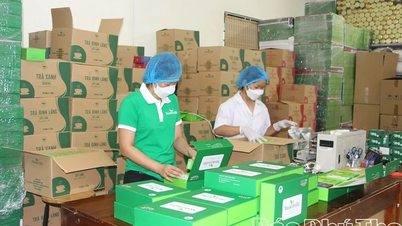
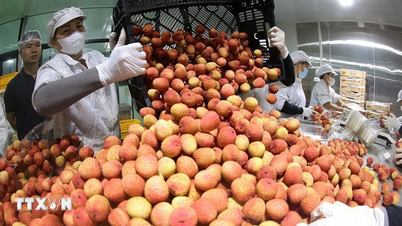
Mr. Pham Van Tuan, Director of Tuan Thu Co., Ltd., is one of the businesses specializing in purchasing, processing, and exporting dried betel nuts. The company currently has two factories with 10 drying ovens, purchasing fresh betel nuts from households for processing and consumption domestically, as well as exporting to China, Thailand, and Myanmar. However, this year's betel nut harvest has faced many difficulties.
Due to a lack of demand, Mr. Tuan was forced to close one workshop, while the other is only operating at a reduced capacity. He said that the quality of betel nuts this year is worse than in previous years due to the impact of the weather and storms that occurred at the time the trees were flowering. Traders tightened their purchasing policies, causing the price of betel nuts to plummet from 80,000 VND/kg to only 9-10,000 VND/kg, while the yield is only a quarter of what it was in 2024.
In previous years, his family's betel nut drying facility purchased an average of 60-70 tons of fresh betel nuts per day, but this year it has dropped to only 20-30 tons. Mr. Tuan hopes that the local government and relevant departments will support betel nut growers and processing facilities, find solutions for betel nut consumption, and provide policies to support low-interest loans so that betel nut growers can maintain and develop production.
Mr. Hoang Van Hien, head of Cao Nhan 4 neighborhood, Le Ich Moc ward, said that betel nuts are the main source of income for the people here. To date, the entire betel nut growing area in Cao Nhan has suffered crop failure. Traders have limited purchases, causing betel nut prices to plummet. Many betel nut-growing families are facing the risk of heavy losses due to difficulties in selling their produce.
Mr. Dam Cong Chinh, Head of the Economic, Infrastructure and Urban Planning Department of Le Ich Moc Ward, shared that although Cao Nhan betel nut cultivation and processing village has been recognized as a traditional craft village since 2008, there are currently no investment or support policies for the village, and betel nut growers are mostly operating spontaneously. In 2025, the local government plans to allocate 5 hectares for the construction of a craft village area.
Simultaneously, efforts are being made to implement product codes, geographical indications, and labels for Cao Nhan betel nut products. In the 2025 betel nut harvest season, betel nut growers suffered crop failures and price drops, with sales dependent on traders, putting farmers at risk of losses and uncertain income. Betel nut products are primarily sold through personal relationships and individual contracts, lacking legal binding agreements.

It is known that in 2025, Hai Phong city organized many activities to expand the connection space between businesses, distributors, and consumers. However, many experts believe that trade promotion for some products still faces many difficulties due to uneven production capacity, small-scale operations, lack of investment capital, limitations in packaging, labeling, traceability, marketing skills, and market access. Many units have not yet adapted in a timely manner to digital transformation and product standardization, etc.
For agricultural products, including Cao Nhan betel nuts, to develop sustainably, attention, investment, and comprehensive solutions are needed, ranging from planning and capital support to brand building and market development. Only then will agricultural products and Cao Nhan betel nuts no longer suffer from the problems of bumper harvests leading to low prices, high prices during poor harvests, or poor harvests leading to low prices. This will allow farmers to produce with peace of mind, increase their income, and contribute to the socio-economic development of the locality.
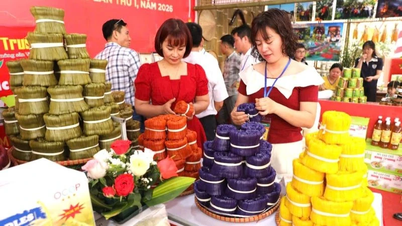
Currently, Hai Phong city has 855 recognized OCOP products, including 8 five-star products, 171 four-star products, and 467 three-star products, helping to enhance the value of local agricultural products.
Source: https://baotintuc.vn/kinh-te/cau-cao-nhan-mat-mua-rot-gia-20251225064913511.htm
































































































Comment (0)