

In the 1990s, Tram Tau, in the memories of those who worked in forestry, was a wild and tragic land. It was a period when old-growth forests were exploited uncontrollably, facing the risk of being wiped out.
Mr. Lai Van Quang, Deputy Director of the Tram Tau Protective Forest Management Board, still remembers the day he first set foot here in 1992. At that time, this area was a "three-no" zone: no electricity grid, no paved roads, and almost no concept of conservation. The biggest concern for those working here was witnessing the Pơ Mu forest being "slaughtered".
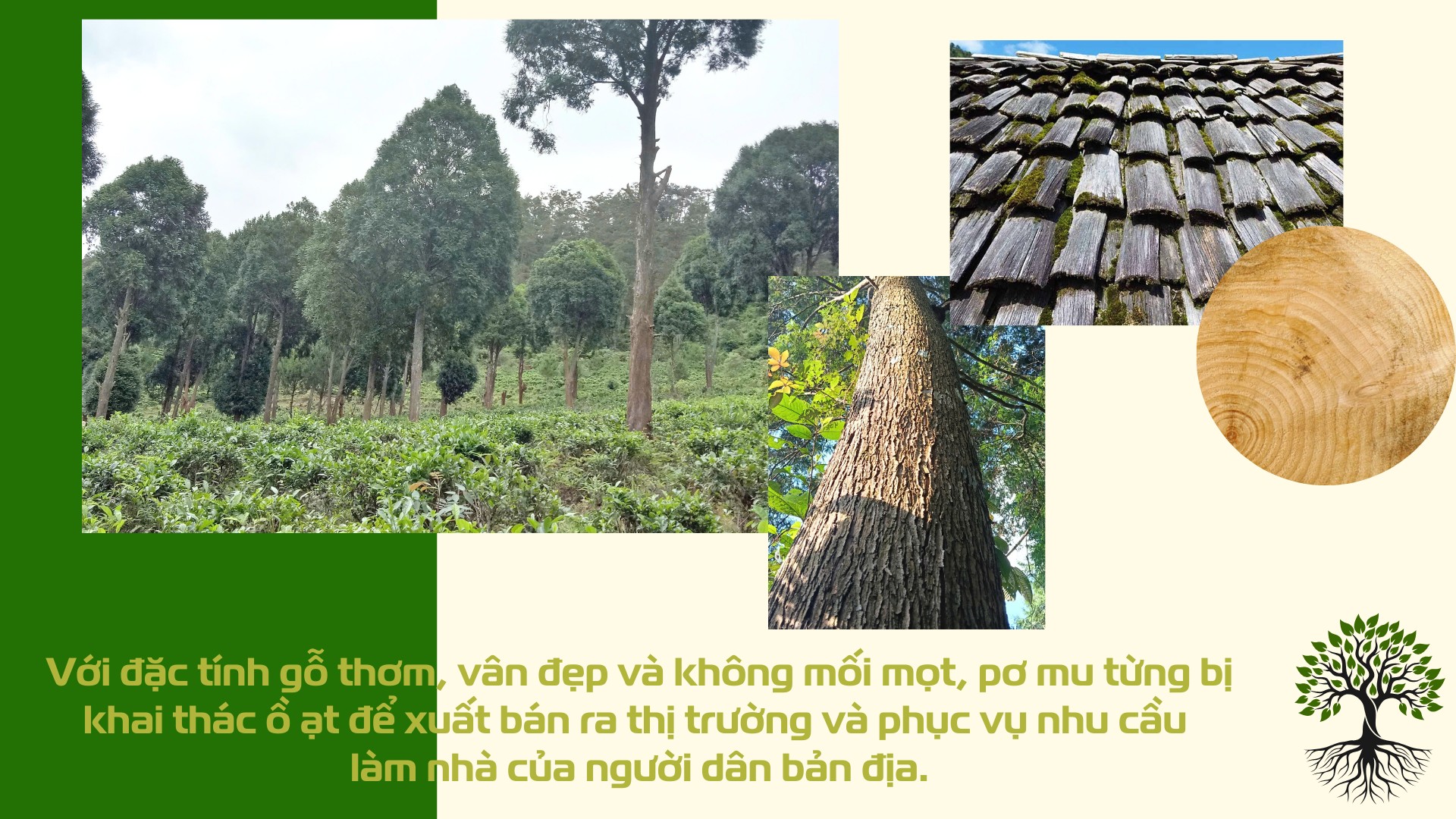
At that time, local people built their houses entirely from cypress wood, from pillars and beams to roofing planks, causing ancient trees that were too large for two or three people to embrace to fall down. This precious tree species faced the risk of becoming merely a name in the Red Book of endangered species.
Faced with the risk of resource depletion, Mr. Quang and his colleagues, under the leadership of Mr. Hoang Xuan Thuy - then Head of the Technical Department - conceived a bold idea: planting and preserving the Pơ Mu tree. However, during the period 1995-1998, this idea encountered great skepticism. Local people argued: "There are still plenty of old-growth forests, why bother planting more?" - this was a common refrain when officials came to persuade them.
Undeterred, the forestry officials ventured deep into the forest to find saplings, nurturing them for months. The real turning point came when they met Mr. Lo Van On, a Thai veteran from Luu 1 village, Hat Luu commune (now Hanh Phuc commune). Having quickly grasped the value of the forest, Mr. On happily agreed and encouraged his children, grandchildren, and other villagers to participate.
The result of that perseverance was the successful planting of 27 hectares of cypress trees right on the land of Luu 1 village between 1996 and 1998. For more than 20 years, this forest has become a giant "shield," protecting against the hot winds from Laos and preserving a source of cool, clean water for the entire village.
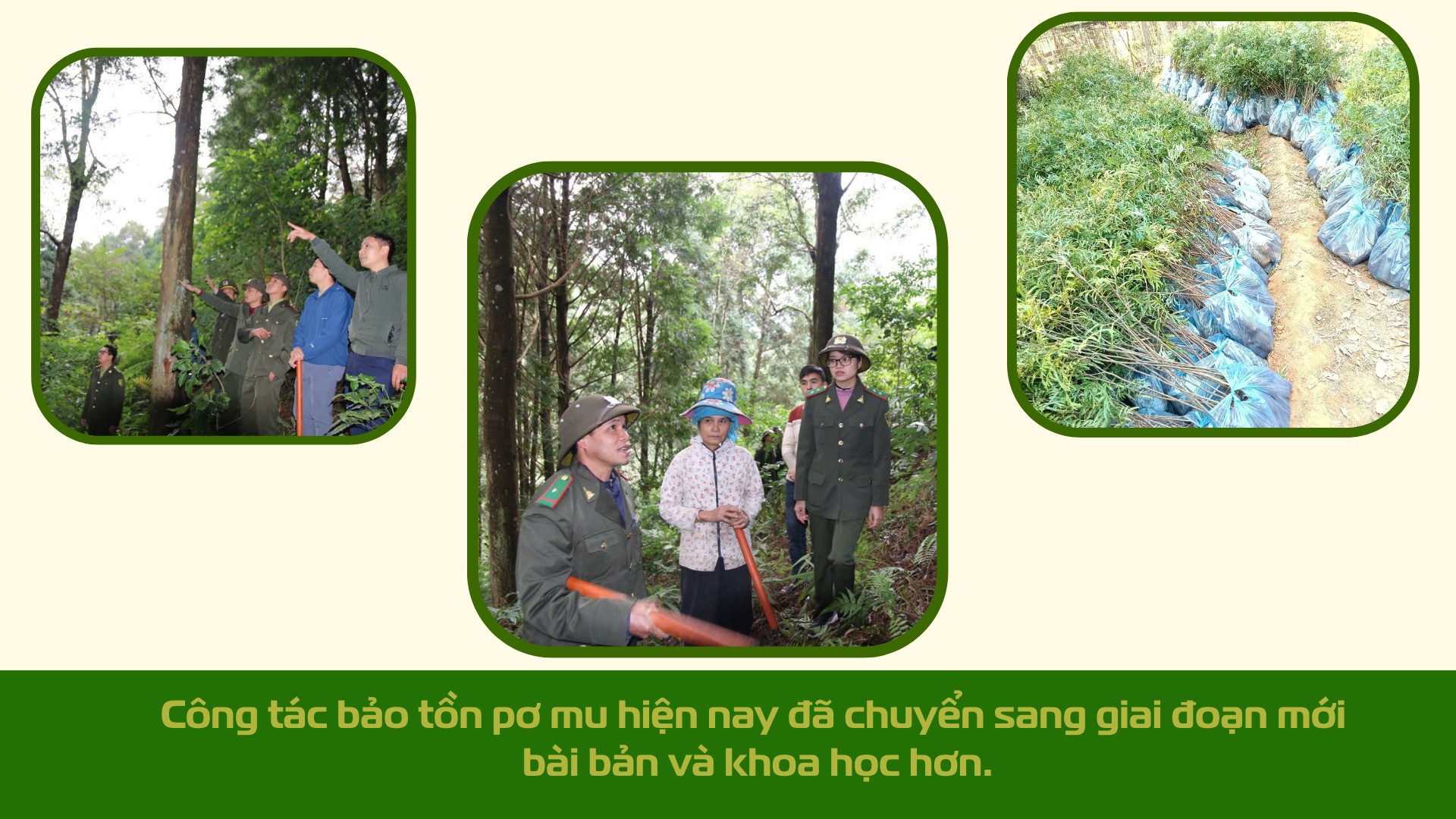
Building upon the foundation laid by previous generations, the conservation of the cypress tree has now entered a new, more systematic and scientific phase. In particular, over the past few years, the Tram Tau Protective Forest Management Board has collaborated with GIZ to implement a multi-species forest planting model instead of a mono-species model.
This approach is being replicated in communes such as Hanh Phuc, Tram Tau, and Phinh Ho... to enhance biodiversity, protect the soil, and improve carbon sequestration capacity.
Thanks to this, from its initially small area, the former Tram Tau region has now achieved a remarkable feat: maintaining, protecting, and developing over 53 hectares of protective forest with a structure of cypress trees, along with 300 hectares of mixed forest. Of this, cypress trees account for the dominant proportion with a density of approximately 300 trees/ha (equivalent to 20%).
In the coming period, we will focus on strictly managing existing forests, especially seed forests, to proactively secure genetic resources. We will promote intercropping of cypress trees in suitable areas. We will actively enclose and promote natural regeneration in areas where cypress trees are regenerating.
For those who have been involved in forestry like Mr. Trinh and Mr. Quang, the figure of over 300 hectares is just the beginning. These decades-old cypress forests are now facing a new opportunity to become a tourism "gold mine".
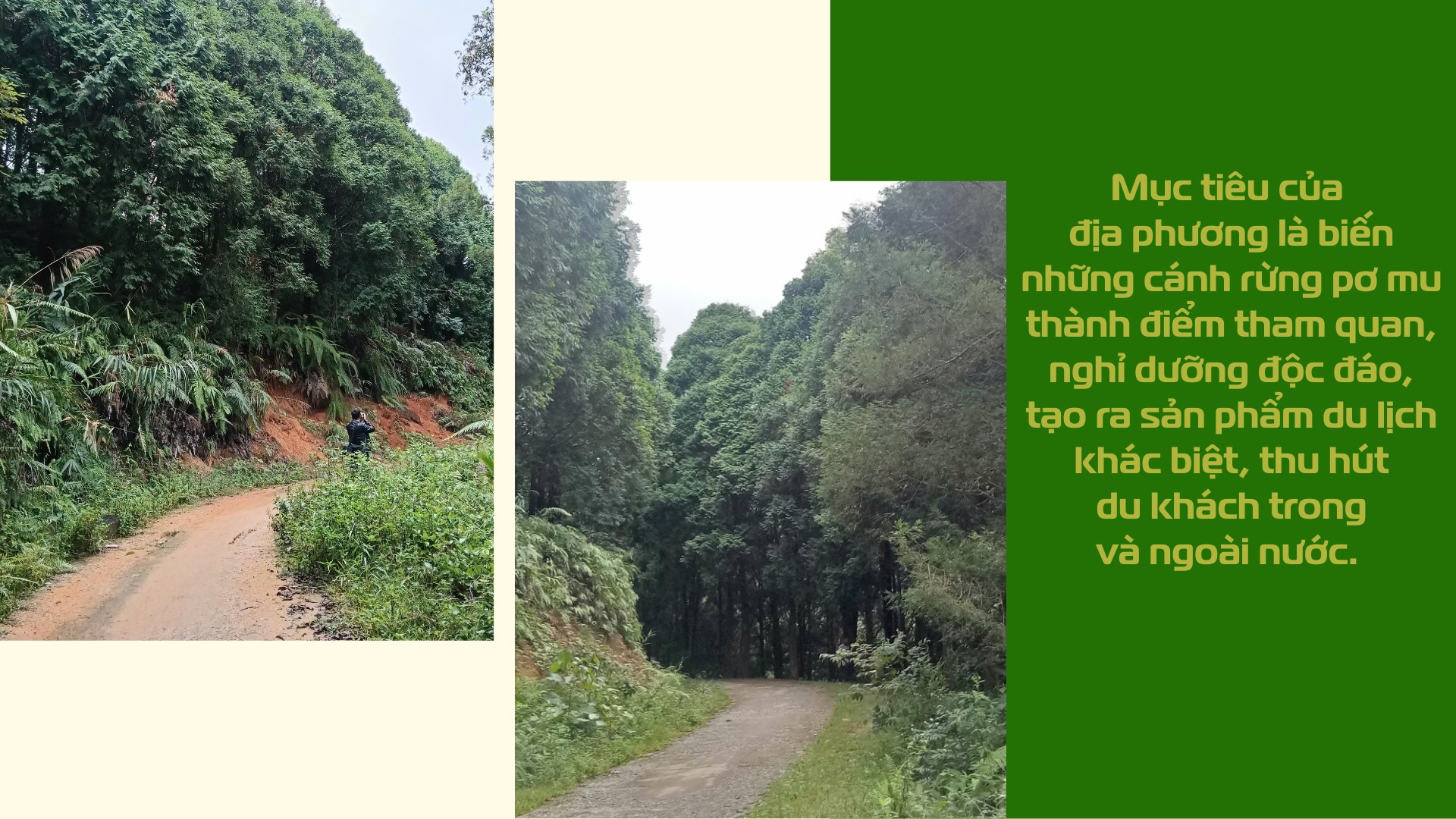
This would provide indigenous people with additional sustainable livelihoods by showcasing the beauty of their homeland, alongside income from forest protection contracts.
The journey of three decades is not only the story of the cypress tree growing into a giant, but also a testament to a revolution in awareness: from the mindset of clearing forests for slash-and-burn agriculture to the consciousness of planting trees to preserve the land among the people on the misty mountaintop.
Source: https://baolaocai.vn/cau-chuyen-3-thap-nien-giu-dat-post889025.html
![[Photo] Hanoi is ready for the "National Festival"](https://vphoto.vietnam.vn/thumb/1200x675/vietnam/resource/IMAGE/2026/03/12/1773305846167_ndo_br_z7612336508628-14627dc7d18cc27532ffea5d4089713b-4105-jpg.webp)


![[Photo] Trial run of the election process at polling stations in Dong Da ward (Hanoi)](https://vphoto.vietnam.vn/thumb/1200x675/vietnam/resource/IMAGE/2026/03/12/1773306146728_ndo_br_van-hanh-thu-to-bau-cu-4070-755-jpg.webp)




























































Comment (0)