.jpg)
Advantages in many aspects
On every major national or city holiday, or on Sunday mornings, the community Zalo group of Residential Group No. 36 Hoa An (An Khe Ward) becomes bustling with announcements from the group leader about displaying the national flag, general environmental cleaning, and maintaining urban aesthetics. Through text messages sent via phone, the policies and activities of the residential area are quickly conveyed to each household.
Mr. Le Quy Hieu, head of residential group No. 36 in Hoa An, said that the group currently has nearly 150 households, and most of them participate in the community Zalo group. This has become an effective "digital bridge" between the residential group and the people, helping to promptly convey content related to building a civilized urban area, protecting the environment, fire prevention and control, ensuring security and order, as well as new policies and guidelines of the locality.
According to Mr. Hieu, the application of digital technology brings many advantages in management and administration at the grassroots level. Instead of having to go to each household or distribute invitations as before, all information is now transmitted quickly and accurately, saving time and costs.
In particular, community groups have become an effective two-way interactive channel where residents can directly report issues arising in their neighborhoods, such as environmental sanitation, deteriorating infrastructure, security and order, or other basic needs.
In Ta Lang residential area (Hai Van ward), digital technology is gradually changing the way the community is managed and operated. Mr. Dinh Van Hin, head of the Ta Lang residential area, said that the area has 119 households, and the application of digital platforms has helped to disseminate policies and guidelines to residents more quickly and effectively than before.
"With just a few taps on their phones, people can stay updated on the latest announcements regarding policies, meeting schedules, community activities, or warnings related to natural disasters, epidemics, and public security," Mr. Hin said.
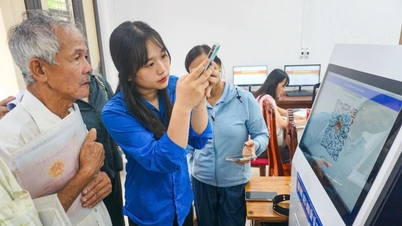
In addition, the Ta Lang residential area has also intensified its efforts to promote and support residents in accessing digital services. Many households have been guided to install and use the VNeID application, carry out online administrative procedures, and make cashless payments in daily transactions.
Song Tranh village (Tra Tan commune) has approximately 220 households. Digital technology has greatly assisted in local management. Village head Ho Van Thanh said that to promptly convey policies and guidelines from higher levels to the people, the village has implemented various forms of communication, such as organizing meetings for each group, and maintaining effective community Zalo and Facebook groups for the village.



"People now access information very quickly. Simply posting it on the group allows them to grasp the content, proactively participate in activities, or prepare documents when required. Feedback from the public is also sent directly via phone, helping us to process issues more promptly," Mr. Thanh shared.

From Zalo and Facebook to digital government at the grassroots level.
After the merger, the entire city has more than 4,100 villages and residential areas. In recent years, along with the digital transformation process, grassroots officials have actively applied information technology in management and administration, creating a widespread network connecting the government with the people.
According to Ngo Ngoc Hau, Chairman of the People's Committee of An Khe Ward, most neighborhood group leaders in the ward are proficient in using digital platforms to support their management work. Each neighborhood group has established community groups to maintain regular information exchange with residents.
According to Mr. Ngo Ngoc Hau, this model not only helps the government quickly convey policies, guidelines, and directives, but also becomes a very effective channel for receiving public feedback.
"Many suggestions related to urban infrastructure, construction order, environmental sanitation, and people's livelihoods are promptly reflected and immediately forwarded to specialized departments for handling. As a result, the gap between the government and the people is increasingly narrowed, improving the quality of service and the effectiveness of state management at the grassroots level," Mr. Hau shared.
In mountainous areas, where transportation is still difficult, digital technology is proving to be an even more important role in connecting communities.
According to Mr. Le Minh Chien, Chairman of the People's Committee of Tra Tan commune, the commune has a large area and an unevenly distributed population, with many areas far from the center. Previously, whenever implementing policies or urgent announcements, village officials had to go directly to each residential cluster to disseminate information. Now, along with the local public address system, community Zalo groups have become a quick and effective information channel.
According to Mr. Le Minh Chien, many village heads, heads of the Fatherland Front working committees, and other organizations have proactively learned and researched the use of methods and models for managing community groups, updating information for people via smartphones. As a result, information related to disaster prevention, production support, social welfare policies, and guidance on administrative procedures is conveyed promptly.
Many citizens are familiar with submitting feedback, suggestions, or exchanging information with the government through online applications. This is an important platform for localities to gradually build digital government and improve the quality of service to the people.



In Avuong commune, one of the mountainous areas of the city, digital transformation is gradually permeating the lives of its people.
According to Mr. Briu Quan, Chairman of the People's Committee of Avuong commune, despite remaining difficulties in telecommunications infrastructure and the level of technological access among some residents, many households have adopted smartphones and participated in online community groups.
Officials in 16 villages regularly assist residents in installing VNeID, accessing online public services, and promoting electronic payment methods. For ethnic minority communities, direct, hands-on guidance has helped many confidently embrace technology.
“Thanks to the proactive efforts of village and hamlet leaders, many households have learned to use social media. As a result, the Party and State's policies and guidelines are promptly accessed by the people through chat groups. In addition, social media has supported the promotion of agricultural products and local specialties, contributing to increased income and expanded trade opportunities,” said Mr. Briu Quan.
Source: https://baodanang.vn/cau-noi-so-o-khu-dan-cu-3340910.html