Jonathan David's miracle
Striker Jonathan David made history by scoring a hat-trick (in the 6-0 win against Qatar), a feat that the Canadian national team may never achieve again at the World Cup . He is the first player in 60 years to score a hat-trick on home soil at the World Cup (since Geoff Hurst of England in 1966). But if Canada progresses further in the knockout stage and plays in the USA, that would truly be David playing in his homeland. Born in Brooklyn, New York, he currently plays for Juventus; however, he grew up and began playing football in Canada and holds Canadian citizenship.

Jonathan David (right) was born in the US but plays for the Canadian national team.
Photo: AFP
Germany's right-back Nathaniel Brown is also having a great time at this World Cup, with one goal and one assist. Brown's father is American, and the US Soccer Federation contacted him last year to offer him a spot on Mauricio Pochettino's team. However, Brown declined, choosing to represent Germany, his mother's homeland.

Nationality issues in national teams have long ceased to be a novelty. But it seems unusual for the US to have many players who choose to represent other countries. Derrick Etienne Junior, Duke Lacroix (Haiti), Esmir Bajraktarevic (Bosnia, who successfully converted the final penalty to eliminate Italy in the play-offs), Brian Gutierrez, Obed Vargas (Mexico), Tyler Bindon (New Zealand) are all American players and could have represented the US national team if that had been their initial choice.
The US won both of their first two matches to advance from the group stage early. This team would undoubtedly be much stronger with the addition of David Brown, Vargas, Gutierrez, or Bajraktarevic. Conversely, of course, there are also quite a few talented players in the US squad who come from other countries, such as Sergino Dest (born in the Netherlands, currently playing for PSV) or Antonee Robinson (born in England, playing for Fulham)...
BROTHERS WHO ARE NOT ON THE SAME TEAM
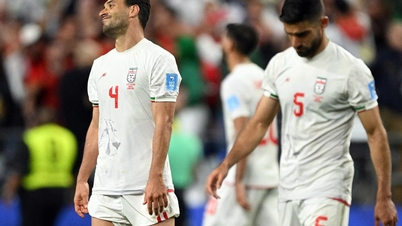
This isn't a new story, but what's unusual is that there are many such cases at this World Cup: pairs of brothers who aren't on the same team. There are 7 pairs of brothers participating in the World Cup, and of those, 4 pairs are playing for different national teams.
Spain has Nico Williams, the younger brother of Inaki Williams of Ghana. France has Desire Doue, one of the world's most outstanding young stars. This player, who is currently winning the Champions League with PSG, is the younger brother of Guela Doue of Ivory Coast. In the Netherlands, Brian Brobbey recently rose to prominence with a brace against Sweden. This striker is the half-brother of defender Derrick Luckcassen of Ghana. This family also has two other players, but they will not be participating in the 2026 World Cup. Scotland has defender John Souttar, the older brother of defender Harry Souttar of Australia.
Kevin-Prince Boateng (playing for Ghana) and Jeremy Boateng (Germany) were the first pair of brothers to ever face each other on the World Cup pitch (in 2010). Four years later, they clashed again at the 2014 World Cup. Back then, it was a rare case of brothers not playing for the same national team. Now, this has become so common that more than half of all pairs of brothers at the World Cup are not teammates. No pairs faced each other in the group stage, but if Australia, Scotland, Ghana, and Ivory Coast all advance from the group stage, the chances of brothers directly facing each other in the knockout phase are very high.



If we divide the players at the 2026 World Cup by place of birth, France is the country with the most players participating in the 2026 World Cup: 98 players - more than double that of Germany (48), while England has 49 players. Another interesting fact is that in the starting lineup of Morocco in the opening match against Brazil (1-1 draw), there were no players born in… Morocco!
Source: https://thanhnien.vn/cau-thu-nguoi-my-ve-que-du-world-cup-185260623203641953.htm




















![[Photo] Thousands of people participate in a run to show their support for the campaign "Sharing a common determination to build drug-free communes, wards, and special zones".](https://vphoto.vietnam.vn/thumb/1200x675/vietnam/resource/IMAGE/2026/06/27/1782554475933_0673e2a3df7b5e25076a-8283-jpg.webp)