

For many people in Yen Bai , Nam Cuong, and Au Lau wards, the Yen Bai bridge is not just a transportation structure, but also a witness to a time of transformation, to the early days of reform, the hesitant steps of urbanization, and the simple aspirations of people from the countryside who have recently become urbanized.
In the hearts of the people of old Yen Bai town, Au Lau ferry terminal was a majestic melody amidst the swirling Red River. There, the two ferries swayed precariously, towed by speedboats like tiny boats on the open sea. On the Yen Bai town side, the slope was steep. On the other side, Au Lau greeted them with a muddy sandbank; during the dry season, the ferries only docked precariously at the water's edge, vehicles trudged across, the sand sinking under their wheels, the reeds rustling like sighs. Then the day came, 1992, when the Yen Bai bridge was inaugurated, opening a new chapter for this land. The elderly people in Hong Tien street around the Yen Bai bridge area still vividly remember the inauguration day in 1992.
Mrs. Pham Thi Xoe, now over 70, has failing eyesight, but her memories of the bridge remain as vivid as yesterday. “In the old days, the only way to cross the river was by ferry, which was slow and dangerous. During the rainy season, we were completely isolated. When we heard about the bridge, the whole village and commune were overjoyed. Everyone said, ‘Now we’re finally out of suffering!’” Mrs. Xoe recounted, her voice filled with emotion.
She recalled that on the day the bridge was inaugurated, people from all over flocked to it, crowding together to witness the miracle firsthand. Laughter, chatter, and applause echoed along the river. The bridge not only connected the two banks of the river, but also connected the dreams and aspirations of the people here.
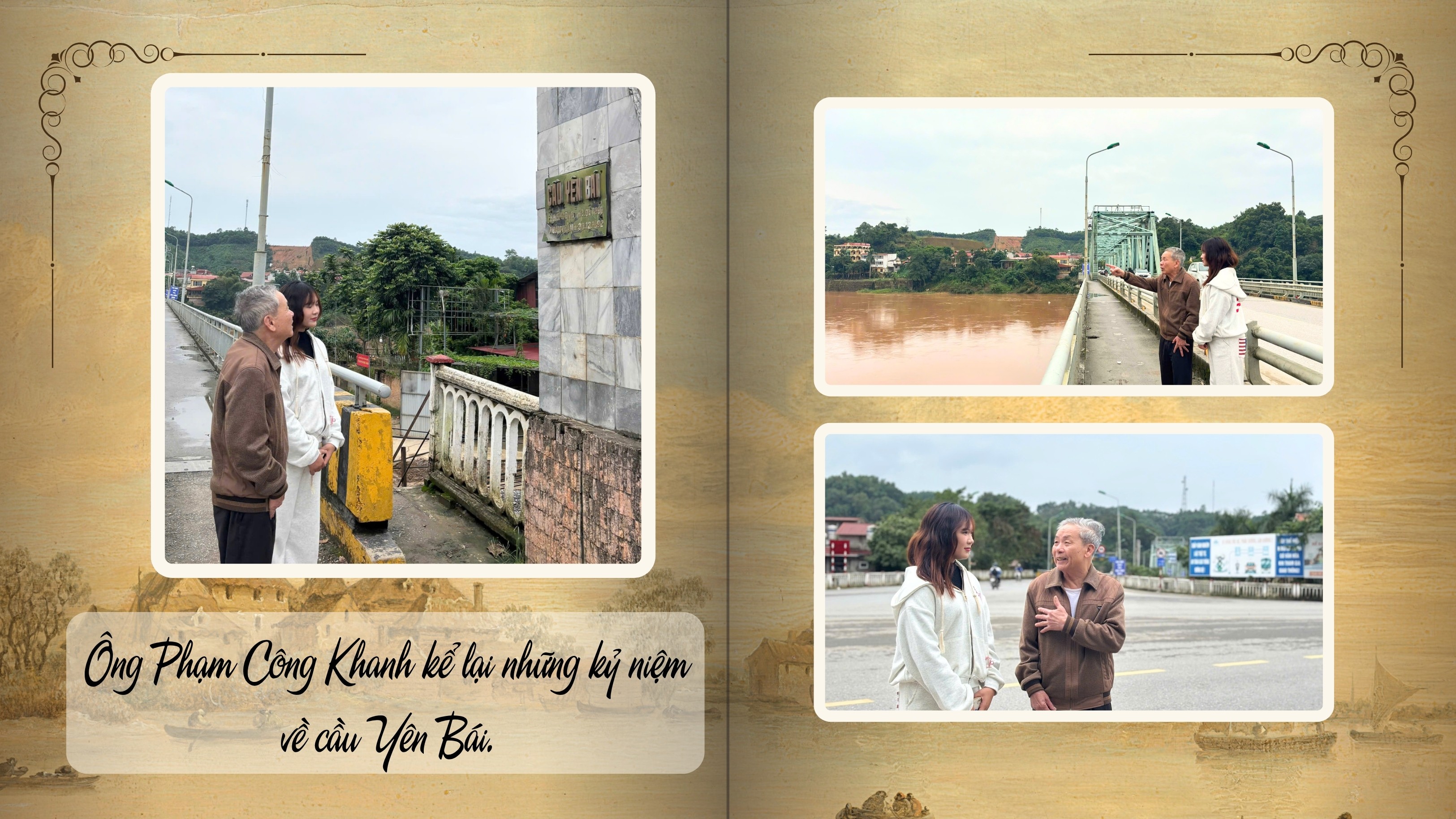
Mr. Pham Cong Khanh, now 79 years old, sat quietly in a corner of the small shop, his eyes distant: “Back then, looking at the new bridge filled my heart with joy. People came and went, goods increased, and life changed. Children ran and jumped on the bridge, people laughed and talked boisterously. The bridge seemed to open up a different path for us.”
His words conjured up a vivid picture of those early days: rudimentary vehicles, cargo trucks, mothers carrying their children to the market on bicycles, and couples strolling along the tranquil river.
The Yen Bai Bridge was the first bridge connecting the two banks of the Yen Bai region, but it bridged invisible gaps in people's minds: the gap between rural and urban areas, between daily worries and aspirations for advancement. For Mr. Dang Van Tuyen, a trader in Cong Da village, Au Lau commune, the bridge opened up new markets.
“Before, crossing by ferry took a whole morning. With the bridge completed, goods can cross quickly, and the trade routes are wider. In the first few years of the reforms, people were able to sell rice, sell wood, buy motorbikes, and build small houses. Life changed little by little,” Mr. Tuyen said, his voice a mixture of pride and concern.
It is said that, during each harvest season, the left and right ends of the bridge become meeting points for trucks carrying agricultural products from neighboring villages. The sounds of engines, loading and unloading goods, and the greetings of the villagers – all blend together into a busy yet warm symphony of labor. Many simple life stories are captured there: young couples starting their own businesses, students leaving their villages for the town to take exams for the first time, mothers selling goods patiently waiting for the train to arrive – the bridge has witnessed countless joys and the tireless efforts and struggles of the people.
The memory of the bridge extends beyond material achievements. It is also a symbol of faith in the future. During the period of renewal, the people of Yen Bai town and the neighboring communes of Tran Yen district harbored great aspirations: expanding trade, providing education for their children, renovating their homes, and finding opportunities to participate in a rapidly changing economy .
At that time, the Yen Bai Bridge was not only a symbol of development and a source of pride, but also a cultural landmark for the people of Yen Bai. Whenever visitors from afar arrived, people would take them to the bridge to admire it, take photos, and introduce them to a land undergoing transformation.
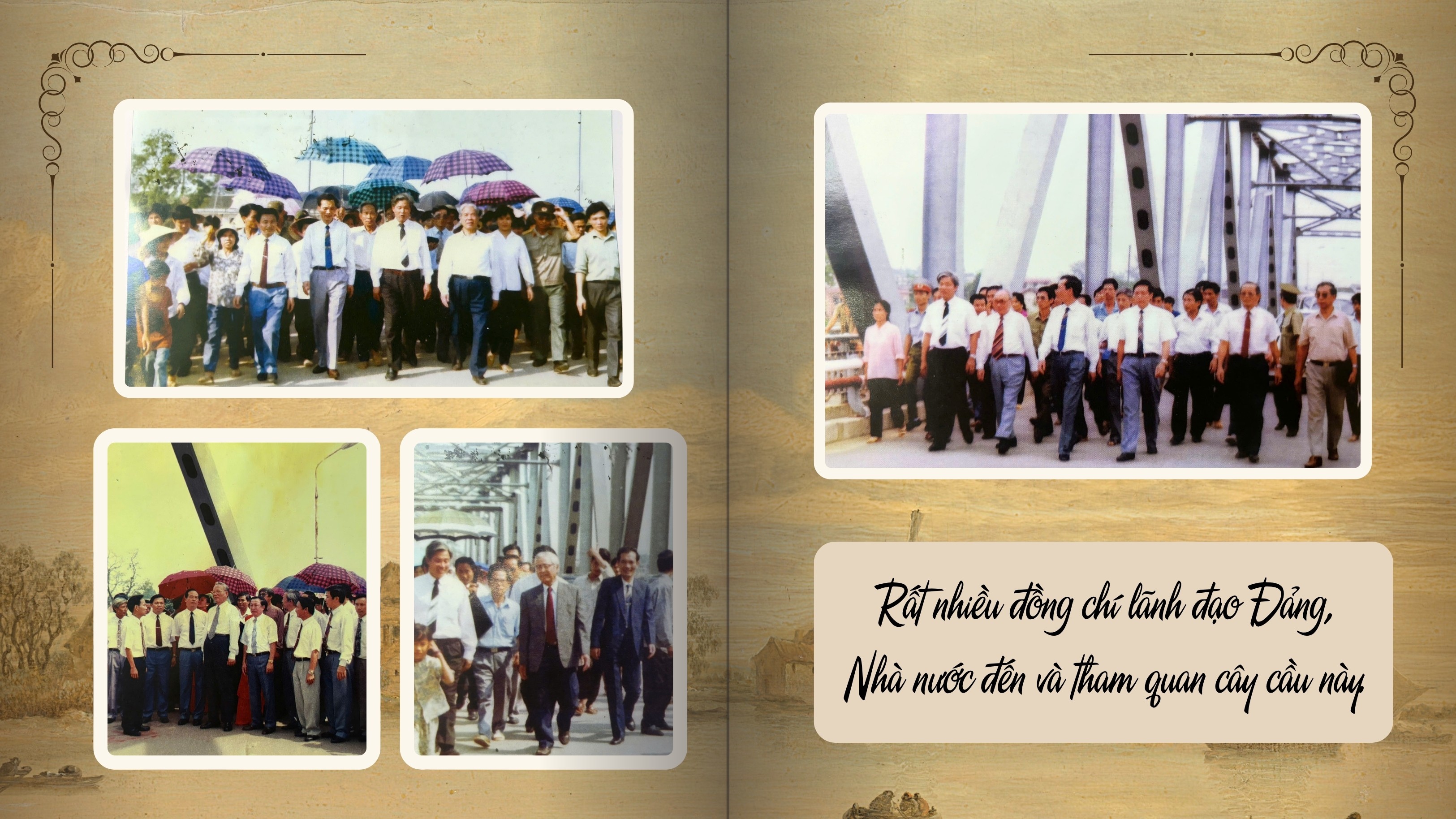
Looking at the old bridge still standing, connecting the two banks of the Red River, though with restrictions on certain types of large vehicles, Mr. Khanh recalled: "My house is very close to the bridge, so we have witnessed many Party and State leaders coming to visit this bridge. At that time, the Yen Bai bridge was the gateway to the western localities of the province, and also opened the route to the Northwestern provinces."
That bridge has become an indispensable part of the memories of every resident of Yen Bai. The Yen Bai Bridge is not just a transportation structure, but also a cultural symbol immortalized in poetry, a symbol of this land. Perhaps every resident of the old Yen Bai town knew by heart the song : "My homeland, the gateway to the West / The Au Lau Bridge spans the deep river / An eternal song, oh Yen Bai ."
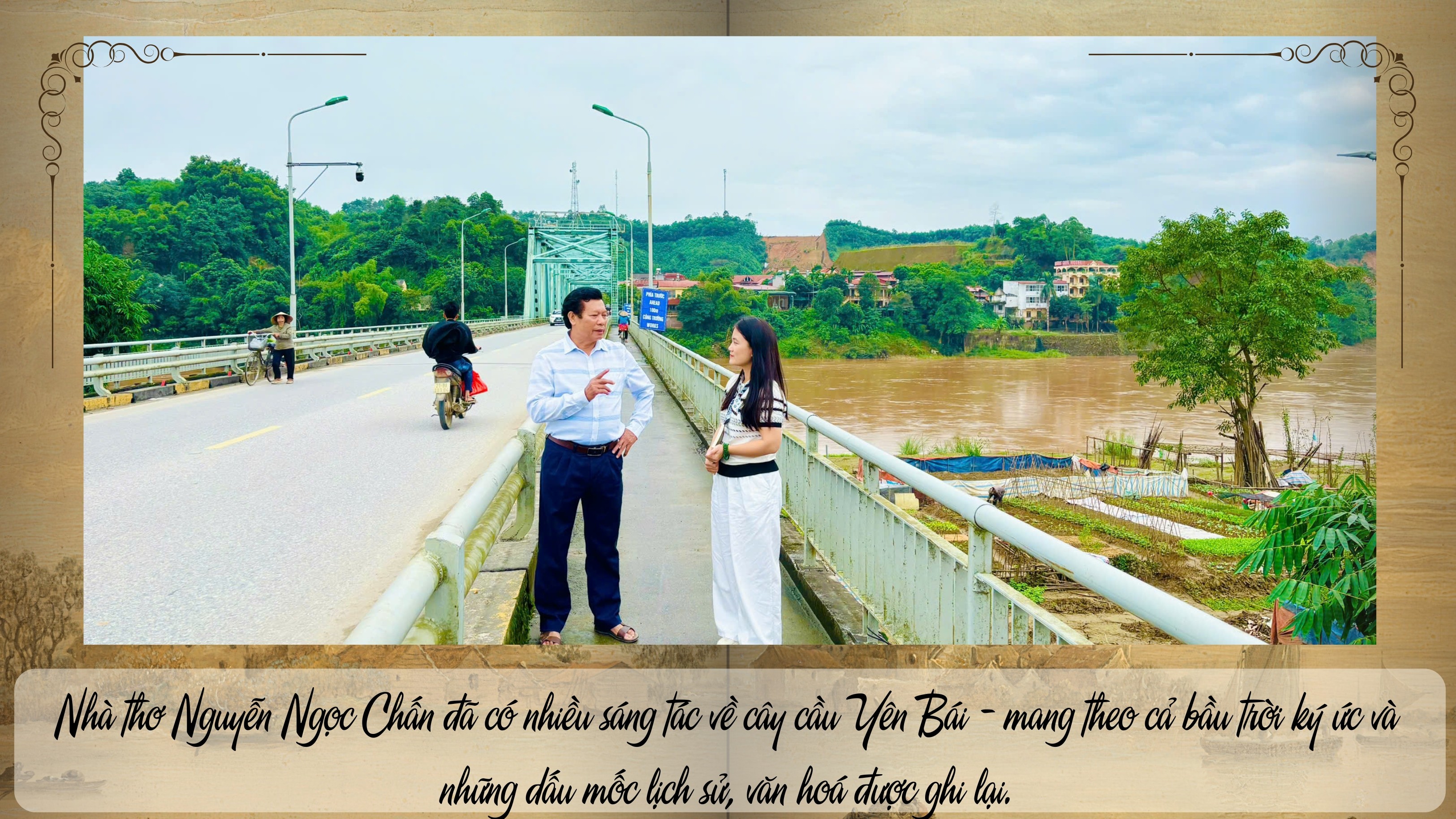
Poet Nguyen Ngoc Chan, who lives in the Hop Minh area, has written many works about rivers and bridges, including the Yen Bai bridge. His poems and essays carry a whole sky of memories, recording historical and cultural milestones.
Poet Ngoc Chan shared: “On the town side is the historic Au Lau ferry terminal, the French Resident's residence, and on the other side of the bridge is the hill where the Hop Minh bronze jar originated, along with a series of cultural sites such as the White-Robed Goddess Temple, the village well… In particular, the first bridge built across the Red River in the former Yen Bai province is the clearest historical witness to the cultural exchange between the lowlands and the Northwest.”
The Yen Bai Bridge serves both as a bridge to boost the economy and as a place that preserves beautiful memories for the local people. I met Ms. Nguyen Hoai Linh again, from Nuoc Mat village, Au Lau ward, who is currently working in Hanoi .
Linh recounted that when she was a child, she often went to the bridge with her friends to enjoy the cool breeze, watch the sunset, or simply run from one end to the other. The bridge witnessed childhood games, innocent first loves, and simple dreams about the future.
“Every time I visit my hometown, I go to the bridge. Standing on the bridge, looking at the Red River, I remember the beautiful days of my childhood. The bridge is like a close friend, always there, silently witnessing the changes in my life,” shared Ms. Nguyen Hoai Linh.
Over time, the Yen Bai bridge has deteriorated and is no longer as sturdy as it once was, causing concern among the local population. Local authorities and relevant agencies have implemented traffic restrictions to ensure the safety of both people and vehicles crossing the bridge. Residents on both sides of the Red River are hoping for the bridge to be repaired soon, not only to ensure traffic safety but also to preserve a memory of a bygone era of modernization.
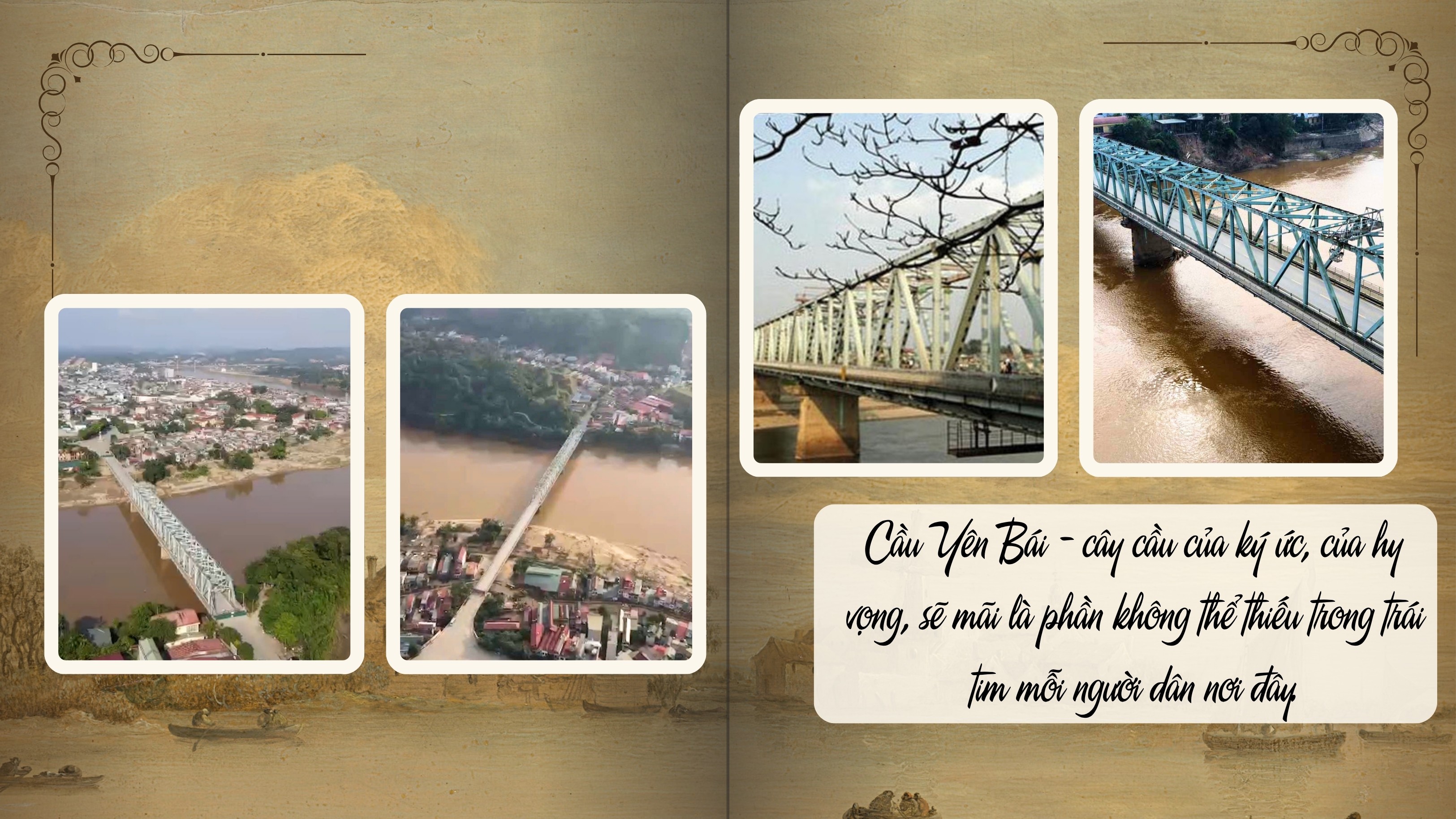
As the early winter afternoon faded quickly, standing on the Yen Bai bridge with poet Nguyen Ngoc Chan and Mr. Pham Cong Khanh, I felt even more strongly the vibrant energy of this land. Despite enduring many ups and downs, the people here have always maintained their faith in the future and aspired to progress. The Yen Bai bridge, a bridge of memories and hope, will forever remain an indispensable part of the hearts of every resident here. May it remain strong in the not-too-distant future, continuing its mission of connecting and bringing prosperity to this land.
Source: https://baolaocai.vn/cau-yen-bai-ky-uc-thoi-ky-doi-moi-post886902.html
![[Photo] Prime Minister Pham Minh Chinh receives the Chinese Ambassador to Vietnam](https://vphoto.vietnam.vn/thumb/1200x675/vietnam/resource/IMAGE/2026/04/05/1775397481797_ndo_br_dsc-5512-jpg.webp)




















































Comment (0)