

Mr. Tran Hoan's family in Hamlet 4, Quang Thach Commune, planted 10 sao (approximately 1000 square meters) of shallots. This year, favorable weather conditions resulted in a high yield of shallots, estimated at 4-5 quintals per sao, 1-1.5 quintals per sao higher than last year. However, this year, the price of shallots has dropped sharply, at times only half the price of the 2024 shallot crop, causing disappointment for Mr. Hoan's family.
It's not just Mr. Hoan's family, but most households growing ginger in Quang Thach commune are also regretting the drastic drop in ginger prices, now only around 20,000-35,000 VND/kg.
Mr. Nguyen Thanh Binh, residing in Hamlet 4, Quang Thach Commune, cultivates 1 hectare of shallots. With high yields, his family harvested over 6 tons of shallots this year. However, due to the low shallot prices, Mr. Binh only earned approximately 150 million VND this year, a decrease of over 100 million VND compared to last year.
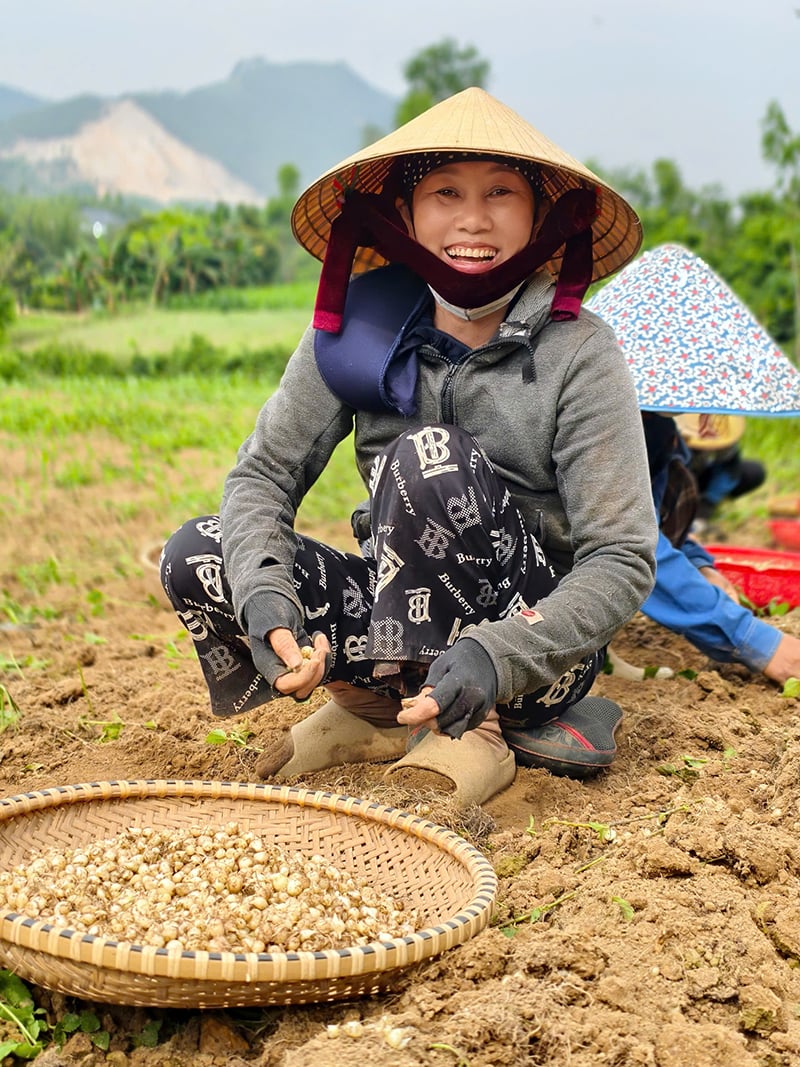 |
"Having grown shallots for many years, I, like many others here, have experienced the situation of a bumper harvest followed by a drop in prices. However, to be fair, shallots still yield higher economic value compared to other crops like corn, peanuts, and beans. Therefore, we still choose shallots as our main crop," Mr. Binh shared.
According to Phan Duy An, Chairman of the People's Committee of Quang Thach commune: This year, farmers in the commune planted 45 hectares of shallots. Due to favorable weather conditions and years of production experience, the shallot yield in Quang Thach commune this year is very high, reaching over 270 tons. However, compared to the 2024 shallot crop, the price this year has dropped quite significantly, making farmers happy despite the good harvest. Specifically, while in 2024 the price of shallots ranged from 35,000-65,000 VND/kg, this year it is only 20,000-35,000 VND/kg.
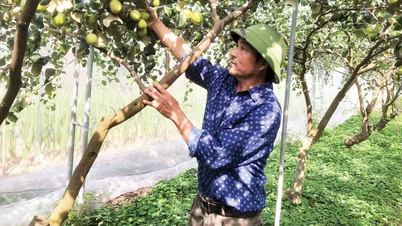
According to Mr. An, the nén tree is a suitable crop for the hilly terrain and local climate conditions. In recent years, Quang Thach commune has actively converted areas previously used for less productive acacia, melaleuca, and cassava cultivation to nén cultivation.
Locally, the cultivation of shallots has been identified as a new direction, not only increasing income and improving the lives of the people but also helping to improve soil quality through sustainable farming practices. This is also a direction for sustainable agricultural development, maximizing the potential of the locality.
However, due to the unstable market and the fact that prices are still dependent on traders, people are hesitant and not yet confident in expanding the area for growing shallots. The locality hopes that in the future, relevant authorities and agencies will pay attention and provide support to create a market for the product as well as build a brand for Quang Thach shallots.
Lam An
Source: https://baoquangbinh.vn/kinh-te/202504/cay-nen-duoc-mua-mat-gia-2225753/















































































Comment (0)