

In Khmer, "chà pây" is the name of a musical instrument used to accompany each song. When performing "chà pây" alone, the performers usually base their performances on folk poems of their ethnic group, mainly in four-word or seven-word verses. However, there are also times when the singers do not rely on any story but improvise on stage, expressing verses of their own composition to reflect the realities of life, revealing the thoughts, feelings, and aspirations of the people. These lyrics carry profound educational and humanistic values.
From an artistic perspective, the "chầm riêng chà pây" folk singing style shares similarities with the "xẩm" singing style in Northern Vietnam. Performers must sing and play the instrument themselves, with the only instrument being the "chầm riêng chà pây đong vêng" lute. According to Mr. Thạch Hoài Thanh, a lecturer at Tra Vinh University in Vinh Long province: "The 'chầm riêng chà pây đong vêng' lute plays a very important role in the repertoire of several folk orchestras such as the Arak orchestra, wedding music, and Mahori music. For a performer of 'chầm riêng chà pây', talent in both playing the instrument and singing, along with flexible improvisational skills, is required to perform well."
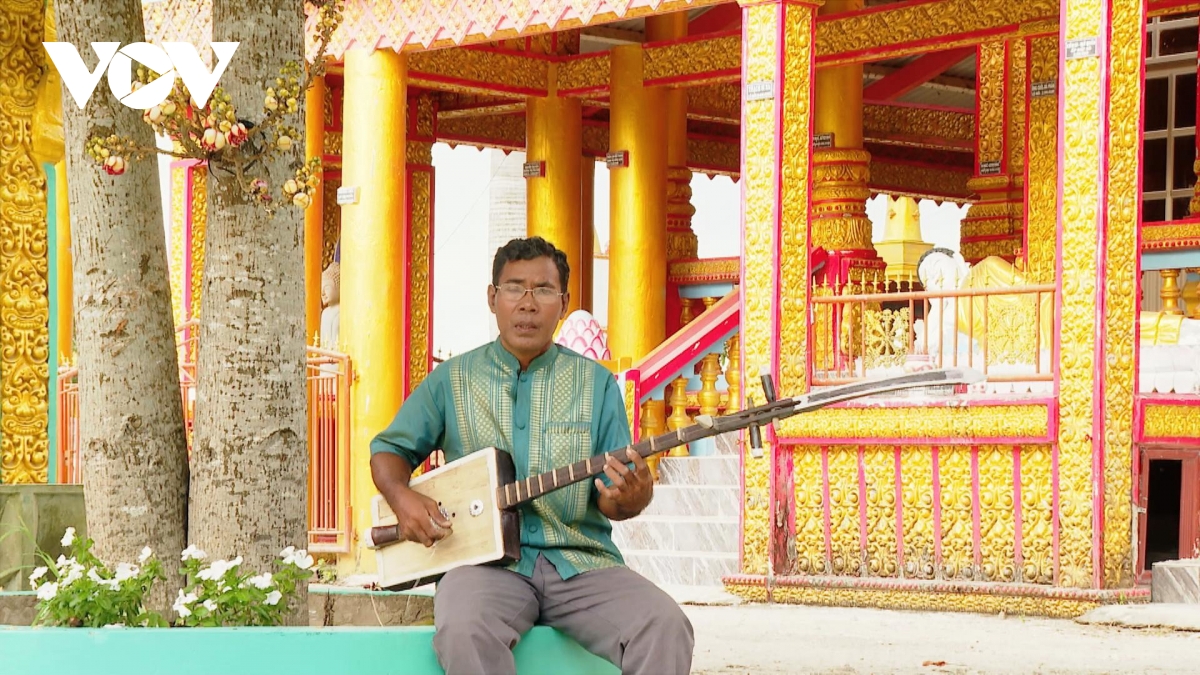
The art of Cham Rieng Cha Pay of the Khmer people
For the Khmer people, the image of the artist playing the cha-pay instrument has been deeply ingrained in the consciousness of countless generations. The heartfelt songs, teaching people moral values and proper conduct, have contributed to shaping the beautiful cultural character of the community. However, in modern life, the art of cha-pay is gradually fading; many veteran artists have left the instrument, and those who remain are also advanced in age.
Born into a family with a tradition in the arts, with his father being a musician and artisan named Danh Yen in Lam Tan commune, Can Tho city, he developed an early passion for music . From accompanying his father to performances, he gradually became fascinated with and dedicated himself to the art of cha pay (a traditional Vietnamese folk singing style) to this day.
Mr. Danh Yen shared: “Since I was little, I've been passionate about music, often following my father to watch him perform. My father was blind, so he could only play the drums. At the age of 12, I asked to learn from the uncles and older brothers in the troupe, initially learning to play the Srolay, and later the Chà Pây instrument. At that time, I was too young to hold the instrument properly, so I just watched the performances. It wasn't until two years later that I started formal lessons, and then learned from many other teachers, which is how I can play as well as I do today.”
Chầm riêng chà pây has its own unique characteristics. During performances, the artists don't continuously sing and play their instruments; instead, they usually sing a short a cappella section, then pause to play the instrument as accompaniment before continuing. Importantly, the lyrics can be improvised on the spot, showcasing the individual style of each artist. This is what creates the diversity and richness of this unique folk art form.
However, to perform the Chầm riêng Chà Pây song perfectly, the artist needs not only masterful playing techniques but also a deep understanding of the ethnic culture, language, and literature. This knowledge helps them compose lyrics that are appropriate for each situation and performance space.
Mr. Danh Yen further shared: “The repertoire of Cham Rieng Cha Pay includes many pieces such as Angkor Reak, Sa Rom-mi, Ong Kom Ca Ek… When performing, you have to base your choice of song on the ritual and the atmosphere, whether sad or happy. For example, in a wedding ceremony, when cutting the betel nut flowers, there are only a few fixed songs, but if the host requests a longer performance, you have to improvise to tell about the gratitude owed to parents. That's the most difficult moment because you have to compose on the spot.”
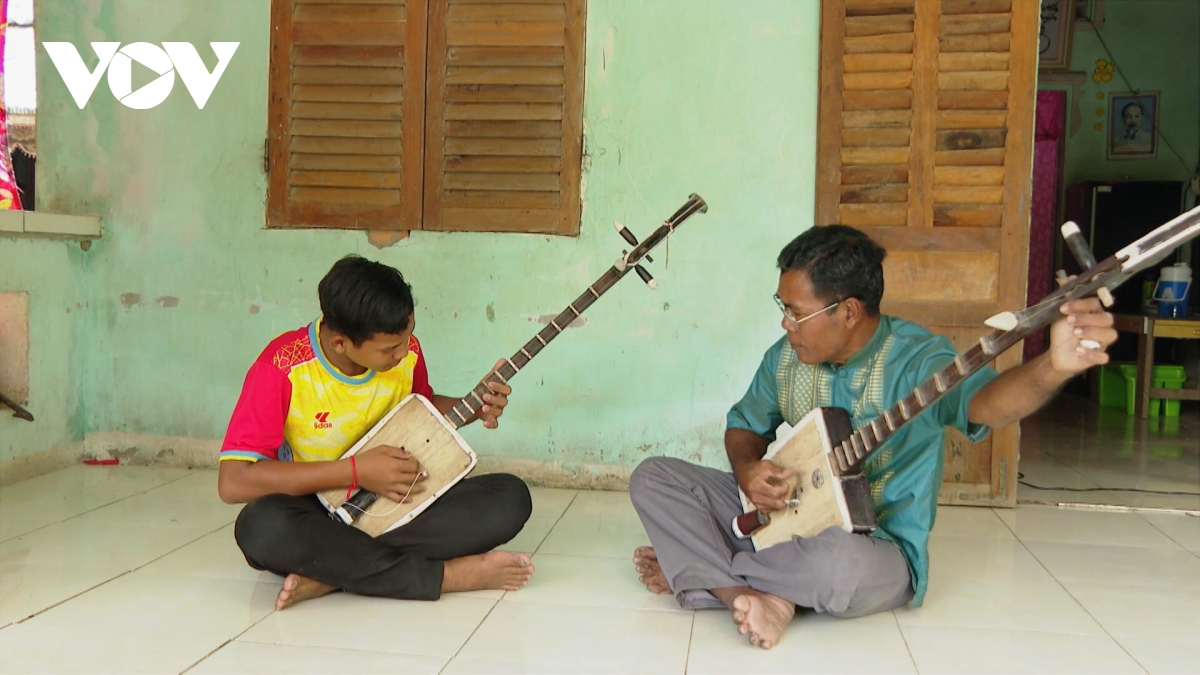
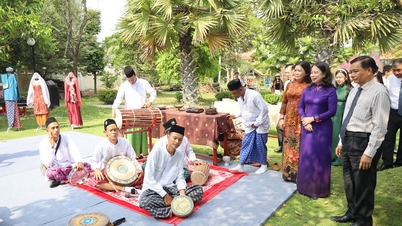
The Khmer people preserve the art of cha pay.
It can be said that the Cham Rieng Cha Pay is an indispensable spiritual nourishment in the cultural life of the Khmer people. This art form not only exists in solo performances but is also an important instrument in many traditional orchestras. Depending on the time, space, and circumstances of the performance, the artist will choose the appropriate piece and must know how to adjust the strings to harmonize with the orchestra.
Sharing his thoughts on this, Mr. Danh Yen said: “The Chà Pây instrument has a total of 12 frets. When performing, if the strings are not at the correct pitch for the orchestra, you have to adjust them immediately. When singing alone, you tighten the strings to your own key, but when performing with a troupe, you have to readjust them to match. The instrument has a very convenient string adjustment mechanism; you can adjust the tension as you wish.”
Cham Rieng Cha Pay clearly demonstrates the creativity of the Khmer people as well as their ability to adapt flexibly to their living environment. With these unique artistic and cultural values, Cham Rieng Cha Pay of the Khmer people was recognized as a National Intangible Cultural Heritage, a form of folk performing art, in 2013. To this day, this heritage remains and continues to be preserved in the cultural and spiritual life of the Khmer people in Southern Vietnam.
Source: https://vov.vn/van-hoa/di-san/cham-rieng-cha-pay-di-san-quy-cua-dan-toc-khmer-post1262592.vov





























































Comment (0)