


Children with congenital heart disease need adequate nutrition and proper oral hygiene care to prevent infections, live well, and maintain good health.
Dr. Lam My Dung, Head of the Nutrition Department at Tam Duc Heart Hospital, said that congenital heart disease is a common condition in children, with a current incidence rate of about 8-10 per 1000 live births. In Vietnam, approximately 16,000 children are born with congenital heart disease each year.
Children with congenital heart disease not only have poor appetite and are prone to malnutrition, but are also highly susceptible to infections, especially respiratory infections, and most dangerously, endocarditis. Therefore, caring for children with congenital heart disease is quite challenging in order to help them live well, develop normally, and be healthy enough to undergo surgical interventions to have a healthy heart.
Dr. Dung advises on how to care for children with congenital heart defects, as follows:
Nutrition
Children with congenital heart defects have higher-than-normal energy needs, but their absorption is reduced due to rapid breathing and fatigue. Therefore, they tend to have poor appetites, feed poorly, and absorb nutrients poorly because of their weak digestive systems. Malnutrition is very common in children with this condition. Therefore, parents need to be very patient and careful when caring for their children to ensure they receive adequate nutrition for their development.
For infants who are breastfeeding.
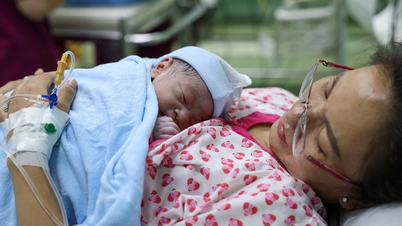
To prevent choking on milk, mothers should hold their babies upright with their heads elevated while breastfeeding.
After feeding, hold your baby upright, against your shoulder for a few minutes, and gently pat their back to help them burp before laying them down. Position the baby on their side to prevent spitting up and avoid milk entering the nose and causing choking.
Mothers should breastfeed their babies multiple times a day, reducing the amount of milk at each feeding. Avoid letting the baby feed for too long at once, as this can easily tire the baby out and cause choking.
For babies who cannot breastfeed (due to premature birth, oral defects, or fatigue...).
Mothers can express breast milk for their babies to drink. The average amount of milk per day is about 15% of the baby's body weight.
For babies who have started eating solid foods
Children should be fed in small amounts and frequently, depending on their digestive capacity. For older children who can eat rice, their meals should be bland but still nutritious. Give them plenty of vegetables, fruits, and easily digestible foods to prevent constipation.
Supplement the diet with potassium-rich foods such as oranges, grapes, papaya, bananas, and coconut water when children are taking diuretics like Lasix (furosemide).
Drinking water
Older children with heart failure should only drink water when thirsty. Conversely, children with congenital heart defects who are cyanotic and have highly concentrated blood should drink plenty of water.
Dental problems
Children aged 6-12 months
This is the age to start dental checkups. When baby teeth first erupt, parents should use a toothbrush with a small, round head and soft bristles to brush their baby's teeth.
Weaning from breastfeeding and switching to bottle feeding should begin when the child is 1 year old. Children learning to walk need close supervision to prevent falls that could cause dental injuries.
Children over 12 months
Brush your child's teeth after feeding or eating and before bedtime, using a soft toothbrush. Brushing with clean water should be done once immediately after each meal, and finally in the evening, until your child is 18 months old.
Always read the instructions to use toothpaste that is appropriate for your child's age.
Do not give children snacks. Always have them rinse their mouths after taking sugary medicines like syrups or eating candy.
Children should have their own meals and avoid sharing food with others, including family members, to prevent the spread of illness.
Take your child to a pediatric dentist for a check-up every six months for monitoring and preventative care.
Brush your teeth correctly
From around 4-5 years old, children should start learning to brush their teeth independently. However, children don't develop the skill to clean their teeth on their own until around 8-9 years old, so parents need to provide support.
Choose a position where parents can easily see the child's mouth. Move the toothbrush gently in small circles to clean the front surfaces of the teeth. To clean the inner surfaces of the teeth, tilt the toothbrush.
Don't brush too vigorously as this can damage your child's teeth and gums. Brush the top and side surfaces of the teeth. Clean all surfaces of the teeth. Gently brush around the gum lines of each tooth. Brushing your child's teeth for about two minutes is recommended for thorough cleaning.
Finally, toothbrushes should be changed every three months or replaced if the bristles are frayed to better remove plaque around the teeth and prevent scratching the child's gums. A separate toothbrush and a non-frayed brush for massaging the gums should be used.
America and Italy
Source link
![[Photo] Capturing the moment the tide recedes at Yen Binh Son rapids - a million-year-old scenic spot in Quang Ngai.](https://vphoto.vietnam.vn/thumb/1200x675/vietnam/resource/IMAGE/2026/05/19/1779175463885_yen9-1199-jpg.webp)



![[Photo] National Assembly Chairman Tran Thanh Man attends the groundbreaking ceremony for the National Highway 1A spatial axis project.](https://vphoto.vietnam.vn/thumb/1200x675/vietnam/resource/IMAGE/2026/05/19/1779161360398_ndo_br_bnd-1412-jpg.webp)






































































![[Photo] General Secretary and President To Lam receives Indian Defense Minister Rajnath Singh](https://vphoto.vietnam.vn/thumb/402x226/vietnam/resource/IMAGE/2026/05/19/1779184046302_anh-man-hinh-2026-05-19-luc-16-46-58.png)































Comment (0)