

According to the latest decision of the Ho Chi Minh City People's Committee, from October 21, 2024, investors of new real estate projects and new housing construction projects in the city are not allowed to transfer land use rights within real estate projects that already have technical infrastructure and housing construction investment projects to organizations or individuals for self-construction of housing.
According to the latest decision of the Ho Chi Minh City People's Committee, from October 21, 2024, investors of new real estate projects and new housing construction projects in the city are not allowed to transfer land use rights within real estate projects that already have technical infrastructure and housing construction investment projects to organizations or individuals for self-construction of housing.
Thus, although the 2023 Real Estate Business Law only prohibits land subdivision projects in urban areas, the above decision officially bans land subdivision projects in Ho Chi Minh City. However, the city also has regulations allowing households and individuals with sufficient land area – if they meet the conditions – to still subdivide their land.
In fact, the 2003 Land Law completely prohibited land subdivision and sale in urban areas and areas under urban planning, but allowed it in towns and rural areas. In 2008, when the real estate market faced difficulties, this regulation was relaxed when the 2013 Land Law permitted land subdivision and sale even in central areas.
This helped to alleviate difficulties for the real estate market during the period 2008-2013.
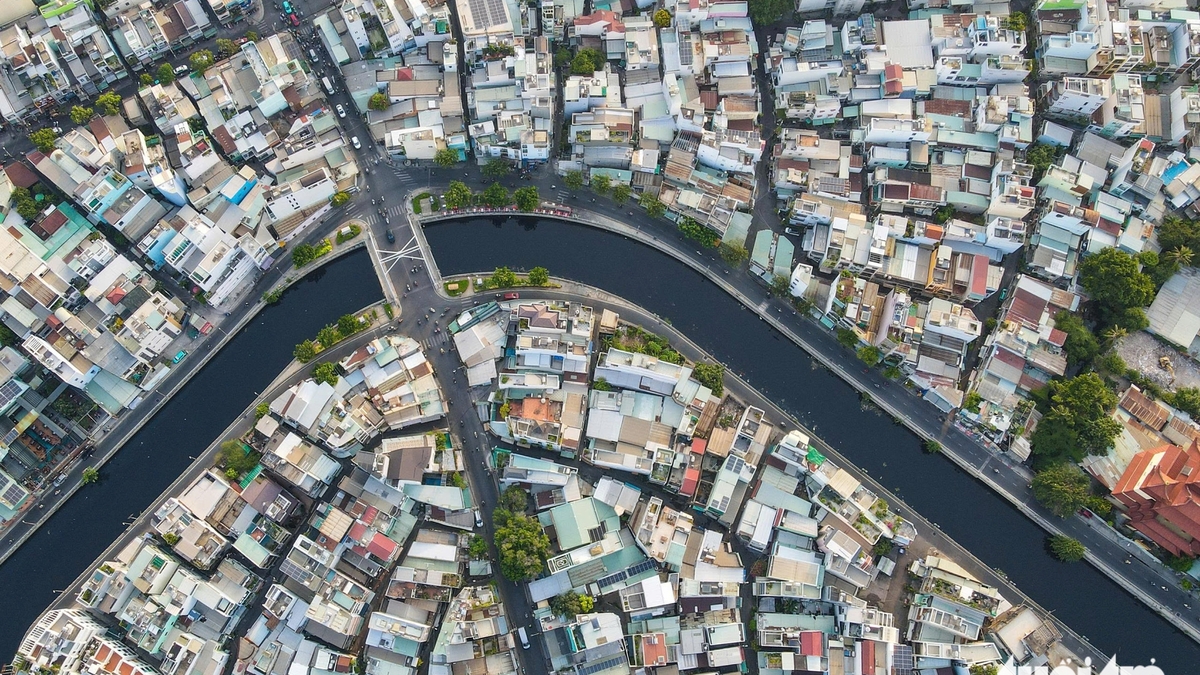
However, lenient regulations have also created opportunities for illegal land subdivision and sale to spread from the outskirts of the city to neighboring provinces. This has led to the formation of many spontaneous residential areas lacking drainage systems, common spaces, and infrastructure connections with surrounding areas.
The widespread unauthorized and illegal construction activities also stem from this. The consequences include the disruption of urban development planning, the waste of land resources, and increased real estate speculation.
According to a report by the Ho Chi Minh City Department of Construction, from June 2019 to June 2024, the city recorded 3,085 construction violations (an average of 1.7 cases per day). The main reason for this situation, according to the agency, is the high profit margin from buying and selling agricultural land and subdividing it into plots for sale. In this context, some land speculators have taken advantage of the public's housing needs, illegally converting land use and constructing houses on agricultural land for business purposes or dividing a single house into multiple smaller apartments. These individuals then conduct transactions using informal agreements, leading to complex construction activities in some suburban districts and outlying areas of Ho Chi Minh City.
It should also be added that while land subdivision and sale have positive aspects, they are often exploited by some organizations and individuals for speculative purposes. Many individuals without a genuine need for housing have taken advantage of land subdivision and sale to make quick profits, leading to large areas of land being left fallow and wasted.
Tightening regulations on land subdivision and sale may lead to a short-term decrease in land transactions and potentially drive up land prices, but it will mitigate other negative consequences. Ho Chi Minh City's ban on land subdivision and sale also aims to unify state management of housing and strengthen the responsibility of project developers, ensuring the synchronized development of technical and social infrastructure; preventing unauthorized or illegal construction by residents. The question is, can Ho Chi Minh City prevent speculators from using their own methods to circumvent the law when completely banning land subdivision and sale projects? Why does Ho Chi Minh City ban land subdivision and sale projects, but still consider allowing households and individuals to subdivide land if the land area meets the conditions? It is very possible that land subdivision and sale activities will be distorted by this policy allowing land subdivision.
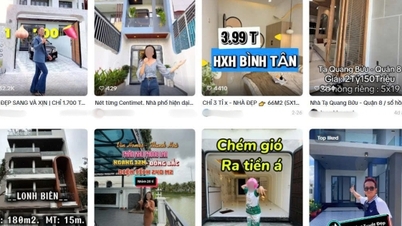
In reality, there have been instances where individuals and organizations have exploited land subdivision policies to create subdivided plots for resale. Numerous subdivided land plots have been disguised as "projects" to attract buyers. This is not to mention the situation where individuals and organizations arbitrarily build houses on agricultural and non-agricultural land, then buy and sell them, creating housing complexes with shared ownership , building permits, and house numbers. This is also one of the reasons leading to price inflation, land speculation, and potential risks for the market in recent times.
Therefore, the task of the management agency is to promptly identify and address this issue harmoniously. Otherwise, land subdivision and sale activities will become more sophisticated or distorted in a negative direction, inevitably negatively impacting the development of the real estate market as well as urban planning in the future.
Source: https://baodautu.vn/batdongsan/chan-bien-tuong-phan-lo-ban-nen-d229239.html





















































![[Photo] Hue: Admire the 2.4 trillion VND sea bridge, the longest in Central Vietnam.](https://vphoto.vietnam.vn/thumb/402x226/vietnam/resource/IMAGE/2026/05/24/1779614018347_anh-man-hinh-2026-05-24-luc-16-13-29.png)


































Comment (0)