

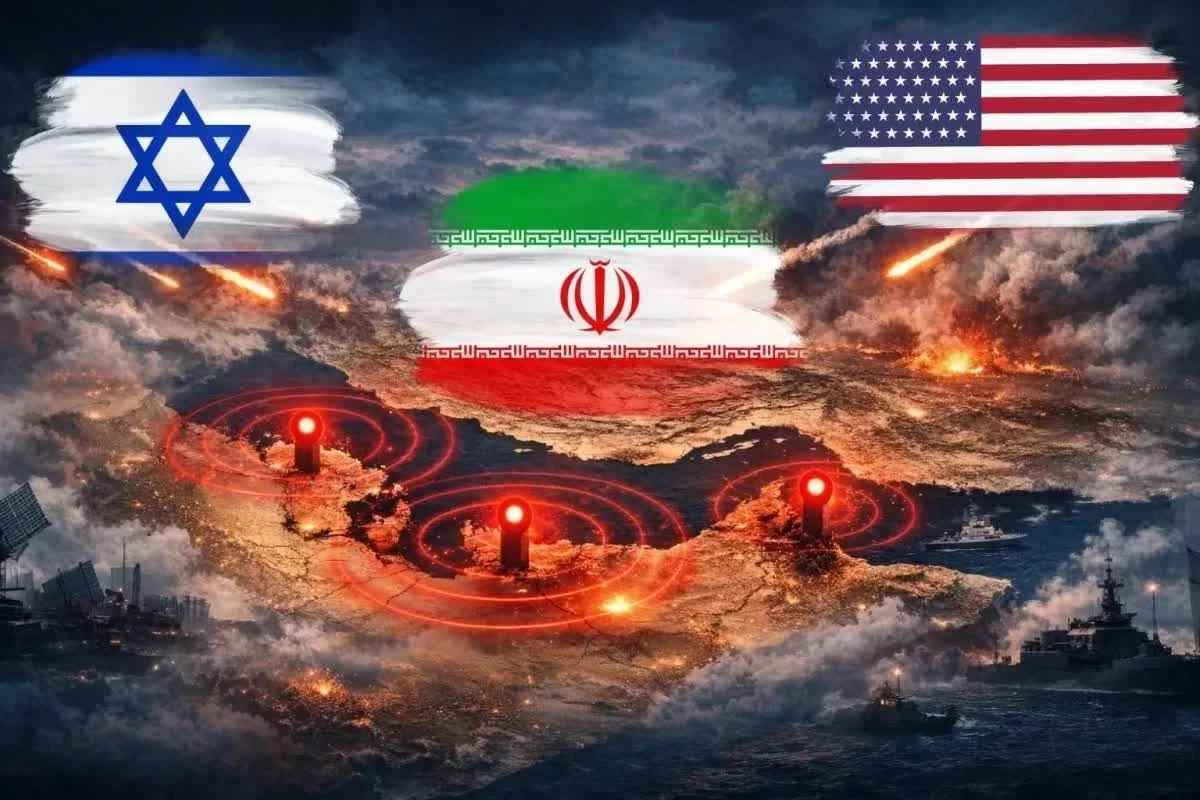
The conflict between the US, Israel, and Iran continues to escalate, devastating the Middle East and causing numerous repercussions for the world . (Source: APA)
The "vortex of rage"
In recent days, the world's attention has continued to be focused on the Middle East, as the conflict between the US and Israel and Iran continues to escalate with a series of attacks involving artillery, missiles, fighter jets, aircraft carriers, drones, etc., causing heavy casualties.
According to Iranian media on March 11, after more than 11 days, the "Operation Fury" by the US and Israel has attacked 10,000 civilian locations, causing numerous casualties. Iran's Supreme Leader Ayatollah Ali Khamenei and many high-ranking officials have been killed. In Israel, at least 13 people have died and 2,000 have been injured. Meanwhile, the Pentagon reported 8 soldiers killed and approximately 150 others injured.
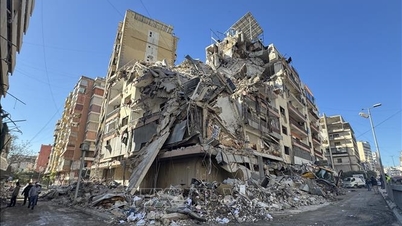
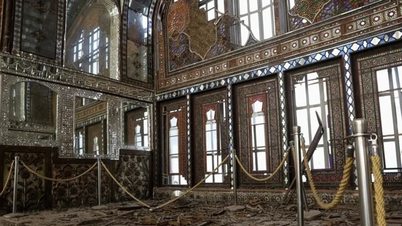
Notably, at least 486 Lebanese were killed in Israeli retaliations after Hezbollah attacked Israeli territory to show support for Iran. Casualties also occurred in Iraq, Syria, the United Arab Emirates (UAE), Saudi Arabia, Bahrain, Kuwait, and Oman after Iran attacked US bases in those countries. Many key infrastructures, from military bases to civilian buildings, were destroyed.
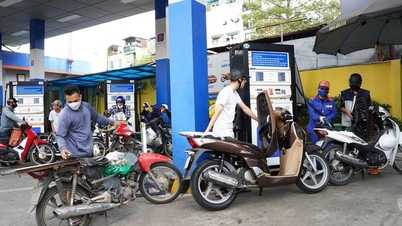
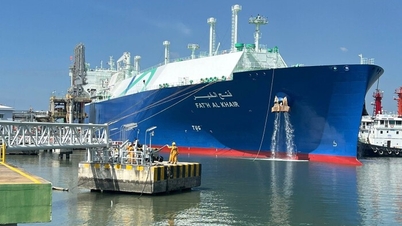
The flames of conflict have not only spread throughout the region but have also negatively impacted global growth and stability. The blockade of the Strait of Hormuz, a key route for one-fifth of global crude oil traffic, and the ensuing conflict in the Middle East, home to some of the world's leading oil-exporting nations, have led to supply shortages and a sharp rise in oil prices.
The 50% surge in crude oil prices over 11 days, surpassing $100 for the first time in four years, has severely impacted the lives of people in many parts of the world. According to Mark Zandi, chief economist at Moody's Analytics (USA), the world's Gross Domestic Product (GDP) could fall by as much as 0.4% if oil prices remain at $85-$90 per barrel in the near future. Capital Economics (UK) is even more pessimistic, predicting that the consequences of the conflict, including serious damage to oil production infrastructure and the blockade of the Strait of Hormuz, will keep oil prices in triple digits throughout 2026.
Uncompromising
The escalating conflict is having serious consequences for the Middle East and the entire world. The top priority now is to immediately end the conflict, de-escalate tensions, and find a peaceful solution. However, there are currently no signs that the parties are willing to compromise.
Recently, the US deployed B-52 strategic bombers to a military base in the UK, aiming to further increase the frequency and intensity of bombing raids on critical Iranian infrastructure. The Pentagon affirmed its determination to gain control of the Strait of Hormuz by destroying 16 Iranian mine-laying vessels.
At the same time, in the early morning of March 11, Israel launched its second large-scale attack since February 28 on Tehran and the suburbs of Beirut, Lebanon. Prior to that, on March 10, the Iranian Islamic Revolutionary Guard Corps (IRGC) attacked US bases with Khorramshahr missiles. The Israel Defense Forces (IDF) also accused the Iranian military of using cluster munitions in the previous day's attacks on Israeli territory.
Both sides also maintained a tough stance on the media front. US President Donald Trump said he was “not happy” with cleric Mojtaba Khamenei becoming Iran’s new Supreme Leader, emphasizing that “Operation Fury” was progressing beyond expectations and the conflict was “almost complete.”
However, just hours later, he threatened to attack "20 times harder" if Tehran dared to block ships from passing through the Strait of Hormuz. President Trump, however, currently maintains that he is not considering a US military landing in Iran, which could escalate the current conflict into a much more violent phase.
Meanwhile, Israeli Foreign Minister Gideon Saar affirmed that Israel and Washington would only end the conflict “at a time when we and our partners deem it appropriate.” While emphasizing that they were “not seeking a protracted war,” the diplomat still highlighted the goal of “eliminating, in the long term, the existential threat posed by Iran to the State of Israel.”
For his part, Iranian Foreign Minister Abbas Araghchi said on March 10 that, amid the current escalating conflict, his country is not considering the possibility of negotiations with the United States. He stated that in the latest round of talks on Iran's nuclear program in February, Washington said it had "no intention of attacking" Tehran, but things have clearly gone in the opposite direction. He emphasized that, given what is happening, Iran is the one determining the outcome of the conflict. Ebrahim Zulfikari, spokesman for the Hatem al-Anbiya Central Command of the IRGC, warned that if the US and Israel can tolerate oil prices exceeding $200 per barrel, "let this game continue." The IRGC also expressed its determination to fight to the end, ready for "a prolonged conflict."
However, the reality is that the longer the conflict lasts, the greater the pressure on all parties involved. Economic figures clearly demonstrate this. The US is currently spending $6 billion in the first week of the conflict and $1 billion for each day thereafter. Reuters estimates Israel will lose at least $12 billion if the conflict lasts a month. For Iran, this means loss of life, including many leaders and high-ranking officials, extensive damage to infrastructure, and strained relations with neighbors.
Ultimately, however, regardless of how the extreme test of strength and willpower in the Middle East – the "land of fire" – ends, the consequences such as violence, instability, decline, and a lack of trust will undoubtedly continue to haunt the world for years to come.
Source: https://baoquocte.vn/chao-lua-trung-dong-cho-ngay-bao-tan-368233.html
![[Photo] Trial run of the election process at polling stations in Dong Da ward (Hanoi)](https://vphoto.vietnam.vn/thumb/1200x675/vietnam/resource/IMAGE/2026/03/12/1773306146728_ndo_br_van-hanh-thu-to-bau-cu-4070-755-jpg.webp)



![[Photo] Hanoi is ready for the "National Festival"](https://vphoto.vietnam.vn/thumb/1200x675/vietnam/resource/IMAGE/2026/03/12/1773305846167_ndo_br_z7612336508628-14627dc7d18cc27532ffea5d4089713b-4105-jpg.webp)





































































Comment (0)