

Start your day with health news; you can also check out other articles such as: What harmful habits should you avoid on weekends?; Why is it so difficult to achieve a six-pack? ...
4 dietary adjustments that can help protect your kidneys.
Besides filtering waste products, the kidneys also control the levels of many substances in the blood, regulate blood pressure, and perform several other functions. When the kidneys are malfunctioning, the level of creatinine in the blood will increase.

Eating vegetables and avoiding excessive amounts of red meat will help reduce the strain on the kidneys.
In healthy individuals, creatinine levels range from 0.5 to 1.2 mg/dl. A creatinine level above 1.2 mg/dl indicates kidney failure. One of the biggest problems with kidney failure is that it has no early signs other than elevated creatinine levels in the blood.
To protect your kidneys, experts recommend the following dietary adjustments:
Avoid consuming excessive amounts of protein. Many studies show that eating too much protein can affect creatinine levels in the blood. Red meat is a high-protein food. People who eat a lot of red meat or other protein-rich foods like milk and eggs may have higher-than-average creatinine levels.
To reduce the strain on the kidneys, experts recommend switching to plant-based foods instead of consuming excessive amounts of red meat.
Eat plenty of fiber. Fiber is one of the important substances that helps the body function harmoniously. Numerous studies show that people who eat a lot of fiber have significantly lower creatinine levels in their blood. Fiber is abundant in foods such as fruits, vegetables, whole grains, and legumes. Readers can find more information on this topic on the health page dated December 2nd .
What harmful habits should you avoid on weekends?
For many working people, weekends are a much-needed time to rest. However, some activities on these days off can actually harm the body and affect long-term health.
For most people, their weekend rest time begins on Friday evening. One of the most common things people do on weekends is allow themselves to be lazy and less active.
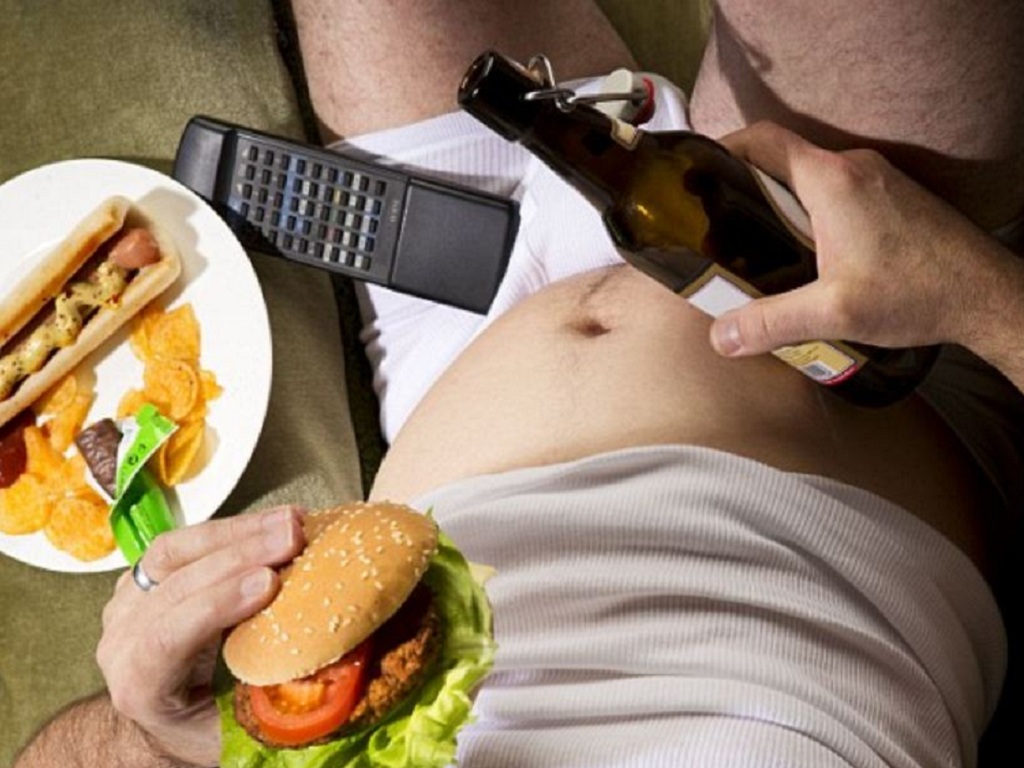
Lack of exercise and unhealthy eating habits on weekends can lead to weight gain and have long-term health consequences.
This is not good for your health. The less we exercise, the more likely we are to feel sluggish and lazy. Some people choose to play games, watch movies, or watch TV all day. They sit in a slouching, hunched position, which can easily cause aches and pains. Furthermore, prolonged sitting in this posture strains the lower back and hip muscles, and can cause blood to pool in certain areas of the body.
On the other hand, those who don't have time to exercise during the week often try to work out as much as possible to make up for it. This is also not a good option.
Many studies show that if you're busy all week, exercising on the weekend is a great option for your health. However, people should only exercise at a moderate level and avoid exercising at too high an intensity. Because you exercise less during the week, suddenly increasing your intensity can easily cause muscle soreness, overexertion, and increase the risk of injury. The rest of this article will be available on the health page on December 2nd .
Why is it so difficult to get a six-pack?
Many people who start going to the gym hope to get a six-pack. However, this is very difficult to achieve. There are many reasons why the goal of having a six-pack is hard to attain.
For men, some are born with a natural physique, so their abdominal muscles are very well-defined. However, most people don't have this natural build and need to train to achieve them. Regardless of gender, to have clearly defined abdominal muscles and thick abs, a combination of a proper diet and high-intensity training is necessary.

To get six-pack abs, you need to maintain a high-intensity diet and workout regimen.
To develop and strengthen abdominal muscles, gym workouts are essential. Like other muscle groups, abdominal muscles need stimulation through exercise to grow. Exercises create microscopic tears in the muscles. Consuming protein after workouts helps boost protein synthesis, recovery, and muscle growth. To ensure sufficient protein intake, the body needs at least 20 grams of protein per meal.
However, if you want to have well-defined abs, just doing abdominal exercises isn't enough. You also need to reduce your overall body fat to a relatively low level, burning excess belly fat and revealing muscle mass. To lose fat, your body needs a calorie deficit through dieting and training other muscle groups. This process takes at least several weeks to several months. Start your day with health news to read more about this article!
Source link
![[Photo] General Secretary and President To Lam presides over the meeting to approve the draft report on the results of the second inspection by the Politburo of the Standing Committee of the Hanoi City Party Committee.](https://vphoto.vietnam.vn/thumb/1200x675/vietnam/resource/IMAGE/2026/05/26/1779789811432_a2-bnd-4430-9620-jpg.webp)
































































































Comment (0)