

This was a notable statement regarding the practice of saving and combating waste during the discussion session on the afternoon of April 20th, within the framework of the first session of the 16th National Assembly .
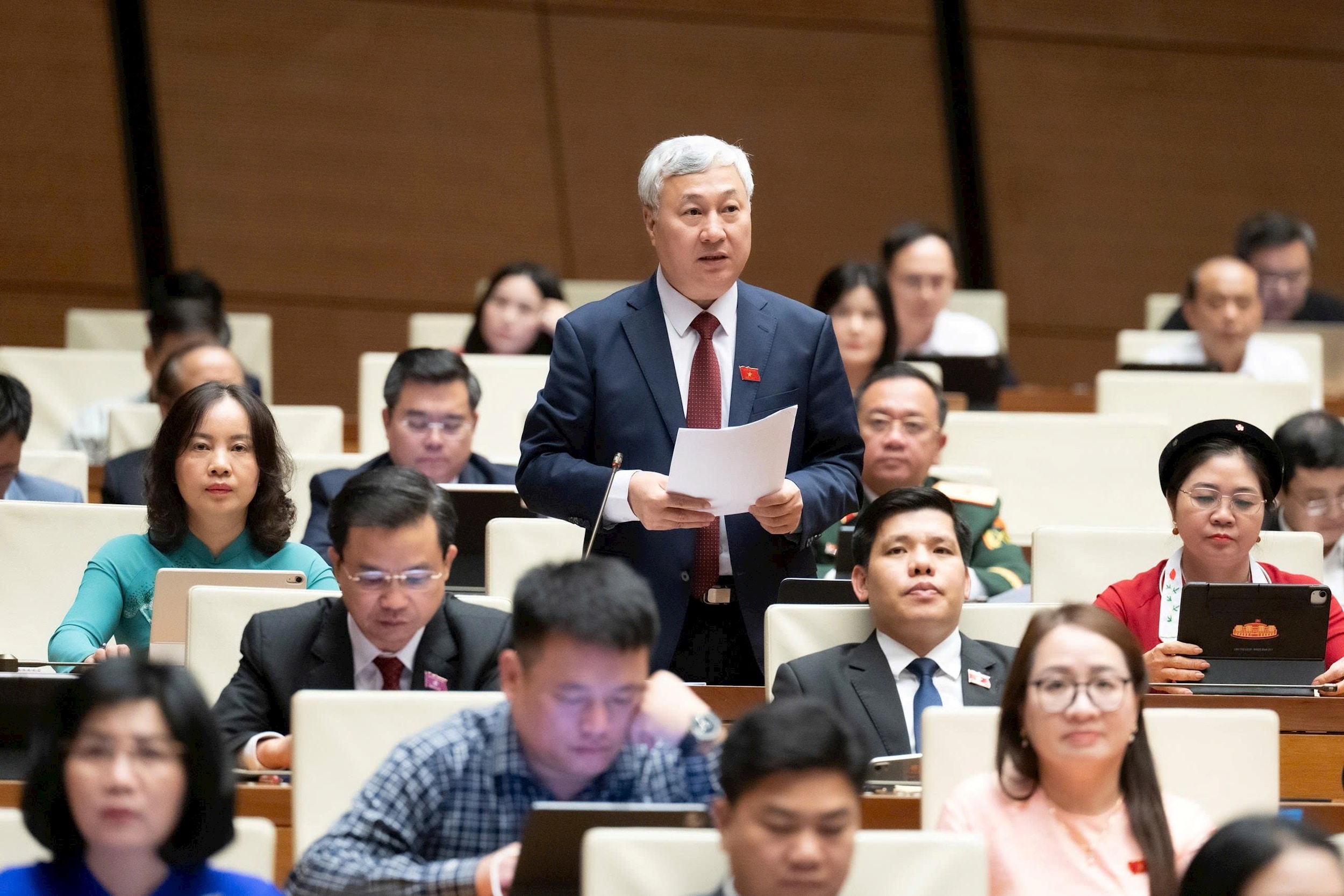
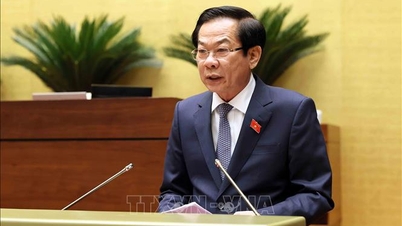
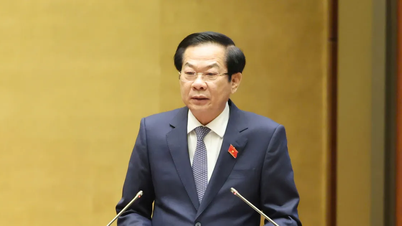
Delegate Tran Van Lam (Bac Ninh delegation) argued that the policy of cutting recurrent expenditures to increase investment expenditures within a reasonable range could yield positive results. However, looking at the overall picture, he suggested careful consideration: If, after the cuts, operations remain stable and management objectives are still achieved, then the accuracy of the expenditure norms and the quality of budget preparation should be questioned.
"Therefore, we must fundamentally review and refine the norms, and improve the quality of budget preparation to be truly realistic, rather than simply cutting 5% or 10% of the budget. When the budget is accurate, the failure to spend all the allocated funds is a limitation that needs to be seriously considered," the representative said.
Furthermore, if we save on recurring expenses but divert resources to inefficient projects that are slow to implement and fail to deliver on their intended purpose after investment, that would be an even greater waste.
Therefore, delegates argued that it is necessary to focus on solutions to improve investment efficiency, from selecting project portfolios to ensure spillover effects and socio-economic effectiveness, to investment preparation, project planning, budgeting, implementation, disbursement, ensuring project quality, inspection and control to prevent waste and losses, and especially effective management, operation, and exploitation after investment.
According to the delegates, implementation should not be done mechanically and rigidly through administrative orders, and must be linked to the ultimate goal of improving the efficiency of resource utilization to serve the rapid and sustainable socio-economic development of the country.
"I want to emphasize that saving money isn't about spending less, but about spending wisely and effectively; it's not about increasing revenue at all costs, but about nurturing sustainable revenue sources for the economy. Every dollar spent on the budget must be used appropriately, at the right time, and create real value for the rapid and sustainable development of the country – that's the greatest saving," said delegate Tran Van Lam.
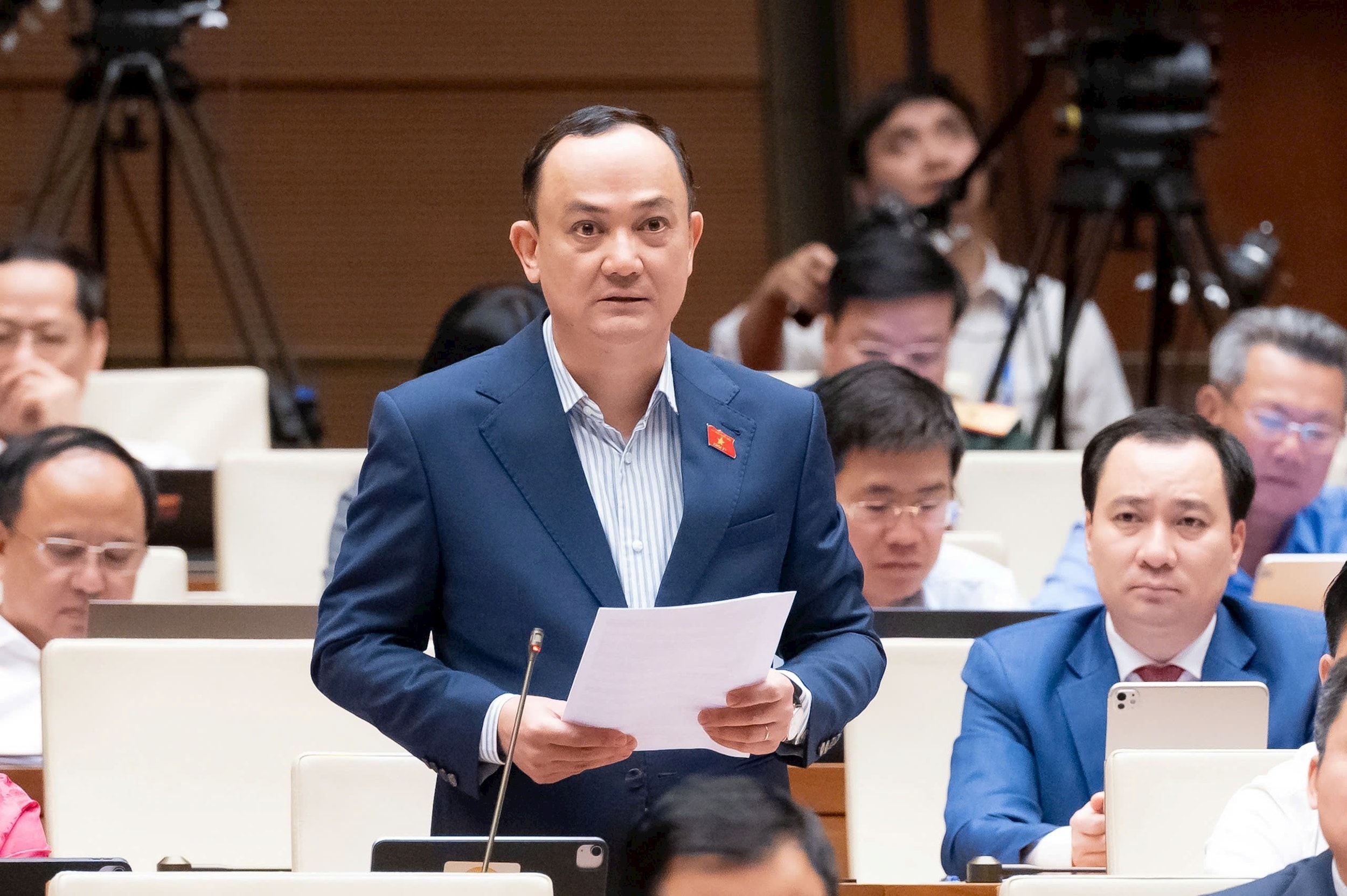
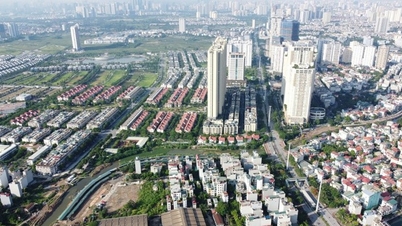
Concerned about the wasteful use of land resources, delegate Nguyen Ngoc Son (Hai Phong delegation) argued that, in practice, the major difficulties of the real estate market still lie in the planning system, investment procedures, land valuation, compensation, resettlement, and project approval time.
"I believe that when the legitimate supply remains blocked, while 'speculation,' 'planning rumors,' and land auctions continuously create artificial price effects, it is very difficult to stabilize the market. Therefore, I propose clarifying the solutions to cool down the unreasonably escalating price levels, especially how to harmonize the goal of market stability with reality," the representative said.
Given that many localities still tend to rely on revenue from land, from auctioning land use rights, the delegates proposed a thorough assessment and specific solutions for real estate projects that are entangled in cases that have been investigated and concluded by inspection agencies, have received court rulings, and have been decided by competent authorities; and projects that have been delayed in implementation, leaving them abandoned and wasted for many years.
"In my opinion, it is necessary to make information public and to have a mechanism for reviewing and classifying each project as soon as possible; projects that meet the criteria should be allowed to continue implementation with a clear timeframe; projects that lack the capacity to implement or are deliberately delaying should be resolutely revoked for re-auction, re-tendering, or re-purposed accordingly," the representative said.
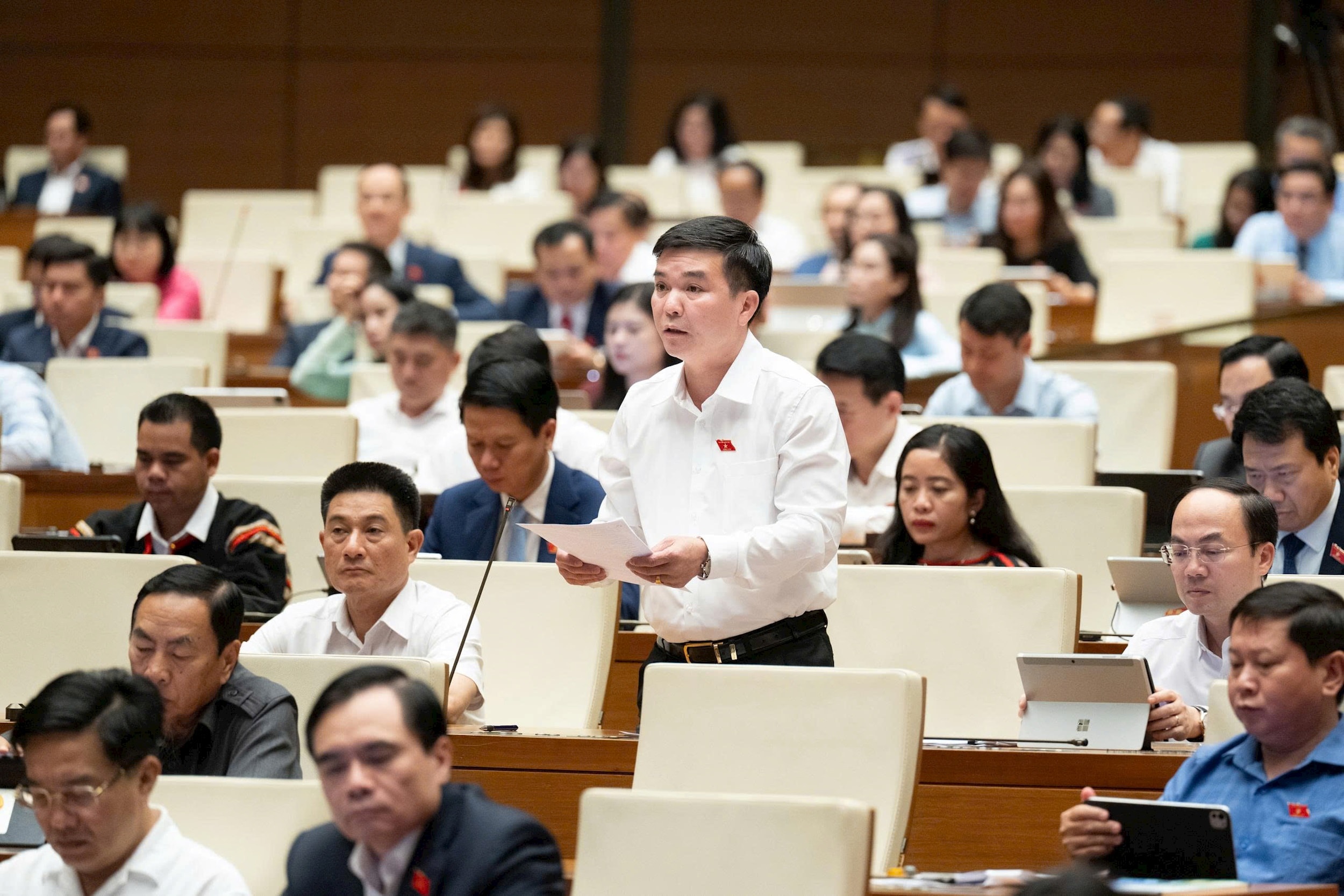
Meanwhile, delegate Ha Sy Huan (Thai Nguyen delegation) argued that, regarding the implementation of a two-tiered local government system, many communes in mountainous areas have not been truly effective in reorganizing surplus office buildings after administrative unit restructuring. "Some Party Committee, People's Council, and People's Committee offices are located in two or three different places more than 10 km apart," the delegate stated.
Therefore, the representative from Thai Nguyen province proposed that the Government establish a special mechanism to allow communes in mountainous areas to build office buildings in accordance with planning, ensuring a more efficient operation of the administrative apparatus.
Source: https://hanoimoi.vn/chi-dung-chi-hieu-qua-moi-la-tiet-kiem-746020.html


![[Image] National Assembly discusses the implementation of the socio-economic development plan.](https://vphoto.vietnam.vn/thumb/1200x675/vietnam/resource/IMAGE/2026/04/20/1776696707422_ndo_br_img-20260420-185419-jpg.webp)


![[Photo] General Secretary and President To Lam meets with National Assembly delegates from ethnic minorities.](https://vphoto.vietnam.vn/thumb/1200x675/vietnam/resource/IMAGE/2026/04/20/1776696701056_a1-bnd-8331-3342-jpg.webp)









































































Comment (0)