

Digital economy in the long-term vision
From July 2025, Ho Chi Minh City's urban area will expand, encompassing 168 wards, communes, and special zones, covering an area of over 6,770 km² and a population of over 14 million people. In this new context, the city has identified the digital economy as a core driving force, aiming for a 40% share of its GRDP by 2030.
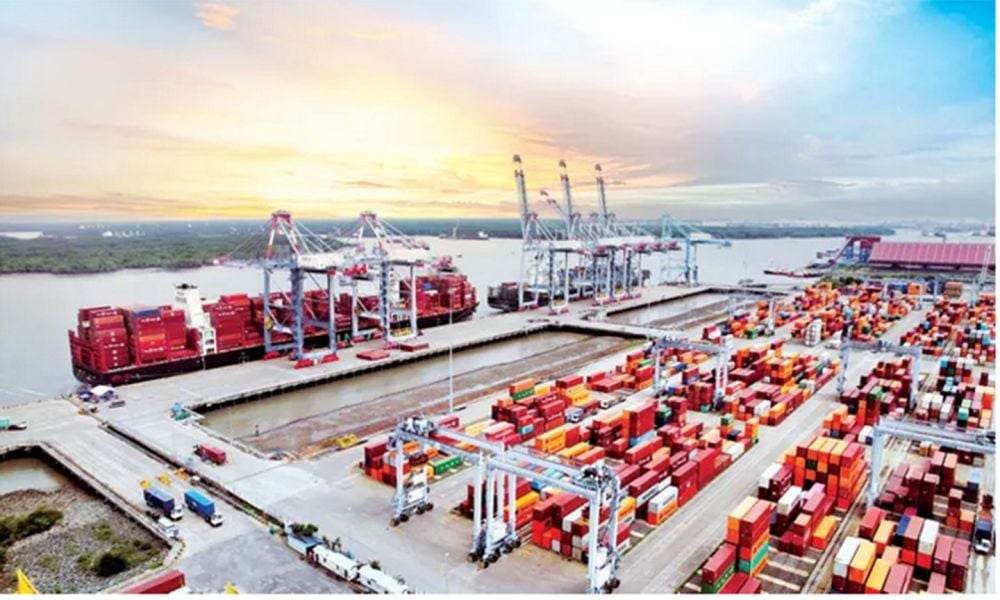
According to Dr. Tran Du Lich , this integration helps Ho Chi Minh City become the largest maritime economic center in Vietnam, leveraging advantages from oil and gas exploitation, international seaports, fisheries, island and coastal tourism, and logistics. The head of the Ho Chi Minh City Department of Science and Technology stated that the city has strategically reoriented its development space according to a multi-polar, integrated, and interconnected approach.
In this plan, Ho Chi Minh City will serve as the core urban center, an international financial and commercial hub. The former Binh Duong region will become a center for science and technology and innovation, a center for next-generation industries, with the core focus on attracting foreign direct investment (FDI). The former Ba Ria - Vung Tau region will become the economic capital of the maritime sector, a center for clean energy, heavy industry linked to seaports and coastal tourism.
Therefore, the overall vision focuses on developing a green economy, digital economy, circular economy, and sharing economy, based on science and technology and innovation. In this, the digital economy is one of the key drivers, aiming to maximize the potential of technology, innovation, and young human resources.
According to Mr. Lam Dinh Thang, Director of the Department of Science and Technology of Ho Chi Minh City: Developing the digital economy in Ho Chi Minh City is not simply a trend, but an inevitable path to maintaining its role as the leading economic engine and becoming a leading innovation center in Southeast Asia.
In the long term, Ho Chi Minh City has also set goals for 2030, with a vision for 2045: to be among the top 100 cities with the most dynamic startup and innovation ecosystems globally by 2030. The science, technology, and innovation ecosystem should include at least 5,000 innovative startups and at least 5 CoE centers (internationally accredited research centers)…
According to Associate Professor Tran Minh Tuan, Director of the Department of Digital Economy and Society (Ministry of Science and Technology), Ho Chi Minh City, after the merger, possesses significant potential, including a superior population size and GRDP. This scale will attract international investment and high-quality human resources, creating a large domestic market and strong global competitiveness. Prior to the merger, Ho Chi Minh City led the country in digital infrastructure, while the former Ba Ria - Vung Tau region had strengths in digital institutions and foundational digital infrastructure. This combination creates a solid foundation for developing inter-regional digital infrastructure, ensuring seamless, secure, and efficient connectivity for the entire region.
Ho Chi Minh City previously possessed a workforce of 4.7 million IT professionals (accounting for 55% of the country's IT workforce), Binh Duong province had 1.87 million, and Ba Ria - Vung Tau province had over 575,000. This merger will expand the scale of the digital workforce, creating conditions for developing a high-quality workforce for high-tech industries and digital transformation across the region.
However, alongside the potential and opportunities, there are also challenges. For example, meeting the demand for human resources in high-tech industries, especially AI, semiconductors, and information security, remains a major challenge.
Infrastructure breakthroughs and human resource development.
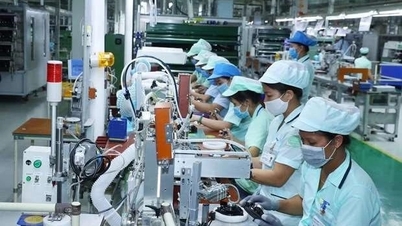
According to Dr. Thai Kim Phung (Ho Chi Minh City University of Economics), digital human resources play a leading role in the development of the digital economy, demonstrated through several aspects such as boosting labor productivity through automation, optimizing processes, and operational management. In addition, this workforce will support the creation of new business models such as e-commerce, platform economy, digital finance, and educational technology. These are also directions related to the spread of the digital economy, aiming to increase the contribution of the digital economy to the GRDP as Ho Chi Minh City is currently pursuing.
In this context, developing a digital workforce requires a synchronized approach. Firstly, it's necessary to review and consolidate policies, standardize training targets, labor databases, skill standards, and output standards. Secondly, it's crucial to promote short-term training and digital skills development for the existing workforce through collaboration with universities, colleges, research institutes, and online training platforms in the fields of AI, Big Data, Blockchain, semiconductors, cybersecurity, and emerging technologies. Thirdly, it's essential to develop a digital workforce map and a supply-demand forecasting system by industry/sector, develop an open data platform, integrate data from multiple agencies, and apply AI in forecasting skill trends.
In the long term, an integrated digital skills education and training ecosystem should be formed based on an open model, including regional innovation and digital skills centers located in Ho Chi Minh City and its satellite cities (Thu Dau Mot, Vung Tau), acting as training, research, and practice hubs. Policies should be implemented to attract and retain digital talent both domestically and internationally, such as high-tech work visas, tax incentives, housing support, a creative work environment, and a network of overseas Vietnamese experts in the digital field.
Currently, Ho Chi Minh City's digital economy growth rate is 5-10% higher than the national average; the city continues to strive for the digital economy to account for 40% of its GRDP by 2030.
The year 2025 saw many positive signs, such as SAP Group (Germany) investing €150 million over five years in its R&D center in Ho Chi Minh City, demonstrating Ho Chi Minh City's determination to improve its investment environment and attract high-quality human resources. However, to attract more "big players," the issue of human resource development and talent retention must continue to be a priority. |
Source: sggp.org.vn
Source: https://baodongthap.vn/chia-khoa-tang-truong-moi-a237117.html
![[Image] Me So Bridge - an important connecting point on the Ring Road 4](https://vphoto.vietnam.vn/thumb/1200x675/vietnam/resource/IMAGE/2026/03/06/1772781627165_ndo_br_dji-0917-jpg.webp)


![[Photo] Prime Minister Pham Minh Chinh meets with representatives of female leaders and managers of central agencies and presents the Kovalevskaia Award 2025.](https://vphoto.vietnam.vn/thumb/1200x675/vietnam/resource/IMAGE/2026/03/06/1772789429283_ndo_br_dsc-1149-jpg.webp)

![[Photo] People in Ho Chi Minh City experience the green space at Ly Thai To Park No. 1.](https://vphoto.vietnam.vn/thumb/1200x675/vietnam/resource/IMAGE/2026/03/06/1772783731988_01-9003-png.webp)












































































Comment (0)