

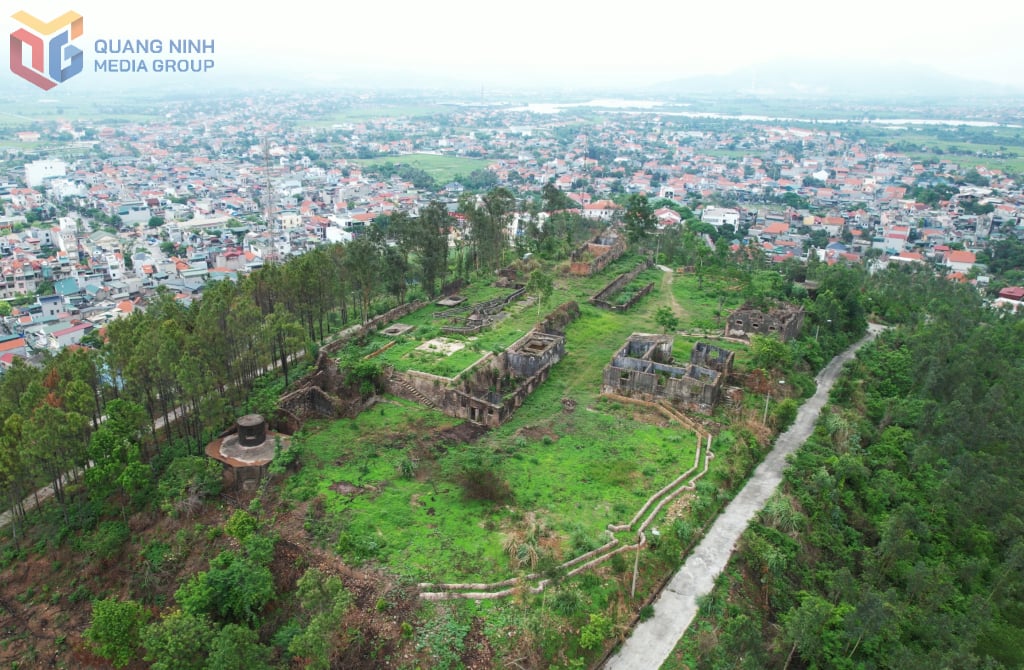
Cao Dong Trieu Fort, Duc Chinh Ward, Dong Trieu City, is one of the landmarks associated with the formation and establishment of the Tran Hung Dao War Zone - the Dong Trieu War Zone during the pre-August 1945 Revolution in Quang Ninh .
Former Fourth War Zone
In April 1945, as Nazi Germany and Japan were on the verge of collapse, the Second World War entered its final stage. Seizing the opportunity, the Party launched a powerful anti-Japanese national salvation movement, sparking a vibrant revolutionary movement throughout the country. In the northeastern coastal region, the frontier of the Fatherland, the mass struggle movement developed strongly, especially in the Dong Trieu and Chi Linh areas. Here, the Viet Minh organization, national salvation groups, and armed self-defense units were continuously established, spreading to Hai Phong, Kien An, Uong Bi, Cua Ong, etc., contributing to the disintegration of parts of the puppet government and creating a high revolutionary momentum.
In April 1945, the Northern Revolutionary Military Conference, convened by the Central Committee in Hiep Hoa ( Bac Giang ), decided to establish seven military zones throughout the country. Bac Ma Pagoda served as a base where comrades Tran Cung, Hai Thanh, and Nguyen Binh met to plan the establishment of the Fourth Military Zone; simultaneously, they directed the building of forces and prepared the conditions for launching an uprising. The decision to establish the military zones at this time was considered an extremely wise and timely move.
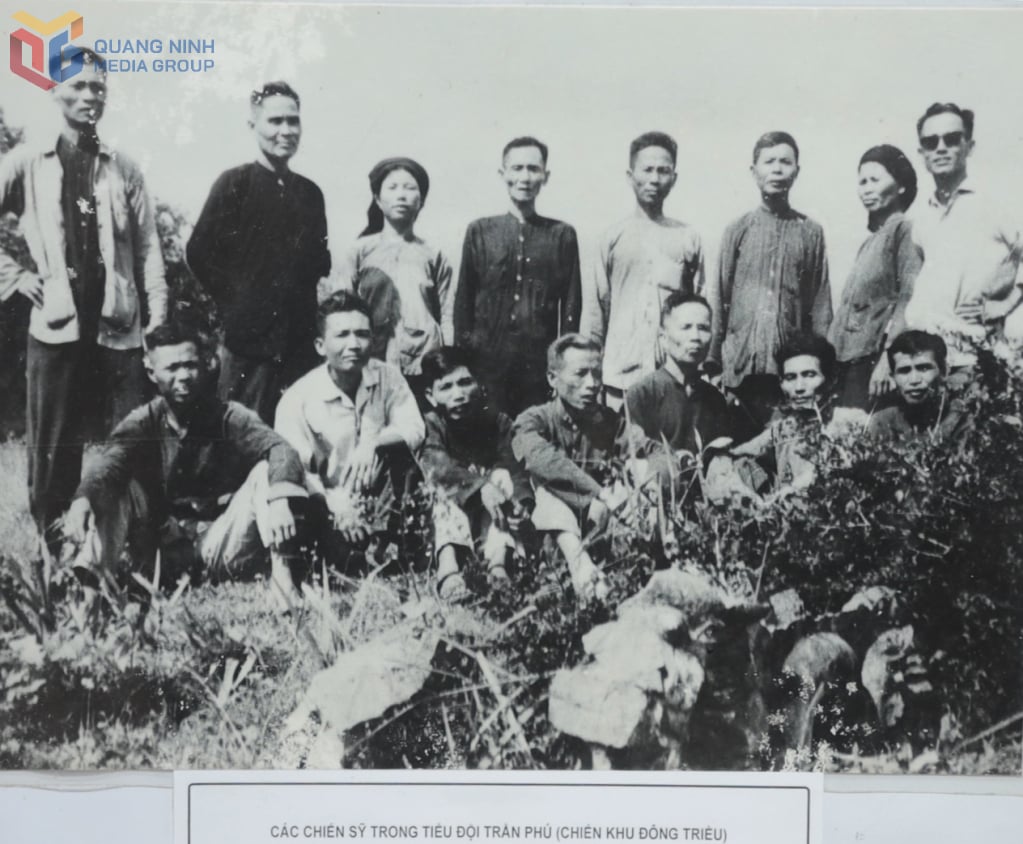
Soldiers of the Tran Phu squad (Dong Trieu War Zone). Archival photo.
Mr. Nguyen Quang Nha, former Secretary of the Dong Trieu District Party Committee (now Dong Trieu City), shared: "At that time, the people of Dong Trieu were forced to plant jute and pay tribute in rice, and also faced crop failures and rampant bandits. Famine spread, and many people died of starvation in numerous communes, fueling intense resentment among the people. But upon hearing news of a revolutionary organization led by the Viet Minh, the people trusted it completely and readily joined, contributing rice to feed the troops. Revolutionary cadres only needed to rally the people, and they all rose up in resistance. This strength came from their hatred of the enemy, their desire for life, and their belief in independence and freedom. The uprising not only marked a crucial turning point in the Dong Trieu revolutionary movement but also clearly demonstrated the indomitable will and burning desire for independence of the heroic people of this mining region."
On the night of June 6, 1945, the leadership of the uprising met and made a historic decision: "The subjective and objective conditions have fully converged, the revolutionary opportunity is ripe, and a general uprising must be launched." Just two days later, on June 8, 1945, under the leadership of the Tran Hung Dao War Zone, the armed forces, in coordination with the people, simultaneously attacked enemy outposts in Dong Trieu, Mao Khe, Trang Bach, and Chi Linh, dismantling the puppet regime and seizing power for the people. On the afternoon of June 8, 1945, the entire Dong Trieu region was liberated, becoming the first district in the Northeast region to regain power for the people.
Mr. Pham Van Chi, from Binh Khe commune, Dong Trieu city, one of the soldiers who directly participated in the uprising, recalled: "I am 100 years old this year, but the memory of June 8th remains vivid in my mind and will be an unforgettable memory. At that time, upon receiving the order to revolt, we immediately gathered our forces, hastily prepared weapons, mostly flintlock guns, daggers, and spears. The hatred for the enemy was intense; when the signal was given, we and the people marched to surround and capture the enemy's outpost amidst resounding shouts. Everyone was determined, 'Even if we have to fall, we will fight to regain freedom for our people.'"
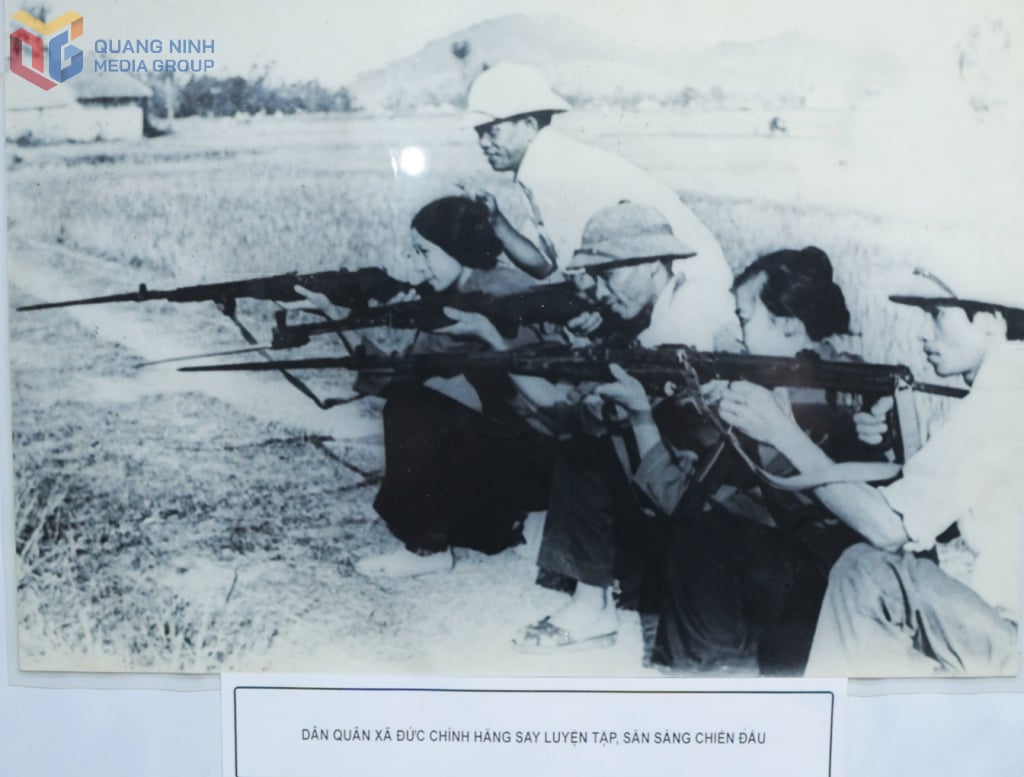
Militia members of Duc Chinh commune enthusiastically train, ready for combat. (Archival photo)
The Fourth War Zone will forever remain a glorious milestone in the history of nation-building and national defense. The experiences and lessons learned from here continue to illuminate the path of building and protecting the Fatherland today. It is a victory of the courage, intelligence, and culture of Vietnam in the Ho Chi Minh era, where the strength of the people is the foundation, and the will for independence is intertwined with the aspiration for sustainable and enduring national development. Since liberation, in the homeland of the Fourth War Zone, generations of people have always remembered and upheld the heroic revolutionary traditions of previous generations.
Mr. Tran Quang Phan, from Ho Lao village, Viet Dan commune, Dong Trieu city, said: "As a son of Dong Trieu, I am always proud of the cradle of the Fourth War Zone, passed down from my grandfather's generation, my father's generation, to ours. My grandfather sewed flags for the Fourth War Zone, my father joined the guerrilla unit, my uncle was a martyr, and my older brother also served in the army, fighting against the Americans and sacrificing his life in the South. These memories are not only a source of pride but also a motivation for our generation, as well as future generations, to continue to cultivate and protect the revolutionary tradition, working together to build a more developed, prosperous, and civilized homeland."
Embrace new opportunities.
From a war zone engulfed in flames, Dong Trieu has today risen strongly with comprehensive development. In 2015, Dong Trieu district officially became a town. Five years later, the town reached the status of a type III urban area, and by January 1, 2025, Dong Trieu will transform into a dynamic young city at the western gateway of the province with remarkable socio-economic development.
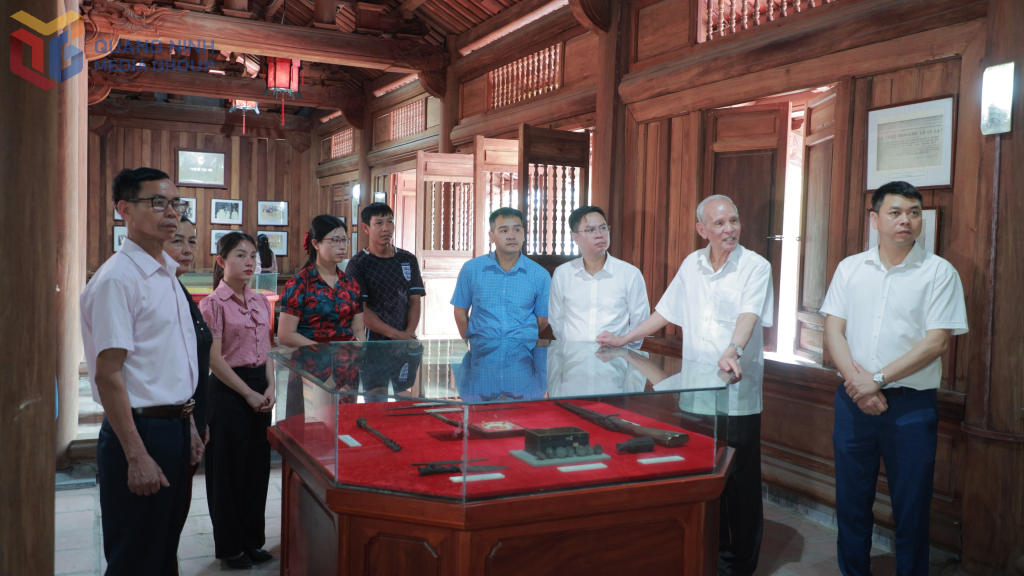
Mr. Nguyen Quang Nha, former Secretary of the Dong Trieu District Party Committee, recounts heroic historical stories to the younger generation at the Ho Lao Temple and Pagoda National Historical and Cultural Relic Site.
In particular, to stabilize the lives of its people, Dong Trieu has focused on developing modern agricultural production, applying high technology, while diversifying industries and expanding industrial and service sectors. The local government has also prioritized investing in upgrading essential infrastructure, improving living conditions, and developing social welfare policies to help people gradually increase their income and quality of life. As a result, Dong Trieu has made a significant mark by becoming the first locality in the North to successfully complete the New Rural Development program. This is vivid evidence of the positive changes resulting from sound policies, the consensus of the people, and the unwavering determination to continue developing Dong Trieu sustainably and modernly in the near future.
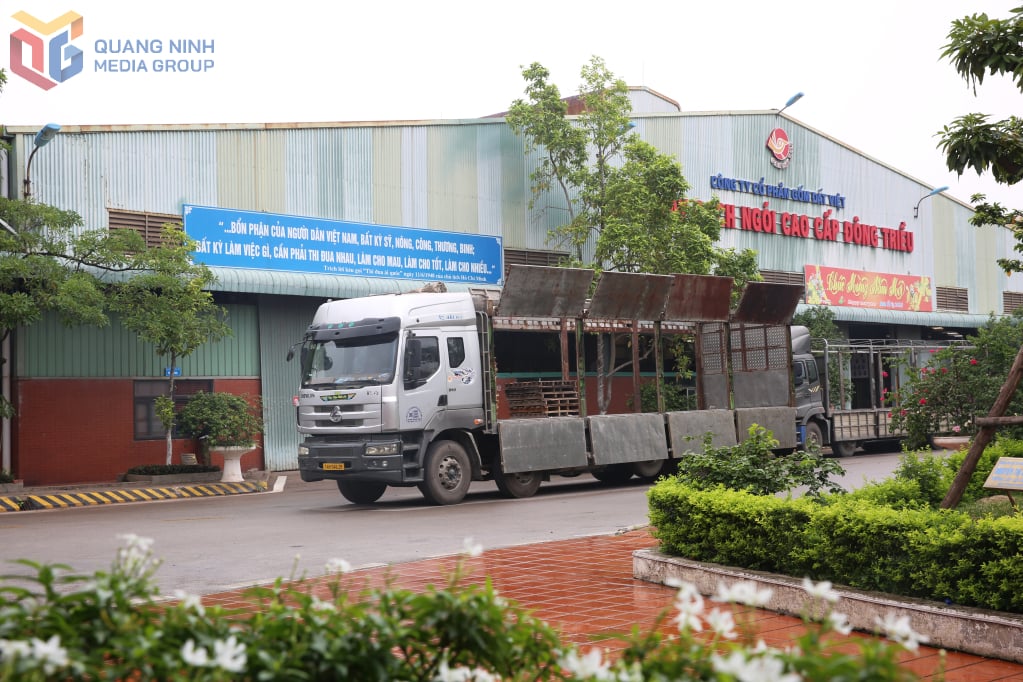
Viet Ceramic Joint Stock Company operates a stable business, making a positive contribution to the local budget, creating jobs for hundreds of workers, and promoting socio-economic development in Dong Trieu city.
Mr. Nguyen Duc Tien, Secretary of Doc Man neighborhood, Binh Khe commune, Dong Trieu city, said: "The New Rural Development program has brought about many significant developments for the people of Binh Khe in particular and Dong Trieu in general. People not only enjoy essential services such as healthcare, education, and transportation infrastructure, but their lives are also changing every day, becoming much more modern and convenient. In particular, people's incomes have increased significantly; by 2024, the average per capita income reached approximately 125 million VND/year, marking a remarkable leap forward compared to previous years."
Not only was Dong Trieu the first locality in the North to achieve the New Rural Area (NRA) status, but it also impressed with its strong growth in industries, services, tourism, and a synchronized transportation system. Its abundant natural resources, including coal, clay, and limestone, with reserves of tens of millions of tons, have also fueled the development of the mining industry, attracting hundreds of investment projects. Furthermore, it is the largest producer of ceramics, building materials, and fired clay in Quang Ninh province; its products are distributed to many provinces and cities nationwide and exported to numerous countries and territories worldwide, demonstrating its proactive economic integration in the new context.
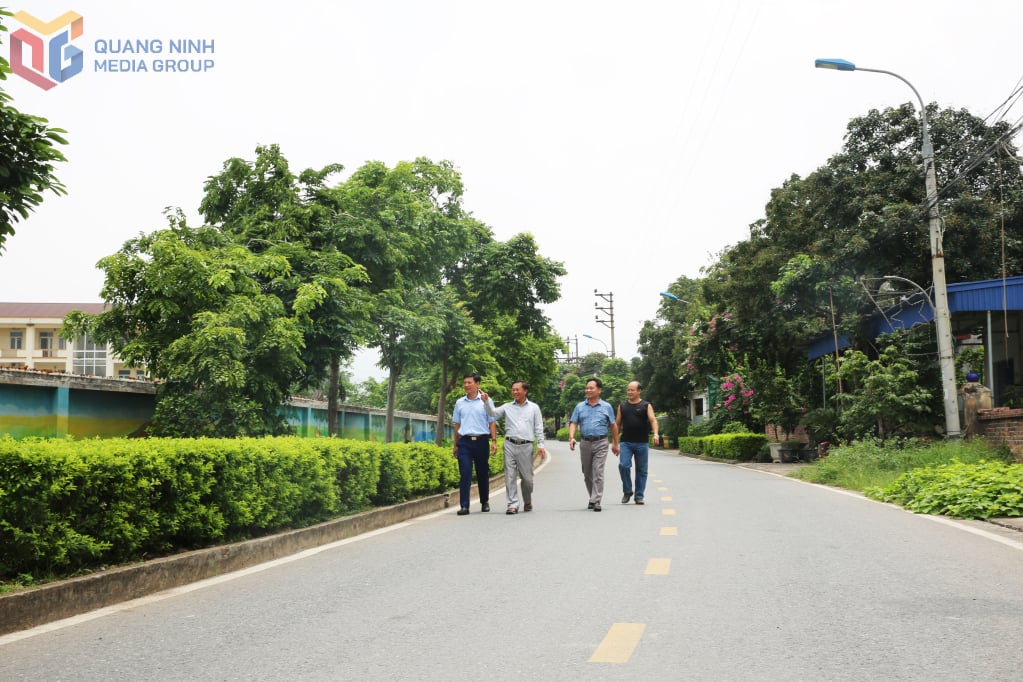
The newly constructed rural road in Doc Man hamlet, Binh Khe commune, Dong Trieu city, is clean and beautiful, showing a clear change in the appearance of the countryside, reflecting efforts to build infrastructure and an increasingly improved quality of life.
Mr. Le Quang Bach, Director of Administration at Dat Viet Ceramic Joint Stock Company, stated: "Thanks to the attention, support, and favorable conditions from the local government, our company has effectively leveraged its strengths, expanded production scale, and improved product quality. As a result, our business operations have become increasingly stable, with revenue growing steadily year after year, contributing to job creation and making a positive contribution to local economic development. In the future, along with the overall development of the locality, we will continue to invest in technological innovation, improve production capacity, expand markets, and diversify products to meet the ever-increasing demands of customers. At the same time, the company is committed to accompanying and supporting the sustainable development of the locality, contributing to building a green, clean, and efficient economy."
Dong Trieu's efforts in developing a modern and sustainable industry have been proven by concrete figures. Dong Trieu's economic growth rate has consistently been among the highest in the province. By 2024, the city's economic growth rate reached 14.2%; the economic structure has shifted positively and in the right direction, with industry and services accounting for 95.9%, and agriculture, forestry, and fisheries accounting for 4.1%. From a land rich in tradition, Dong Trieu today has transformed dramatically, becoming a vibrant young city with new constructions, modern urban areas, and comprehensively developed arterial roads…
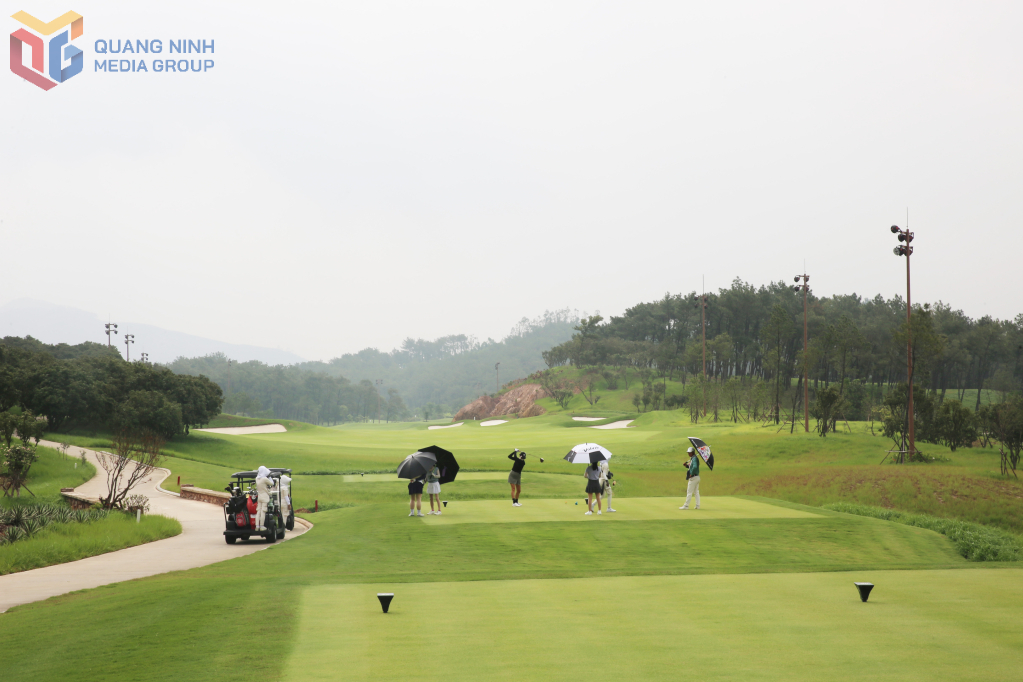
The Silk Path Dong Trieu Golf Course officially opened in January 2025, becoming a new tourism product that contributes to the development of Dong Trieu city towards high-end service and tourism, attracting domestic and international tourists.
The country is entering a new era with comprehensive changes, an unprecedented revolution. Implementing a two-tiered government model, eliminating the district level, Dong Trieu City immediately began developing a plan to reorganize its commune-level administrative units, ensuring an effective and efficient organizational structure. Accordingly, 19 commune-level administrative units were reorganized into 5 units: Dong Trieu, An Sinh, Binh Khe, Mao Khe, and Hoang Que wards, based on careful study of the natural characteristics, population, and potential of each locality.
Mr. Nguyen Van Cong, Secretary of the Dong Trieu City Party Committee, stated: Facing the new opportunities and challenges of the nation, the Party Committee, government, and people of Dong Trieu City are all ready to embrace a two-tiered government structure, close to the people, and upholding the traditions of the Fourth War Zone to join the province and the country in embarking on a new path. In the coming time, we will focus on developing high-quality human resources to meet the development requirements of Dong Trieu, in line with the new opportunities in the economic transformation process. In particular, we will continue to pay attention to preserving and promoting traditional cultural values, nurturing the revolutionary traditions of our homeland; accelerating the shift in economic structure towards modernization, attracting capable investors to boost processing and manufacturing industries, developing industrial zones, and creating more jobs for local people; and focusing on investing in the construction of synchronous infrastructure, exploiting and developing local resources from the people to promote the development of residential areas and regional linkages within the city. With strong determination, we strive to build Dong Trieu into a land rich in cultural identity, with sustainable economic development and increasingly happy lives for its people, worthy of being the western gateway of Quang Ninh province, closely connected with the key economic region of the Red River Delta.
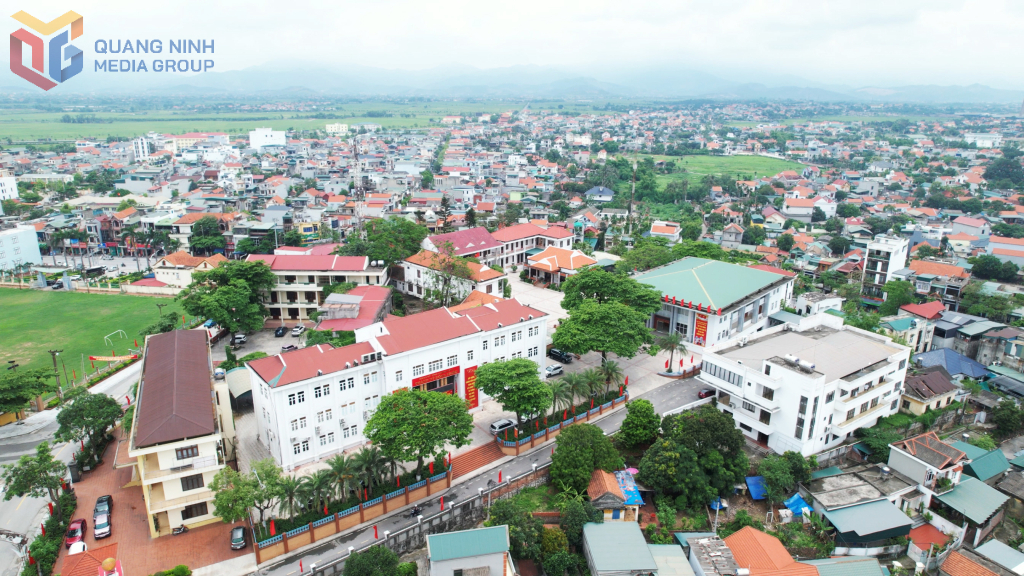
Today, Dong Trieu is transformed by many wide roads, well-maintained residential areas, and an increasingly improved standard of living for its people. The economic, cultural, educational, and healthcare sectors have all made remarkable progress, reflecting the image of a dynamic and modern city while still preserving the traditional identity of a land rich in revolutionary and cultural traditions.
The Fourth Eastern Triều War Zone is not only a place associated with revolutionary history, but also a symbol of the indomitable will and unwavering patriotism of the people of the Northeast region. Through the ups and downs of history, Đông Triều has maintained its heroic character and is strongly developing in the era of renewal. Preserving and promoting the value of revolutionary heritage in conjunction with socio-economic development is how Đông Triều today affirms its resilience and aspirations for development; at the same time, it is a way to pay tribute to the generations of ancestors who fell for the independence, freedom, and happiness of the Fatherland.
Minh Duc
Source: https://baoquangninh.vn/dong-trieu-chien-khu-anh-hung-and-khat-vong-vuon-minh-doi-thay-3361528.html
![[Photo] Prime Minister Pham Minh Chinh presides over a meeting on private sector economic development.](/_next/image?url=https%3A%2F%2Fvphoto.vietnam.vn%2Fthumb%2F1200x675%2Fvietnam%2Fresource%2FIMAGE%2F2025%2F12%2F20%2F1766237501876_thiet-ke-chua-co-ten-40-png.webp&w=3840&q=75)

![[Photo] Prime Minister Pham Minh Chinh presides over the conference announcing the establishment of the International Finance Centre in Vietnam.](/_next/image?url=https%3A%2F%2Fvphoto.vietnam.vn%2Fthumb%2F1200x675%2Fvietnam%2Fresource%2FIMAGE%2F2025%2F12%2F21%2F1766309817714_ndo_br_dsc-3400-jpg.webp&w=3840&q=75)



























































Comment (0)