

The Pope spent 12 days visiting Papua New Guinea, Timor Leste, Indonesia, and Singapore. These destinations are geographically far from the Vatican, which is considered a periphery of the Vatican. Therefore, the media interpreted the purpose of Pope Francis's trip as implementing the "pivot to the Asia- Pacific " policy.
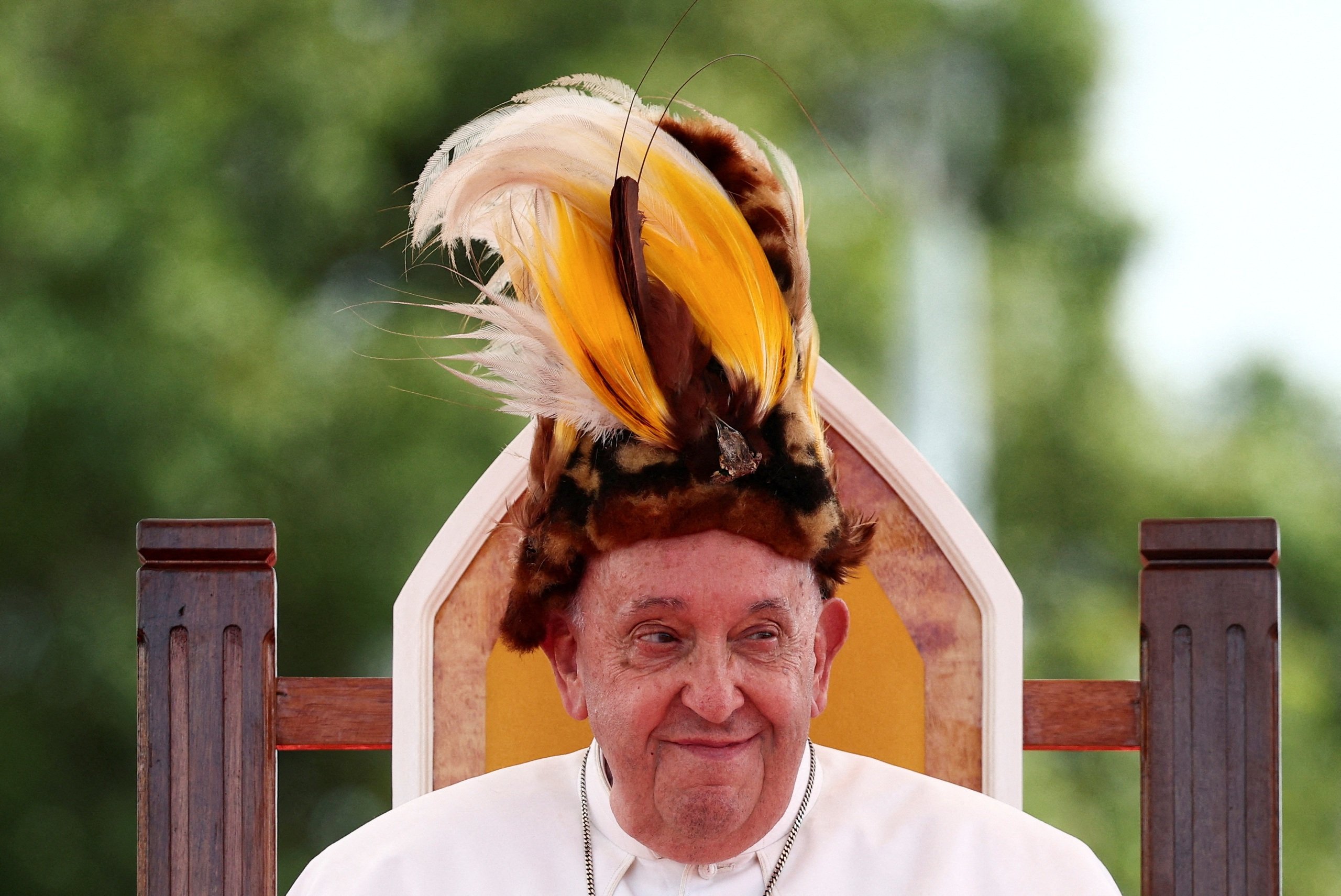
Pope Francis during his visit to Papua New Guinea.
Papua New Guinea and Timor Leste are both small countries. Indonesia has the largest Muslim population in the world . Singapore is a "city-state." Nevertheless, together, these factors highlight the significance of Pope Francis's trip: extending the reach of the Christian Church and the influence of the Holy See to these far-flung regions.
Turning toward the peripheries is one of Pope Francis's strategic directions for "globalizing" the Christian Church, enhancing its status and strengthening and expanding its influence in the modern world. Pope Francis sees the future of the Christian Church and the influence of the Vatican in this globalization direction, not only by encouraging people around the world to turn toward the Vatican in Rome, but also by building and strengthening the Vatican's direct presence in the peripheries.
At the same time, Pope Francis also advocates for building and strengthening the Vatican's global political role, expressing his views and attitudes on current world issues such as the wars in Ukraine and the Gaza Strip, combating climate change, and the US presidential election. This is also a way for the Pope to complete his own political and religious legacy.
Source: https://thanhnien.vn/chien-luoc-khoi-xa-cua-vatican-185240916221426779.htm








































































Comment (0)