


Mr. Duong Minh Thuan recounted the memory of General Secretary Truong Chinh visiting his family.
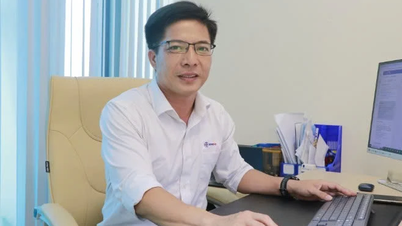
Through an introduction from a local official, we found our way to the small house of Mr. Nong Van Bang, residing in Vinh Thuan village, Bac Son commune. Mr. Bang is the youngest son of Mr. Nong Van Do, who once held the position of Acting Secretary of the Northern Regional Party Committee. Slowly recounting the past, Mr. Bang said that his father passed away when he was only three years old. Therefore, throughout the following years, his image and stories about his father were mainly perceived through his mother's accounts.
According to Mr. Bang's account, Mr. Do was born in 1905 and began participating in the revolution in 1926. After a period of activity, from 1935 to 1944, he was arrested and imprisoned by the French colonialists, enduring harsh conditions in many prisons. It was in these dark prisons that the will of the revolutionary fighter was forged, fostering his unwavering character and indomitable spirit. In 1944, he escaped from prison, traversing forests and streams to reach the guerrilla base in Dinh Ca, Vo Nhai ( Thai Nguyen ), continuing his chosen path.
In early 1945, he joined the armed forces, serving as the Political Commissar of the 3rd National Salvation Army Platoon. From there, he directly led and participated in uprisings to seize power in many key locations such as Vo Nhai (Thai Nguyen), Bac Son, Binh Gia, and Bang Mac (Lang Son), contributing to the overall victory of the burgeoning revolutionary movement.
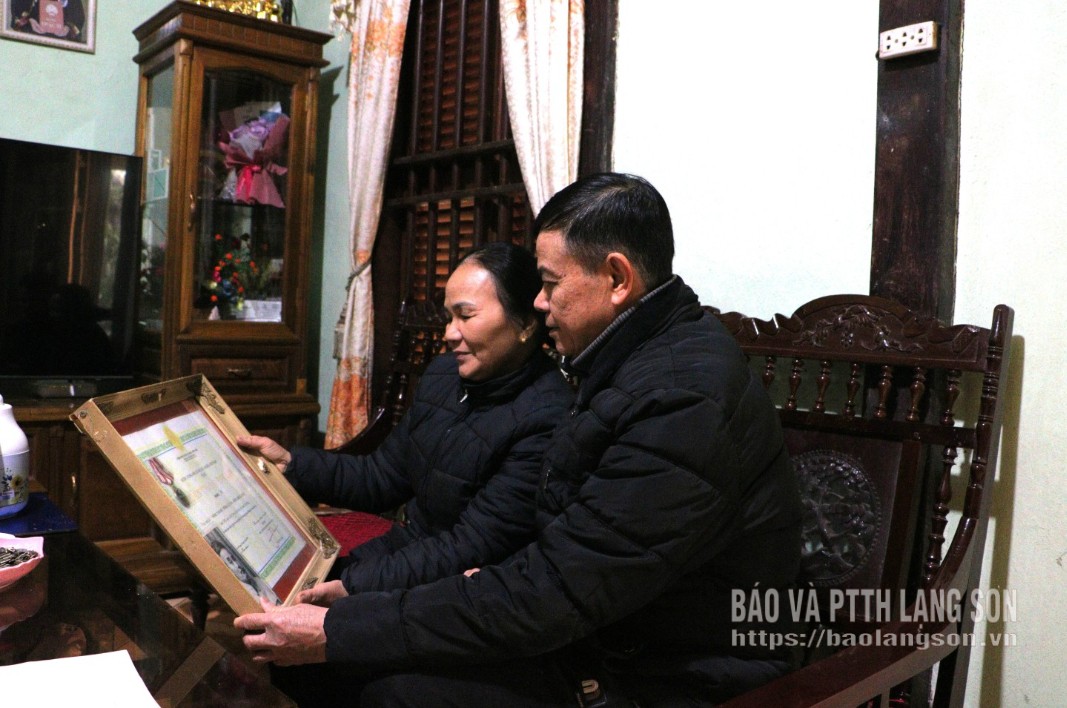
The family of Mr. Nong Van Bang always cherishes and preserves the prestigious awards bestowed upon their father by the Party and the State.
Mr. Bang shared: "From 1954 to 1960, my father continued to dedicate himself and held many important positions in the locality, such as Chairman of the Farmers' Association of Bac Son District, Chairman of the Vietnam Fatherland Front Committee of the district... He was always devoted to his work, close to the people, and wholeheartedly committed to the cause of building and developing the homeland after the war. For these great sacrifices and contributions, he was awarded the Certificate of Merit for his service to the nation, the Victory Medal, the Second Class Independence Medal, and the Ho Chi Minh Medal by the Party and the State."
Leaving Mr. Bang's small house, we continued our search to Hoang Van Thu village – where Mr. Duong Minh Thuan's family lives. Mr. Thuan is the son of Mr. Duong Van Long (alias Nam Tien) – a veteran revolutionary cadre of the former Bac Son district. Throughout the conversation, Mr. Thuan slowly recounted each story and memory associated with his father's revolutionary life. For him, the stories passed down were not just memories heard, but like a film reel etched in his mind.
From the 1940s onwards, Mr. Nam Tien's family became a key contact and travel point for Party leaders and revolutionary cadres. On one occasion, the family provided food, lodging, and security for dozens of people for several days while a delegation attended the 8th Central Committee Conference in Pac Bo (Cao Bang). Due to his familiarity with the terrain and his agility, Mr. Nam Tien was often assigned the task of guiding Central Committee members through the deep forests to attend meetings.
When the enemy tracked them down, the captured family members steadfastly kept their identities secret, enduring all torture and threats from the enemy to protect the cadres. This unwavering loyalty contributed to preserving the forces and maintaining the vital communication lines of the revolution during extremely difficult times. Therefore, Mr. Nam Tien's family became one of the most reliable revolutionary bases, a solid support for the struggle during those arduous years. The kindness and protection the family provided to the revolution were remembered by Party leaders even after their death. On one occasion, General Secretary Truong Chinh visited the family, and other comrades also frequently visited and encouraged them.
Besides Mr. Do and Mr. Nam Tien, the former Bac Son district had over 150 veteran revolutionary cadres. They were a solid foundation for the revolutionary movement at the grassroots level, serving as a bridge between the Party and the people. Through their prestige, loyalty, and sacrifice, these veteran cadres built trust among the people, transforming every home and every village into a fortress protecting the revolution.
When peace was restored, many of them returned to ordinary life, continuing to work and produce, making many contributions to their homeland. These people, regardless of the period in history, always maintained the spirit of revolutionaries, steadfast in battle, simple in daily life, and dedicated to building their homeland. They not only contributed to the glorious history of heroic Bac Son but also serve as shining examples for present and future generations to learn from and emulate.
Today, amidst the hustle and bustle of modern life, stories of veteran revolutionary cadres are still preserved and recounted by their descendants as vivid lessons about patriotism, self-sacrifice, and responsibility towards their homeland. This is not only an expression of gratitude to the past, but also a reminder to the present and future that every step forward today has been achieved through the sweat, tears, and even blood of those who silently went before. The revolutionary spirit continues to be preserved and spread, becoming a tremendous source of spiritual strength for the cause of building and developing the homeland today.
Source: https://baolangson.vn/diem-tua-cua-cach-mang-5074991.html






















































Comment (0)