4,860 days of exploring the Earth's interior.
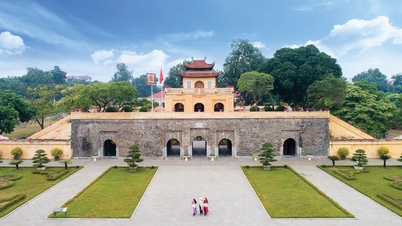
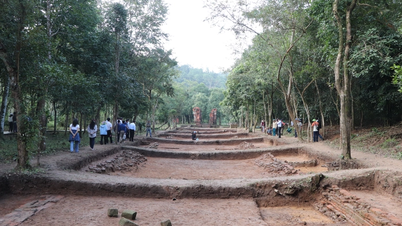
Underground archaeological discoveries at 18 Hoang Dieu and the area where the National Assembly building was constructed revealed a complex of 53 architectural foundation remains, 7 wall foundations, and 6 wells. This discovery provides concrete evidence of the existence of the magnificent Thang Long capital under the Ly dynasty and is considered the most important archaeological find in Vietnam. Thanks to this, the Thang Long Imperial Citadel was inscribed by UNESCO as a World Heritage Site in October 2010.
|
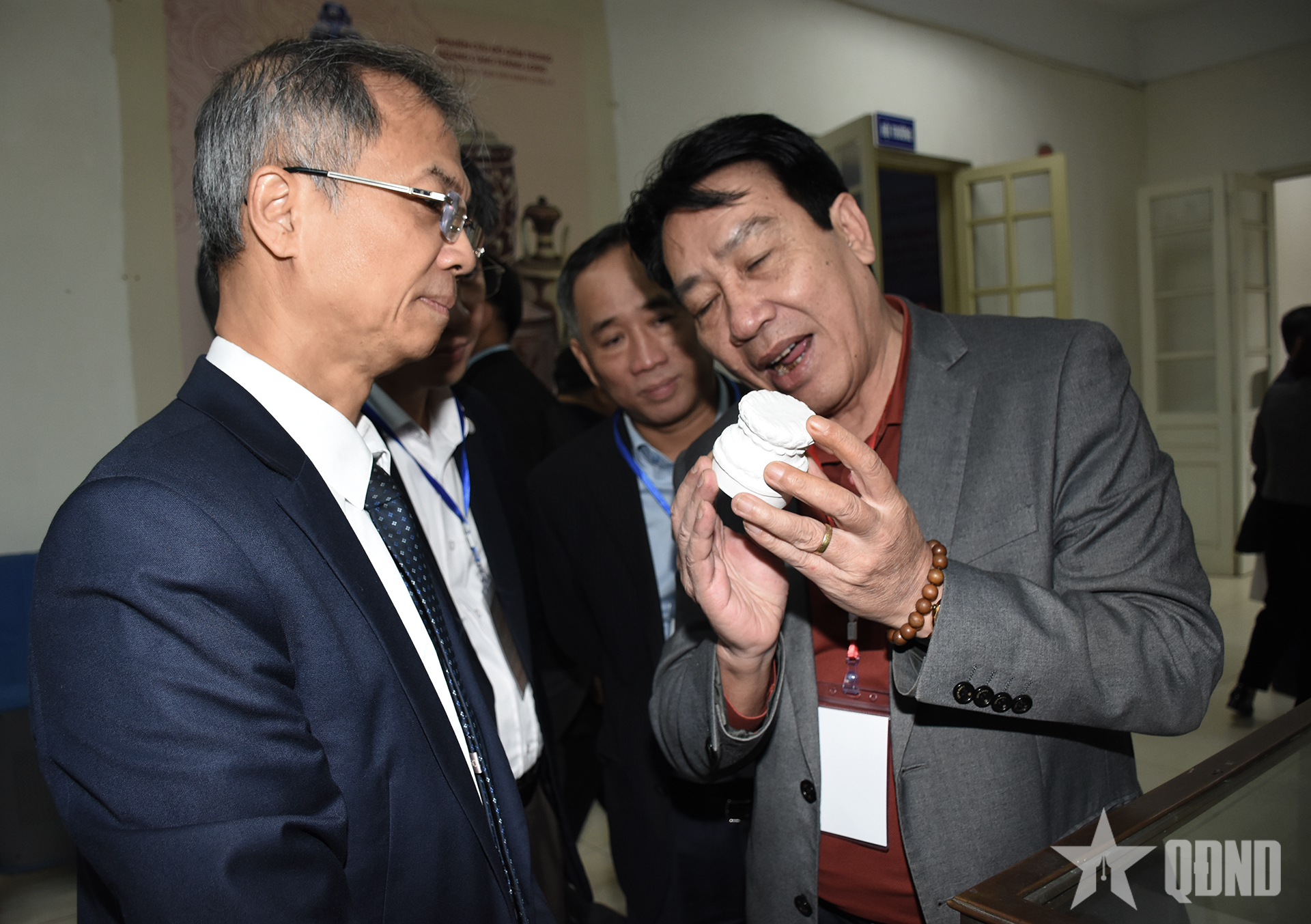
Archaeologists present artifacts unearthed at the Thang Long Imperial Citadel historical site. |
Since then, although archaeology has convincingly proven that the foundation remains of the Ly Dynasty palaces were wooden structures with elaborate and magnificent tiled roofs, rarely found elsewhere, the overall form of the Ly Dynasty palace architecture remains a mystery. The architectural works of the Ly Dynasty have been lost, making reconstruction extremely difficult.
Through years of diligent, persistent, and quiet research, and based on four sources of information: archaeology, architectural models, inscribed documents, and comparative studies with ancient palaces in China, Japan, and Korea, the Institute of Imperial City Studies (now the Institute of Archaeology, Vietnam Academy of Social Sciences ) has gradually deciphered the architectural forms of Vietnamese palaces during the Ly Dynasty. A crucial discovery, and the golden key to successfully deciphering the architectural forms of Ly Dynasty palaces, is the use of bracketed roofs – an extremely complex technique for supporting and decorating roofs, demonstrating the masterful construction skills of our ancestors.
According to Associate Professor Dr. Dao Tuan Thanh from Hanoi Pedagogical University: “The excavation of the Thang Long Imperial Citadel is considered the largest in the history of Vietnamese archaeology. The results of this excavation have uncovered a large complex of Thang Long - Hanoi relics with many types of architectural relics layered on top of each other over 1,300 years, from the An Nam Protectorate to the Ly, Tran, and Le dynasties, reflecting the long and unique history of Thang Long - Hanoi, typical of the nation's history of nation-building and defense. This is also the first time a system of artifacts of such large quantity, approximately several million archaeological artifacts, has been found, including pottery, architectural materials, metal objects, animal remains, burial remains, etc., vividly reflecting many aspects of the cultural and social life of the Thang Long Imperial Palace through various historical periods.”
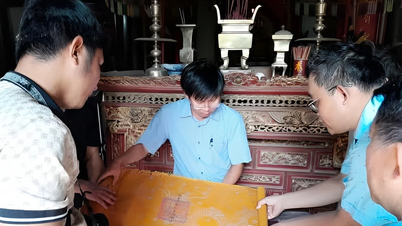
When the first excavation pits opened at 18 Hoang Dieu Street, archaeologists were presented with tens of thousands of artifacts, layer upon layer, bearing traces of the Ly, Tran, and Early Le dynasties. Hidden beneath each layer of sediment was a part of the history of the ancient capital, but all existed only in fragmented, incomplete, and disjointed pieces. Scientists reread history from broken roof tiles, decorative moldings, and intricate carvings so small that they could only be seen clearly under a magnifying glass. Beyond deciphering the palace architecture, archaeologists successfully deciphered the life of the ancient royal court, revealed through various types of pottery and earthenware, from royal utensils to ceremonial objects and decorations, reflecting a relatively prosperous life.
|
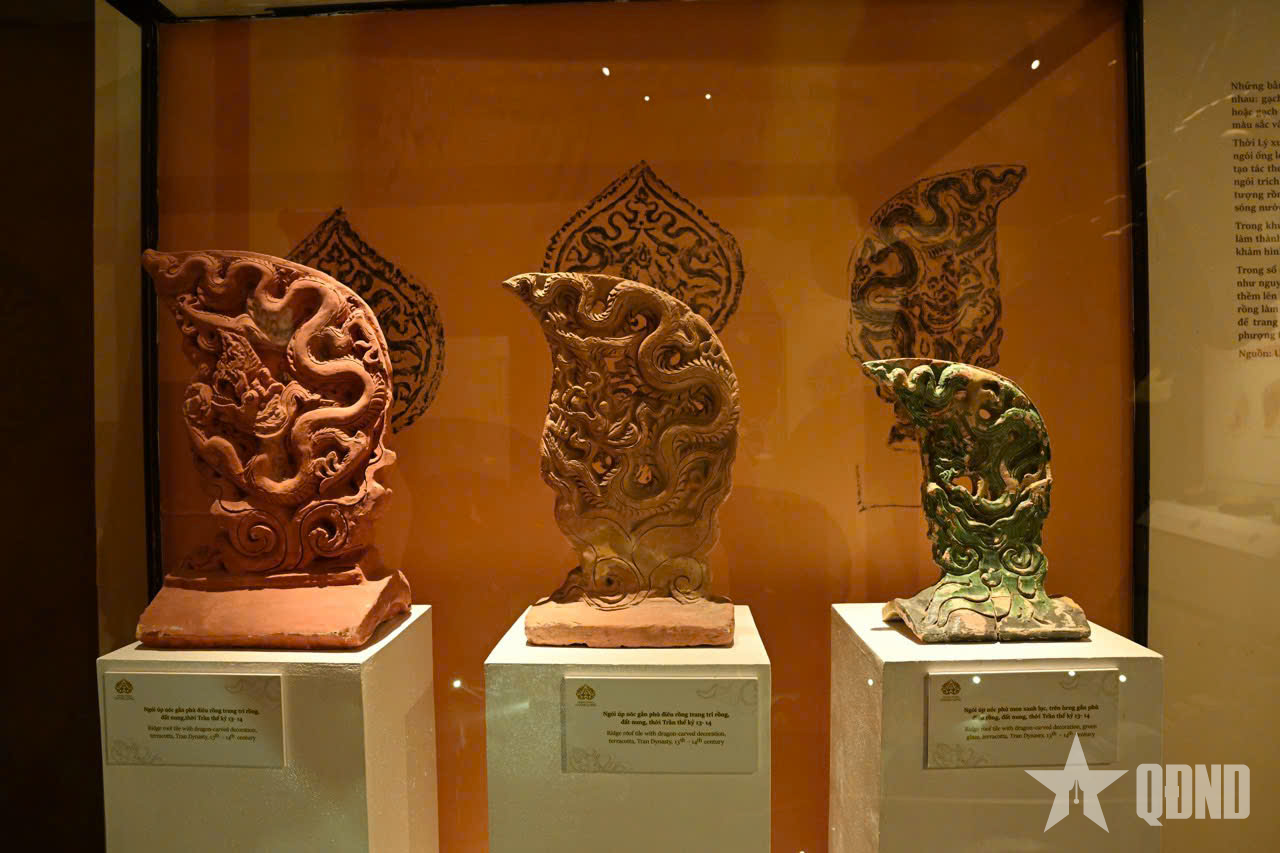
Various types of palace roof tiles were found during excavations at the Thang Long Imperial Citadel historical site. |
According to Associate Professor Dr. Bui Minh Tri, former Director of the Institute of Imperial City Research and Head of the Project "Research, revision, evaluation of value and creation of scientific documentation for the Thang Long Imperial Citadel," archaeologists have completed the entire volume of groundbreaking work, achieving important scientific achievements and successfully deciphering the mysterious layers beneath the Thang Long Imperial Citadel. This achievement has created a solid scientific basis for the restoration, preservation, and promotion of this thousand-year-old world heritage site. "It was the sweat, effort, intellect, and even tears of scientists who worked for 4,860 days to decipher the Thang Long Imperial Citadel. There were no ready-made methods to rely on because urban archaeology in Vietnam at that time was almost a blank slate. We had to figure things out ourselves, from descriptive terminology and classification systems to methods for creating scientific documentation," Associate Professor Dr. Bui Minh Tri affirmed.
A huge workload
Researching, classifying, and organizing archaeological artifacts – fragments of history – is always a major challenge and a task requiring meticulousness and perseverance. To assess the role and function of objects and tools used in the life of the ancient Thang Long Imperial Palace, the key issue is to determine the type, function, age, and origin of production of each artifact.
To address this challenge, the Imperial Citadel Research Institute has invested heavily in comparative research, building a scientific terminology system and defining criteria for dating and origin. The research results, including the classification of artifacts and objects within the Imperial Palace, have led to many groundbreaking scientific discoveries, providing vivid evidence and deepening insights into various aspects of life, economy, culture, religion, society, and economic exchange in the Thang Long capital throughout the dynasties.
|
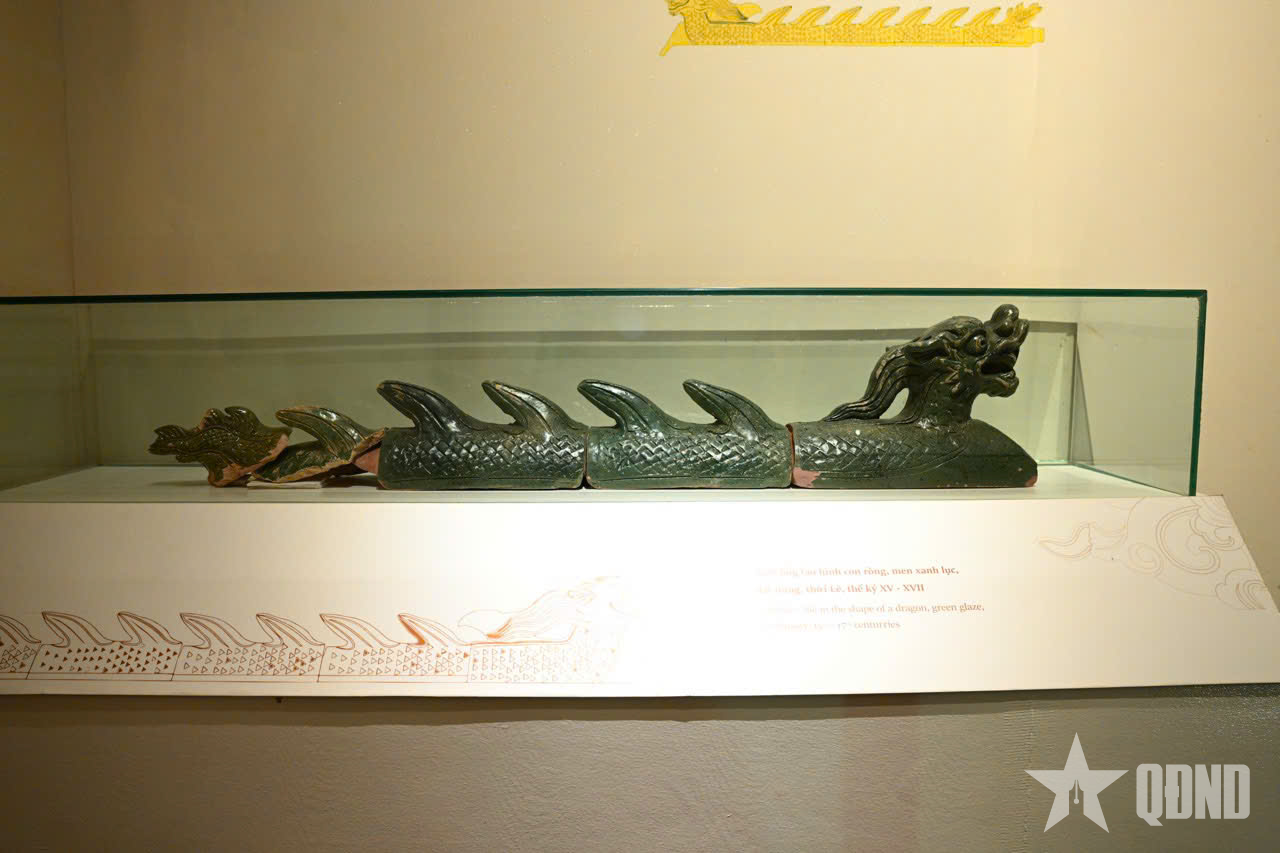
Archaeological artifacts at the Thang Long Imperial Citadel historical site. |
Among these discoveries, the most important and scientifically significant is the finding of authentic Ly Dynasty porcelain. These are high-quality porcelain pieces, reaching a level of excellence comparable to Song Dynasty Chinese porcelain. This is considered an extremely important discovery, providing compelling evidence that the history of Vietnamese porcelain invention dates back to the Ly Dynasty.
Over the past 15 years, the Institute for Imperial City Studies has enthusiastically conducted research and achieved many scientific accomplishments, publishing: 17 books related to Thang Long Imperial Citadel and ancient Vietnamese cities; 112 research papers published in prestigious domestic books and journals; 15 research papers published in prestigious international books and journals; and 66 papers presented at domestic and international scientific conferences and seminars...
According to Dr. Ha Van Can, Director of the Institute of Archaeology (Vietnam Academy of Social Sciences), to gain a profound, comprehensive, and authentic understanding of the value of archaeological discoveries at the Thang Long Imperial Citadel heritage site as we have today, we must acknowledge the tireless scientific research efforts of Vietnamese archaeologists, especially the significant contributions of the Institute of Imperial Citadel Research over the past 15 years.
|
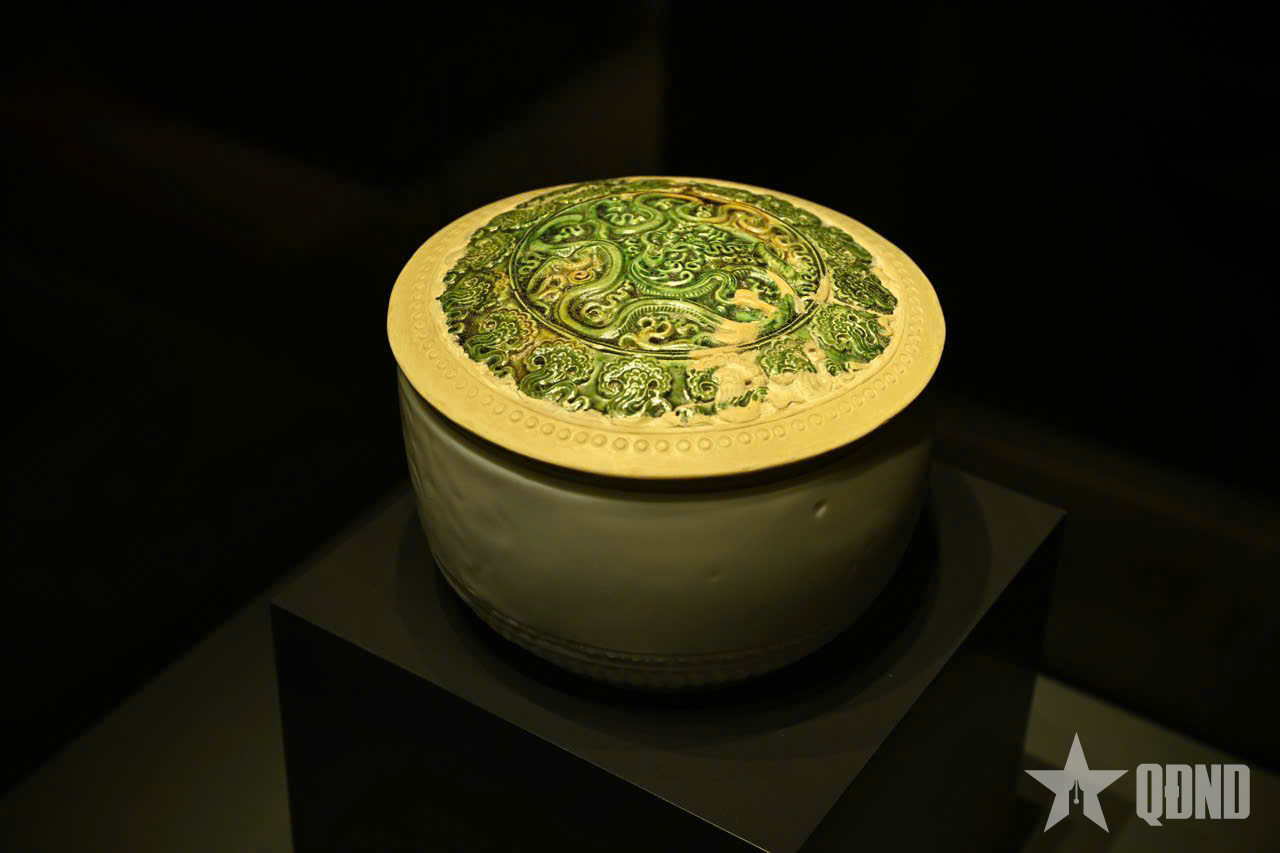
Archaeological artifacts at the Thang Long Imperial Citadel historical site. |
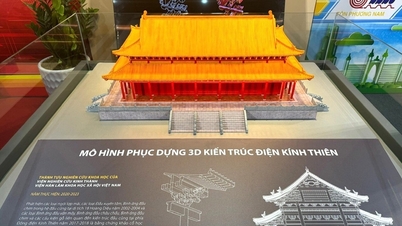
"The Institute of Imperial Citadel Research has carried out this project with the utmost dedication and responsibility, achieving achievements of profound historical significance. The Institute has undertaken a colossal amount of work: from cataloging millions of artifacts and processing complex archaeological data to deciphering the mysteries of palace architecture within the Thang Long Imperial Citadel that had been lost for centuries. The research has delved deeply into the field of palace architecture, clarifying the architectural forms of the Ly and Tran dynasties and the Kinh Thien Palace during the early Le dynasty – the "soul" of the Thang Long capital. In addition, the in-depth analysis of Vietnamese and imported ceramics has not only vividly recreated the material life and rituals within the Imperial Citadel, but also affirmed Thang Long's diplomatic and trade position within the Asian network. These achievements form the foundation of scientific knowledge, contributing to a deeper and clearer understanding of the outstanding global value of the Thang Long Imperial Citadel complex, bringing that value to the public," affirmed Dr. Ha Van Can.
Source: https://www.qdnd.vn/van-hoa/doi-song/giai-ma-nhung-bi-an-duoi-long-dat-o-hoang-thanh-thang-long-1011031































































Comment (0)