Faced with the increasing impacts of climate change, the demand for reduced emissions, and the stringent standards of the international market, agriculture in the Mekong Delta is in dire need of significant change.
Accordingly, green transformation is not only a solution for adapting to climate change but also opens up opportunities to enhance the value of agricultural products, build a modern, sustainable, and more competitive agriculture in the global market.

|
Farmers, cooperatives, and businesses are increasingly raising their awareness of green production. |
Change your mindset.
As the largest agricultural producing region in the country, the Mekong Delta plays a particularly important role in food security and agricultural exports. However, challenges from climate change and the inherent limitations of traditional production models are placing this region before the need to change its development mindset.
According to economic experts, the Mekong Delta currently contributes about 50% of Vietnam's rice production, over 90% of its rice exports, and more than 31% of the country's agricultural GDP. However, this region, considered the "rice bowl" of the nation, is increasingly affected by drought, saltwater intrusion, land subsidence, and rising sea levels. Agriculture in the Mekong Delta also faces pressure from traditional production models that rely heavily on chemical fertilizers, pesticides, and extensive resource exploitation.
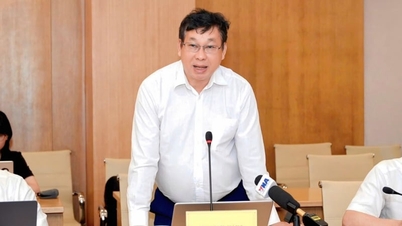
Mr. Ly Viet Hung, Head of the Carbon-Neutral Economy Department (Climate Change Agency), noted that Vietnamese agriculture, especially in the Mekong Delta region, is facing a double challenge. On the one hand, this region is increasingly affected by climate change; on the other hand, traditional agricultural production activities contribute to increased greenhouse gas emissions. According to Mr. Hung, agricultural modernization is no longer a choice but has become a mandatory requirement to protect the nation's key agricultural production areas.
From a research perspective, Associate Professor Chau Minh Khoi, Vice Rector of the University of Agriculture (Can Tho University), argues that traditional production practices such as burning straw, flood irrigation, and excessive use of chemical fertilizers are generating large amounts of emissions. Therefore, shifting to a low-carbon agricultural model and applying science and technology is an inevitable direction to adapt to climate change and improve production efficiency.
In reality, the process of land consolidation still faces many obstacles. According to Mr. Tran Ho Van Khoa, Director of Techpal Soc Trang Co., Ltd., the habit of using chemicals in production is still widespread. Meanwhile, to achieve organic standards, cultivated land needs a conversion period of 2-3 years, requiring significant investment costs and perseverance from producers.
According to the latest greenhouse gas inventory report, Vietnam's agricultural sector emits nearly 90 million tons of CO₂ equivalent annually. Rice cultivation alone accounts for approximately 45 million tons, followed by livestock farming with around 20 million tons. Activities such as burning rice straw, frequent flooding, intensive cultivation of three rice crops per year, and the overuse of chemical fertilizers have increased the levels of methane and N₂O – greenhouse gases that are many times more potent than CO₂.
Towards green agriculture
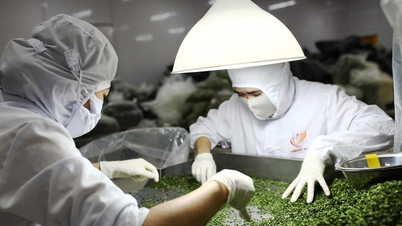
According to Mr. Ly Viet Hung, the shift from traditional farming to high-tech production brings many practical benefits. Automation solutions, smart management, and artificial intelligence applications can help reduce irrigation water by up to 40%, cut greenhouse gas emissions by more than 50%, and optimize production costs.
In particular, in the future, farmers will not only benefit from the added value of green agricultural products but also have the opportunity to participate in the carbon credit market—a new source of revenue that many countries are interested in developing.
Many new production models have proven effective in practice. Associate Professor Dr. Chau Minh Khoi introduced an improved land management model using compost, biochar, and crop rotation of rice with dryland crops. This solution not only reduces methane emissions but also improves soil fertility. Notably, the rice-watermelon rotation model helps diversify livelihoods and increase profits for farmers by 75-163% compared to rice production alone.
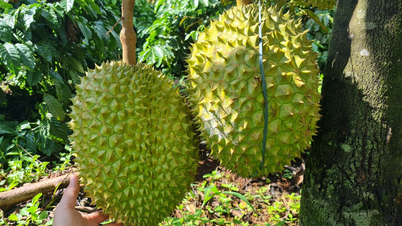
In Vinh Long, the Green Production Model is being implemented increasingly strongly. According to Mr. Van Huu Hue, Deputy Director of the Department of Agriculture and Environment, the awareness of farmers, cooperatives, and businesses about green production is constantly improving. The area of production according to VietGAP, GlobalGAP, organic standards, and low-emission high-quality rice models is continuously expanding. Along with this, many advances in mechanization, digital transformation, traceability, water-saving irrigation systems, and high technology in agricultural production are being widely applied. The production-consumption chain is increasingly developing, contributing to enhancing the value and competitiveness of local agricultural products.
According to experts, for agricultural development to be successful, it needs to be based on three pillars: appropriate technology, a stable consumer market, and a harmonious benefit-sharing mechanism among participating parties. Dr. Tran Huu Hiep argues that technology is only truly effective when linked to market needs. At the same time, businesses, farmers, cooperatives, and investors need to shift from a purely buyer-seller relationship to a model of joint investment, shared benefits, and shared risks.
Former Vice Chairman of the National Assembly, Le Minh Hoan, believes that agricultural transformation is not just about applying new technologies, but more importantly, about shifting the mindset from traditional production to a circular economy and an agricultural ecosystem economy. Accordingly, by-products and waste from production need to be reused to create new value. A future field will not only produce rice but also absorb carbon, support aquaculture, develop tourism, conserve biodiversity, and create livelihoods for the community.
"What is needed now is not only to create green products but also to form a green market, where environmental and social values are recognized and fairly priced. Green transformation is not just a technological revolution, but also a revolution in markets, consumer behavior, and how society values sustainable values," Mr. Le Minh Hoan emphasized.
Text and photos: THAO LY
Source: https://baovinhlong.com.vn/kinh-te/nong-nghiep/202606/chuyen-doi-xanh-de-bao-ve-vua-lua-dong-bang-178272a/










































































Comment (0)