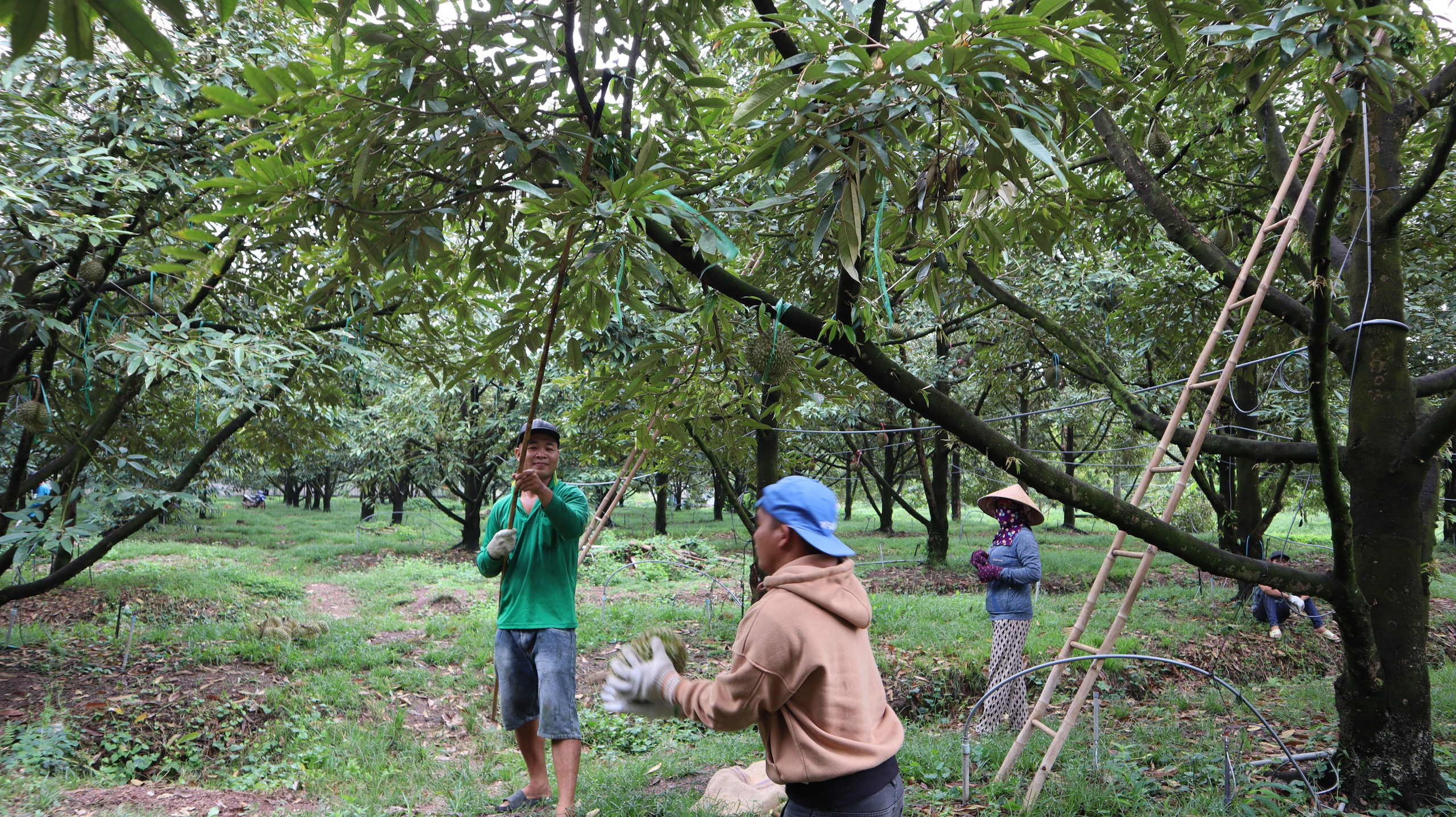
In late May 2026, durian orchards in Dong Nai city began their peak harvest season. Throughout the orchards, traders and groups of durian pickers were working at full capacity. After a few hours of inspection, each durian was cut by the main picker and dropped to the workers below.
According to observations by a Thanh Nien reporter at a durian orchard in Nha Bich commune, this job can bring in up to 2 million VND per day for durian pickers. However, along with the high income, they also face the risk of compensating the orchard owner if they cut too many unripe fruits, affecting the reputation of traders. Therefore, skilled pickers are always in high demand every durian season .

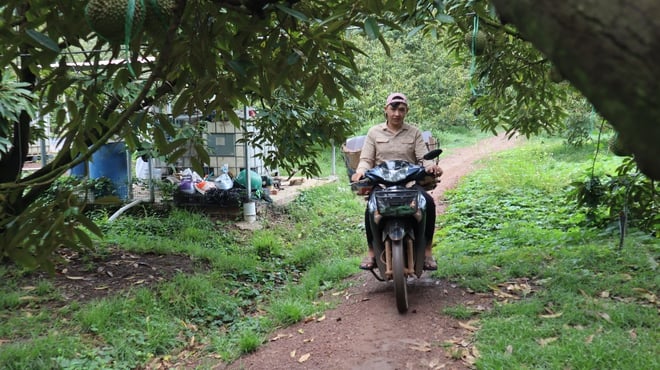
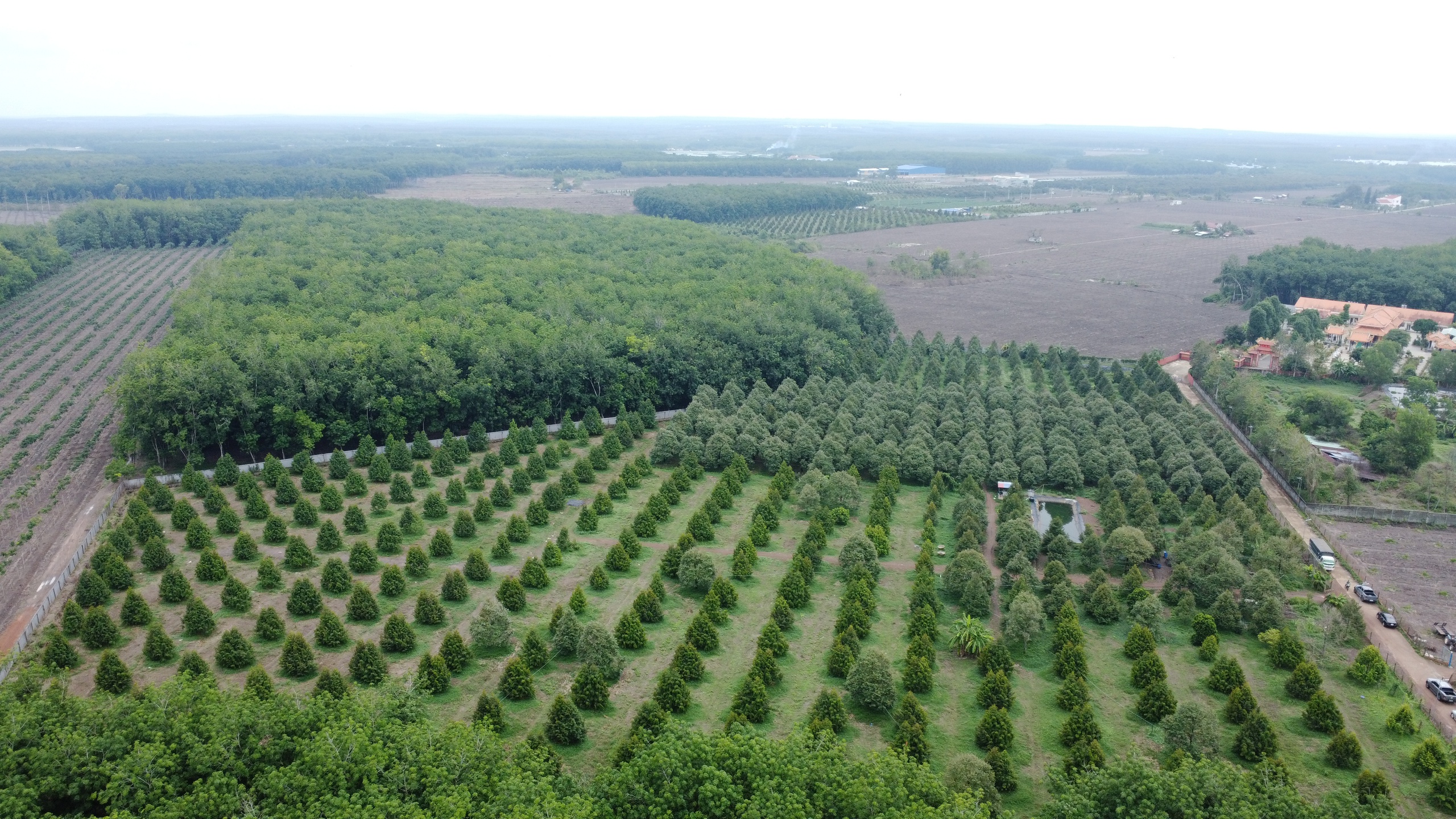
The lush green durian orchards in Dong Nai city are in full swing during the harvest season. In just the last 10 years, the movement to switch from cashew and pepper cultivation to durian farming has been strong, due to the significant income that durian trees can generate from the same area of land.
PHOTO: HOANG GIAP
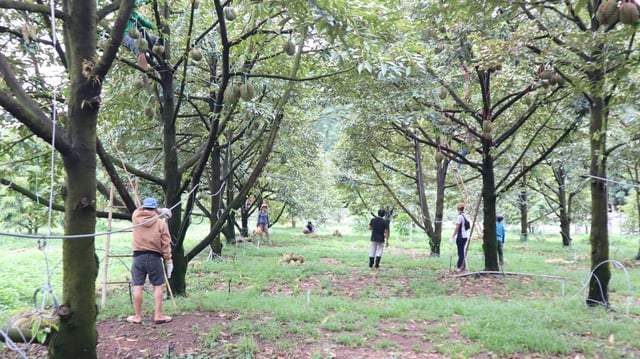
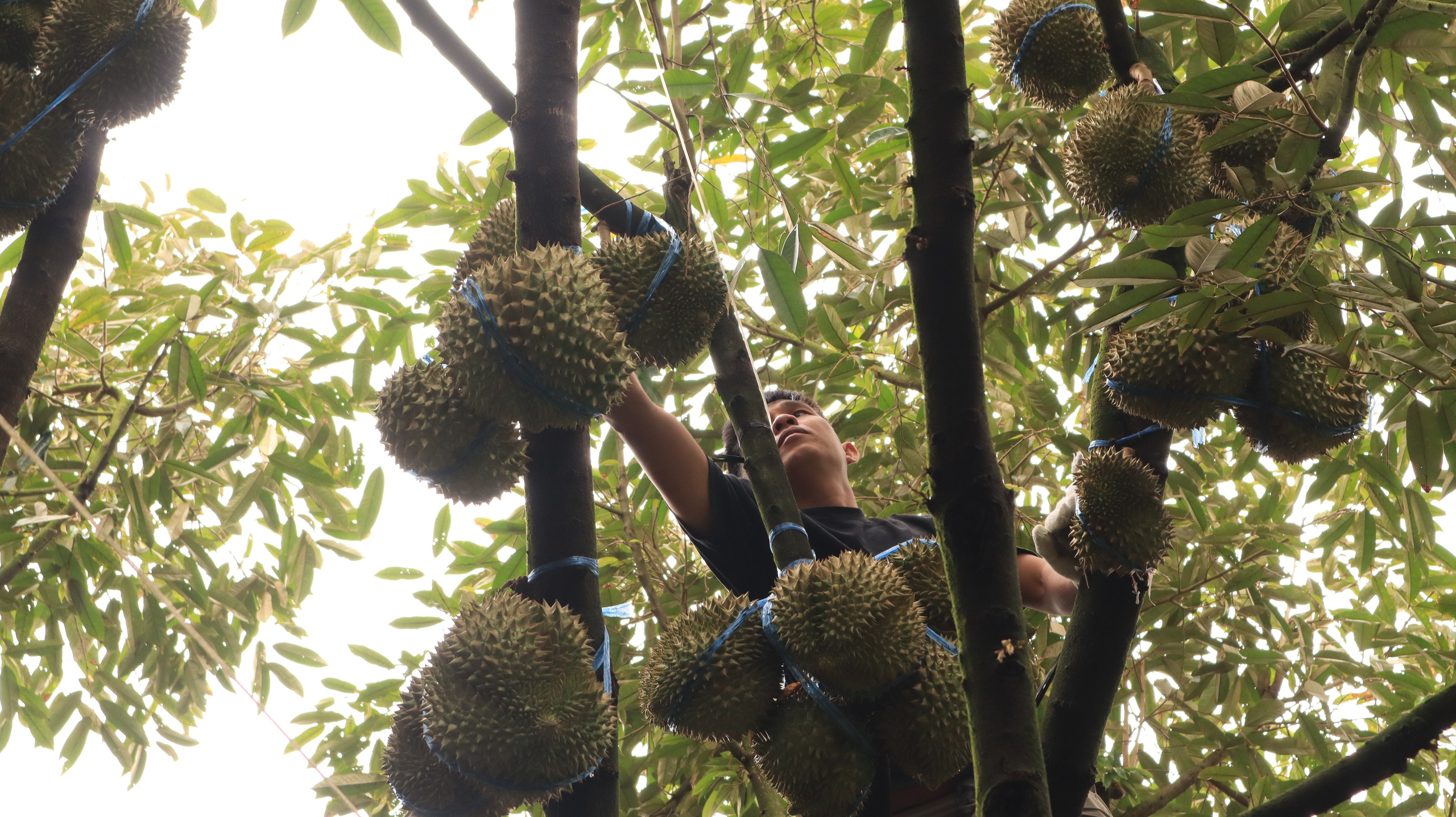
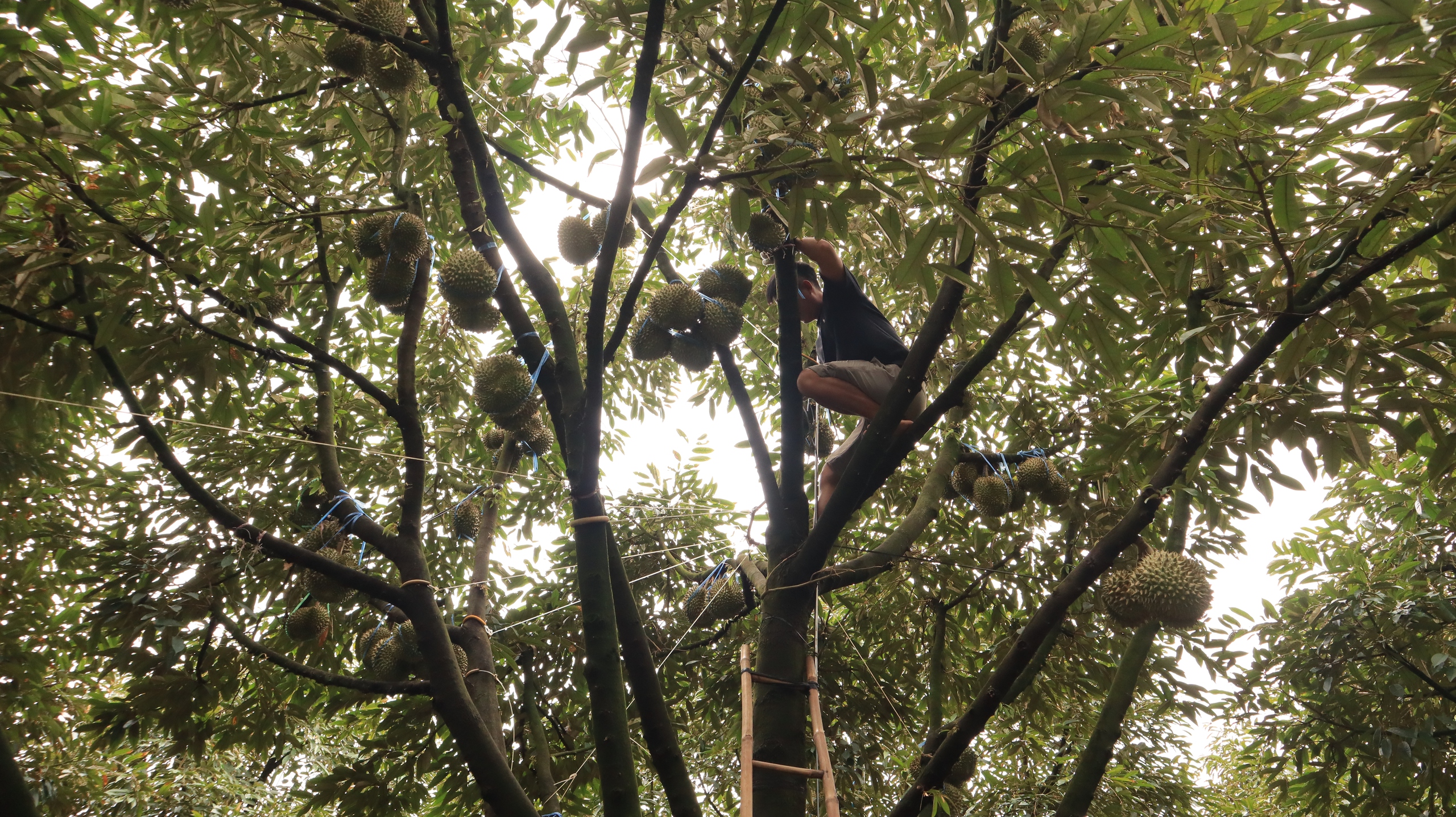
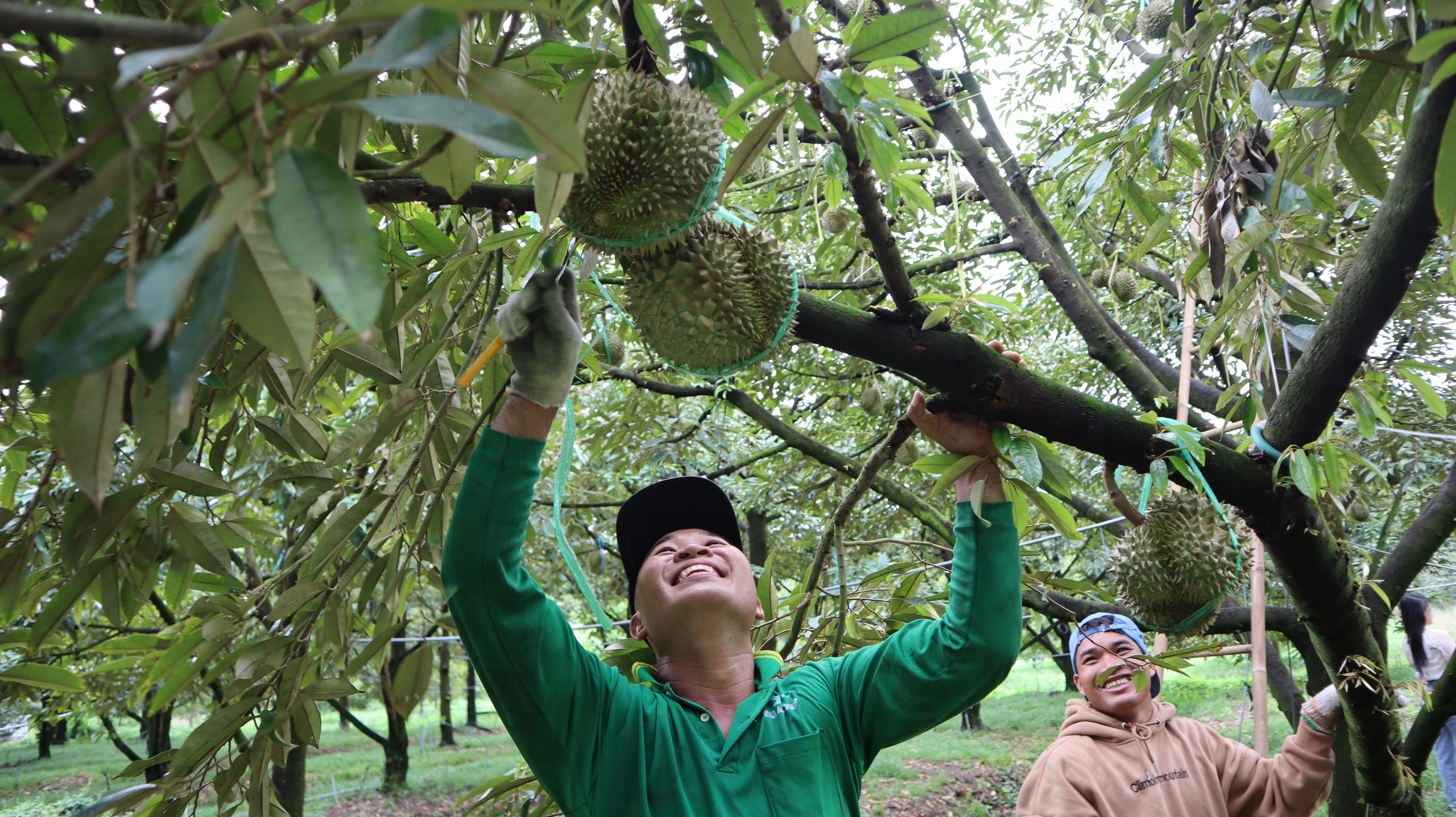
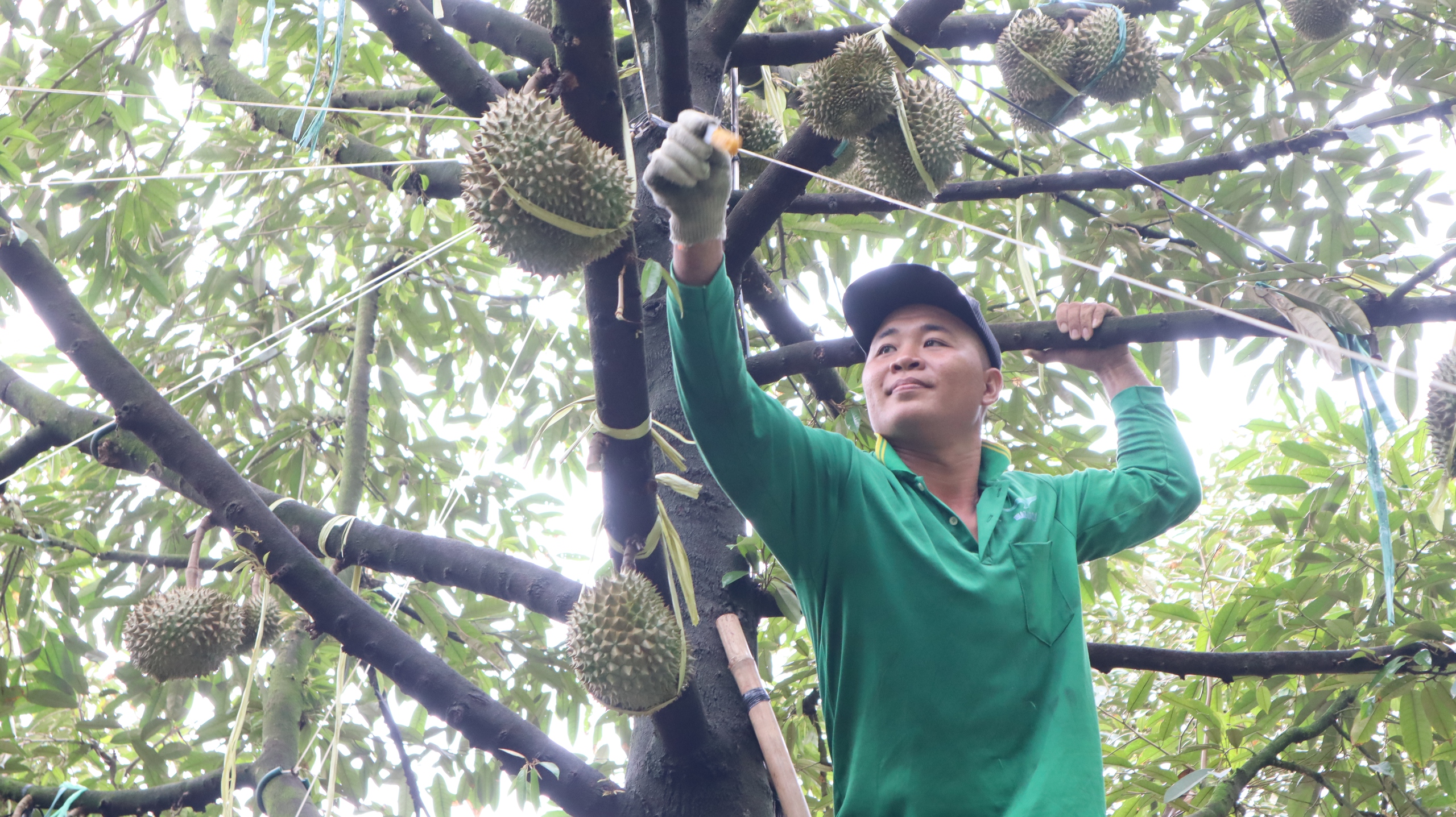
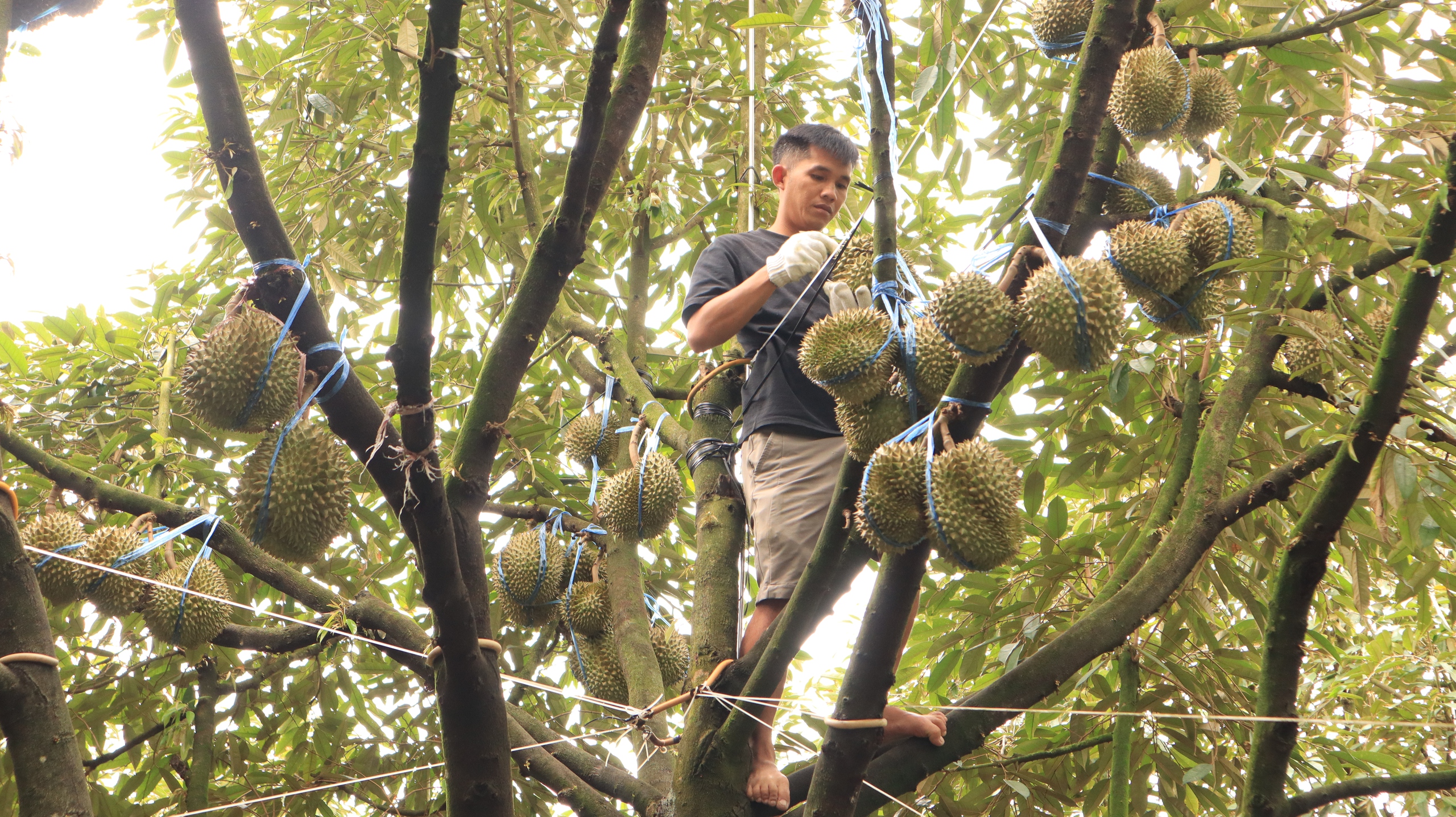
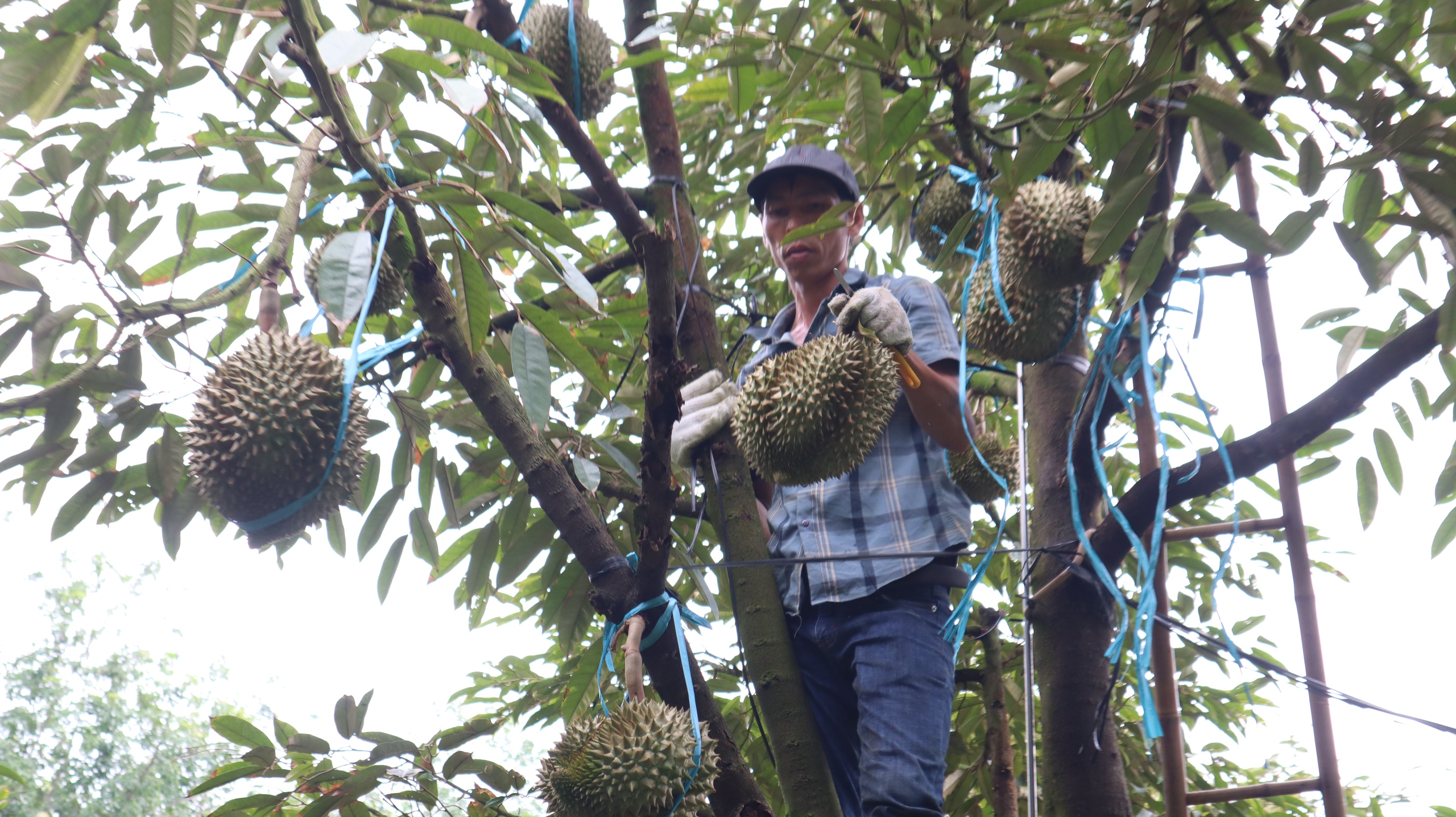
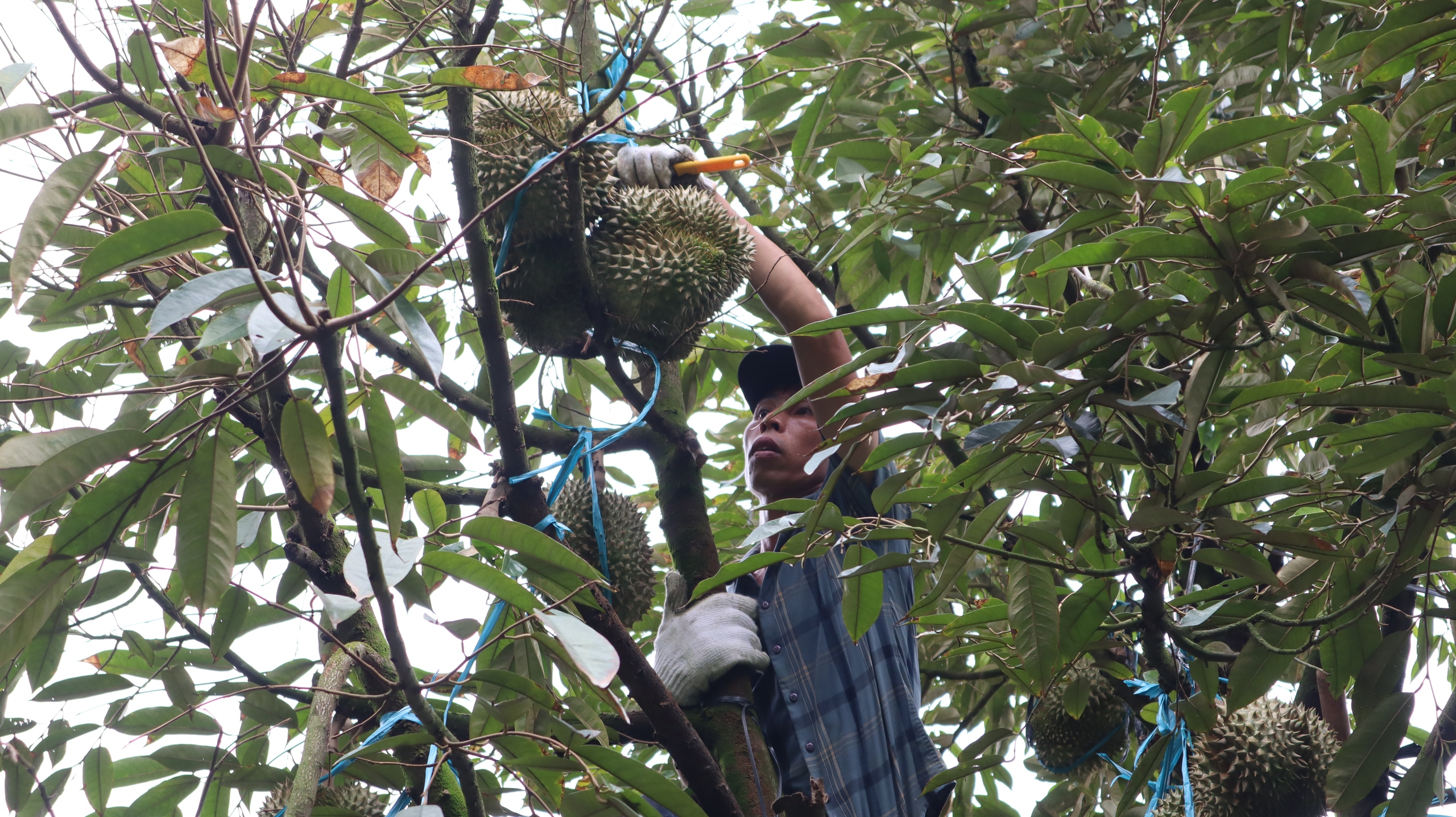
Many durian orchards in Dong Nai are only about 10 years old. In each orchard, there are two workers: one main worker climbs the tree and uses a knife to cut the ripe durians, and the other worker stays below to catch the cut durians as they fall from the tree.
PHOTO: HOANG GIAP
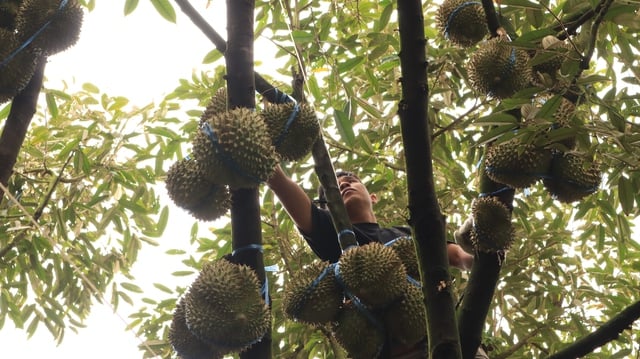
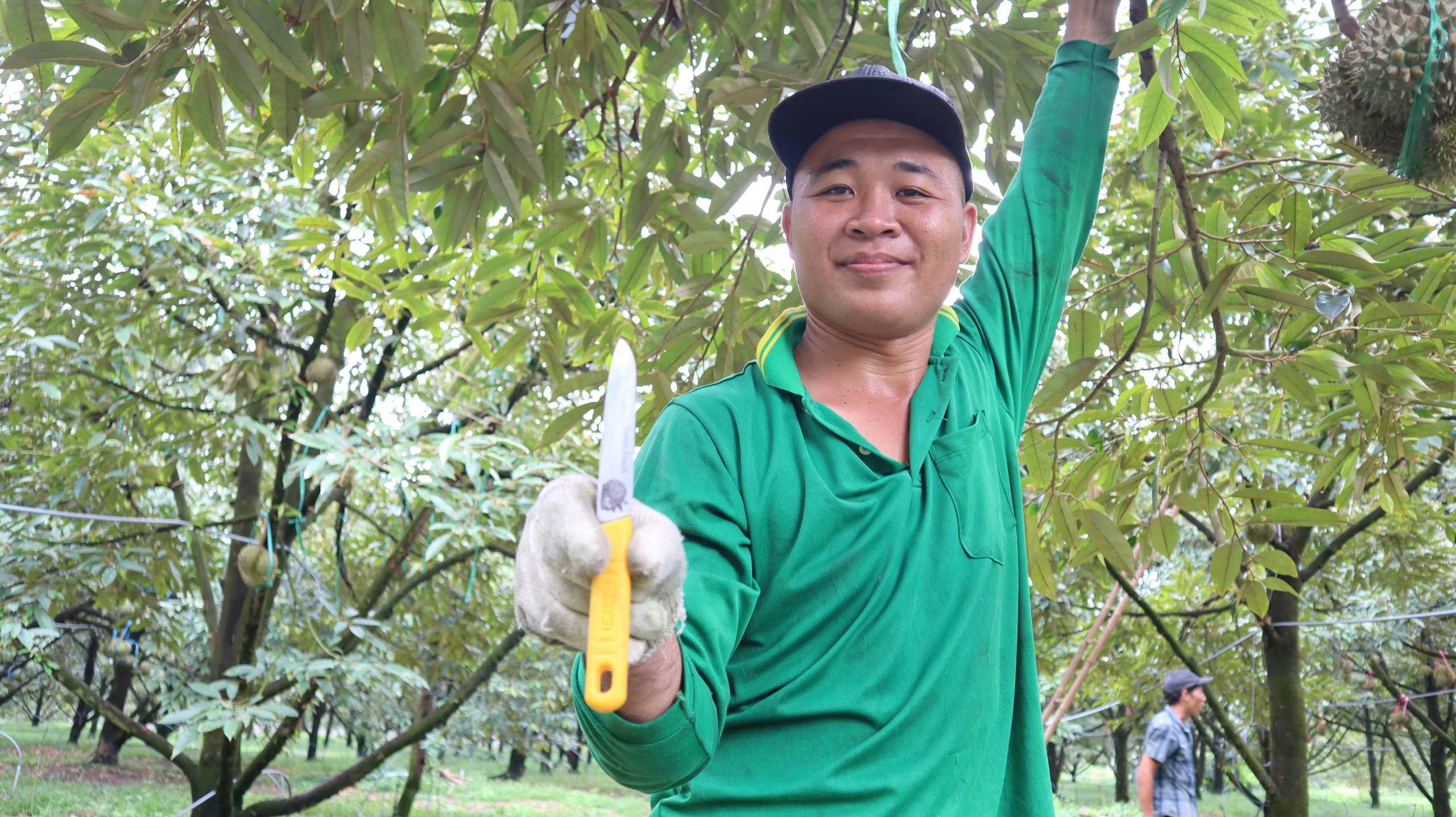
Mr. Vo Quoc Thanh (38 years old, from Dak Lak ) has been working as a durian picker for 5 years and is currently the team leader, leading a team of nearly 20 people specializing in durian harvesting. Team leaders can assess the skill and experience of a picker after observing them for a short time.
PHOTO: HOANG GIAP
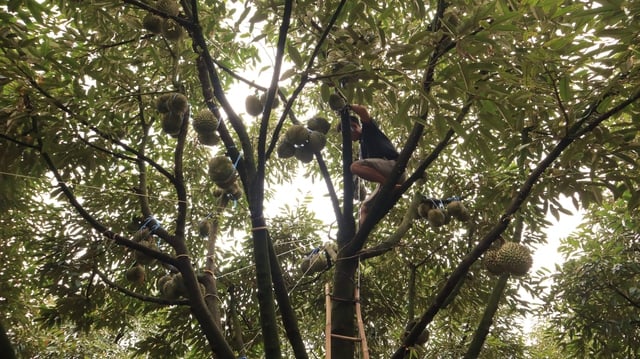
Most durian harvesting teams operate on a "joint" basis, assembling experienced knife handlers who travel across the Mekong Delta, southeastern Vietnam, and the Central Highlands according to the season, rather than being confined to a specific location. The main workers can also be replaced frequently.
PHOTO: HOANG GIAP
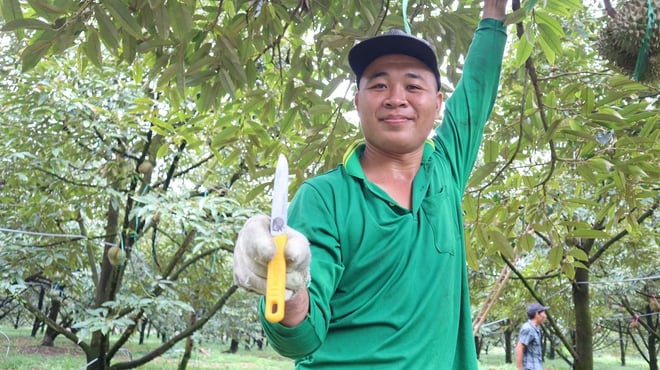
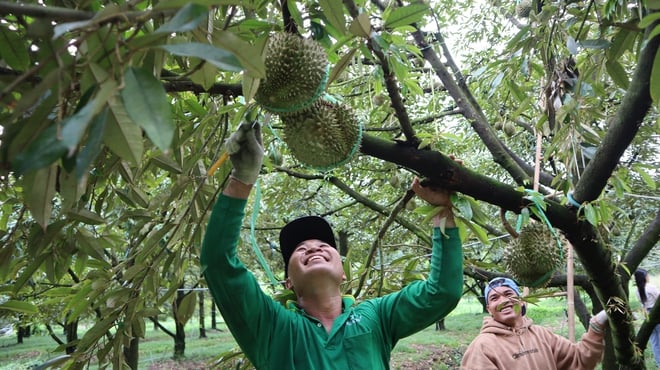
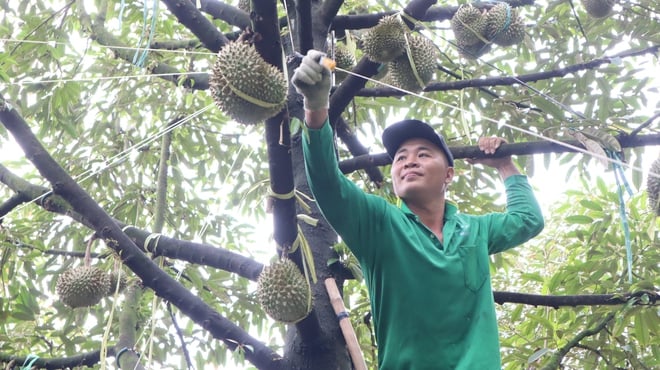
According to Mr. Huynh Van Khanh (36 years old, from Vinh Long province, with 8 years of experience, working as both an assistant photographer and a main fruit picker), depending on each person's aptitude, some can learn to cut fruit in just 1-2 months, while others may take 3 years and still not become a main fruit picker. Teaching new recruits usually relies on their willingness to learn or their own accumulated experience after several seasons of assisting with fruit picking.
PHOTO: HOANG GIAP

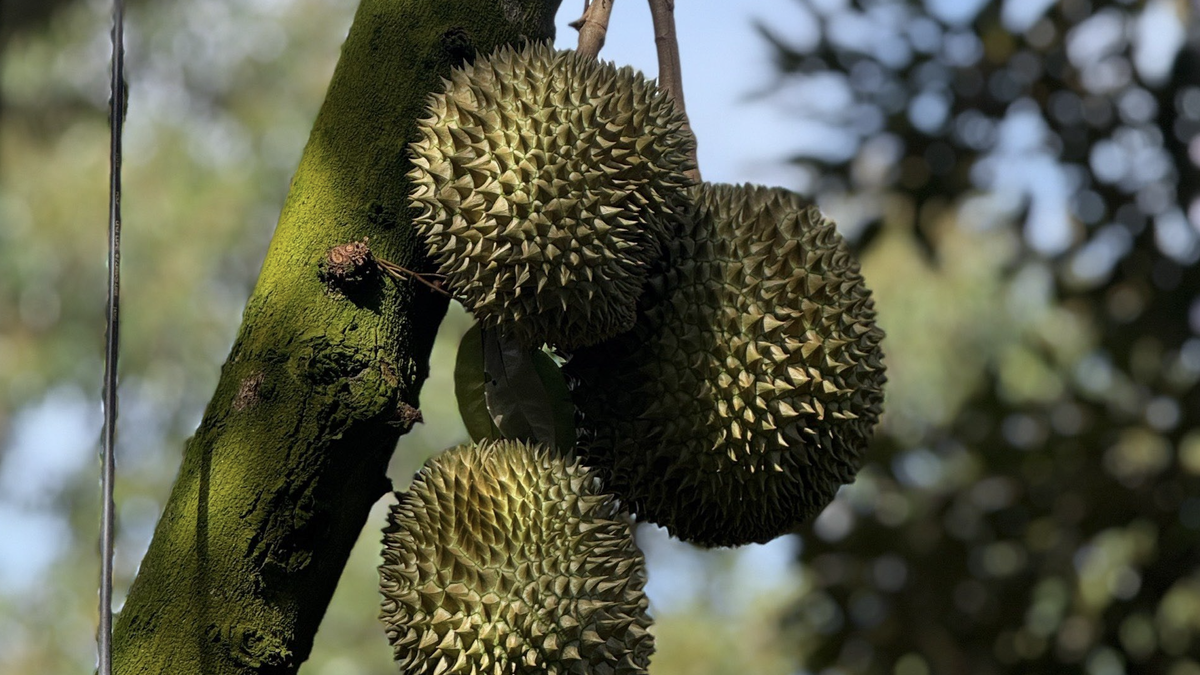
According to Mr. Vo Quoc Thanh, to distinguish between ripe and unripe durians, one can assess the sound by tapping the fruit with a knife. The shape of the stem and the color of the peel are also very important. A ripe durian will make a "pop, pop" sound when tapped, while an unripe, hard durian will produce a sharper sound.
PHOTO: HOANG GIAP
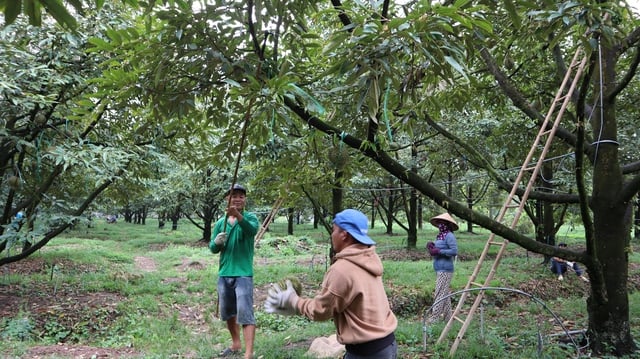
Learning the trade of durian harvesting is primarily through practical experience rather than a fixed formula. Skilled durian harvesters, if they focus on their work, have a large harvest, and favorable weather, can earn up to 50-60 million VND per month. Meanwhile, assistant harvesters earn only about 15 million VND per month. New harvesters frequently make mistakes and sometimes have to pay for unripe or substandard harvested fruit themselves.
PHOTO: HOANG GIAP
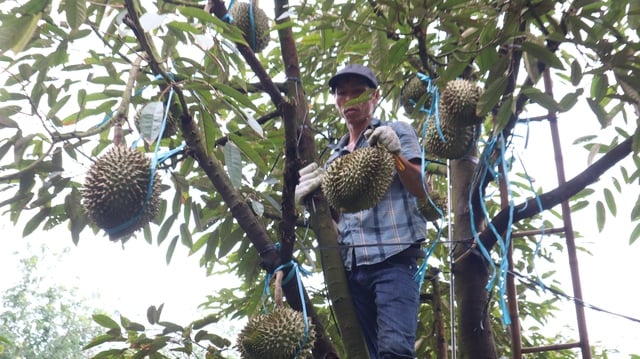
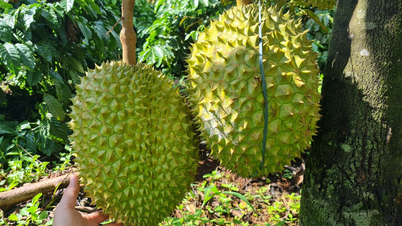
Durian harvesters typically work in the orchard from around 7 AM to 4 PM. Harvesting should be avoided after dark or in low light to prevent mistakes and picking unripe fruit. Durians from different regions also vary significantly in appearance, thorn shape, flesh quality, and harvesting cycle (ranging from 120, 130 to 150 days from fruit set to harvest).
PHOTO: HOANG GIAP
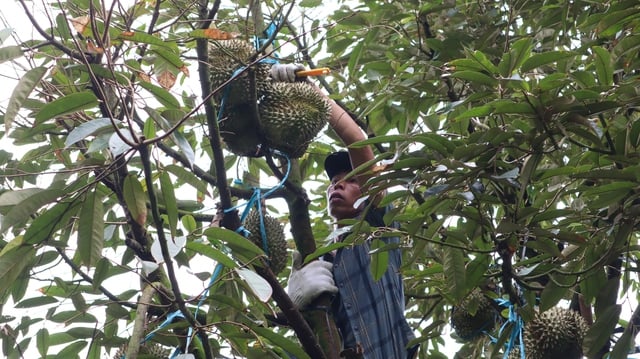
According to Mr. Bui Huy Hanh (39 years old, from Lam Dong), to become a master woodcutter, one must start by working as an assistant or a "photographer" to get familiar with the wood. Whether the income is high or low depends on the worker's experience.
PHOTO: HOANG GIAP
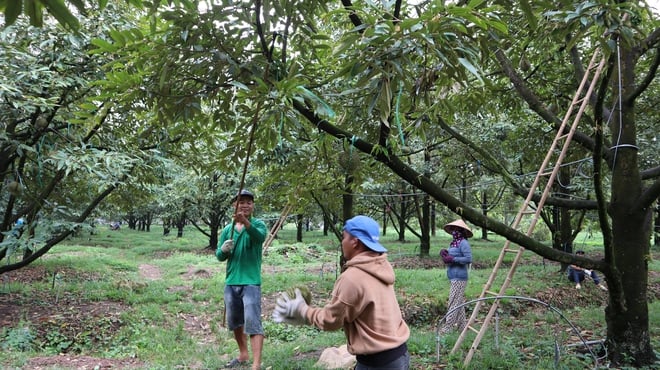

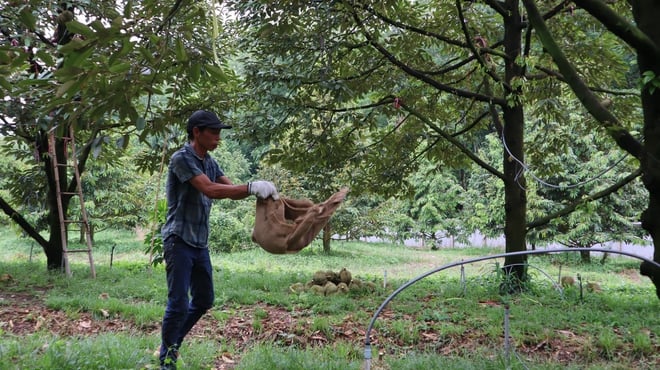
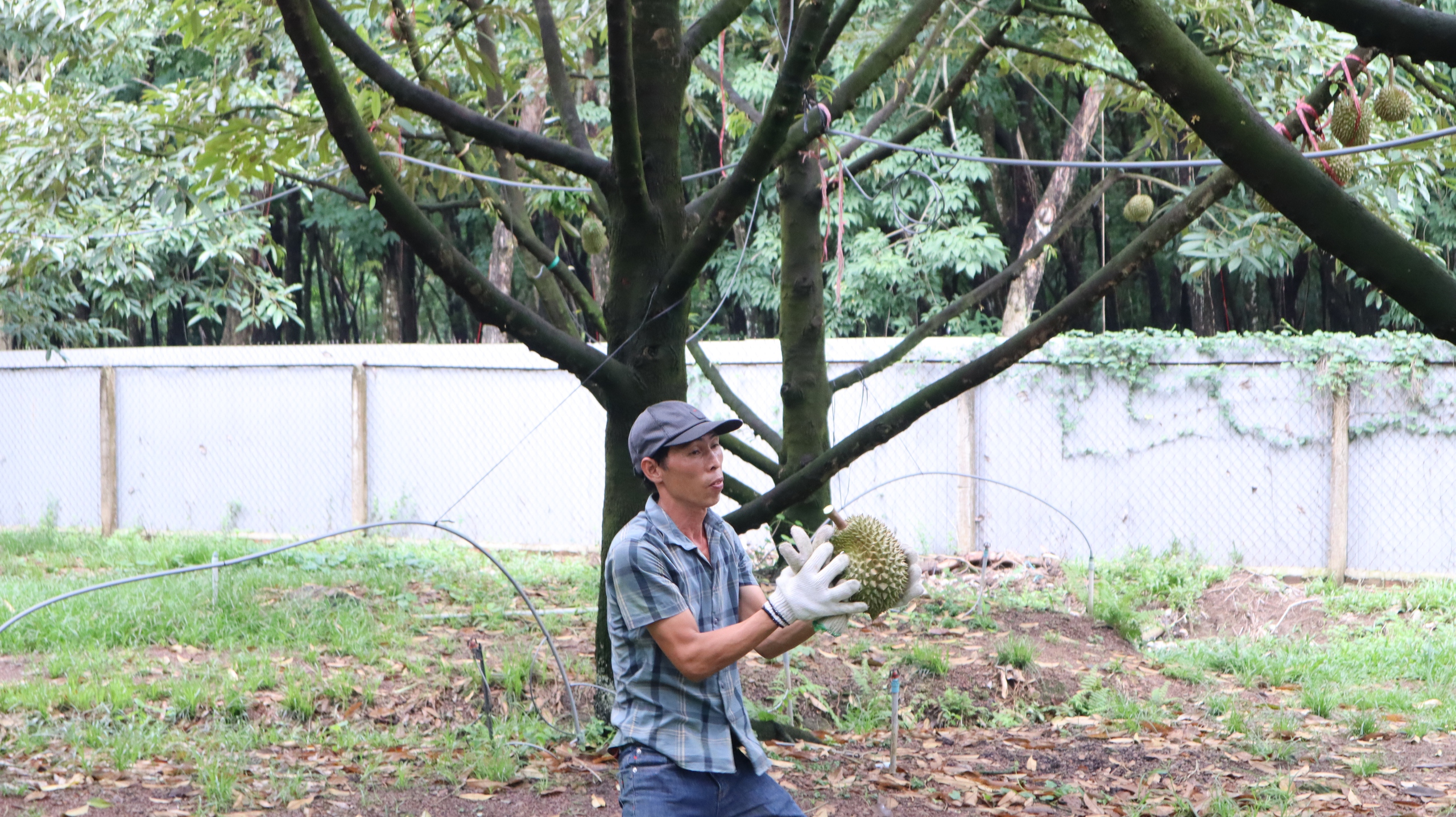
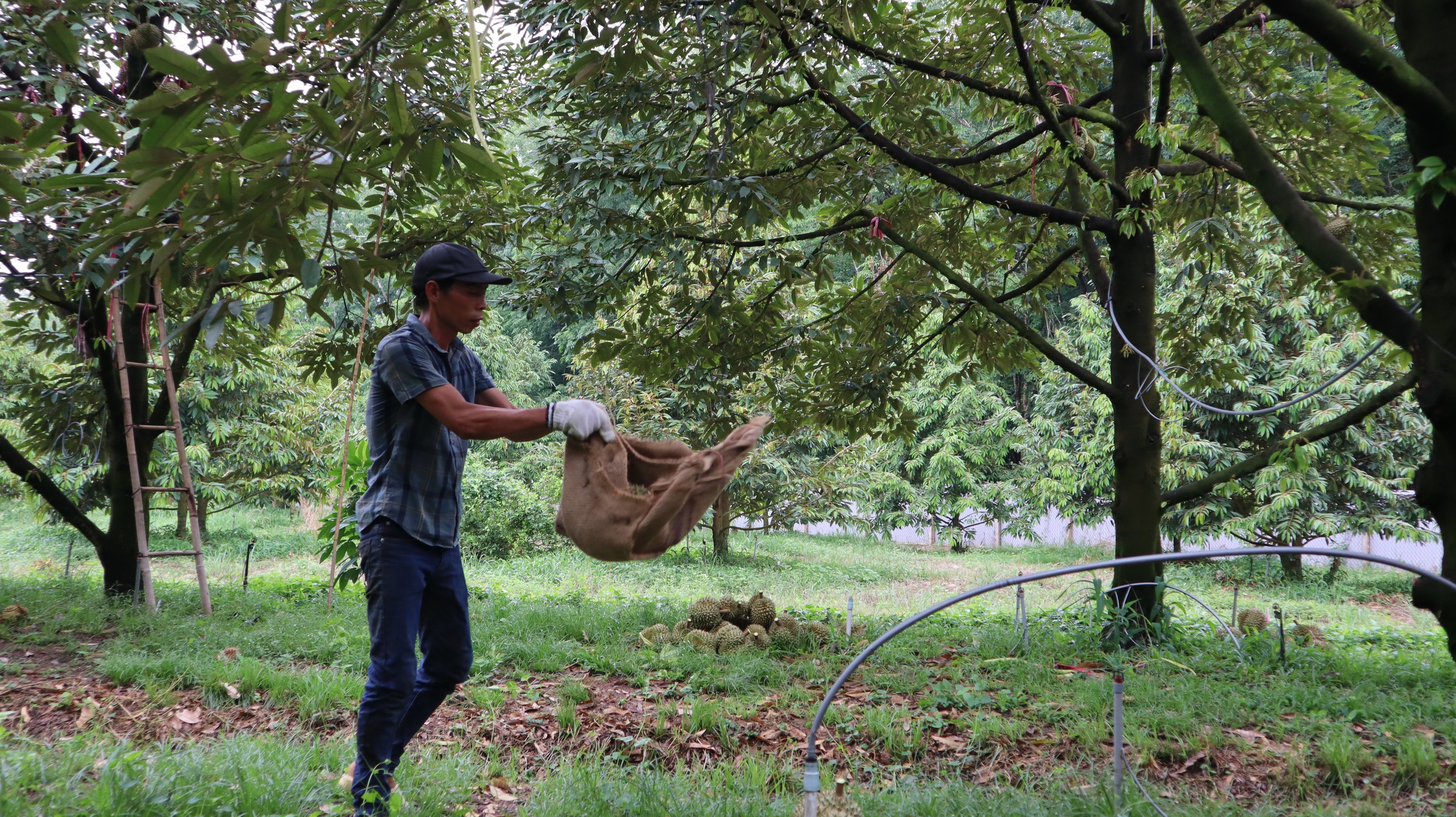
Each pair of workers needs to coordinate perfectly; the person in the tree cuts and drops the durian while the person on the ground concentrates on catching the fruit to avoid being crushed by the thorns. On tall trees, the assistant worker only needs to use two hands wearing cloth gloves to catch the fruit. But for very tall trees, the assistant worker must use burlap sacks to catch the fruit, preventing thorns from piercing their hands and ensuring the quality and appearance of the fruit, preventing it from falling directly to the ground.
PHOTO: HOANG GIAP

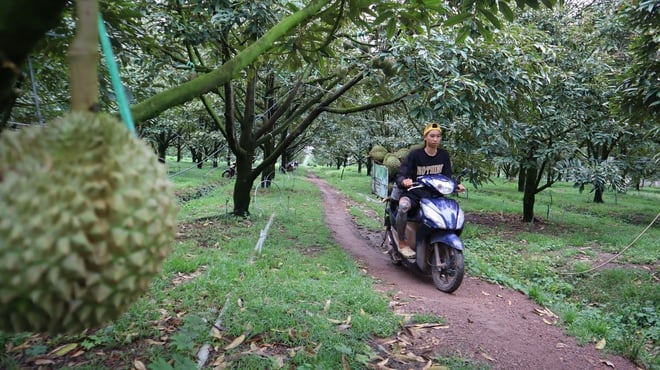
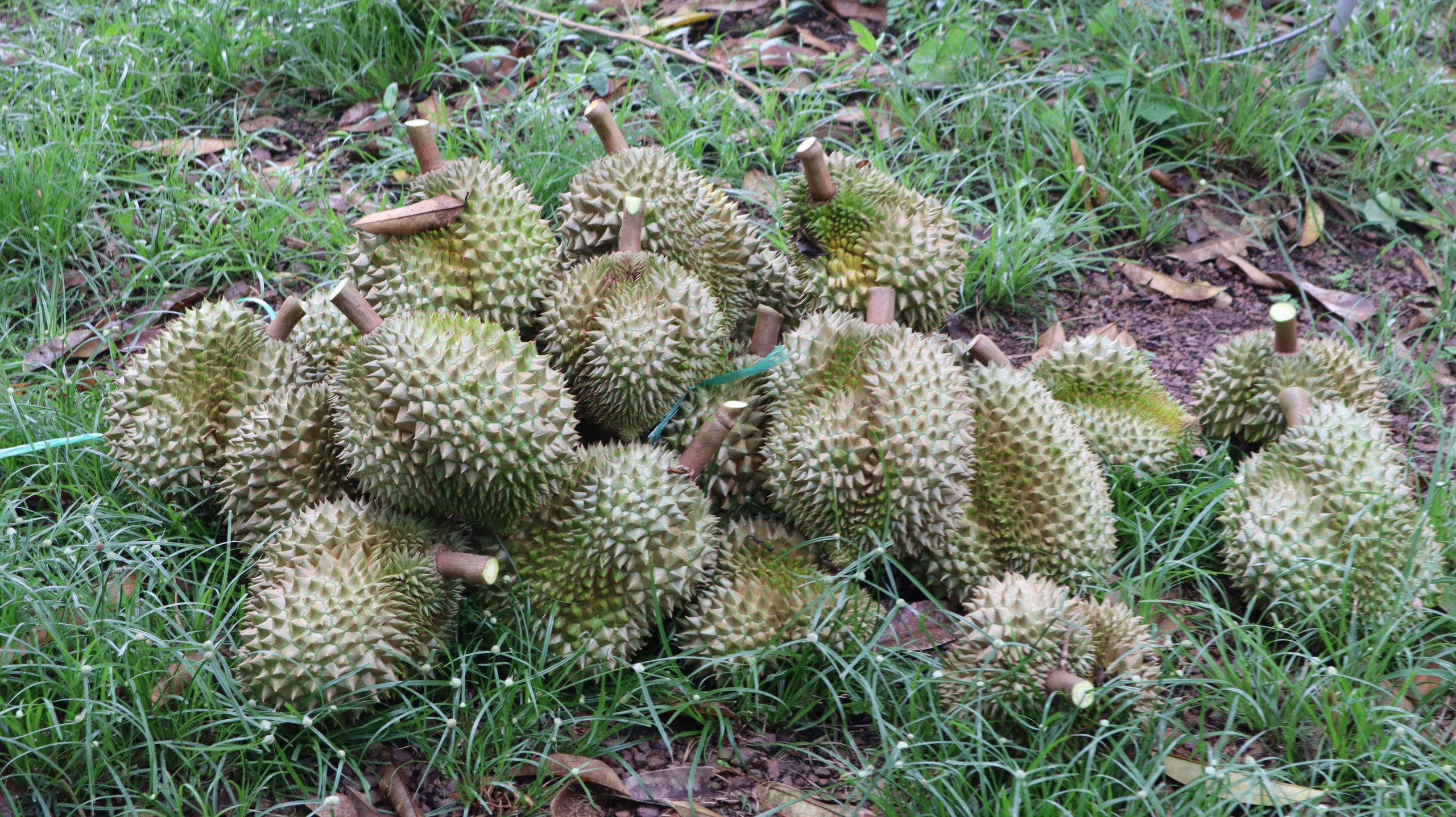
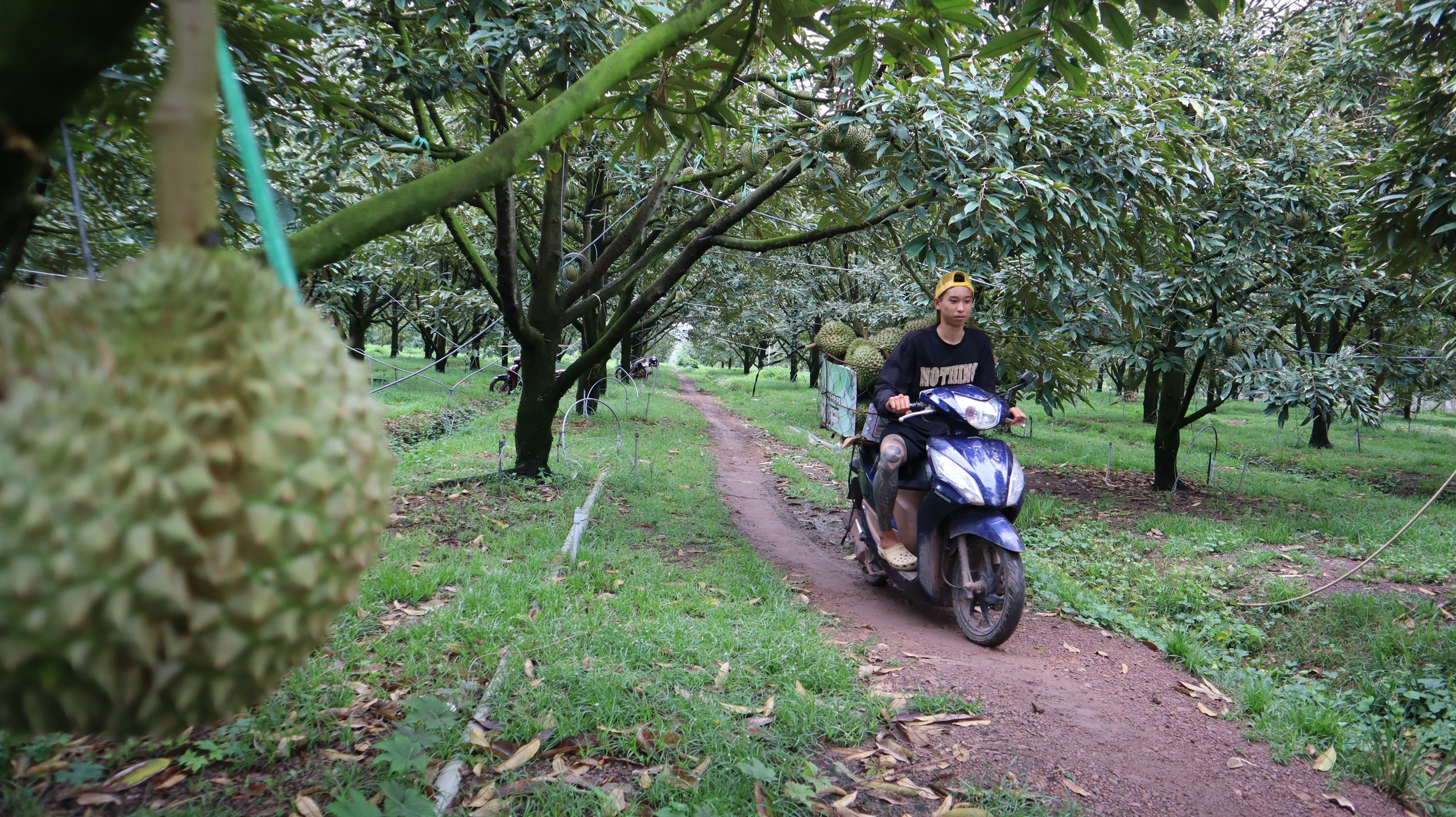
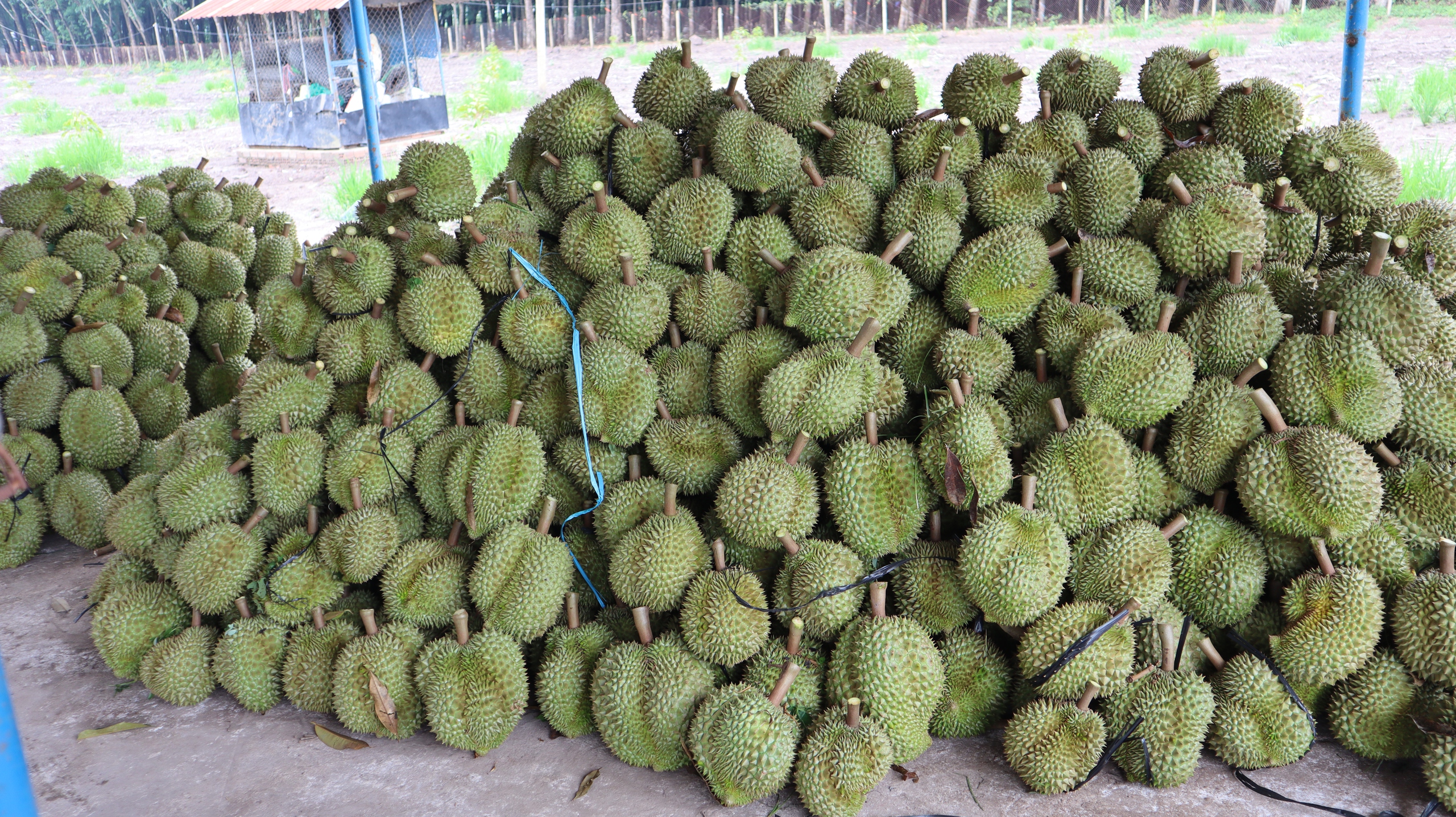
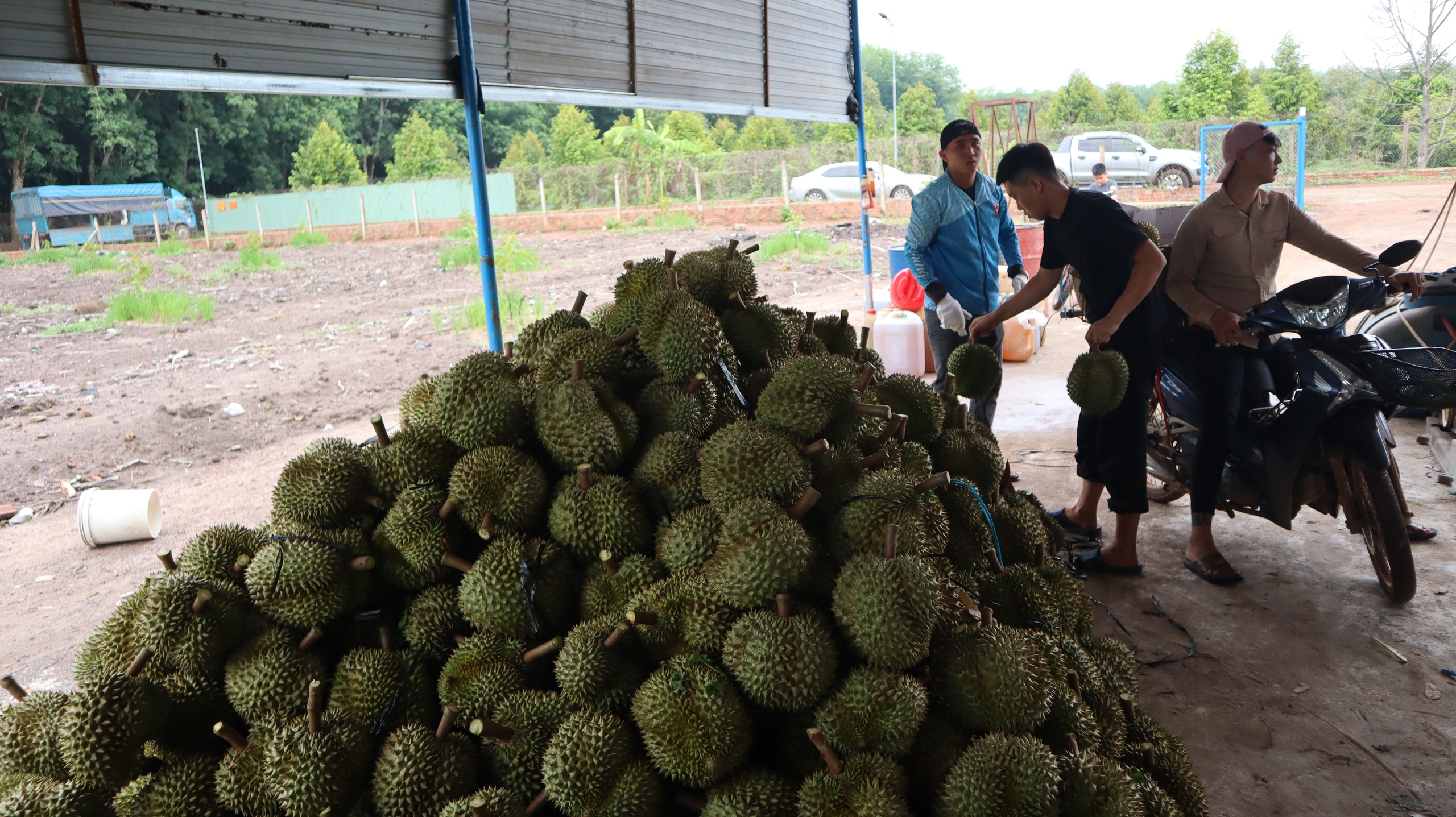
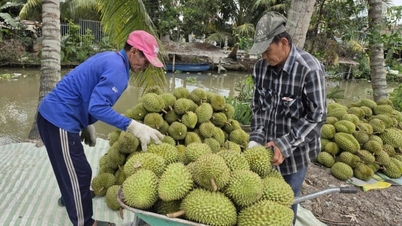
After being harvested, the durians are piled up near the base of the tree. Then, other workers come and collect them, gathering them into large piles before further sorting, weighing, and loading them onto trucks to be transported to the warehouse.
PHOTO: HOANG GIAP
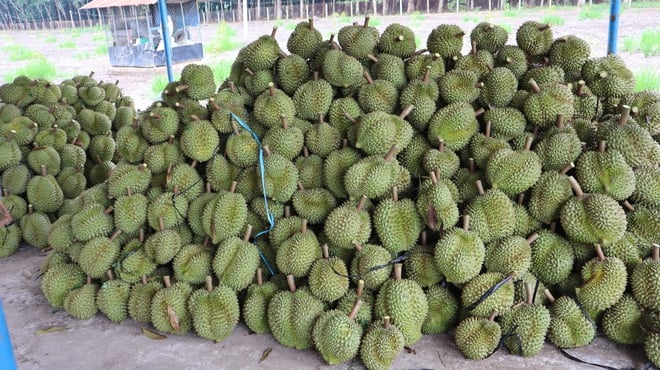


After being harvested at the orchards, durians are gathered into piles, then sorted on-site before being loaded onto trucks and transported to the warehouse. According to Mr. Vo Quoc Thanh, the allowable loss or error rate for durian harvesters is typically around 2% (equivalent to a maximum of 20 kg of unripe or weak fruit per ton of harvested durian).
PHOTO: HOANG GIAP

According to statistics, Dong Nai city currently has over 23,000 hectares of durian orchards. These are concentrated in communes and wards such as Thanh Son, Que Son, Cam My, Hang Gon, Nam Cat Tien, Bu Dang, Phu Rieng, and Phu Trung... This area also ranks first, accounting for more than 30% of the total area of the five main fruit crops identified by the locality: bananas, pomelos, mangoes, jackfruit, and durian.
PHOTO: HOANG GIAP
Source: https://thanhnien.vn/tho-go-sau-rieng-185260601065530738.htm































































































Comment (0)