

The Silent Reform
Until about a decade ago, customs clearance in Israel relied heavily on paper forms, manual processing, lengthy waiting times, and coordination among multiple regulatory agencies.
However, in recent years, the Israeli Tax Authority, along with the Customs and Value Added Tax Department, has promoted a large-scale digital reform program with three main pillars: the “MAM” ( World Gateway) system, the Non-Intrusive Inspection (NII) system called “Nail,” and new regulations for the import of food and sensitive goods. This is based on four official documents published by the Customs Department and presents key guidelines, milestones, and impacts on the supply chain.
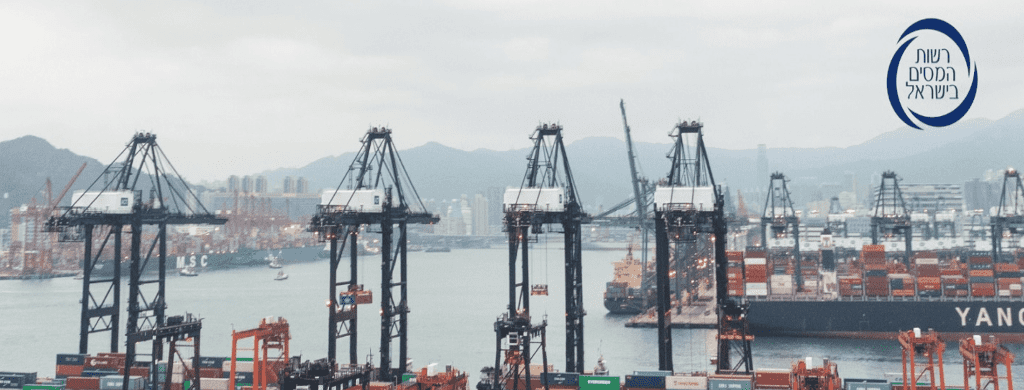
Israeli seaports and customs.
Importer's Commitment
The simplified import declaration, also known as the "Importer's Commitment," is a fundamental document for customs clearance. It's a digital form that serves as official proof of import duty payment, completed by a customs broker or directly by the importer through the World Gateway system. The shift to digital declarations has replaced physical forms and allows for faster processing of thousands of transactions daily.
According to the guidelines, importers must declare the value, classification, and supplier information of the goods. Errors in declaration can slow down customs clearance and lead to penalties. The system allows online submission using smart cards and electronic signatures. The Customs Department's guidelines emphasize that the responsibility for the accuracy of the data rests with the importer. Therefore, it is recommended to use a certified customs broker to complete and submit the declaration correctly.
Implementing the Automated Customs System
The “MAM” system (also known as the World Gateway, Global Gateway, or Shaar Olami) is Israel’s central cloud platform for managing international trade. The official Customs Office guidelines detail the prerequisites: Smart cards, digital signatures, and online registration. The system connects the Customs Office with the Ministry of Health , the Ministry of Agriculture, the Ministry of Economy, and the Standards Institute, enabling the creation of a “single-window procedure” for submitting all necessary documents requiring approval.
The guidelines describe the workflow: Submitting import/export declarations, attaching electronically signed documents, paying fees and taxes, and tracking customs clearance status. It also addresses the management of digital authorizations and record-keeping for seven years. The system was first piloted in 2015 and officially launched on January 14, 2018. Since then, it has undergone continuous upgrades, including the integration of artificial intelligence for risk management.

Regulations for importing food and sensitive goods.
The import of food and sensitive goods (such as pharmaceuticals, pesticides, hazardous chemicals, and food supplements) is subject to particularly strict regulations in Israel. The Customs Service, in collaboration with the National Food Safety Authority under the Ministry of Health , has issued detailed guidelines on import regulations. These guidelines distinguish between "ordinary food" and "sensitive food".
Ordinary food (non-sensitive food) only requires an online "Importer's Declaration," without prior approval. Conversely, sensitive food (including animal products, infant formula, staple foods, dietary supplements, and certain frozen foods) requires a "Pre-import approval for sensitive food" before the goods can be imported into Israel.
Similarly, sensitive materials such as hazardous waste or pesticides require approval from the Ministry of Agriculture and the Ministry of Environmental Protection.

Official documents detail a list of products requiring pre-approval, how to submit applications (via the World Gateway system or dedicated portal), and estimated processing times. They also mention laboratory testing and port sampling. Businesses should prepare and submit all necessary approvals before the goods arrive to avoid delays and unnecessary storage costs.
Source: https://moit.gov.vn/tin-tuc/israel-cai-cach-thu-tuc-hai-quan-ap-dung-ky-thuat-so-nam-2026.html


![[Photo] General Secretary and President To Lam presides over a meeting with the Central Organizing Committee.](https://vphoto.vietnam.vn/thumb/1200x675/vietnam/resource/IMAGE/2026/06/03/1780482764658_a1-bnd-4741-3342-jpg.webp)
![[Photo] Secretary of the National Assembly Party Committee, Chairman of the National Assembly presides over the meeting of the Standing Committee and Executive Committee of the National Assembly Party Committee.](https://vphoto.vietnam.vn/thumb/1200x675/vietnam/resource/IMAGE/2026/06/03/1780480353201_ndo_br_bnd-2585-jpg.webp)
![[Photo] First session of the 14th Congress of the Vietnam Trade Union](https://vphoto.vietnam.vn/thumb/1200x675/vietnam/resource/IMAGE/2026/06/03/1780465947883_ndo_br_img-3852-jpg.webp)







































![[Video] Sunset at Lap An Lagoon – Where the sun sets over the fishing nets](https://vphoto.vietnam.vn/thumb/1200x675/vietnam/resource/IMAGE/2026/05/31/1780192137701_beach-landscape-sea-water-nature-grass-745871-pxhere-com.jpeg)






























Comment (0)