Opening the door to a market of over 1.4 billion people.
Dak Lak province is currently the largest durian growing region in the country. This "durian hub" still has more than two months before the peak harvest season. Mr. Le Anh Trung, Chairman of the Dak Lak Provincial Durian Association, said that this year the harvested area has increased and yields in most orchards are also good, thanks to many farmers mastering cultivation techniques. The province's durian production is expected to exceed 500,000 tons, about 20% higher than last year. The durian harvest in Dak Lak and the Central Highlands in general is basically not affected by competition from Thailand, nor by heavy metals, so sales are good. More importantly, before the peak harvest season, Vietnamese durian is about to open up the Indian market. This is of great significance in terms of diversifying export markets.
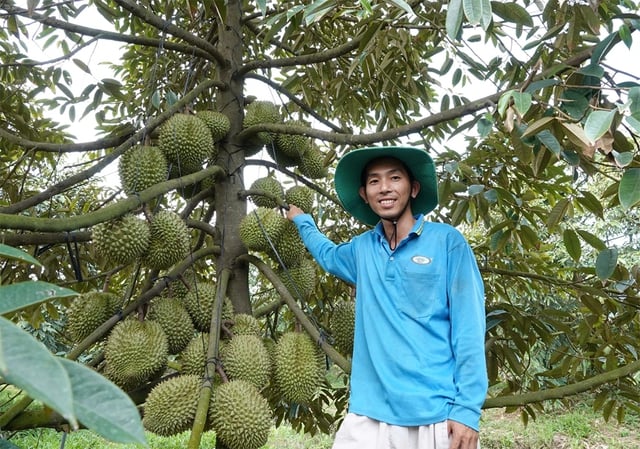
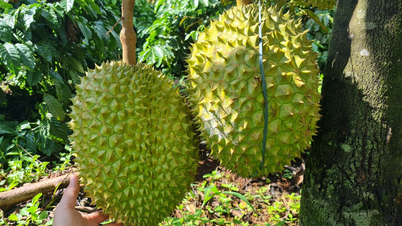
Vietnamese durian is preparing to open up the Indian market, which has over 1.4 billion people.
PHOTO: DUY TAN
According to the Department of Crop Production and Plant Protection (Ministry of Agriculture and Environment), Vietnamese durian is expected to be officially exported to the Indian market from July 2026. Currently, the relevant authorities of both countries are finalizing the necessary technical procedures. If everything goes according to plan, Vietnamese durian will be the first to open its market to over 1.4 billion people, even before Thailand. This is considered a significant step forward for the domestic durian industry.
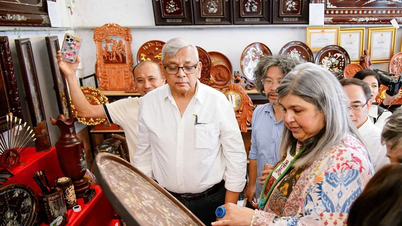
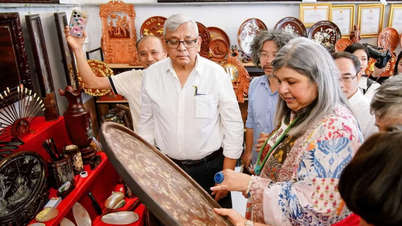
Mr. Le Anh Trung recounted that two years ago, he participated in a delegation from the Dak Lak Provincial People's Committee to India to explore the market. At that time, durian was a very new product in the Indian market. This market has a very strong stratification, but there are many well-off and wealthy people who can afford expensive goods. "At this point, it's still too early to assess the future of Vietnamese durian if we successfully open the Indian market. However, what is certain is that opening another export door means we have another opportunity for success and reduce the risk of dependence on that market," Mr. Le Anh Trung stated.
Sharing the same perspective, Mr. Dang Phuc Nguyen, General Secretary of the Vietnam Fruit and Vegetable Association (VINAFRUIT), analyzed: India's preparation to open its market to Vietnamese durian is certainly a welcome sign, but expecting a surge in export value immediately, as with the Chinese market, is somewhat difficult. This is because China is a market "waiting for goods," so export value surged as soon as the market opened. Conversely, with India, Vietnam plays the role of a pioneer. We must cultivate consumer interest in experiencing durian to turn it into a favorite food.
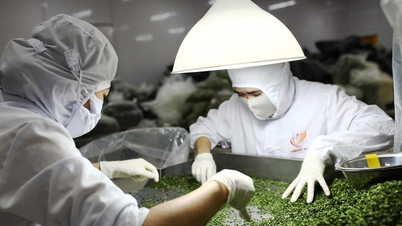
"The Indian market for Vietnamese durian is more of a long-term strategic opportunity than a 'gold mine' that can be exploited immediately. In the short term, India will be more suitable for processed products such as frozen and dried durian than fresh whole durian, thanks to its long shelf life," the General Secretary of the Vietnam Fruit and Vegetable Association commented.
Nevertheless, looking at the success of Vietnamese dragon fruit in the Indian market in recent years, we have reason to expect durian to soon become an "addictive" fruit for the people of this country. In just a short time, this market has ranked second only to China in consuming Vietnamese dragon fruit. By 2025, Vietnamese dragon fruit exports to India are expected to reach $42 million, a 6.4% increase compared to the previous year. If only 5-10% of the Indian population "knows how to eat" durian, it would mean opening up a huge consumer market.
Alongside maintaining and increasing market share in China, we must also expand into new markets, with India being a very promising one. To achieve this, the government needs to implement supportive policies to develop sustainable durian growing areas and encourage businesses to invest in deep processing to increase product value and minimize the risk of price drops due to bumper harvests.
Mr. Le Anh Trung, Chairman of the Dak Lak Province Durian Association
Many high-end markets also saw strong growth.
Looking back at the first four months of 2026, although durian exports faced numerous difficulties leading to a sharp drop in domestic prices, customs data showed very positive signs. Cumulatively, durian exports reached US$293 million in the first four months, a 60% increase compared to the same period last year. China remained the main consumer market with a turnover of US$256 million, a 143% increase compared to the same period. In addition, other important markets also saw strong growth compared to the same period last year, such as the US with nearly US$7 million (a 12% increase), and especially South Korea with US$1 million (a 201% increase).
Mr. Dang Phuc Nguyen informed that Vietnam has not yet exported fresh durian to South Korea; the product is currently only available in frozen whole fruit or separated segments. Recently, Vietnam's durian exports to South Korea have seen good growth, at times even increasing by 500% compared to the same period. This growth may stem from the increasingly large Vietnamese community in South Korea, including expatriates, students, and Vietnamese workers. This loyal customer base acts as a bridge between culinary cultures, driving up the demand for durian in South Korea.
Currently, many demanding markets such as the US, Japan, South Korea, Australia, and Europe do not consume large quantities of durian, but this lays the groundwork for future growth. South Korea, in particular, is a market with strict food safety standards, and the introduction of frozen durian as a first step in solving logistics problems allows businesses to proactively manage supply without fear of spoilage like with fresh durian.
"South Korea applies a strict Pesticide List Management System (PLS - Positive List System). Therefore, the rapid growth in export turnover demonstrates that Vietnamese businesses and farmers have made significant improvements in maximum residue limits (MRLs) and sanitary and phytosanitary measures (SPS)," Mr. Dang Phuc Nguyen commented.
Meanwhile, Mr. Le Anh Trung noted that in recent times, Vietnam's durian exports have developed very rapidly in terms of breadth. Currently and in the near future, we must still focus on effectively exploiting the Chinese market.
"To maintain market share in China, Vietnam also needs to change its management mindset for the industry. Products must be truly traceable; not just through QR code labels, but through data covering the entire chain including growing area, care, supplies, harvesting, logistics, cold storage, packaging, and consumption. Alongside maintaining and increasing market share in China, we must also expand into new markets, with India being a very promising one. To achieve this, the government needs supportive policies to develop sustainable durian growing areas and encourage businesses to invest in deep processing to increase product value and minimize the risk of bumper harvests leading to price drops," Mr. Le Anh Trung emphasized.
South Korea is a high-spending market with a long and harsh winter, so not only durian but also many other Vietnamese fruits and vegetables have promising futures.
Mr. Dang Phuc Nguyen , General Secretary of the Vietnam Fruit and Vegetable Association
Source: https://thanhnien.vn/sau-rieng-viet-mo-them-nhung-canh-cua-moi-18526060121465352.htm




























































































Comment (0)