

From the beginning of April 2026, when the winter-spring rice crop was entering the harvesting stage, the Department of Agriculture and Environment urgently carried out preparatory steps for the summer-autumn crop season. Through on-site inspections of key irrigation systems such as reservoirs and dams like Trung Thuan, Truc Kinh, La Nga, Vuc Noi, Bau Nhum..., the Provincial Irrigation and Disaster Prevention and Control Sub-Department assessed that the current water resources are basically sufficient for production.
Aggregate data shows that the average capacity of 52 large reservoirs operated by specialized units has reached over 70% of their design capacity; the system of 114 reservoirs managed by local authorities also maintains a level of 76%. However, although the stored water is sufficient to meet immediate irrigation needs, the pressure on the summer-autumn crop remains very high as the intensity of the heatwave is forecast to increase from May to July.
According to calculations by specialized units, after the end of the winter-spring crop season, the reservoir capacity is expected to be only about 60%. Given this situation, the risk of drought, water shortage, and saltwater intrusion may occur locally in highland areas and at the end of the canal system.
|
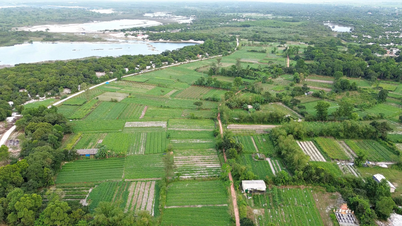
The La Ngà irrigation reservoir currently has 70% of its designed capacity remaining - Photo: Phan Khiêm |

Regarding specific water regulation plans, Mr. Nguyen Sinh Cong, General Director of Quang Tri Irrigation Works Management and Exploitation Company Limited, said: “The unit is making maximum use of returned water and water from river, stream, pond, and lake systems to serve production in the early stages of the season. Water from large reservoirs is prioritized for the rice heading stage – the most important time at the end of the season.”
Sharing in the effort to combat drought, Mr. Nguyen Huu Sang, Deputy Director of Quang Binh Irrigation and Drainage Exploitation Company Limited, said: “The unit is focusing maximum manpower and equipment to flexibly operate the mobile pumping stations. This is a key solution to effectively exploit natural surface water resources and reduce pressure on main irrigation works in the context of extreme weather.”
Based on the technical solutions mentioned above, water resource monitoring is being emphasized in drought-prone areas such as Nam Trach, Trung Thuan, Cua Viet communes... and the western mountainous communes of the province. In Trung Thuan commune, drought mitigation experiences from previous years are being effectively applied to this year's crop season.
Mr. Nguyen Hong Van, head of the self-governing group in Phu Luu village, Trung Thuan commune, said that although the Nuoc Sot reservoir and Khe De dam serve 125 hectares of rice fields in the entire village, the water level is currently only 50% due to the prolonged heatwave. To cope, the village has proactively contracted with Quang Binh Irrigation Exploitation Company Limited to provide irrigation support for 25 hectares.
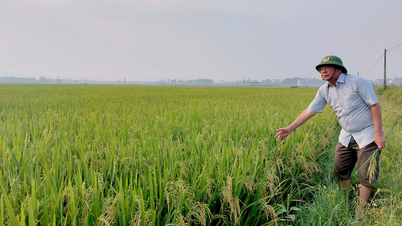
Building on the effectiveness of previous early canal dredging and the installation of mobile pumps, in mid-April, farmers mobilized to repair embankments, block leaks, and dredge the main canals. These tasks were carried out just before the winter-spring rice harvest to ensure a timely water supply for the upcoming summer-autumn crop.
To address the local water shortage during extreme weather conditions, the Ministry of Agriculture and Environment organized a conference and established working groups to conduct on-site inspections of irrigation work serving the winter-spring crop at key reservoirs; requiring irrigation operating units to strictly implement the principle of water-saving irrigation from the end of the winter-spring crop. This includes implementing the principle of "irrigating further away first, then closer areas" and "irrigating higher areas first, then lower areas" to ensure fairness and efficiency in water distribution.
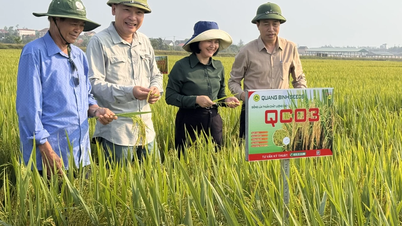
According to a report by the Department of Agriculture and Environment, in the 2025 summer-autumn crop season, more than 9,000 hectares of rice land in the province were left fallow. One of the main reasons stems from the fact that the irrigation system in some areas does not meet requirements, harsh weather conditions, and high input costs, leading to a decrease in production efficiency. To address this issue, this summer-autumn crop season, the province is focusing on replacing long-duration rice varieties with short-duration, heat-tolerant varieties such as ADI73, DB6, Du Huong, and Mahy85.
For areas where irrigation water cannot be guaranteed, local authorities encourage people to boldly switch to suitable dryland crops to avoid wasting land and reduce the pressure on water regulation in key rice-producing regions.
Mr. Le Quang Lam, Head of the Provincial Department of Irrigation and Disaster Prevention, emphasized that they have requested localities to carefully review the water supply capacity of each reservoir and pumping station. In areas with insufficient irrigation water, people will be encouraged to switch to growing other crops and vegetables, to prevent rice from dying prematurely and wasting people's investment.
Along with crop diversification, many cooperatives in the province are also promoting the use of drones for mass sowing, helping to shorten the planting season and reduce labor costs. The province also prioritizes allocating funds to repair critical points on the main irrigation canals, ensuring irrigation reaches all fields.
With proactive measures ranging from forecasting and water resource preparation to flexible operation of irrigation plans and crop restructuring, the Agriculture and Environment sector is striving to overcome difficulties caused by extreme weather conditions. Close coordination between irrigation management units, local authorities, and the consensus of the people in using water economically are decisive factors in achieving the best results for the 2026 summer-autumn crop.
Phan Khiem
Source: https://baoquangtri.vn/kinh-te/202604/chu-dong-phuong-an-chong-hancho-luavu-he-thu-b747dee/
![[Photo] My Son at night: A thousand-year-old heritage site amidst the Milky Way](https://vphoto.vietnam.vn/thumb/1200x675/vietnam/resource/IMAGE/2026/04/15/1776261039184_ndo_br_chon6-jpg.webp)
![[Photo] The General Secretary, President and his wife meet with Vietnamese-Chinese friendship leaders.](https://vphoto.vietnam.vn/thumb/1200x675/vietnam/resource/IMAGE/2026/04/15/1776264829725_vna-potal-tong-bi-thu-chu-tich-nuoc-to-lam-gap-mat-nhan-sy-huu-nghi-viet-nam-trung-quoc-8703641-3130-jpg.webp)

![[Photo] Mrs. Ngo Phuong Ly meets and exchanges views with Mrs. Peng Li Yuan](https://vphoto.vietnam.vn/thumb/1200x675/vietnam/resource/IMAGE/2026/04/16/1776277858080_phu-nhan-1-jpg.webp)
![[Photo] National Assembly Chairman Tran Thanh Man attends the opening session of IPU-152](https://vphoto.vietnam.vn/thumb/1200x675/vietnam/resource/IMAGE/2026/04/16/1776277863731_ctqh5-jpg.webp)






























































Comment (0)