

Tsubosakadera Temple, located in Takatori town, Nara Prefecture, is a place where locals and tourists come to pray for bright and healthy eyes.
Tsubosakadera was founded in 703. According to legend, the temple was once a place where Emperor Kanmu (781-806) and Emperor Ichijo (986-1011) came to pray for healing of eye diseases.
During the Meiji era (1868-1912), the story of Tsubosaka Reigenki (The Miracle at Tsubosaka Temple), set at the temple, spread, making it an even more popular destination for people seeking to improve their eyesight. Tsubosaka Reigenki tells the story of the love and fidelity of a blind couple, and is famous in the art of Kabuki theater (singing, dancing, and performing) and Ningyo Joruri puppetry.
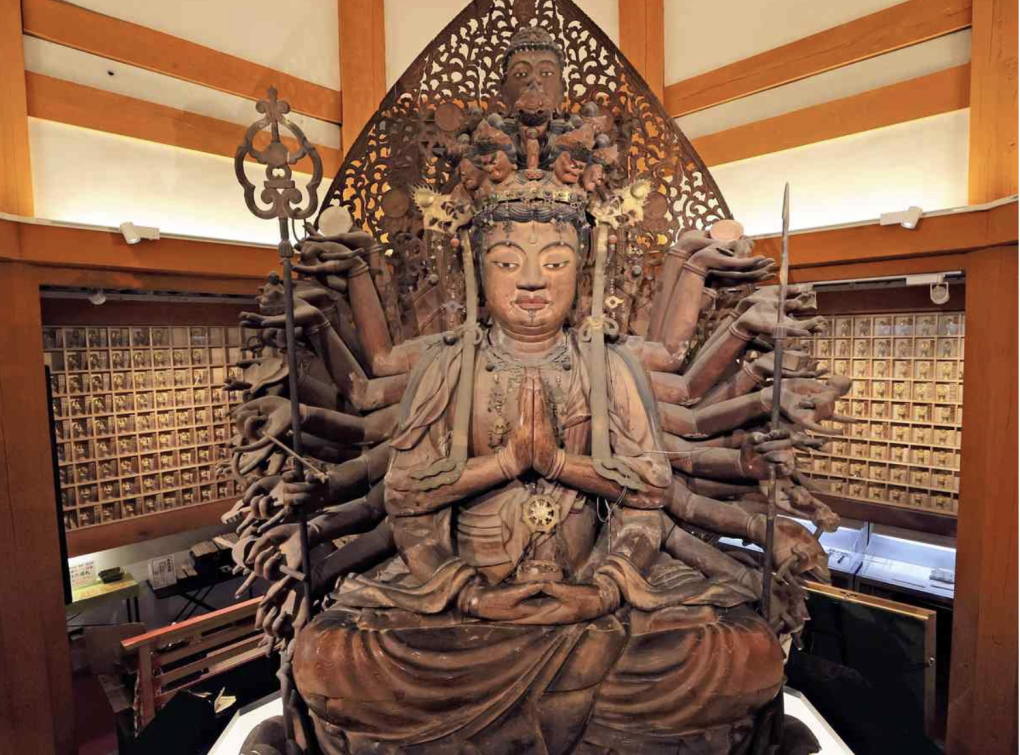
The statue in the main hall of the temple is that of the Thousand-Eyed, Thousand-Armed Avalokiteshvara, whom locals believe can cure eye diseases. The temple places a pair of rimless wooden mirrors, 4.7 meters wide and 1.8 meters high, in front of the three-story main hall. These mirrors were crafted in 1989 to match the facial features of the 20-meter-tall statue within the temple grounds.
Glasses are indispensable for those with poor eyesight. The giant wooden glasses serve as a reminder to devotees of the importance of their eyes and to cultivate gratitude for everything around them.
However, the glasses are only displayed from October to December each year.
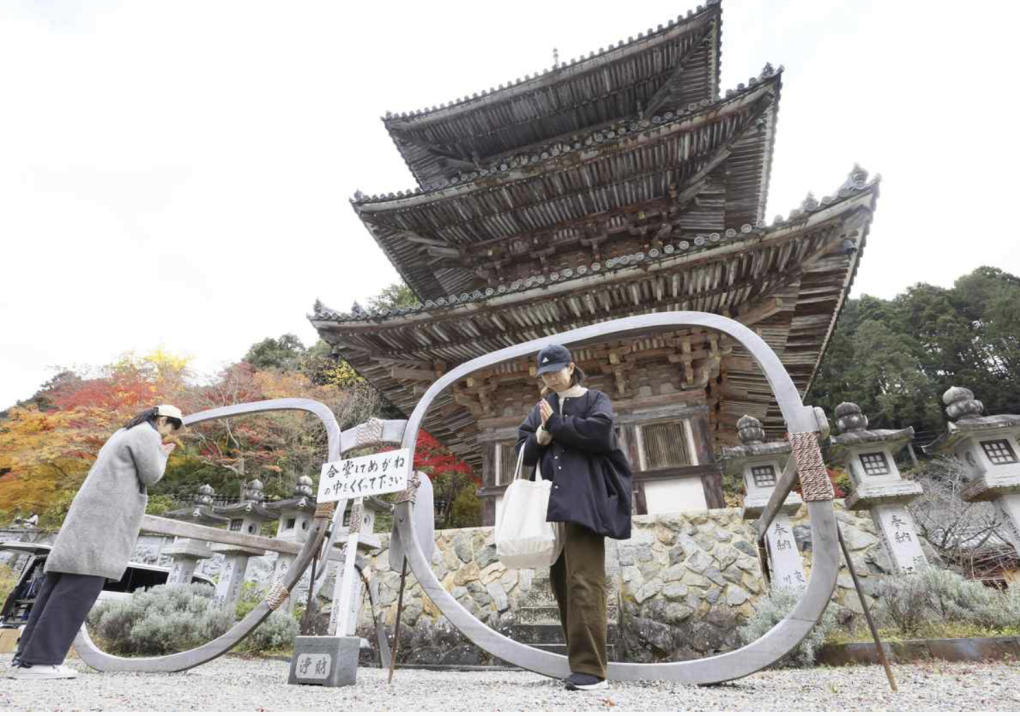
Shoshin Kita, 55, the temple manager, said that the wooden mirrors are prone to rotting during the rainy season, so they are only displayed for two months of the year.
A 68-year-old woman from Osaka Prefecture visited a temple to give thanks after cataract surgery, saying that praying at the temple helped her overcome anxiety and brought her peace.
Another woman, an 80-year-old from Osaka Prefecture, who suffers from glaucoma and has been regularly visiting the temple for the past eight years, said that the place gives her strength to overcome her illness.
Not only the visually impaired, but many elderly people with poor eyesight also frequently visit the temple to pray. The path leading to the main hall is equipped with a lift and ramps for wheelchairs to assist visitors, and electric wheelchair rental services are also available.
"We want the temple to become a place where anyone can come," said Mr. Kita.
In 1961, a nursing home for the visually impaired elderly was built on the temple grounds. For over 1,300 years, Tsubosakadera Temple has been a place of pilgrimage and assistance for those facing difficulties in life.
Tsubosakadera Temple began selling eye drops in the late Edo period. Currently, the temple sells these eye drops for 1200 yen (approximately 200,000 VND). In addition, the temple also sells candy containing megusuri no ki powder (a medicinal plant used to treat eye problems), also known as nikko, a tree whose bark is used in folk medicine.
From the front courtyard of the main hall, visitors can enjoy views of the three mountains of Yamato or Mount Rokko in Kobe. Visitors can also purchase eye-related souvenirs such as glasses cleaning cloths featuring an image of Buddha wearing glasses, or cloths printed with the Buddha's hand, similar to an eye chart, when visiting the temple.
According to vnexpress.net
Source: https://baohanam.com.vn/du-lich/chua-cau-cho-mat-sang-o-nhat-ban-151296.html


































































Comment (0)