

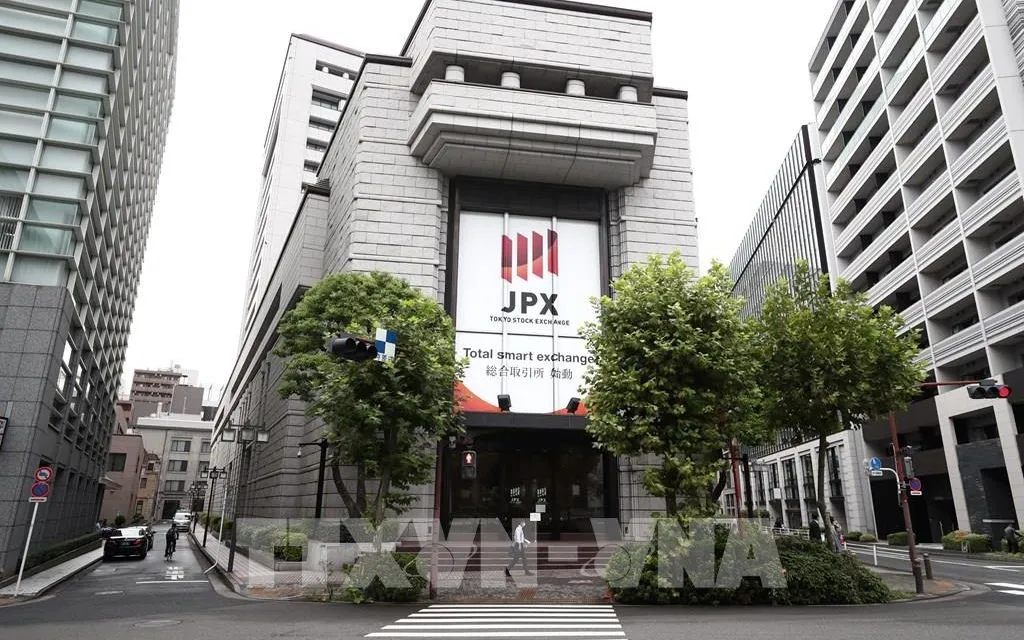
Outside the Tokyo Stock Exchange (TSE) in Tokyo, Japan. Photo: VNA
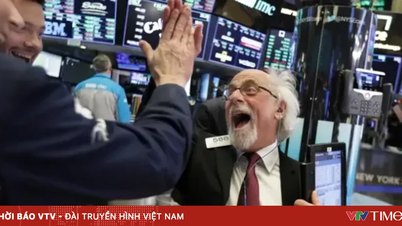
Easing trade tensions between China and the US fueled a sharp rise in stock prices on the morning of October 27th, with Japan's Nikkei 225 index surpassing 50,000 points for the first time and South Korea's Kospi index exceeding 4,000 points for the first time.
Asian stock markets surged as signs of easing trade tensions between China and the U.S. boosted risk appetite in a volatile week marked by central bank meetings and earnings reports from large-cap companies.
The MSCI index of Asia-Pacific stocks (excluding Japan) rose 1.3%. In the first 15 minutes of trading, the Nikkei 225 gained 948.64 points, or 1.92%, to 50,248.29, while the Kospi rose 81.55 points, or 2.07%, to 4,023.14, on hopes that the US and China would soon reach a comprehensive trade agreement. In China, the Shanghai Composite index rose 0.48%, opening at 3,969.22.
Top economic officials from China and the United States discussed a framework trade agreement on October 26th, which U.S. President Donald Trump and his Chinese counterpart Xi Jinping could decide on later this week during their planned meeting in South Korea. A trade deal would temporarily halt additional U.S. tariffs on Chinese goods and China's controls on rare earth exports, helping to ease investor concerns about escalating trade tensions between the world's two leading economies.
Charu Chanana, chief investment strategist at Saxo, believes investors will want to wait for confirmation of the US-China trade deal, and that signals of stimulus and reform from China will translate into clear growth drivers. Meanwhile, Chris Weston, research director at Pepperstone, says a trade deal wouldn't be a surprise to the market as it was largely anticipated. However, buying activity could fuel price increases for risk-sensitive assets throughout the week.
This week, investors will also focus their attention on central bank meetings in Japan, Canada, Europe, and the United States. The US Federal Reserve is widely expected to cut interest rates by 25 basis points after data showed lower-than-expected consumer price increases in September 2025, but the government shutdown and its impact on the release of data remain a concern. The European Central Bank and the Bank of Japan (BoJ) are generally expected to keep interest rates unchanged later this week. While the BoJ may debate whether conditions are ripe for further rate hikes now that concerns about a recession caused by tariffs have eased, political uncertainties could delay this for the time being.
Meanwhile, the most hectic period of US corporate earnings reporting season is approaching, with major market capitalization companies like Microsoft, Apple, Alphabet, Amazon, and Meta Platforms all set to release their results this week. While the earnings of the "Big Seven," a group of massive companies whose stocks lead stock indices, are narrowing compared to the rest of the index, these companies are still expected to report more positive results during this period.
Source: https://vtv.vn/chung-khoan-nhat-ban-lap-ky-luc-100251027142007627.htm





































































































Comment (0)