

Ho Chi Minh City has implemented many aspects of the digital transformation program, such as issuing a set of indicators to evaluate digital transformation, a data governance strategy, and implementing pilot models for the project to deploy population data applications.
Electronic authentication… Digital transformation activities focused on the people have achieved many remarkable results.
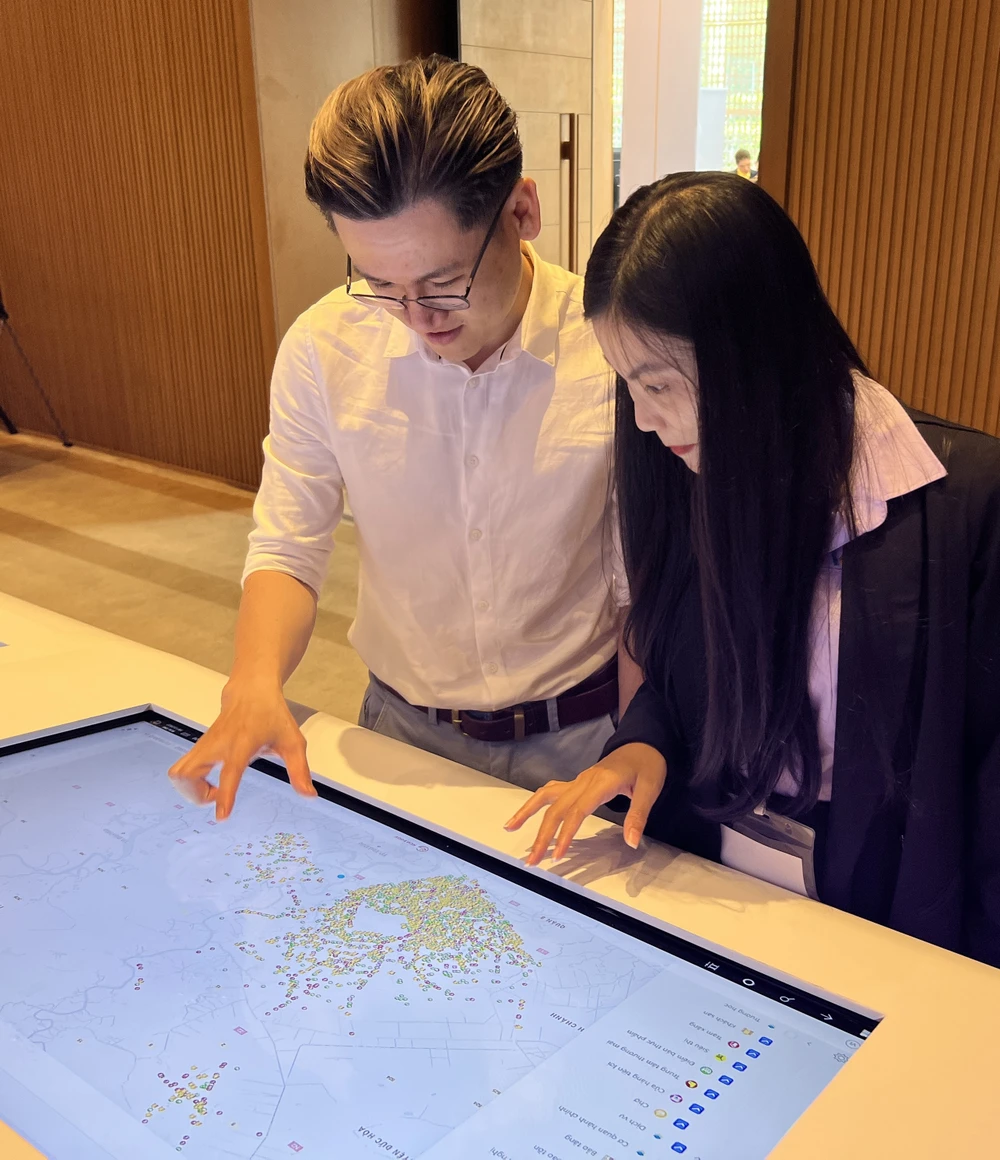
Build the best infrastructure.
Officials and citizens entering the offices of district and even Ho Chi Minh City People's Committees can simply present their smartphone, along with an image or email containing an invitation, to verify their identity, replacing the previous forms of invitations and personal documents. This is a small part of the results of digital transformation – building a digital government – that the city has implemented, bringing convenience and saving time.
With the development of digital government, 100% of the city's state agencies have now implemented official email; online video conferencing; electronic document and file management systems; meeting invitation systems, work schedules, etc. The city has also completed upgrading the document exchange system, enabling seamless connection and exchange of electronic documents across more than 1,500 units, creating a city-wide digital document repository.
Mr. Lam Dinh Thang, Director of the Department of Information and Communications of Ho Chi Minh City, said that the city has restructured the business process for handling administrative procedures in the digital environment, achieving 740 online public services; launched the Institutional Implementation Map at https://bandotheche.hochiminhcity.gov.vn to publicly display transparency indicators and the progress of service resolution for citizens; the 1022 hotline connects 700 units - focal points responsible for 18 fields; and deployed an artificial intelligence (AI) virtual assistant to support document processing and serve citizens on the city's administrative procedure resolution system...
To achieve these results, in addition to the smooth implementation of the digital transformation policy, infrastructure development was prepared early. The city upgraded its data center and cloud computing infrastructure, maintaining capacity and resources with over 1,000 servers for the city's e-government information system; built a dedicated network system that connects and expands interoperability from the city level to the commune and ward levels and affiliated units with over 800 connection points. The city also popularized digital signatures, issuing them to nearly 470,000 citizens, 11,777 digital signatures to officials and civil servants, and 1,950 digital signatures to agencies using online public services… contributing to the smooth and secure operation of digital transformation activities.
According to data released by the Ministry of Information and Communications, the contribution of the digital economy to Ho Chi Minh City's Gross Regional Domestic Product (GRDP) in 2023 was estimated at 18.66%. The city continuously implements activities to promote digital transformation and cashless payments in educational and medical institutions. To ensure that digital transformation is closely linked to promoting the digital economy, Ho Chi Minh City focuses on supporting and encouraging the development of digital technology businesses, creating momentum to promote businesses in various economic sectors to implement digital transformation and develop new production and business models based on digital technology platforms.
Connecting digital government with digital citizens.
In 2024, Ho Chi Minh City identified one of its goals as digital transformation for effective urban governance based on real-time data and forecasts; promoting economic growth, moving towards a digital and green economy; improving the quality of living and working environments; and increasing citizen participation in city administration.
Accordingly, the city has set a target that by 2025, the city government will move its operations to digital platforms; 100% of eligible public services will be available online; citizens and businesses will conduct transactions online and only provide information once; and 100% of city residents will have smartphones…
According to the Ho Chi Minh City Department of Information and Communications, to effectively achieve the above objectives, the city will continue to implement policies to support and develop data center infrastructure, cloud computing infrastructure; telecommunications network infrastructure, broadband internet coverage to every neighborhood and hamlet with no blind spots; expand and improve the city's data integration and sharing platform; widely deploy 5G network coverage (after the Ministry of Information and Communications grants a license); and promote 5G applications and services.
Internet of Things (IoT) services and AI application platforms serving the development of digital government, digital economy, and digital society will also be strengthened and expanded.
In 2024, the city also accelerated the launch of new platforms to improve the quality of public services and effectively apply data in the city's governance and implementation. This will focus on land information systems and construction permits, as these are two areas with the largest number of complex files and the most significant impact on citizens' needs. Simultaneously, the city will implement a digital platform and electronic document storage system… to enrich and effectively utilize the city's data repository.
“In 2024, with digital transformation aimed at building a digital government focused on serving the people, the city will continue to promote digitalization and restructuring of business processes, shortening processing times in the digital environment to improve the quality and quantity of services across the entire system, and streamline administrative procedures. To enhance citizen participation in interacting with the digital government and building a digital citizenry, this year we will launch the City Citizen mobile application for people to use.” "Citizens can communicate and access the city government more effectively and conveniently," Mr. Lam Dinh Thang shared.
BA TAN
Source








































































































Comment (0)