

Learning in an open space
In high schools across Tuyen Quang province, preparations for the 2026 high school graduation exam are entering an accelerated phase. Unlike in the past, when students mainly relied on textbooks and in-person review sessions, digital technology has now become a familiar "companion" for both teachers and students.
During a math review session at Minh Quang High School, the teacher not only lectured on the board but also connected to an online question bank system so students could practice during class. Using only a smartphone or tablet, students could complete the exercises, receive instant results, and clearly identify areas where they needed improvement.
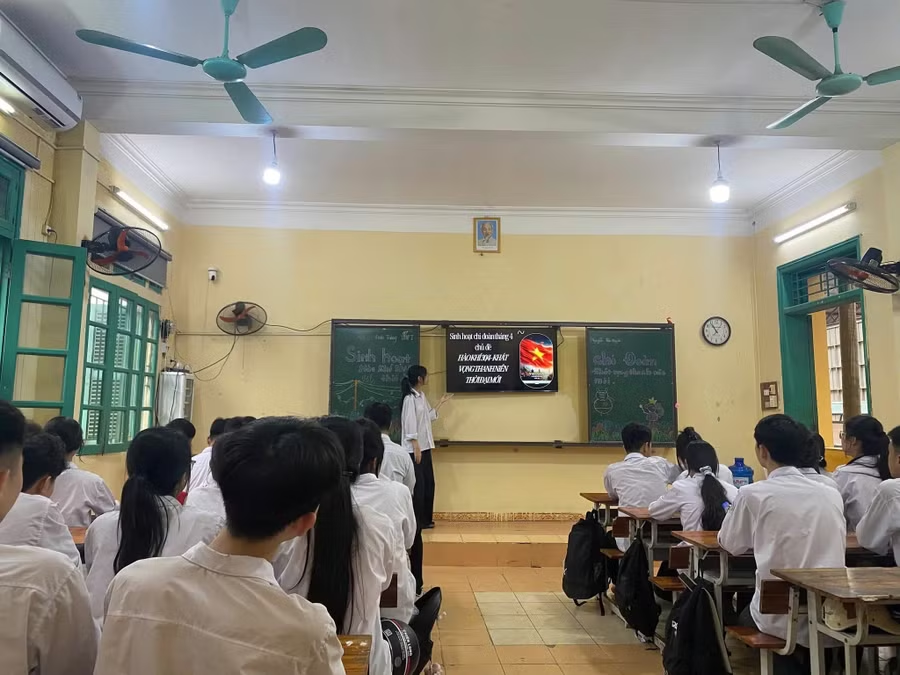
The learning atmosphere has therefore become more vibrant. Students actively exchange ideas and interact with teachers more, instead of just sitting and listening to lectures passively. Data from online tests helps teachers quickly categorize students and adjust review content to suit each ability group.
Ma Thi Hieu, a student in class 12C2 at Minh Quang High School, shared that in addition to her time in class, she regularly participates in online classes and practices exam questions online.
“The teachers provided very detailed guidance on reputable learning resources for us to study on our own. I can review lectures anytime and practice many different types of questions, so I feel more confident. This year I plan to apply to a teacher training college, so I'm trying my best to focus on the exam,” Hieu said.
Digital transformation is not only bringing about positive changes in schools in central areas, but also in many schools in disadvantaged regions. At Khang Nhat Secondary and High School in Tan Thanh commune, the school organized three mock exams for 12th-grade students using a hybrid format of in-person and online testing. The results from each exam showed a significant improvement in student performance.
According to Mr. Nguyen Manh Ha, the school's Vice Principal, the application of technology helps teachers manage students' learning more effectively, while also creating conditions for students to enhance their self-learning abilities.
“The school categorizes students according to their abilities to organize appropriate review sessions. Teachers assign homework through platforms like Khan Academy, OLM… Students can practice extra outside of class, and teachers can easily monitor each student’s progress,” Mr. Ha said.
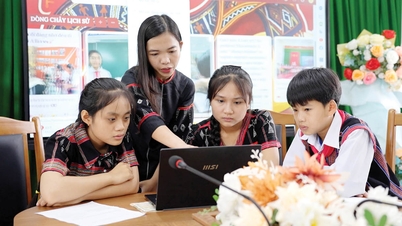
Practical implementation shows that digital technology not only supports innovation in teaching methods but also opens up an "open learning space" where students can access knowledge anytime, anywhere. With just an internet connection, they can participate in online classes, watch instructional videos , take practice exams, or exchange ideas with friends on learning forums.

More importantly, the digital learning environment is contributing to the development of self-learning skills, an increasingly essential element in modern education . Instead of relying entirely on teachers, students proactively develop study plans, search for materials, and self-assess their abilities.
Many teachers believe that AI and digital technology are fundamentally changing the way we teach and learn. Previously, individualized learning was difficult to achieve in large classrooms, but now, with the support of technology, teachers can accurately identify each student's strengths and weaknesses to provide appropriate support.
Towards smart education
Beyond simply serving the 2026 high school graduation exam, the Tuyen Quang Education Department is identifying digital transformation as a long-term strategy to improve the overall quality of education.
According to the plan for the period 2025-2030, the entire education sector strives to ensure that 100% of educational institutions have information technology infrastructure that meets the requirements of digital teaching and learning; and 100% of teachers receive training in digital skills and the ability to apply technology in teaching.
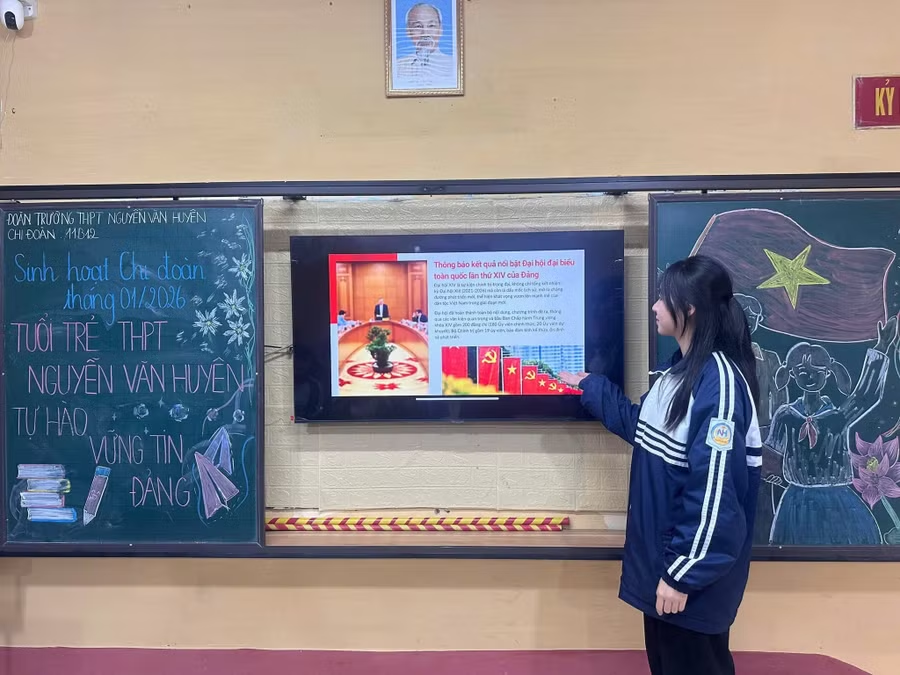
To realize this goal, many schools have invested heavily in technological infrastructure. Fiber optic internet is available in every classroom; televisions, projectors, and presentation equipment are provided uniformly. Most teachers are proficient in using personal computers to design lessons and organize learning activities.
Alongside investment in equipment, the development of digital learning materials is also given special attention. Schools encourage teachers to create e-learning lessons, digitize subject content, and contribute to the shared learning resource repository of the education sector.
Engaging online lectures, incorporating images, videos, and visual simulations, help students access knowledge more easily, especially for difficult or highly differentiated content. They also serve as an important resource for students to self-study and review outside of class hours.
Notably, artificial intelligence is gradually being integrated into the educational environment as an effective support tool. The application of AI not only helps create exam questions and analyze learning outcomes but also supports the personalization of learning content according to each student's abilities.
Recently, the Department of Education and Training of Tuyen Quang province signed a cooperation agreement with STEAM for Vietnam Co., Ltd. to develop AI capabilities for local teachers in the period 2026-2027. The program is part of the AI Literacy initiative sponsored by Meta Group, aiming to build a community of AI teachers and promote innovation in teaching methods in schools.
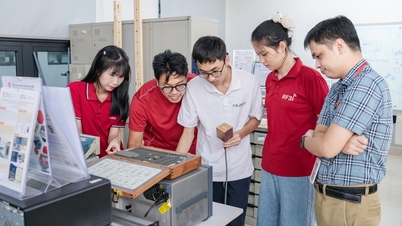
According to representatives from the education sector, enhancing teachers' digital skills is a key element of digital transformation. No matter how advanced technology is, it will only truly be effective when teachers know how to utilize it correctly to support teaching and learning activities.
In reality, with the rapid development of the internet and AI, students today have many opportunities to access knowledge. However, this also places demands on their information selection skills, self-learning abilities, and awareness of using technology safely and effectively.
Beyond simply imparting knowledge, schools are increasingly focusing on the guiding role of teachers in the digital environment. Teachers are not only instructors but also guides who help students learn how to access digital resources and use AI responsibly.
Digital transformation in education in Tuyen Quang is moving in a substantive direction, gradually creating changes from teaching methods to students' learning mindset. Today's digital classrooms, electronic lectures, and online question banks not only serve a single exam but also lay the foundation for a modern education model in the future.
Source: https://giaoducthoidai.vn/chuyen-doi-so-tiep-suc-si-tu-post779655.html





















































![[Video] Sunset at Lap An Lagoon – Where the sun sets over the fishing nets](https://vphoto.vietnam.vn/thumb/1200x675/vietnam/resource/IMAGE/2026/05/31/1780192137701_beach-landscape-sea-water-nature-grass-745871-pxhere-com.jpeg)



































Comment (0)