Based on practical requirements...
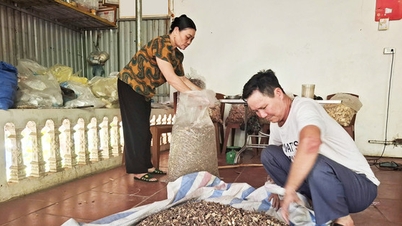
In her small workshop in Phung Xa (Hong Son commune), Meritorious Artisan Phan Thi Thuan meticulously works with cocoons and silk threads. Having been involved in the silk industry for over half a century, she understands that preserving the craft requires more than just maintaining the looms, designs, or weaving secrets; it's also crucial to preserve a clean source of raw materials.
“Silkworms only eat clean mulberry leaves. Without a sufficiently large and safe mulberry growing area, silkworm farming is difficult to sustain,” said Ms. Thuan. This desire is not only the sentiment of an artisan, but also highlights a fundamental requirement of green transformation: Sustainable production must begin with safe, stable inputs and a well-organized system.
Phung Xa today is no longer just a small craft village. Numerous businesses, production households, modern machinery, and thousands of workers are creating significant economic vitality for Hong Son commune. However, as production scale has expanded beyond the boundaries of the traditional craft village, bottlenecks in terms of land availability, transportation, wastewater treatment, waste collection, and production organization are becoming increasingly apparent.
Mr. Nguyen Duy Truong, Chairman of the Phung Xa Textile Village Association, believes that while the village has no shortage of skilled workers and a desire for innovation, simply producing more is not enough to reach greater heights. "The important thing is to do better, more meticulously, and with higher value. To achieve this, the village needs suitable production spaces, synchronized infrastructure, and a better controlled environment," Mr. Truong shared.
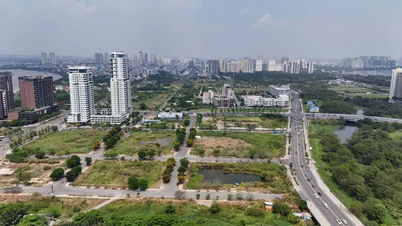
Not only traditional craft villages, but agricultural production in Hong Son is also facing significant pressure. Rapid urbanization, low agricultural product prices, rising input costs, a shortage of young labor, and unstable output have led to a loss of enthusiasm among some farmers for farming. Without new production organization methods, the risk of abandoned farmland and fragmented, inefficient production is unavoidable.

...to concrete action
Based on these practical needs, Hong Son commune is gradually concretizing green transformation through actions closely related to production and daily life. According to Pham Van Thu, Head of the Economic Department of Hong Son commune, one of the local areas of focus is researching and proposing a plan for raw material areas to serve the craft village, including mulberry cultivation and silkworm farming areas. These raw material areas not only help preserve the silk weaving craft but also create conditions for organizing clean production right from the start. With a stable mulberry growing area, those involved in the craft feel more secure, and the products have higher value. This is also a way to connect agriculture with the craft village, so that traditional values are nurtured through new production methods.
Along with securing raw materials, Hong Son has determined that the development of craft villages must be linked to environmental protection. The orientation towards forming concentrated production spaces, investing in transportation infrastructure, and developing wastewater and waste collection and treatment systems not only aims to alleviate difficulties for businesses and production households but also reduces pressure on residential areas. When production is more systematically organized, businesses will have the conditions to invest in clean technology, improve product quality, and meet the increasingly high demands of the market.
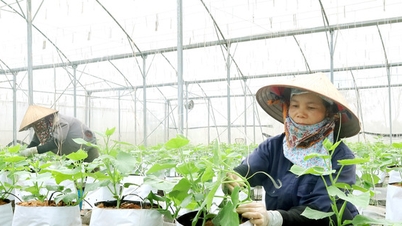
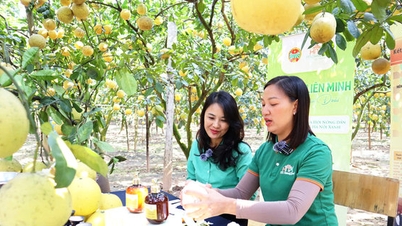
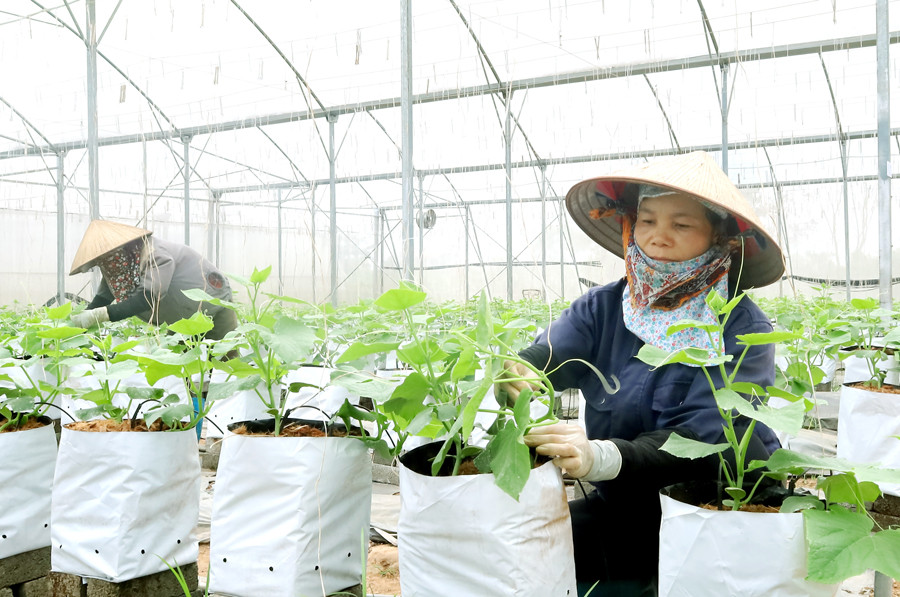
On another front, land consolidation and the replication of high-tech agricultural models are also solutions to mitigate the problem of abandoned farmland under the pressure of urbanization. Terrasol Farm Life, established on nearly 12 hectares of low-lying land, is a notable example. From a low-lying area, this model has been organized into a clean agricultural production space with greenhouses, automatic irrigation, controlled light, temperature, and humidity, producing according to GlobalGAP standards, while also incorporating landscaping, ponds, walking paths, and experiential areas.
This approach demonstrates that when agricultural land is reorganized using technology, landscaping, and experiential services, the value of the land is no longer solely in agricultural production, but also in its ability to create new livelihoods. Building on the foundation of clean agriculture, the model can further develop experiential activities for students, families, and tourists; thereby helping participants better understand crops, water resources, soil, safe farming practices, and a green lifestyle.
Ms. Nguyen Thi Thanh, a worker at Terrasol Farm Life, said that working in a high-tech agricultural model has changed the way workers think about farming. “Previously, many jobs were based on experience. Now, we have to follow procedures, keep records, observe the crops, pay attention to water sources, fertilizers, and timing of care. Clean agriculture requires more carefulness and a deeper understanding of what we are doing,” Ms. Thanh shared.
It is these changes from workers and from specific production models that make green transformation more accessible. It's not just a slogan, but a change in how we plant trees, raise silkworms, weave fabrics, manage the environment, organize space, and create new services for the community.

According to Ngo Quoc Ca, Chairman of the People's Committee of Hong Son commune, green transformation in Hong Son must begin with concrete actions: cleaning up the environment of craft villages, developing raw material areas, replicating high-tech agricultural models, and exploiting ponds, lakes, and landscapes in conjunction with ecotourism and experiential activities. "Economic development must go hand in hand with environmental protection, preserving cultural identity, and improving the quality of life for the people. That is the foundation for Hong Son to build a sustainable green economic zone," the Chairman of the People's Committee of Hong Son commune emphasized.
As craft villages become cleaner, agriculture becomes smarter, and ponds and landscapes are utilized more efficiently, green economic zones on the outskirts of cities will no longer be a distant goal, but will gradually become a part of people's lives.
Source: https://hanoimoi.vn/chuyen-doi-xanh-o-xa-hong-son-dat-nen-tang-cho-vung-kinh-te-xanh-ben-vung-1210558.html