


Vu Ngoc Diep began writing poetry at the age of 8. Initially, her poems were naive and awkward. Over time, Diep's poems gradually became more complete and rhythmic.
Inside her schoolbag, there's always a notebook filled with drawings, poems, and short stories. Whenever she feels inspired to write, Ngoc Diep immediately picks up her pen and starts writing right there.
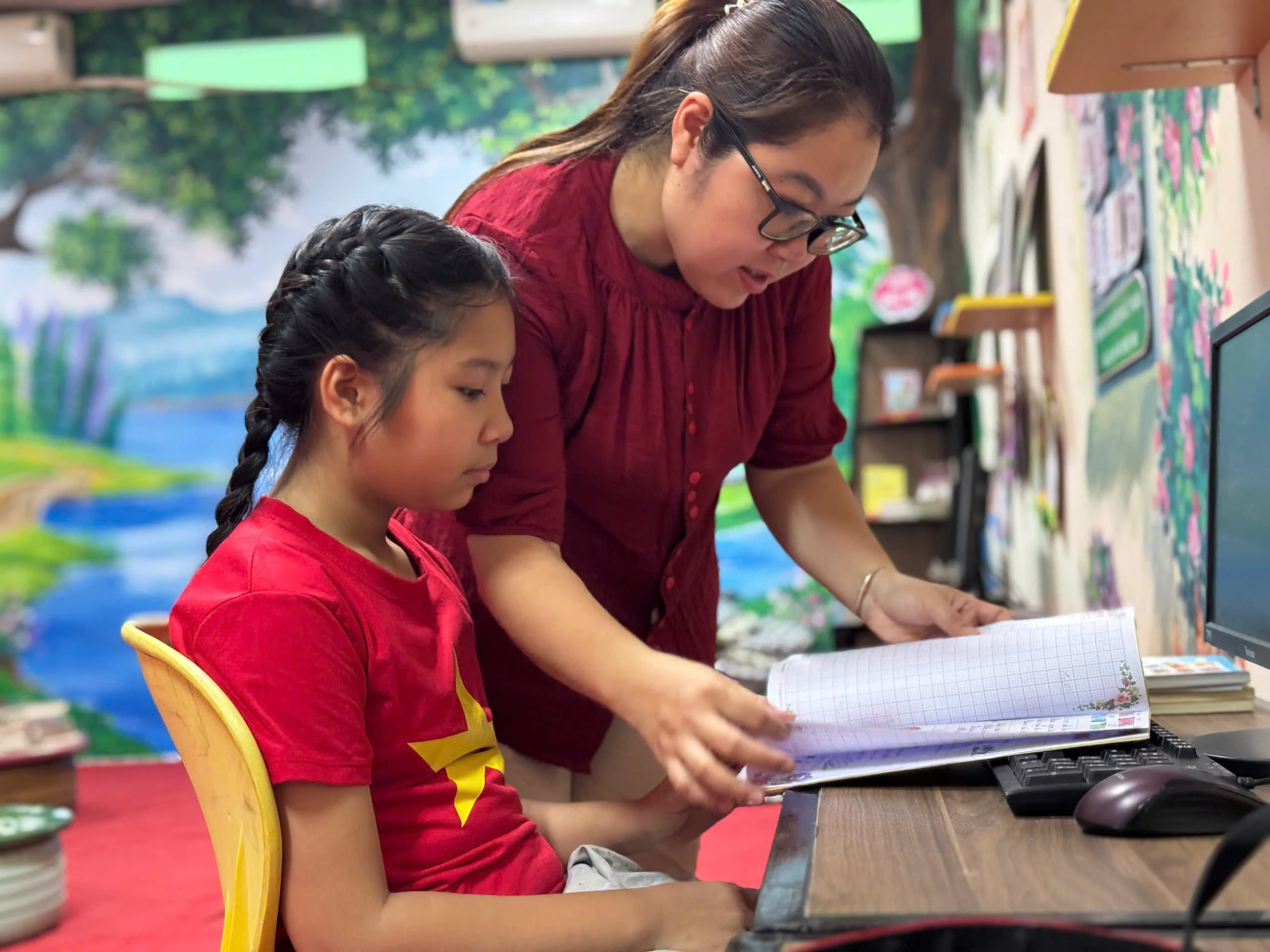
Ms. Luc Dung, Vu Ngoc Diep's mother, shared: "Diep was exposed to books and stories from a very young age. Before she was one year old, she became familiar with pictures through picture books, then listened to lullabies, folk songs, and traditional rhymes. When she started to speak, I let her read nursery rhymes, short poems, and look at funny picture books. Thanks to this, Diep learned to speak early, spoke a lot, and asked many questions."
For Ms. Dung, these weren't just simple childish questions, but also showed that her child always observed the world with a rich imagination.
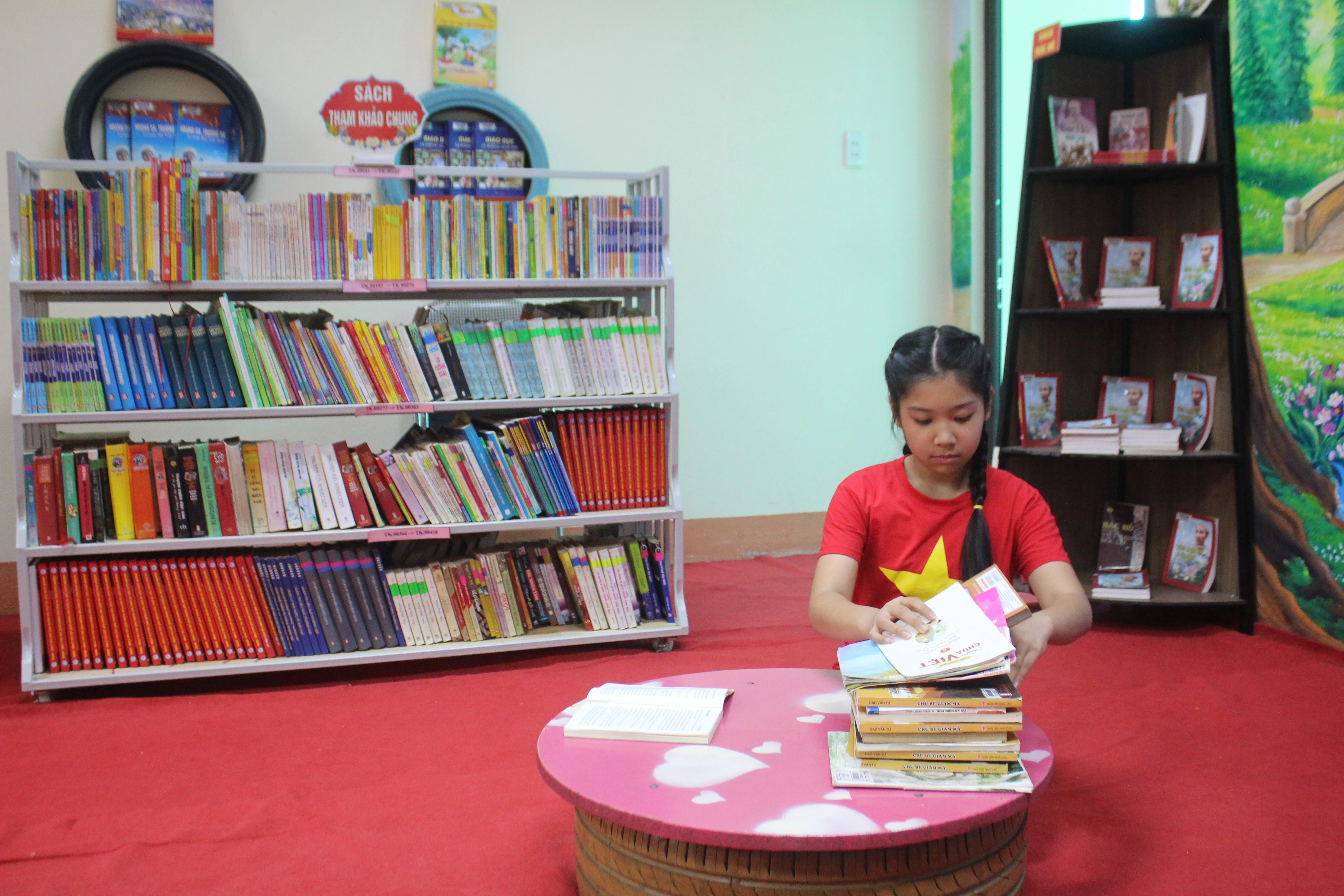
By observing and paying attention to every detail around her, from the color of flowers to the shapes of objects, and every conversation with family members, Diep would "translate" it from a child's perspective and incorporate it into her poetry. Sometimes, just looking at the clouds before it rains, Diep would make a connection and liken it to a family.
When Diep was in second grade, Ms. Dung started having her write a diary, beginning with simple things like the weather or a story from the day. At the same time, she encouraged her to read by giving her storybooks whenever she got good grades.
Besides books, the family also tried to bring their child closer to nature through weekend trips, picnics, or holiday outings. This also helped Ngoc Diep gain more real-life material for writing and drawing. In this way, Vu Ngoc Diep gradually became accustomed to expressing her emotions through writing. At the age of 11, Diep had already written and drawn the manuscript for her first poetry collection, "The Big-Bellied Book."
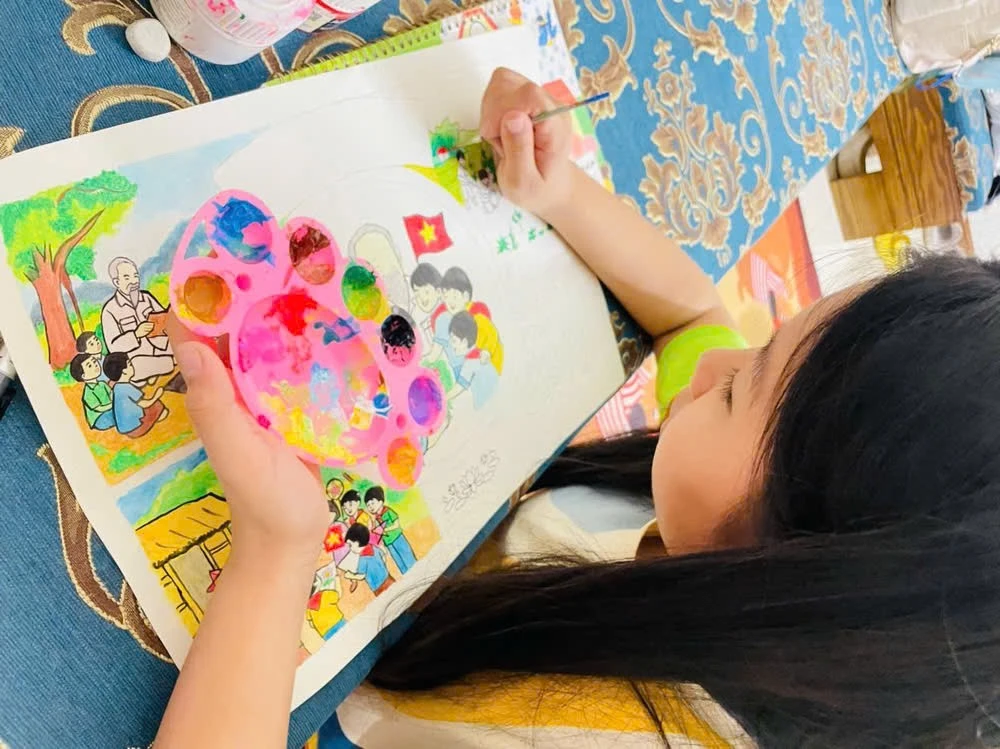
Behind these innocent verses lies not only the imagination of a young girl who loves poetry, but also a childhood nurtured by the special love of her family and the joy of discovering life. It is this purity that allows Vu Ngoc Diep's manuscript "The Big-Bellied Bookworm" to carry so many natural and sincere emotions.

The manuscript of the poetry collection "The Big-Bellied Bookworm" consists of 13 poems, and everything from the cover and content to the illustrations was created by Vu Ngoc Diep. Each page is a candid glimpse into the world around us, where objects and nature can converse, think, and carry their own unique emotions.
The unique feature of this poetry collection is its ability to personify familiar objects from everyday life. In Diep's world, "The Big-Bellied Book" contains a wealth of knowledge, "The Pencil Takes Off Its Shirt," "The Mirror Imitates," "The Clock Races," "The Shoes Want to Go Out," "The Cloud Takes a Bath," "The Moon Goes on a Diet"... - seemingly inanimate objects suddenly become lively, relatable, and possess their own distinct personalities.
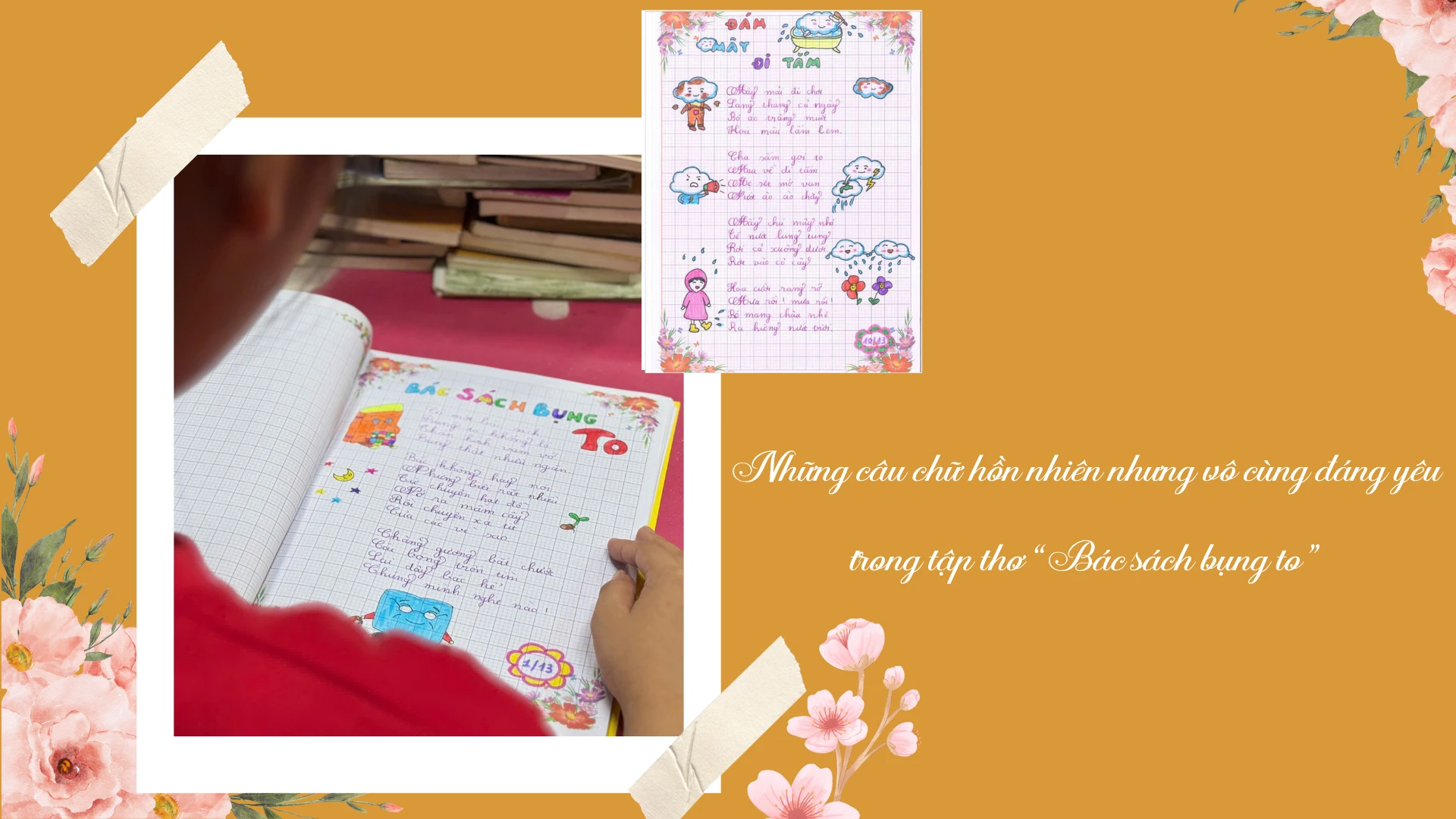
The most valuable aspect of this poetry collection lies not in its technical refinement, but in its natural, unforced tone and genuine emotion. The verses are simple yet reflect a childhood nurtured by love, observation, and the joy of discovering life.
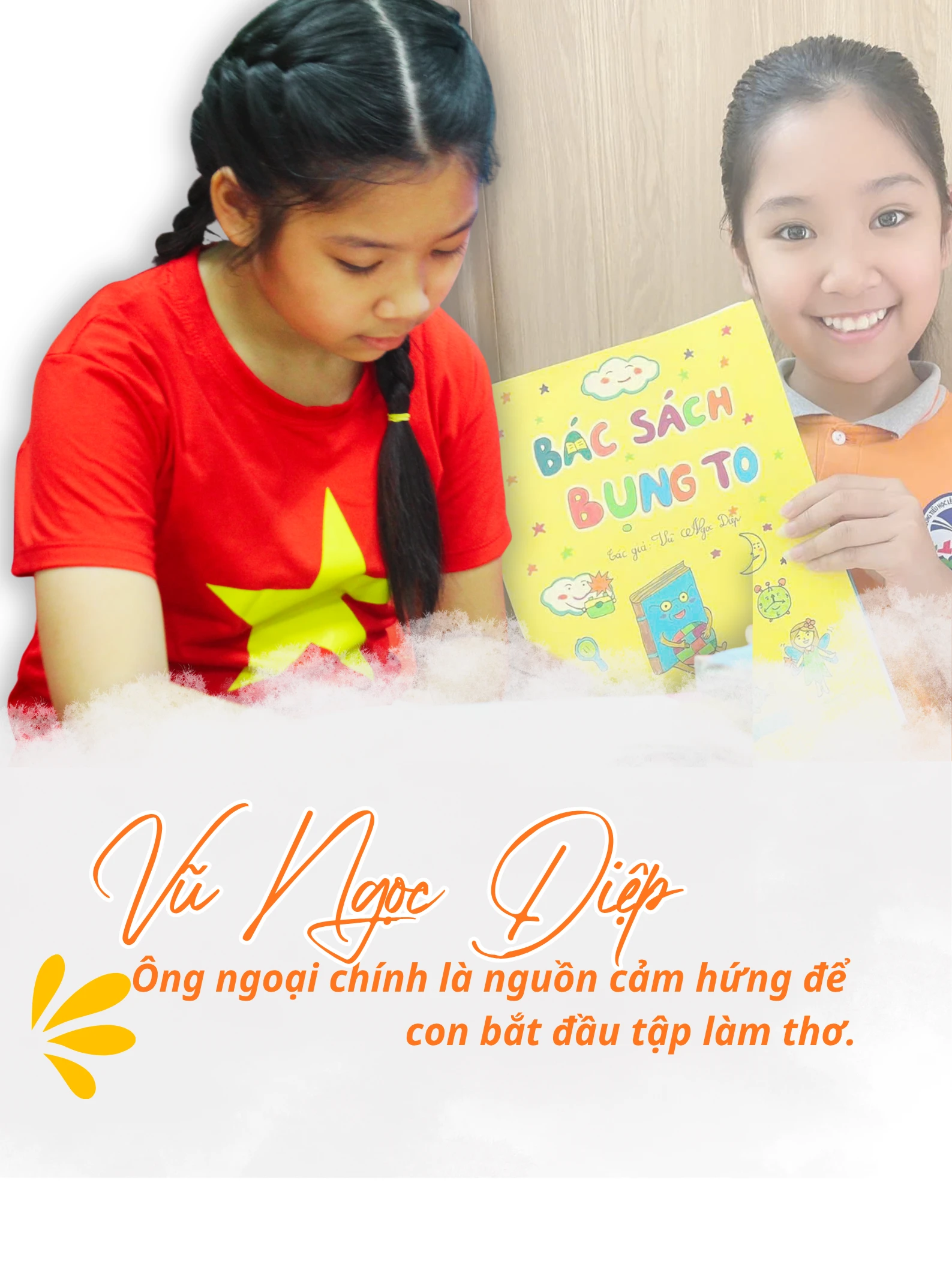
In the poetry collection, Diep's favorite poem is "The Big-Bellied Book," a poem that reminds Ngoc Diep of her grandfather, like a book full of knowledge. For Diep, her grandfather was the most wonderful person.
"My grandfather knew so many interesting things, so many wonderful stories. He taught me how to ride a bicycle and played pretend with me. He was the inspiration for me to start writing poetry," Vu Ngoc Diep shared.
In the midst of modern life, where children are easily drawn to electronic devices, Vu Ngoc Diep's handwritten poetry collection, "The Big-Bellied Bookworm," written in purple ink, has touched many hearts. Not only because of its innocent verses and adorable illustrations, but also because Diep's collection serves as a message to adults about the value of companionship. When children are listened to, encouraged to observe and create, they can create rich worlds through their own imagination – the pure verses of childhood.
Source: https://baolaocai.vn/co-be-11-tuoi-va-tap-tho-bac-sach-bung-to-post900985.html



































![[Video] Sunset at Lap An Lagoon – Where the sun sets over the fishing nets](https://vphoto.vietnam.vn/thumb/1200x675/vietnam/resource/IMAGE/2026/05/31/1780192137701_beach-landscape-sea-water-nature-grass-745871-pxhere-com.jpeg)



























Comment (0)