Many "bottlenecks" have been removed.
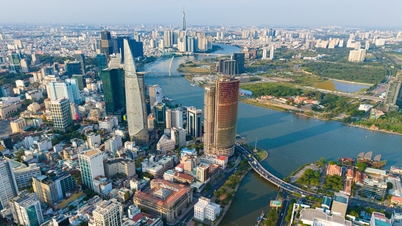
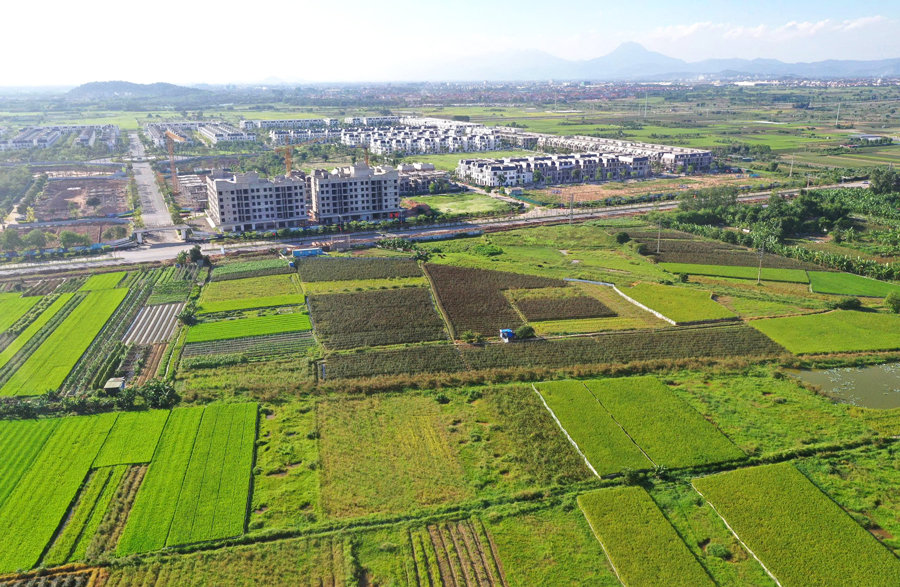
Currently, with the rapid pace of urbanization, land management remains one of the most complex areas in Hanoi. Over the years, alongside achievements, land management has faced numerous challenges, particularly in handling cases involving land with historical origins, delayed projects, interspersed land plots, public land misuse, and inadequacies in the process of land acquisition, allocation, and leasing.
Many long-standing unresolved cases stem not from a lack of determination to address them, but from legal loopholes or procedures that require consultation with multiple levels of authority, leading to prolonged resolution times, complaints, and negative impacts on citizens' rights and the efficient use of land resources.
In this context, the Capital City Law of 2026, passed by the 16th National Assembly and officially effective from July 1, 2026, has granted Hanoi many superior powers and special mechanisms, including many provisions related to land management. Notably, the Law allows the city to flexibly resolve long-standing issues such as service land, land allocation without proper authority, and old land violations; it allows the city to proactively decide on the conversion of land use from rice cultivation land (under 2 hectares) and protective and production forest land (under 5 hectares) to other purposes without waiting for National Assembly approval; and it allows the adjustment of land use purposes for a portion of old apartment complexes to public land and green spaces to create a modern urban environment, ensuring a balance of interests between investors and residents. In particular, the Law also allows cities to pilot special mechanisms in cases where there are conflicts with existing specialized laws to address urgent urban development issues...


According to experts, once institutional bottlenecks are removed, the city will be in a better position to more effectively utilize land resources for infrastructure development, improve the quality of public services, and enhance the lives of its citizens.
Enhancing implementation capacity in practice.
Chairman of the Vietnam Urban Planning and Development Association, Tran Ngoc Chinh, stated that in the context of Hanoi implementing numerous strategic infrastructure projects, developing satellite cities, renovating old apartment buildings, constructing social housing, and developing a synchronized transportation system, the efficient use of land resources will be crucial to the city's growth rate in the coming years. The special mechanisms of the 2026 Law on the Capital City not only grant the city government more autonomy but also place higher demands on accountability, transparency, and management efficiency. This presents an opportunity for Hanoi to modernize its land management methods, strongly apply digital technology , and improve the quality of services for citizens and businesses. In particular, the realization of these special mechanisms will contribute to building a transparent and stable investment environment, fostering confidence among businesses and investors, and ensuring a harmonious balance of interests between the State, citizens, and businesses.
“The 2026 Capital City Law has created an important legal foundation for Hanoi to resolve many outstanding issues in land management. The city needs to take advantage of this opportunity; if implemented synchronously, decisively, and transparently, the special mechanisms will become an important driving force to unlock land resources, improve the efficiency of state management, and create new development opportunities for the Capital City in the coming period,” Mr. Tran Ngoc Chinh emphasized.
According to Nguyen Van Dinh, Vice Chairman of the Vietnam Real Estate Association, the 2026 Capital City Law not only grants Hanoi more authority but also creates a legal mechanism for the city to proactively address long-standing land-related issues. With greater decentralization and delegation of power to Hanoi, coupled with the special mechanisms of the 2026 Capital City Law, the city will be able to proactively review and resolve bottlenecks arising from practical situations. To ensure the regulations are quickly implemented, the city needs to promptly issue complete resolutions, regulations, and implementation procedures, avoiding a situation where mechanisms exist but application is difficult.
Another important requirement is to promote the digitization of land data. When all information is updated on a unified database system, processing of records will be more transparent and faster, while simultaneously reducing disputes and complaints and gaining greater consensus from the people.



Furthermore, Hanoi needs to establish a strict inspection and supervision mechanism to ensure compliance with legal regulations and prevent the exploitation of special mechanisms for personal gain or the occurrence of violations. For projects that have been delayed for many years, the city needs to resolutely review and assess the capacity of the investors to take appropriate measures to avoid wasting land resources and create land reserves for development purposes.
Source: https://hanoimoi.vn/co-che-dac-thu-cua-luat-thu-do-nam-2026-go-nut-that-trong-quan-ly-dat-dai-1209815.html





![[Photo] Strengthening character and expertise: Intense training for artillery soldiers.](https://vphoto.vietnam.vn/thumb/1200x675/vietnam/resource/IMAGE/2026/06/30/1782815602541_lu-368-1875-4571-jpg.webp)