

In Quang Nam , Tran Thi Yen rejected a job at a bank and returned to her hometown to help her father preserve the traditional Ma Chau silk weaving craft, which is in danger of disappearing.
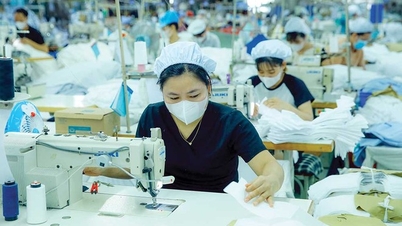
In early May, in a 3,000 square meter silk weaving workshop in the center of Nam Phuoc town, Duy Xuyen district, 10 workers diligently toiled at their looms. Natural silk, through the hands of skilled artisans, was transformed into soft, eye-catching silk fabrics. "Ma Chau silk is durable, lightweight, breathable, and resistant to mold and mildew," said Tran Thi Yen (31 years old), the workshop manager.
Nine years ago, after graduating with a degree in Business Administration from the University of Economics Da Nang, Yen was offered a job at a bank in Tam Ky City. However, the evening before her first day of work, a conversation with her father, Mr. Tran Huu Phuong - Chairman of the Ma Chau Silk Weaving Cooperative, completely changed her career path.
The village of Ma Chau used to have over 300 households engaged in silkworm farming with 4,000 silk looms, but now only Mr. Phuong remains to preserve the craft. The market is flooded with cheap, mass-produced silk fabrics with diverse designs, making it difficult for the cooperative to find a market for its products. They can only sell raw materials to other businesses, resulting in continuous losses. Yen decided to stay in her hometown and work alongside her father to revive the traditional craft.
"People start businesses from scratch, but I started from a negative balance because my father's cooperative is hundreds of millions of dong in debt," she recounted, explaining that she had asked her father to mortgage their house to borrow money from the bank as a springboard to revive the Ma Chau brand.
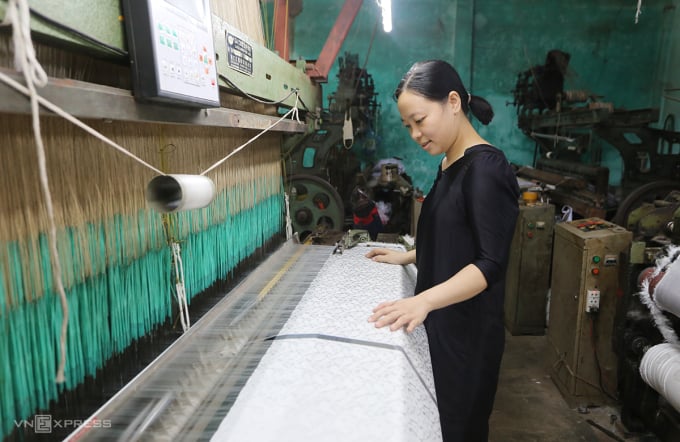
Tran Thi Yen is inspecting the fabrics being woven. Photo: Dac Thanh
In the early days of her career, Yen brought fabrics woven from 100% natural silk to many shops in Hoi An City to offer for sale, but only received negative responses. They said the products were good and beautiful, but three times more expensive than the imported goods they were selling. Some even claimed they were fake because "there's no more Ma Chau silk left."
With unsold products and no funds to pay workers, Yen asked her father to increase her bank loan limit to cover expenses. She realized she had to create products that met market demand. Besides silk fabrics made from silkworm threads, Yen began experimenting with linen and bamboo fibers to reduce costs.
She continued to take the fabric to major cities and trade fairs to promote it; sent samples to stores; and introduced Ma Chau silk on social media. Yen also tried to connect with some young designers, inviting them to use Ma Chau silk for their fashion products.
After a while, customers used the fabric and found it to be of good quality, so sales increased, and she started earning an income. From mid-range products, customers sought out higher-end items. "This was a sign of growth," Yen said, adding that from then on, in addition to traditional wooden looms, she invested in many modern machines to improve product quality.
In just four years, from 2018 to 2022, Yen used over 10 billion VND from her profits and loans from banks and relatives to invest in many modern machines. These included digital programming technology for weaving patterns on natural silk fabric, along with a system of shaping, drying, and dyeing machines using herbal dyes.
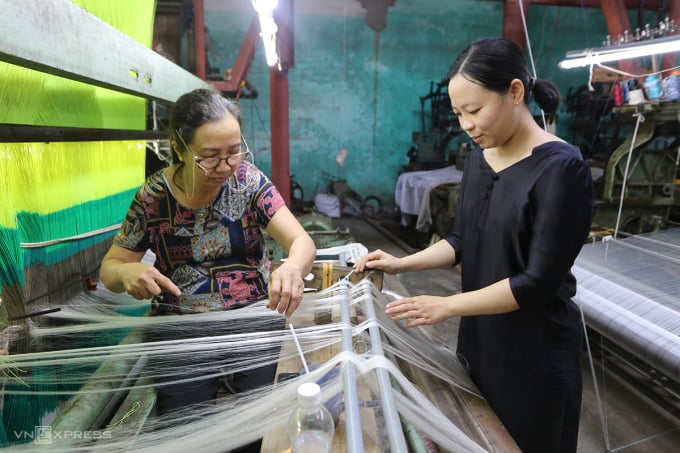
Yen checks the process of feeding silk threads into the loom. Photo: Dac Thanh
Currently, the textile factory supplies 3,000 meters of fabric to the market each month, with prices ranging from 130,000 VND to 1.8 million VND per meter. The products are ordered by famous fashion brands; many businesses also place orders with custom designs, which the company fulfills. The popularity of the products helps Yen achieve total annual revenue of over 2 billion VND, with a profit of approximately 500 million VND after deducting expenses.
In 2018, the Ma Chau silk logo was launched. Also in that year, the Korean KIPO and KIPA organizations selected Ma Chau as the only brand in Vietnam to receive global trademark protection. In 2021, Ma Chau silk scarves were recognized as a 4-star OCOP product of Quang Nam province.
"Despite choosing a busy job, I'm happy to be my own boss in my hometown, continuing my father's craft and providing regular employment for 10 people with an income of 4-7 million VND per month," Yen said. She added that in the future, she plans to develop the craft village into a tourist attraction, welcoming visitors and forming a community tourism area with many households engaged in mulberry cultivation, silkworm farming, and weaving.
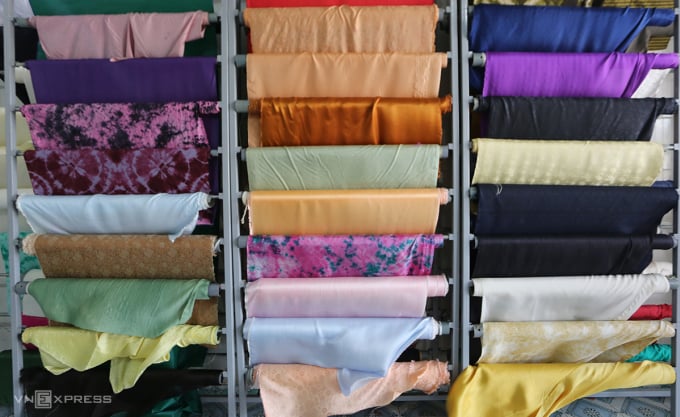
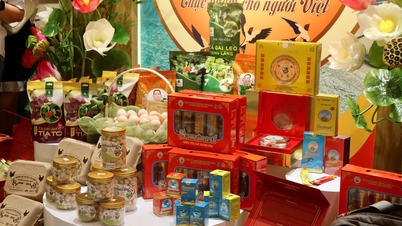
Many of Yen's products are on display at the company. Photo: Dac Thanh
Tran Thi Minh Yen, Chairwoman of the Duy Xuyen District Women's Union, highly praised Tran Thi Yen's dedication to restoring the Ma Chau silk weaving village. "Yen has a creative mindset, and combined with her father's high level of skill, she has not only preserved the craft but also developed the Ma Chau silk brand with products that meet consumer demands," she said.
The Ma Chau silk weaving craft dates back to the 16th century. Legend has it that a woman named Ma Chau from Kinh Bac migrated south. On her journey, she stopped in the vast alluvial plains along the Thu Bon River, where the Cham people cultivated mulberry trees and raised silkworms to produce brocade. She taught the local inhabitants the art of weaving, using the very loom she carried with her when she migrated south.
Out of gratitude to her, the people named the village Ma Chau – close to her name to avoid using her name taboo. Ma Chau silk later became famous in the Southern region of Vietnam when ships sailed into Hoi An for trade. The Hoi An trading port and the Do To ferry terminal were important hubs in the maritime silk road at that time. Ma Chau silk was also supplied to the nobility and officials in the royal court.
Source link





















































































Comment (0)