

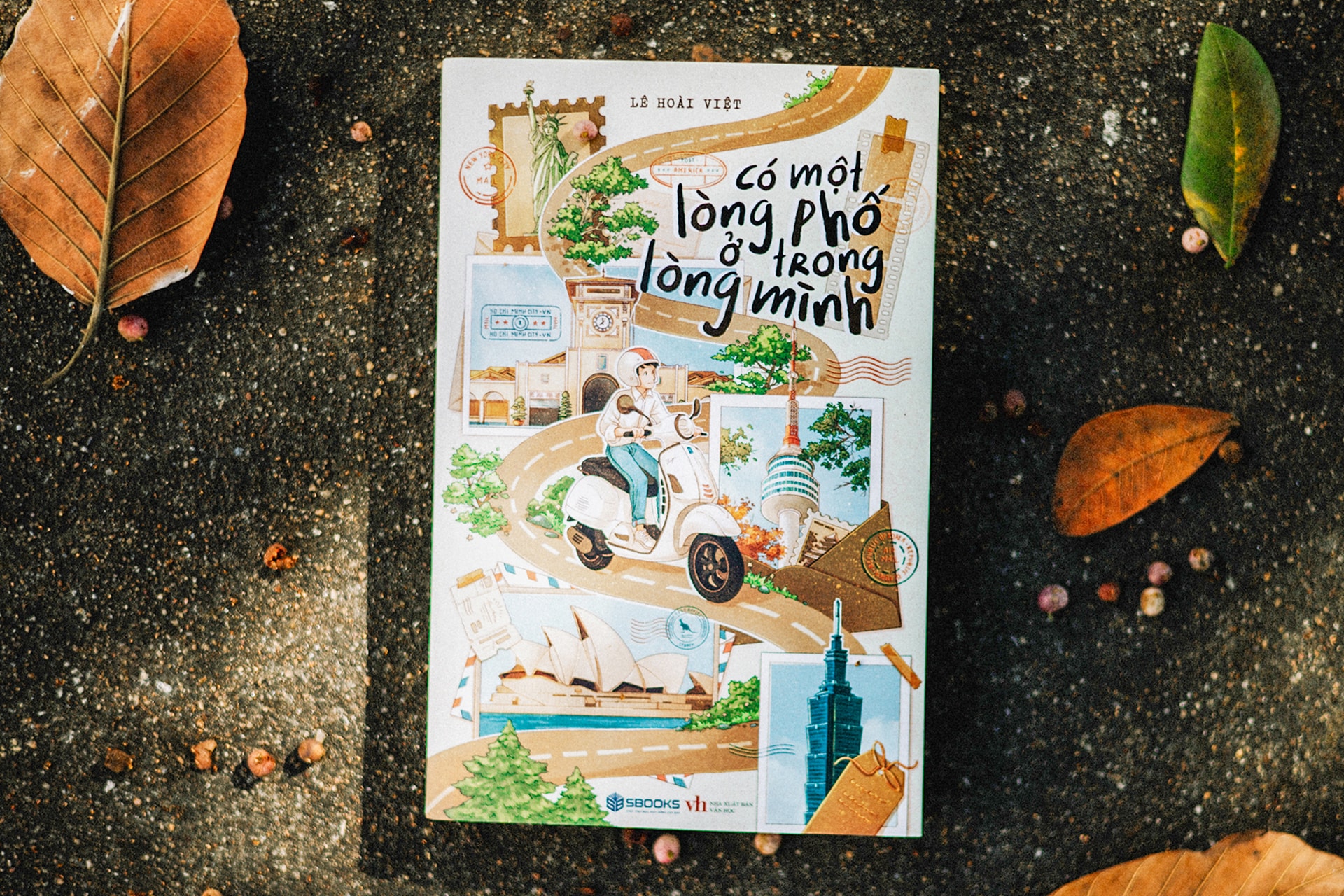
The book comprises 66 essays. If we were to split the book's title in two, we would find the work's purpose divided into two main themes: "There is a heart of the city" and "Within oneself."
“There is a heart of the city” (Part I) in Le Hoai Viet's writing is not simply a geographical space with trees, sidewalks, and shops, but also a spiritual space containing layers of emotion: past attachments, past loves, past sorrows... Because the street corner itself can speak volumes, saying: “Those who were truly sincere, even if no longer together, deserve to be remembered by a street corner of their own” or “as long as we remember, the street still lives. Even if that “life” is only nurtured by our own memories.”
Each essay is like a piece of baggage on the journey through memories. These pages don't descend into melancholy, but instead offer the reader a gentle transformation through "sitting down, being silent, and feeling," allowing them to realize that: The city is, in fact, a mirror reflecting one's own heart – a place where emotions and unspoken feelings have silently manifested themselves, shaping who we are today.
To distill the nostalgic atmosphere throughout the book, the author must have possessed a profound understanding of life. Some pages open up new horizons to Sydney, New York, Paris, or closer destinations like Hue, Da Nang, Saigon, and Hanoi ... These are not simply journeys capturing the unique rhythm and atmosphere of each city, but also reflect the human spirit and its many transformations. Depending on their individual taste, readers can enjoy the book as a collection of essays with evocative titles, or as a travelogue focusing on emotions and sentiments rather than destinations, such as "Hanoi in the Time It Was Loved," "Sydney Has the Eyes of a Person, Silent as an Unwritten Ending," or "New York Waits for No One, Where the Empire State Building Allows Me to Stand High... to Learn How to Bow My Head."
Le Hoai Viet's way of expressing himself and maintaining the rhythm of his words is so genuine that readers feel as if it's a personal narrative, or a gentle sigh from within himself, "In My Heart" (Part II). It's a tender reminder: Listen and begin with the only person who doesn't turn their back on you—yourself; stop telling your own story, stop acting or playing roles, stop explaining if you feel the other person isn't quiet enough to truly listen; even if your heart is empty, don't pretend it's full, and if you can't close it, open it up and cherish the ordinary things... This intertwining of the personal and the collective creates a powerful impact from Le Hoai Viet's essays, through gentle reflections on how we learn to live and love more kindly, appreciate the little things, and find peace within ourselves.
Maintaining a gentle, subtle, nostalgic, and reflective tone, the author guides the reader to appreciate the beautiful double meaning throughout the work: "The soul of the city" is connected to deep-seated memories, and "the soul of the person" carries fragments of lingering affection and longing. And everyone has their own "soul of the city" to cherish and appreciate, to feel that they once lived, loved, and truly existed in that way!
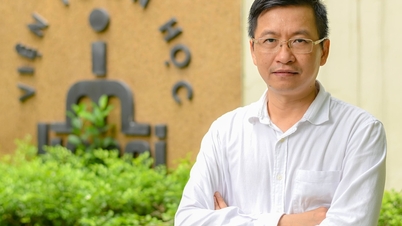
Author Le Hoai Viet previously published a collection of essays titled "On This Side, Longing and Memories" (Vietnam Women's Publishing House, 2022). He is currently a PhD candidate and lecturer at Ho Chi Minh City Open University.
Source: https://hanoimoi.vn/co-mot-long-pho-o-trong-long-minh-728452.html



![[Photo] National Assembly Chairman Tran Thanh Man attends the policy seminar to promote Vietnam-Türkiye cooperation.](https://vphoto.vietnam.vn/thumb/1200x675/vietnam/resource/IMAGE/2026/04/16/1776351415367_vna-potal-chu-tich-quoc-hoi-tran-thanh-man-du-toa-dam-chinh-sach-thuc-day-hop-tac-viet-nam-tho-nhi-ky-8705791-jpg.webp)




































































Comment (0)