|
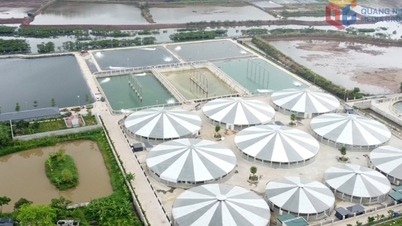
| The Bản Áng resettlement area (Thanh Thịnh commune, Thái Nguyên province) is currently undergoing infrastructure development to serve the Bắc Kạn - Chợ Mới expressway project. (Photo: Provided) |
Public investment has long played the role of "seed capital," creating momentum for economic growth. When this capital flow is disrupted, numerous infrastructure projects fall behind schedule, leading to a chain reaction affecting many production and business sectors. For many years, the pattern of slow disbursement at the beginning of the year followed by a rush at the end of the year has repeated itself.
The paradox of "having money but being unable to spend it" stems from various causes such as complex administrative procedures, difficulties in land clearance, and a reluctance to take responsibility among some officials. Applying key performance indicators (KPIs) can create positive pressure, shifting from subjective evaluations to concrete results, thereby enhancing the accountability of leaders.
However, implementing KPIs in the public sector is not a simple task. If poorly designed, KPIs can easily become mere formalities, creating pressure to chase after achievements. A locality might achieve a very high disbursement rate by prioritizing small, less problematic projects, while large-scale, strategically important infrastructure projects are avoided.



Conversely, some ministries and agencies have made great efforts but still face objective obstacles stemming from mechanisms, policies, or issues beyond their authority to handle.
Therefore, the KPI system being developed needs to ensure multidimensionality and accurately reflect the quality of disbursement. The core value of public investment KPIs lies in the actual effectiveness of budget funds.
The scoring system cannot be based solely on the disbursement rate, but must be linked to implementation progress, construction quality, and the socio-economic impact of the project. The evaluation system also needs to clearly define subjective and objective responsibilities, accurately identify the causes of each bottleneck, and develop appropriate solutions or sanctions.
More broadly, applying KPIs in the disbursement of public investment funds is essential in the journey towards building a modern governance system that prioritizes efficiency and accountability. The message is clear: We cannot continue to be satisfied with reports that focus heavily on lessons learned but lack substantive change. Instead, we must have concrete indicators, measurable results, and clearly defined accountability.
Those who perform their duties well should receive due recognition; those who are negligent and hinder progress must be held accountable accordingly.



KPIs are not a "magic wand" that can instantly solve all bottlenecks in public investment. However, if designed scientifically, transparently, and implemented rigorously, this tool will contribute to unblocking the flow of public investment capital, quickly bringing state resources into practice, forming practical infrastructure projects, and creating momentum for socio-economic growth and development.
Source: https://baothainguyen.vn/kinh-te/202606/coi-troi-cho-dong-von-dau-tu-cong-d0c2f8b/




























































































![[INFOGRAPHICS] Can Tho implements the Strategy for Ethnic Affairs until 2030, with a vision to 2045](https://vphoto.vietnam.vn/thumb/402x226/vietnam/resource/IMAGE/2026/06/28/1782658308447_1782658217.webp)