

Eliminate sub-licenses for the production and trading of gold jewelry.
On May 29th, the State Bank of Vietnam (SBV) announced a draft amendment to Decree 24/2012 on the management of gold trading activities. A notable new point in this draft is the removal of sub-licenses for the production, processing, and trading of gold jewelry and handicrafts, effective July 1st. Simultaneously, the SBV will no longer inspect or audit gold jewelry and handicraft production activities as under the old regulations. However, the draft still requires organizations and individuals engaged in the production, processing, and trading of gold jewelry and handicrafts to comply with legal regulations regarding product quality, standards, measurements, labeling, price listing, invoices, documents, taxes, fire safety, environmental protection, consumer protection, anti-money laundering, and other relevant laws.
The director of a gold jewelry manufacturing company based in Ho Chi Minh City stated that currently, obtaining a gold jewelry manufacturing license takes businesses 3-6 months to meet the required conditions and complete the application process, with fire safety and environmental protection being the most important aspects. Even jewelry shops need licenses to employ repairmen. Therefore, eliminating these sub-licenses would reduce administrative procedures and shorten processing times for businesses.
Mr. Nguyen Van Dung, Chairman of the Ho Chi Minh City Jewelry and Goldsmiths Association, happily stated: "For many years, the Vietnam Gold Business Association (VGTA) has continuously petitioned to remove the production of gold jewelry from the list of conditional business sectors. The amended and supplemented Investment Law, officially passed in 2025, has removed gold jewelry from the list of conditional business sectors, and now the draft amendment and supplement to Decree 24/2012 is great news for the jewelry industry."
" Globally , the production, processing, and trading of gold jewelry is considered a normal commodity production and business activity; no country designates it as a conditional business. Countries like Thailand, Singapore, Indonesia, and the UAE even have many policies to support and encourage the strong development of this industry to meet domestic demand as well as export and generate foreign exchange revenue. That's why these countries export gold jewelry products worth 5-7 billion USD each year," Mr. Dung analyzed.
Making the jewelry industry a key economic sector.
Mr. Huynh Trung Khanh, Vice Chairman of VGTA, commented: The directive of General Secretary and President To Lam in Notice No. 211-TB/VPTW dated May 30, 2025, on "encouraging the development of the gold jewelry market to make Vietnam a center for high-quality gold jewelry manufacturing and export in the region" is a groundbreaking and strategically important directive to develop this industry into a key sector, regenerate foreign exchange for the country, and contribute to increasing national foreign exchange reserves. This is because the capacity and expertise of Vietnamese businesses are not only sufficient to produce and manufacture gold jewelry to meet domestic demand but also to compete in exporting to the global market.
However, according to Mr. Khanh, after removing the sub-licenses, in order for the gold mining industry to operate transparently and develop healthily in the future, the authorities need to quickly resolve the issue of raw gold, allowing the import of raw gold to meet production needs.
Over the years, the demand for raw gold to produce gold bars and jewelry has averaged around 50 tons per year, equivalent to approximately US$5 billion per year (about US$420 million per month). After processing and manufacturing, half of it is used to meet domestic demand, and the other half is exported. This means that 25 tons of gold are exported, potentially generating US$3.5 to US$5 billion. The value of labor accounts for over 30% of the export value. Therefore, allowing businesses to import raw gold for production and processing into gold jewelry not only meets domestic market demand but also generates significant foreign exchange for the country.

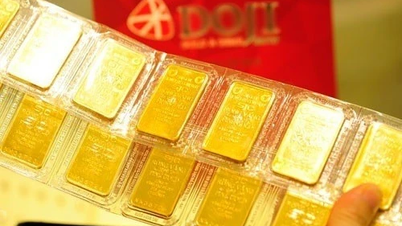
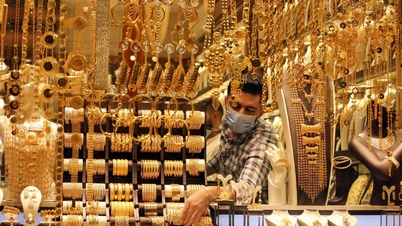
The requirement for sub-licenses for the production of gold jewelry and handicrafts will be abolished from July 1st.
PHOTO: NGOC THANG
According to Mr. Nguyen Van Dung, for Vietnam to become a high-quality gold jewelry manufacturing and export center in the region, much work remains to be done in the coming time, especially regarding raw materials for production. In reality, the Vietnamese gold jewelry market has continuously declined during the 2023-2025 period, with the volume of gold jewelry consumed decreasing by an average of 15% per year. Many businesses have had to close, leading to many sales staff and production workers being laid off or switching to other industries. The decline is partly due to the pressure of raw material shortages. Manufacturing businesses face many difficulties in operation, so they are hesitant to boldly increase investment, thus missing out on Vietnam's competitive advantages. Meanwhile, neighboring countries like Thailand and Indonesia are leading gold jewelry exporters, even though they have a similar, or even lower, level of expertise in some areas… The root cause is that we have combined the management of gold for export with gold bars.
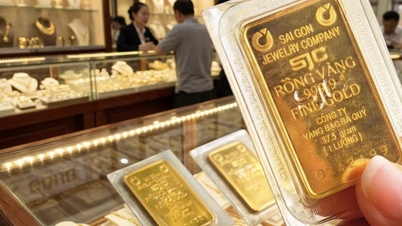
From that perspective, Mr. Nguyen Van Dung proposed managing gold jewelry products as consumer goods, following international practices. Gold bars and investment gold, however, should be managed by the central bank. This would lead to the development of a policy to develop Vietnam's jewelry industry as a key sector. In countries with developed jewelry industries, exporting large quantities of gold jewelry internationally annually, such as China, Thailand, and Indonesia, the jewelry industry is managed as a consumer industry. These countries also have very detailed support policies, from establishing concentrated industrial zones to implementing value chain policies for the industry.
"The management mechanism for Vietnam's jewelry industry, treating it as an industry, aims to both preserve and develop a handicraft with national identity, while also striving to become a leading exporter of traditional fine arts and crafts internationally," Mr. Nguyen Van Dung emphasized.
Untangling the bottleneck in gold transaction settlements.
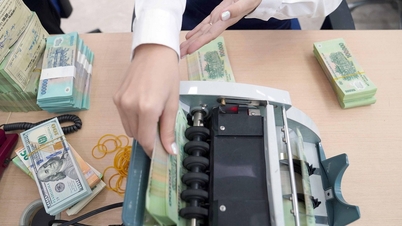
The draft amendment to Decree 24 also stipulates that payments for the purchase and sale of gold with a value of 20 million VND or more per day must be made using non-cash payment methods. This regulation addresses the bottleneck in payment when applying the regulation "through the customer's payment account and the gold trading enterprise's payment account opened at commercial banks or branches of foreign banks." The amended regulation allows customers to use various non-cash payment methods, especially foreign tourists who can purchase gold and gold bars. Furthermore, the draft mentions that the use of credit cards or other payment methods funded by credit activities to pay for gold bar purchases must comply with the law on credit activities.
Source: https://thanhnien.vn/coi-troi-cho-vang-trang-suc-185260531205100528.htm



![[Photo] General Secretary and President To Lam and the President of the Philippines hold talks.](https://vphoto.vietnam.vn/thumb/1200x675/vietnam/resource/IMAGE/2026/06/01/1780283481955_vna-potal-tong-bi-thu-chu-tich-nuoc-to-lam-va-tong-thong-philippines-hoi-dam-8797519-1429-jpg.webp)




















































































Comment (0)