1. How is collagen absorbed?
Collagen is a vital structural protein, accounting for approximately 30% of the body's total protein. It is found in the skin, bones, tendons, ligaments, cartilage, and blood vessel walls. After the age of 25, the natural production of collagen begins to decline, contributing to decreased skin elasticity, wrinkles, and other signs of aging.
Many people believe that eating collagen-rich foods will directly supplement collagen for the skin. However, in reality, collagen, once in the body, is broken down into smaller amino acids and peptides by the digestive system before absorption. The body then uses these components to synthesize collagen and other necessary proteins according to the needs of each tissue and organ. This means that no single food can "directly deliver collagen to the skin upon consumption." The effectiveness of a diet depends on its ability to provide the body with sufficient raw materials to produce collagen naturally.
Current research suggests that maintaining a balanced diet rich in high-quality protein and essential micronutrients for collagen synthesis is more important than focusing on just one specific food.
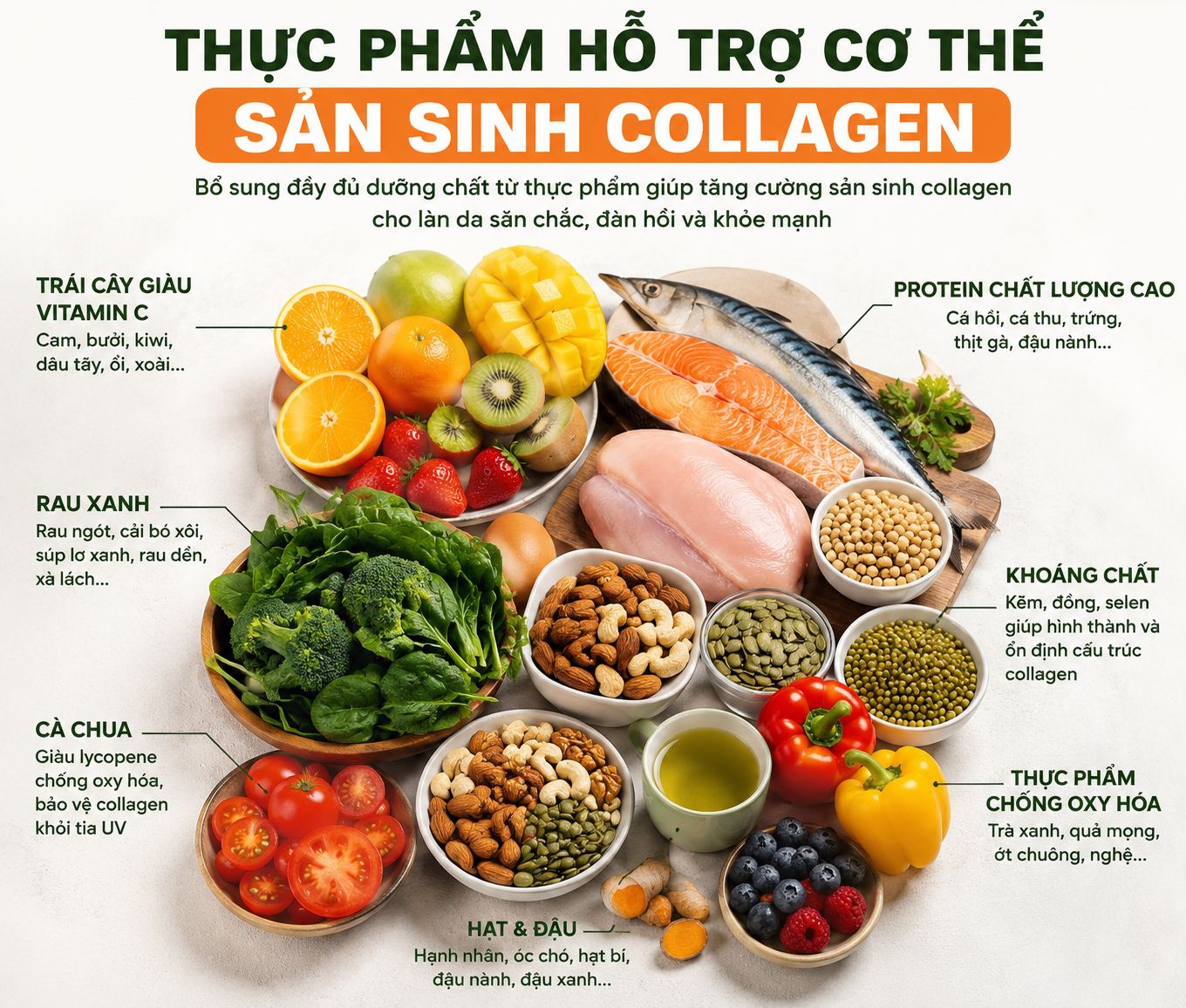
Many foods can provide the nutrients necessary for the natural synthesis of collagen.



2. Summer foods that help the body produce collagen
Although it's impossible to directly supplement collagen to the skin through food, many summer foods can provide the necessary nutrients for the natural synthesis of collagen.
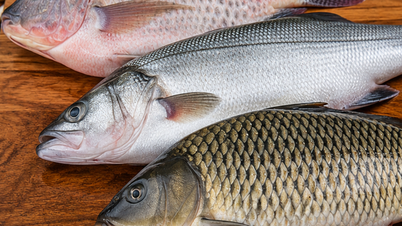
- Seafood such as salmon, mackerel, tuna, or herring are high-quality sources of protein and also contain omega-3s, which help reduce inflammation and support skin health. Fish skin and connective tissue also contain more natural collagen than the flesh.
- Fruits rich in vitamin C, such as oranges, tangerines, grapefruits, guavas, kiwis, strawberries, and mangoes, are particularly important. Vitamin C acts as an essential cofactor in the formation of new collagen fibers. A deficiency in vitamin C will make it difficult for the body to synthesize collagen, even with adequate protein intake.
- Summer leafy greens such as spinach, amaranth, kale, broccoli, and other dark green leafy vegetables provide vitamin C, beta-carotene, and many antioxidants that help protect collagen from damage caused by free radicals.
Tomatoes are also noteworthy for containing lycopene – an antioxidant that can help protect the skin from the effects of ultraviolet rays. While not a substitute for sunscreen, a diet rich in lycopene may contribute to reducing the breakdown of collagen caused by sun exposure.



Additionally, nuts, soybeans, mung beans, pumpkin seeds, cashews, and seafood provide zinc and copper—minerals involved in the formation and stabilization of collagen structure.
See more trending videos :
Source: https://suckhoedoisong.vn/collagen-tu-thuc-pham-co-thuc-su-hieu-qua-169260605103241002.htm

![[Photo] "Hanoi Lotus Festival" honors the lotus flower that has been associated with Vietnam for thousands of years.](https://vphoto.vietnam.vn/thumb/1200x675/vietnam/resource/IMAGE/2026/06/27/1782516943048_sen-ha-noi-2026-minh-duy-1-jpg.webp)