The revolution is changing the philosophy of disaster response.
Impact-based forecasting is a groundbreaking step that will fundamentally transform disaster prevention and mitigation efforts, deeply integrating real-time weather data with defense maps.
Bộ Nông nghiệp và Môi trường•26/06/2026
From dry physical specifications to numbers that speak volumes.
For decades, Vietnam's meteorological and hydrological sector has operated primarily using traditional forecasting methods. The public and management agencies have become accustomed to reports that provide purely physical data, such as the intensity of tropical storms and depressions, and the measured rainfall in millimeters. While this approach accurately reflects the state of nature, it leaves a significant gap in quantifying the actual extent of damage to socio-economic life.
Proactively respond to natural disasters and protect the safety of the people.
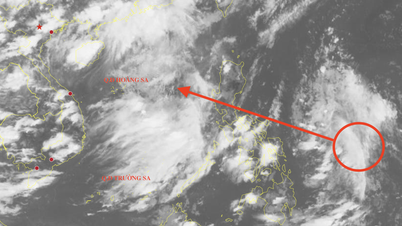
Associate Professor Dr. Mai Van Khiem, Director of the National Center for Meteorological and Hydrological Forecasting, stated that, following the guidelines of the World Meteorological Organization, Vietnam is undertaking a groundbreaking revolution: shifting from impact-based forecasting to impact-based forecasting. The core difference of this new method lies in integrating real-world weather data with the vulnerability levels of specific groups within society.
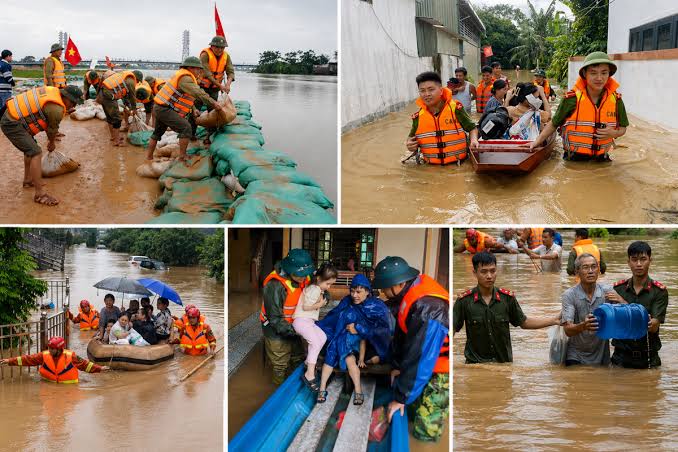
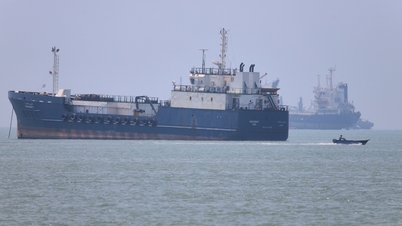
According to Associate Professor Dr. Mai Van Khiem, a weather forecast based on impact should not only warn about wind speed or rainfall, but must also specify how many areas and households will be isolated; how many boats will be affected; and which communes and wards will be flooded so that the authorities can plan accurate evacuations.
Commenting on the practicality of this trend, Dr. Nguyen Ngoc Huy, an expert in weather research and extreme disaster warning, affirmed that climate change has made flood scenarios extremely unpredictable, especially in lowland and urban areas undergoing extensive concrete construction.
To make accurate predictions, Dr. Nguyen Ngoc Huy believes that the system must incorporate many complex 'variables' in addition to rainfall, most notably tidal factors. Practical experience in Central Vietnam shows that if heavy rain upstream coincides with high tides, causing a 'river mouth blockage' phenomenon, floodwaters will be trapped and surge back into residential areas at a terrifying speed. Digitizing these topographic and hydrological variables is key to bringing theoretical predictions into real-life situations.
Digitalization challenges and a transnational vision.
Despite its significant benefits for businesses and economic infrastructure, the implementation of impact-based forecasting in Vietnam is still in its early stages and faces data challenges. Associate Professor Dr. Mai Van Khiem frankly acknowledges that this method requires a continuously updated source of socio-economic data in real time. Currently, meteorological agencies are only able to overlay disaster risk maps onto population infrastructure maps based on annual statistical data.
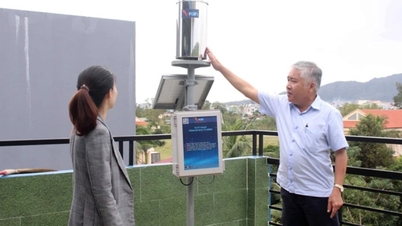
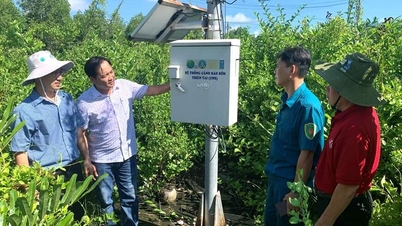
Applying modern technology in forecasting, monitoring, and early warning of natural disasters.
To illustrate the necessity of real-time data, Associate Professor Dr. Mai Van Khiem gave a vivid example: if a natural disaster strikes just as the rice crop is about to be harvested, the vulnerability of the agricultural sector will be extremely high. Conversely, if the harvest is already complete or construction projects are already solidly built, the extent of damage will be significantly reduced. Therefore, this is not a task for the meteorological sector alone, but requires close cooperation from disaster prevention agencies and local authorities in sharing and updating dynamic economic data layers.
Besides domestic coordination, a global vision and international cooperation are also inseparable links. Natural disasters know no borders, especially in major river basins flowing into Vietnam such as the Red River or the Mekong River. Proactively sharing transnational hydrological data from upstream will give our early warning system more time to prepare and avoid being caught off guard by floods from beyond our borders.
Technology, public understanding, and a spirit of comprehensive cooperation are the three solid pillars that will transform the 'digital shield' into a reliable protector for every Vietnamese family.
Vietnam encourages US businesses to expand investment in high technology.On the morning of June 26th, at the Government Headquarters, Deputy Prime Minister Ho Quoc Dung received Mr. Jeff Place, Supply Chain Director of Coherent Group (USA). During the meeting, the Deputy Prime Minister affirmed that Vietnam encourages US businesses to expand investment, especially in high-tech, innovation, and semiconductor industries.
The transition to impact-based forecasting models is a long-term journey, requiring concerted efforts not only from the meteorological and hydrological sector but also from all levels of government, society as a whole, and the international community. By digitizing and continuously integrating socio-economic data into extreme weather scenarios, we are gradually shifting from a passive defensive stance to an active adaptive one.
Successfully building an interconnected and seamless information network will create a robust and secure ecosystem where humans no longer struggle to cope but can confidently master the scenario of peaceful coexistence with nature.