

Rarely has a site of an industrial accident become such a popular tourist attraction as the Gates of Hell or the Darvaza gas crater.
Over 50 years ago, Soviet explorers came to Turkmenistan to drill for natural gas and are believed to have created the Darvaza gas crater. Today, Darvaza is a giant, constantly burning crater, the most sought-after gas field in the country.
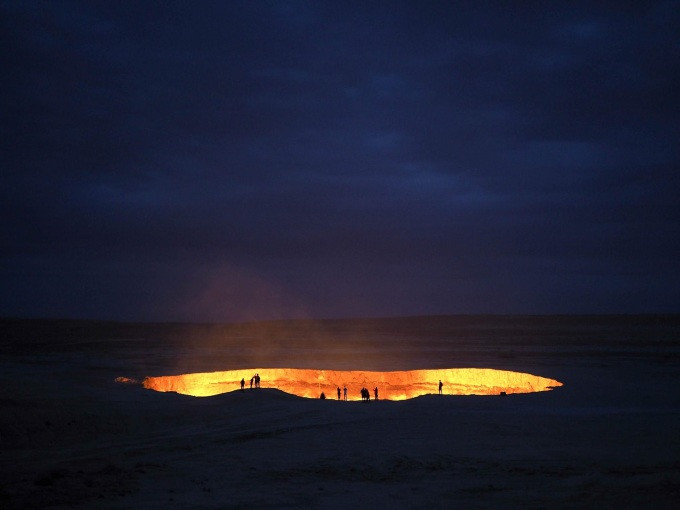
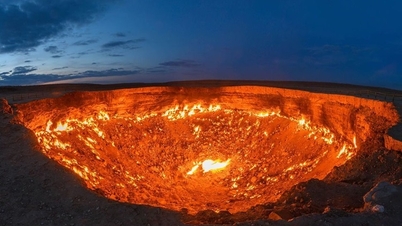
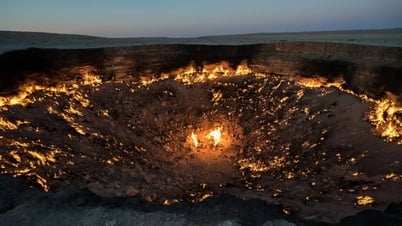
Known as the "Gateway to Hell" or "Karakum Light," the fire burns continuously in the pit due to methane gas escaping from dozens of vents along the ground and sides of the pit. Standing around the rim, visitors can feel the intense heat radiating from it. The scene becomes particularly impressive at night when the flames blaze under a starry sky.
The Gates of Hell are surrounded by sand dunes in the remote Karakum Desert. The crater is also the first stop on most tours for visitors to this Central Asian country.
When tourists first started flocking to Darvaza, the area lacked services and amenities. People had to bring their own supplies for overnight stays. Today, accommodation is available in yurts (cylindrical, Mongolian-style tents) or canvas tents. For visitors who don't want to walk, you can hire a vehicle to take you directly to the sinkhole, and food and drink services are also available.
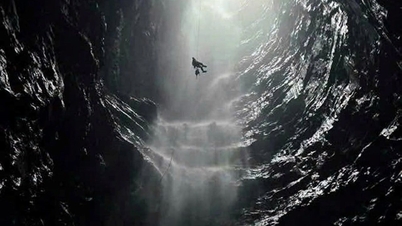
The sinkhole is approximately 70 meters wide and 30 meters deep, with vertical walls sloping down to a bed of rubble at the bottom. Local authorities built a safety fence around the sinkhole in 2018 to prevent visitors from getting too close to the burning sinkhole.
"I found it quite frightening, this place is rather creepy," said writer Ged Gillmore.
According to scientists , the Gates of Hell will not burn forever. The Turkmen government has repeatedly mentioned the possibility of sealing the crater. Tourists who have recently visited the Gates of Hell have also said that the flames have become much smaller than before.
"I think it's only about 40% of what I saw back in 2009," said Dylan Lupin, a British tourist.
A local guide who has visited the gates of hell 40 times also confirmed this, stating that the flames have been getting lower over the past seven years. He said the pit used to have more fire.
But this doesn't diminish the allure of the Gates of Hell. Many are still struck by the moment when a desert sandstorm covered everything except the flickering flames rising from the pit.
The exact time of the formation of the Gates of Hell remains a subject of debate, and many secrets and rumors surround it. One of the most widely accepted accounts is that the crater formed in 1971 and began burning shortly thereafter. However, according to two veteran geologists in Turkmenistan, the crater formed in the 1960s and only began burning in the 1980s.
How the crater caught fire remains a mystery to this day. Many believe scientists dropped a grenade into it. Others suggest Soviet explorers simply tossed a match.
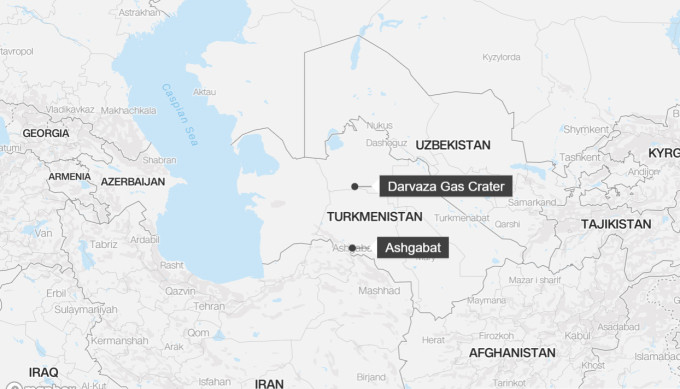
The gas crater is located four hours' drive north of the capital Ashgabat. The road to the Gates of Hell is rough, with two lanes and full of sand. Wandering camels are the most common sight for tourists along the way.
Apart from the grocery stores in Bokurdak and Erbent, two remote villages located along the highway, visitors will find nowhere else to buy necessities after leaving Ashgabat.
Darwaza Camp is the most upscale overnight accommodation option among the three camps offering lodging at the Gates of Hell. Located about a five-minute walk from the crater rim, the camp features yurt tents with beds and chairs, a dining area, and outdoor toilets.
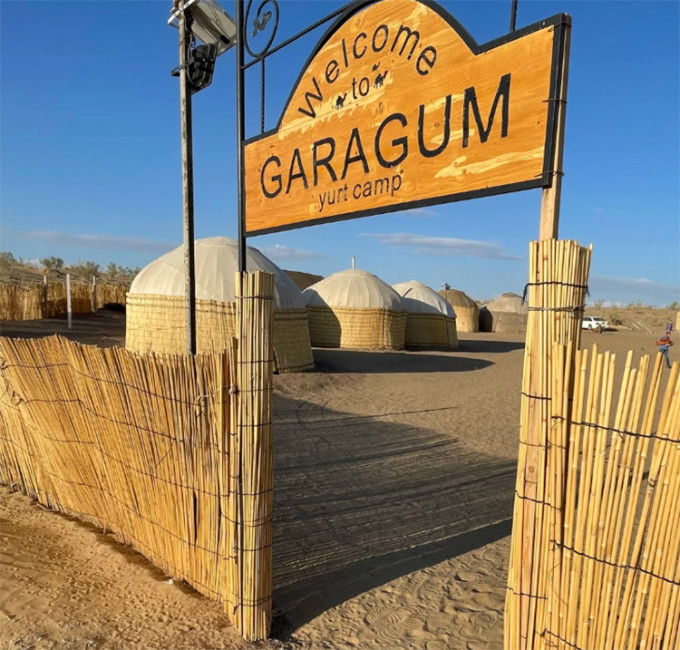
Opposite the crater is the Garagum camp, which offers yurt tents with floor coverings resembling traditional Turkmen mats, and indoor lighting powered by solar energy. Evening barbecues are served outdoors.
Garagum is located about a 10-minute walk from the crater's mouth and near a small rocky hill, from where visitors can get a panoramic view of the Gates of Hell. According to Gillmore, visiting Darvaza at night "is definitely the best," with no lights nearby and the only thing visitors can see is the rising flames.
Adjacent to the Darvaza crater are two other craters, formed around the same time as the Gates of Hell. They are about the same size as Darvaza but not as spectacular.
In 2022, the government -run Neytralny Turkmenistan newspaper reported that the President had instructed the cabinet to consult with scientists to find a way to extinguish the fire and close the site to tourists. One of the main reasons the authorities wanted to close the gas pit was the waste of a valuable natural resource, environmental pollution, and related health issues for the population.
However, to date, there has been no concrete action demonstrating that the government will extinguish the fire in the near future.
Some people say that the government drilled a nearby exploratory well, which sucked up a large amount of gas escaping through the gas pit, causing the flames at the Darvaza crater to significantly decrease.
"That's just a rumor," said a local tour guide.
Local residents also expressed concern that if the Gate of Hell were shut down, it would affect the tourism industry. As a result, people's incomes and jobs would be lost.
Source

![[Image] National Assembly discusses the implementation of the socio-economic development plan.](https://vphoto.vietnam.vn/thumb/1200x675/vietnam/resource/IMAGE/2026/04/20/1776696707422_ndo_br_img-20260420-185419-jpg.webp)

![[Photo] General Secretary and President To Lam meets with National Assembly delegates from ethnic minorities.](https://vphoto.vietnam.vn/thumb/1200x675/vietnam/resource/IMAGE/2026/04/20/1776696701056_a1-bnd-8331-3342-jpg.webp)




















































































Comment (0)