

Following the attacks by the US and Israel, Iran launched hundreds of ballistic missiles and drones targeting Israel as well as US military facilities in Gulf states.
Although Israel and the Gulf states intercepted many targets, some missiles still penetrated the defenses, causing significant damage and casualties.
According to military experts, Iran's missiles have undergone a major upgrade thanks to the application of technology that allows for extremely precise targeting. The secret behind this application lies in Chinese satellite technology, which was originally designed for military use.
China's "All-Seeing Eye"
The United States was a pioneer in the development of positioning technology, with the launch of the first satellite that created the Global Positioning System (GPS) in 1978.
However, GPS is gradually becoming less popular in some areas, as many experts believe that China's Beidou satellite navigation system has surpassed GPS in terms of the number of satellites, signal strength, and positioning accuracy in many regions.
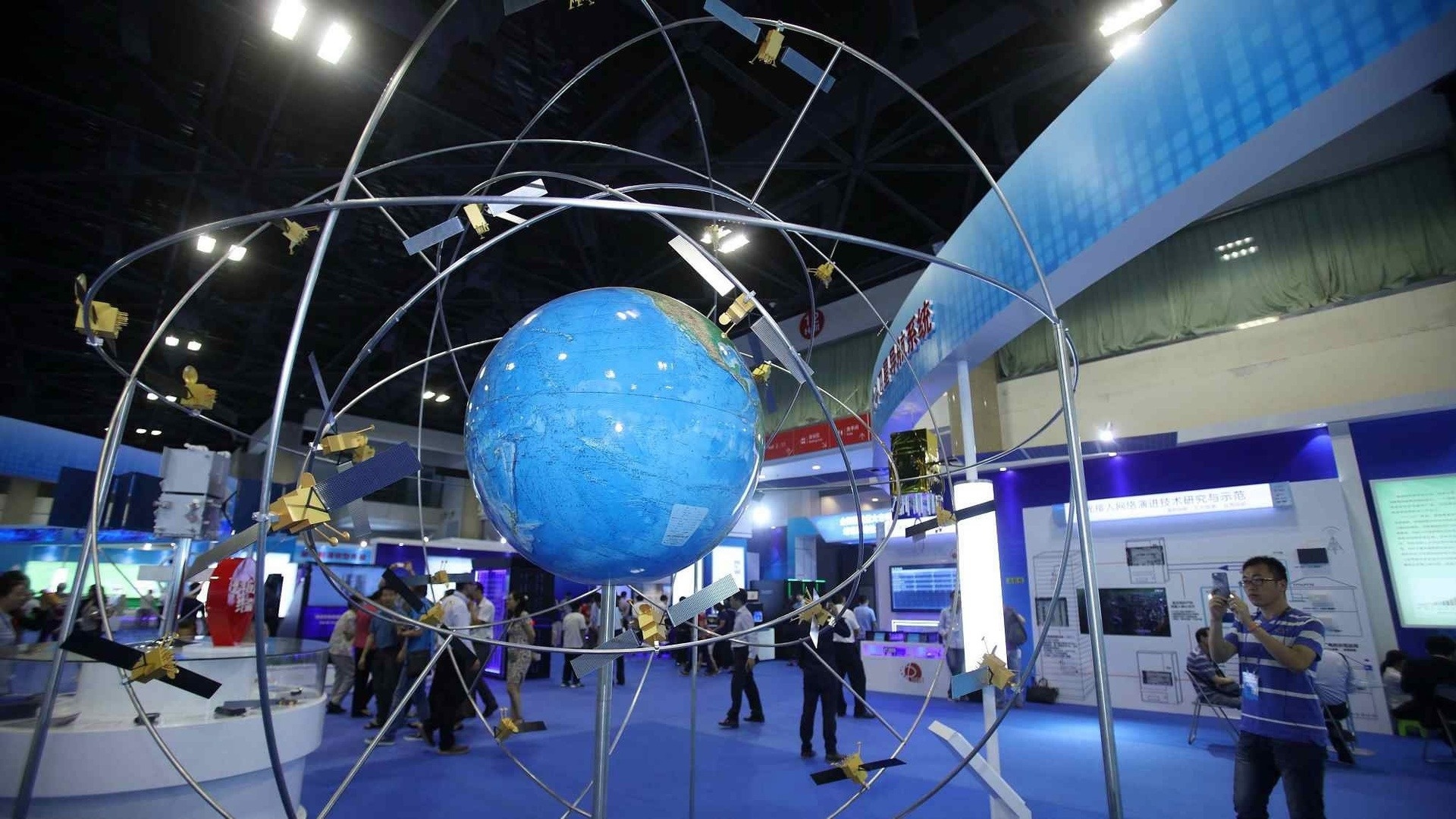 |
A model of the Beidou navigation system is displayed at an exhibition in China. Photo: CGTN. |
In fact, China developed Beidou as part of its efforts to reduce its technological dependence on the United States. The Asian nation fears that in the event of a conflict, the U.S. could cut off access, paralyzing military operations.
If this were to happen, it would be a disaster, because satellite navigation has many important military applications, from guided weapons to cruise missiles.
The Beidou system currently has 56 satellites in orbit, nearly double the 31 satellites used by GPS. The constellations used by this navigation technology are also newer, while GPS is still using satellites from the 1990s.
Furthermore, Beidou is supported by nearly 10 times more monitoring stations than GPS. Positioning accuracy is less than 1 meter for general users and can reach up to 1 centimeter for military purposes. In contrast, GPS typically only achieves accuracy within 3 meters.
Like other satellite navigation systems, Beidou operates by transmitting time signals from satellites to receiving devices on the ground or in vehicles. By calculating the time it takes for signals from multiple satellites to reach the receiving device, the system can determine geographical location with high accuracy.
Beidou is currently compatible with 288 million smartphones, mostly products from Huawei and Xiaomi. The system is used to determine location more than 1 trillion times a day. According to statistics, users in China travel more than 4 billion kilometers daily with the support of this technology.
Missile guidance is more precise than ever before.
In a recent broadcast interview, former French foreign intelligence chief Alain Juliet suggested that the likelihood of Iran gaining access to China's Beidou satellite navigation system is very high.
 |
According to him, the accuracy of Iranian missile attacks has improved significantly since the 12-day war with Israel in June 2025.
“The surprise of this conflict is that Iranian missiles are far more accurate than in the conflict eight months ago. That raises many questions about the guidance systems of these missiles,” said Juliet, who served as Director of Intelligence at the Directorate of External Security from 2002-2003.
Iran has not confirmed this information, and it is also unclear whether the country could have transferred its entire military navigation system to a different satellite network in such a short time since last year's war.
However, some experts believe that Iran had been working to integrate Chinese navigation systems for a much longer period before that.
“In 2015, Iran reportedly signed a memorandum of understanding on integrating the Beidou-2 system into its military infrastructure – specifically to improve missile guidance capabilities with far more accurate signals than the civilian GPS system previously used by its armed forces,” said researcher Theo Nencini at the ChinaMed Project research platform.
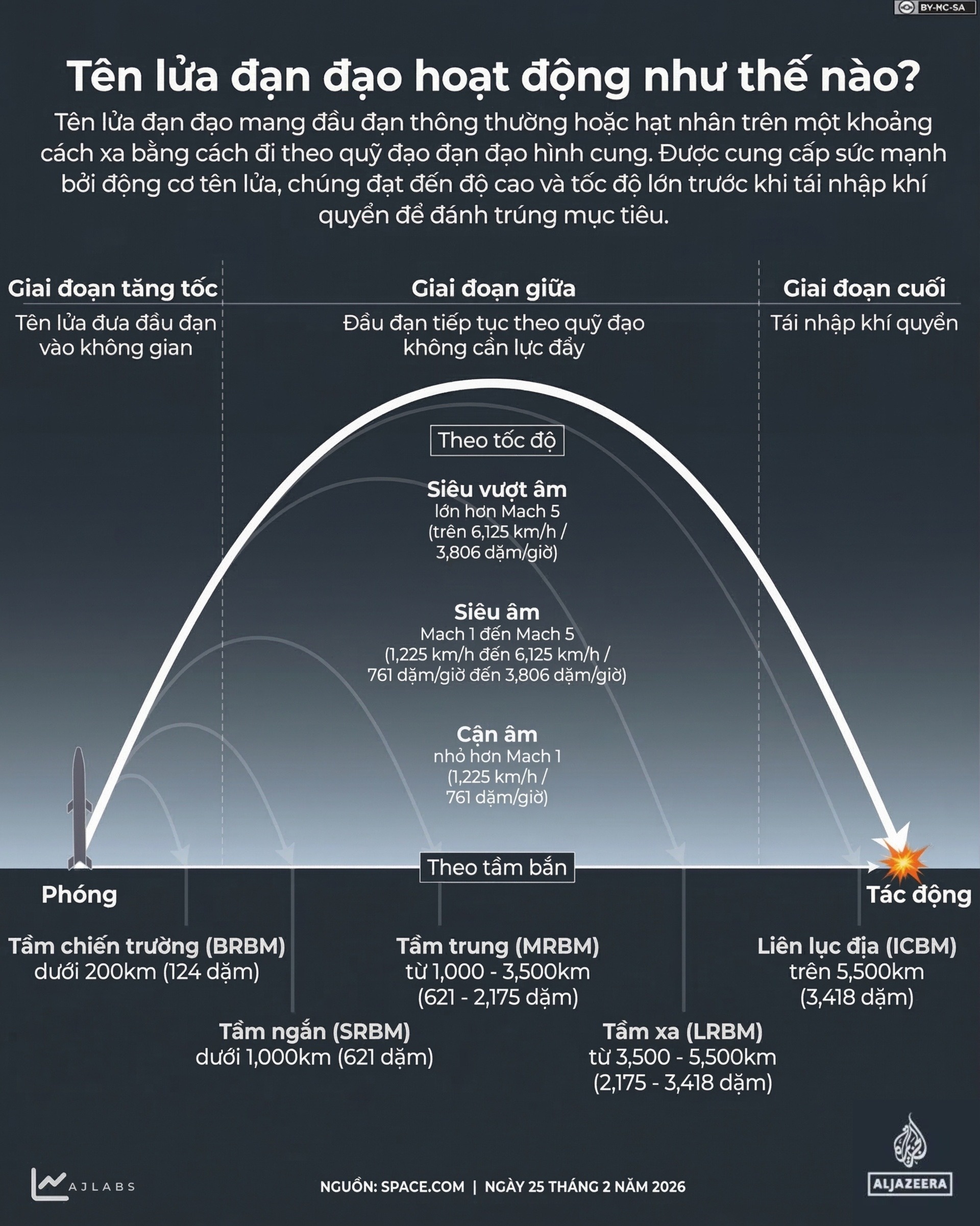
According to Brussels-based military- political analyst Elijah Magnier, most experts still believe that Iran's missiles and drones rely primarily on inertial guidance systems.
"These systems determine the weapon's location by measuring acceleration and motion through integrated sensors such as gyroscopes and accelerometers," Magnier told Al Jazeera.
The advantage of inertial navigation systems is their independence and resistance to external interference. However, according to this military analyst, a major drawback is that even small errors accumulate over time and distance, causing a gradual decrease in accuracy.
Satellite navigation signals are the solution to this problem. “Normally, missiles use inertial guidance systems to maintain their overall trajectory, while satellite signals refine the path and enhance targeting accuracy. This approach provides a significant improvement in precision,” Magnier explained.
With superior accuracy compared to GPS, which is owned by the US government and has been used by the Iranian military, the Beidou satellite system, if adopted by Iran, would offer a huge advantage. In addition, Beidou is also believed to have the ability to filter interference and prevent signal deception.
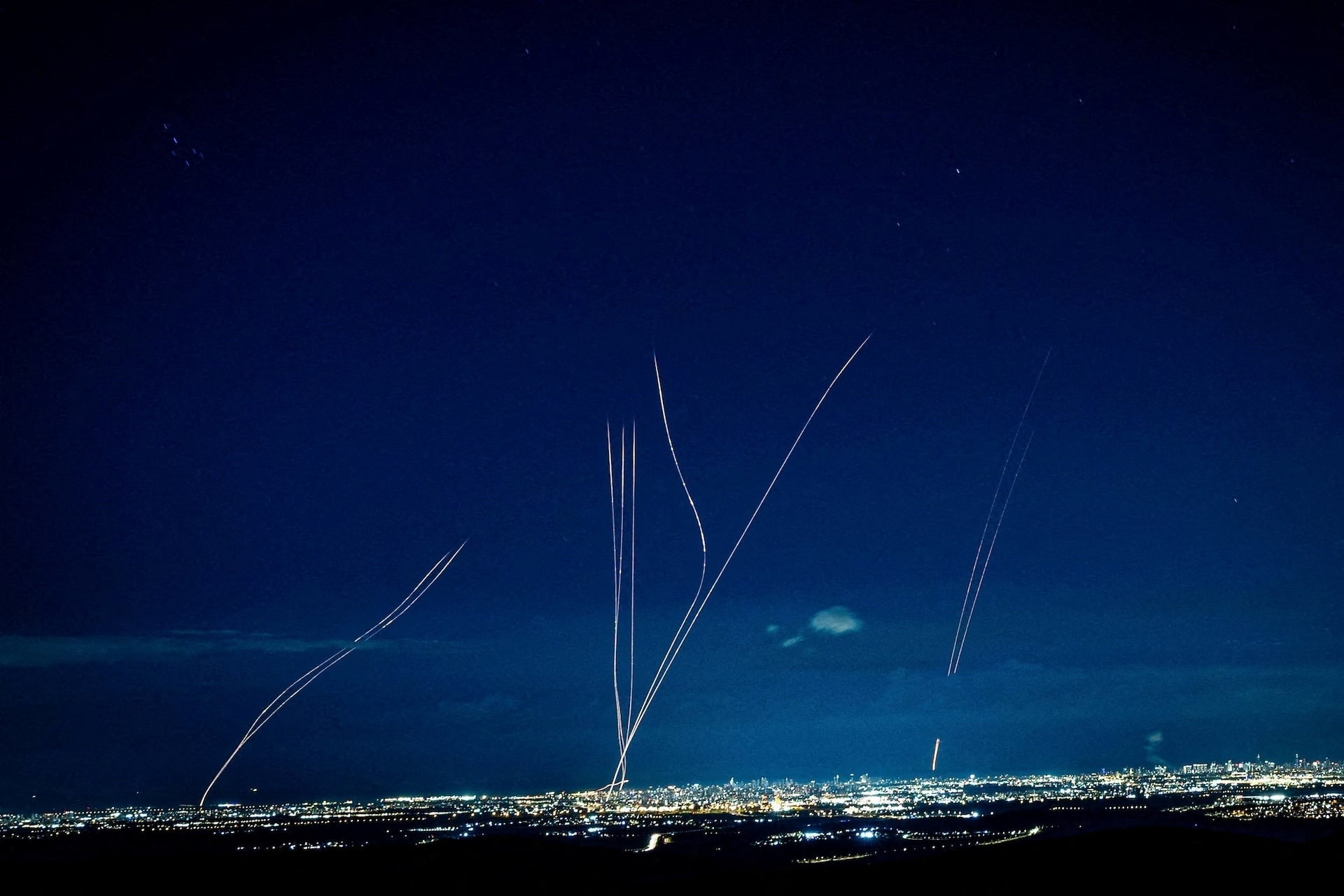 |
This image, taken from central Israel, shows the aftermath of Iran's missile strike on Israel on February 28. Photo: Reuters. |
"Unlike civilian GPS signals that were paralyzed in 2025, the military-grade B3A signal of the Beidou-3 system is essentially impossible to jam," said military analyst Patricia Marins.
More importantly, the Beidou also has a short message communication channel, allowing operators to communicate with drones or missiles at distances of up to 2,000 km while in flight. Marins explained that this means weapons using the Beidou navigation system can be rerouted after launch.
According to analysts, if Iran actually possesses Beidou technology, it would be a major turning point in the war.
"The development of satellite navigation systems has changed the landscape of modern warfare. Precision strike capabilities—previously the domain of a few military powers—are being reshaped by global satellite navigation infrastructure."
"By helping long-range weapons become more accurate and resistant to jamming, systems like Beidou will continue to play a crucial role in the technological landscape of contemporary conflicts," Magnier stated.
Source: https://znews.vn/cong-nghe-trung-quoc-nang-tam-ten-lua-iran-post1634477.html




























































![[Photo] Hue: Admire the 2.4 trillion VND sea bridge, the longest in Central Vietnam.](https://vphoto.vietnam.vn/thumb/402x226/vietnam/resource/IMAGE/2026/05/24/1779614018347_anh-man-hinh-2026-05-24-luc-16-13-29.png)












































Comment (0)