


Transport-Oriented Development (TOD) is key to Hanoi's completion of its urban rail network, facilitating increased land values and the development of new economic centers.
According to the urban railway system construction investment plan for the period 2024-2045, Hanoi City plans to complete approximately 12 urban railway lines (about 600km) with a total investment of nearly 50 billion USD. Of this, 14.6 billion USD is needed to complete 96km by 2030; 22.5 billion USD for 301km in the period 2031-2035; and 18.2 billion USD for 200km in the period 2036-2045. Nearly 20 years of implementation have resulted in only 2 operational urban railway lines. In reality, the construction of urban railway lines in the capital city faces many difficulties. After nearly 20 years of implementation, only 2 urban railway lines are currently operational in the city (Cat Linh - Ha Dong and the elevated section of the Nho Son - Hanoi Station line). Therefore, if construction continues as planned, many believe it will be very difficult for Hanoi to complete its urban railway network as intended. 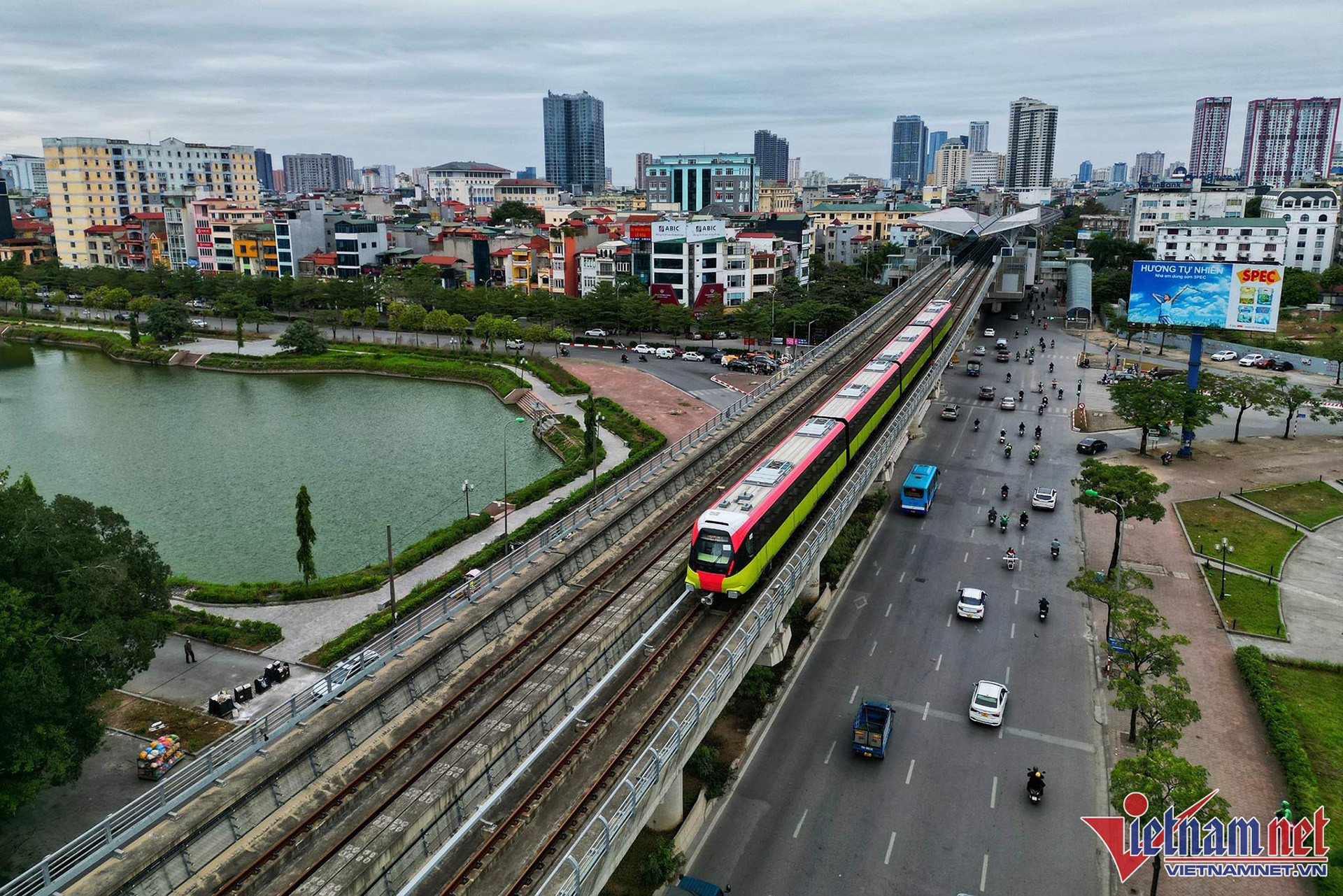
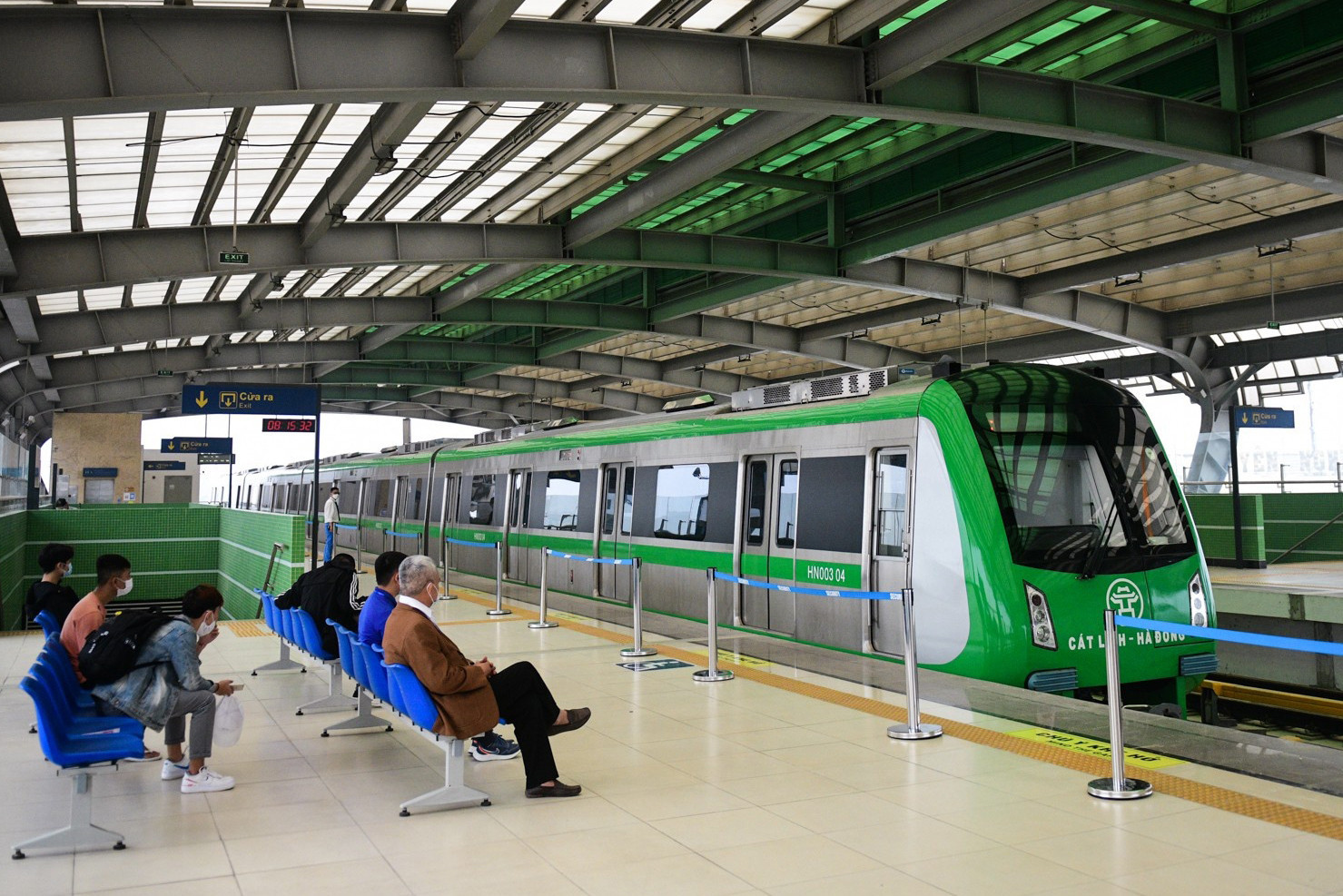
After 15 years of construction, in August 2024, Hanoi put the elevated section of the Nhon - Hanoi Station urban railway line into commercial operation. Photo: Phan Anh
Vice Chairman of the Hanoi People's Committee, Duong Duc Tuan, once pointed out that, considering the entire investment process, the Nhon - Hanoi Station and Cat Linh - Ha Dong railway lines took 10-15 years to be put into commercial operation. "Assuming there were 10 lines and we built them one by one, it would take us about 100 years to complete them, which is extremely impractical," Mr. Tuan worried. Chairman of the Hanoi People's Committee, Tran Sy Thanh, also mentioned that the Nhon - Hanoi Station railway line has been under construction for 15 years and is still unfinished (currently under construction for the underground section). Therefore, according to Mr. Thanh, instead of building each line individually as is currently the case, it is necessary to build all railway lines as planned. In his paper submitted to the national scientific conference "New Vision, New Opportunities for Building a Culturally Rich, Civilized, and Modern Hanoi, a Globally Connected City," Mr. Khuat Viet Hung, Director of the Institute of Transport Strategy and Development ( Ministry of Transport ), stated that Hanoi is one of the most densely populated cities in the world, with over 8.5 million people living and working there. With rapid urbanization and population growth, Hanoi is facing immense pressure to develop its transportation infrastructure to alleviate traffic congestion and environmental pollution. Meanwhile, the implementation of urban railway projects in Hanoi has not met its targets, failing to meet the needs of development and reduce traffic congestion in the city. Therefore, according to Mr. Khuat Viet Hung, the need to build an urban railway network is more urgent than ever to address these issues for the capital city. A historic opportunity to complete the urban railway network: To complete Hanoi's urban railway network, according to Mr. Khuat Viet Hung, the city must prioritize investment resources for railways through increased revenue, cost savings, and efficient land use. In addition, the central government needs to supplement Hanoi's budget for the construction of the urban railway system. Relevant agencies should allow Hanoi to base its decisions on the approved Capital City Master Plan or specialized infrastructure planning projects as the basis for deciding on investment policies and construction projects for urban railway lines.After nearly 20 years of construction, Hanoi currently only has two operational urban railway lines. Photo: Thach Thao
Furthermore, Hanoi also needs to plan urban development areas with a Transport-Oriented Development (TOD) approach at a scale of 1/2000 to manage and reserve land for the development of urban railways and urban development within the TOD area. Regarding the development of the railway network according to the TOD model, Mr. Nguyen Cao Minh, Head of the Hanoi Urban Railway Management Board, believes that this is a key strategy to promote dynamic and sustainable urban development. This is an advanced urban planning model that maximizes the use of the public transportation system with a large number of users. According to Mr. Nguyen Cao Minh, Hanoi is facing a historic opportunity to implement TOD in its long-term urban development strategy. This policy not only helps optimize land use but also reduces traffic congestion, reduces emissions, and improves the quality of public spaces. This is also key to increasing land value and creating conditions for the development of new economic centers. "This not only helps the city effectively utilize large investments in public transport infrastructure such as urban rail, but also improves the existing housing supply while developing new housing and economic centers around strategic transportation hubs," Mr. Nguyen Cao Minh shared.Vietnamnet.vn
Source: https://vietnamnet.vn/cong-thuc-lam-600km-metro-o-ha-noi-2331383.html




![[Photo] The General Secretary presents the title of Hero of the People's Armed Forces to the Navy.](https://vphoto.vietnam.vn/thumb/1200x675/vietnam/resource/IMAGE/2026/02/28/1772251730336_vna-potal-tong-bi-thu-to-lam-du-va-trao-danh-hieu-anh-hung-llvt-nhan-dan-cho-quan-chung-hai-quan-8612073-jpg.webp)






















































































Comment (0)