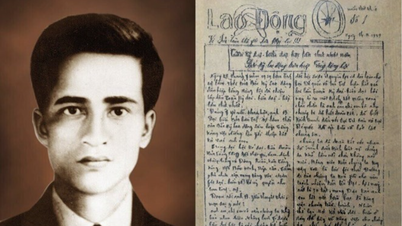
I've mentioned many times in interviews that, as a student, I wrote for newspapers primarily because I "lived, breathed, and even dreamed about journalism"; and also because... it was for the money to buy cheap meals. At that time, I regularly wrote feature articles for two newspapers: Lao Dong and Van Nghe Tre. Whether by chance or design, the highly "literary" feature articles from these two then-thriving newspapers were worth exactly one gold coin. Oh my, what a brilliant student living in rented rooms surrounded by prostitutes and drug addicts (that's how it was back then!), receiving a gold coin as payment each time! Later, I was fortunate enough to win First Prize, Second Prize, and even several Third Prizes and consolation prizes in feature article competitions organized by Lao Dong.
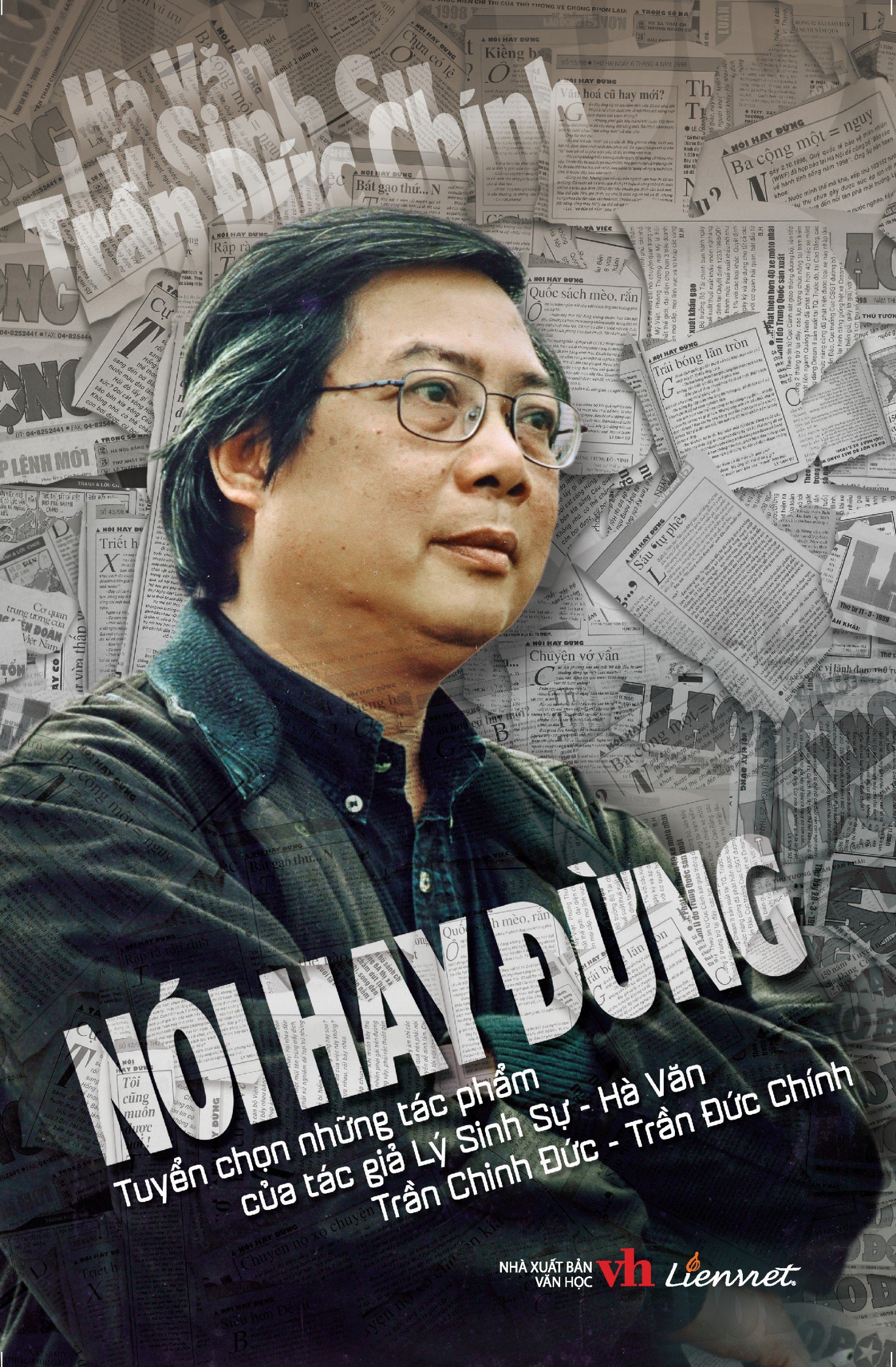
With a little bit of success, I gained a bit of confidence to "attack" the editorial board of Lao Dong newspaper. My goal was to catch a glimpse of the famous journalists I read about every day in the newspaper, "hearing their voices but not seeing their faces." Of course, Mr. Ly Sinh Su (Ha Van, Tran Duc Chinh, Tran Chinh Duc) was the one I was most curious about.
Counting from 1994, three decades have flown by like leaves falling in the yard. So, I honestly don't remember how I first met Mr. Ly Sinh Su - Tran Duc Chinh. I only remember the time he took a liking to "little boy" Do Doan Hoang. Whenever I sneaked into the "Deputy Editor-in-Chief's" office, he would squint, smile brightly and wittily. His glasses had slightly large frames and round lenses, probably dark plastic – everything about him exuded the patina of time – very old-fashioned. Whenever he was engrossed in conversation, emotional, or lost in thought, he would take out his glasses to clean them. Then, with a mischievous and innocent smile, he would call me "this boy," "this little boy," and say, "You like this, you know..."
“I’m writing about the fate of the descendants of the village crier, Uncle. The title is ‘Biographies of Village Criers,’ to make it sound like ‘Eastern Zhou Dynasty Chronicles’ (laughs). In my hometown, from 1953 onwards, before the liberation of Dien Bien Phu , there were still village criers. Some of their descendants still live in the village today. They faced terrible discrimination; most left the area. Village criers and leprosy were the most feared things in the past. Now, leprosy is cured, but the discrimination against ‘children of village criers’ in people’s minds is still so bitter and hasn’t been cured yet…” I explained earnestly. Uncle Ly Sinh Su listened, smiled subtly, and asked for more details. He seemed to find it interesting. After cleaning his glasses, he said, "You have to write it like this, you have to understand: back then, the village crier played a very important role, shouting, shouting, shouting, shouting, to the whole village, from north to south, east to west, to the rich man's daughter... They beat their drums, they announced, they delivered the news excitedly with their charming voices and many other interesting things. They were the beginnings of our journalism from that time, weren't they? They delivered news with both good content and beautiful, eye-catching forms." I burst out laughing, "That's right, Uncle. The village crier's daughter was always beautiful, and always the place where the village officials 'came and went, with wires dangling,' even though they still cursed the crier, just like in the old Vietnamese opera plays we often watch. Beautiful in content and beautiful in form, Uncle."
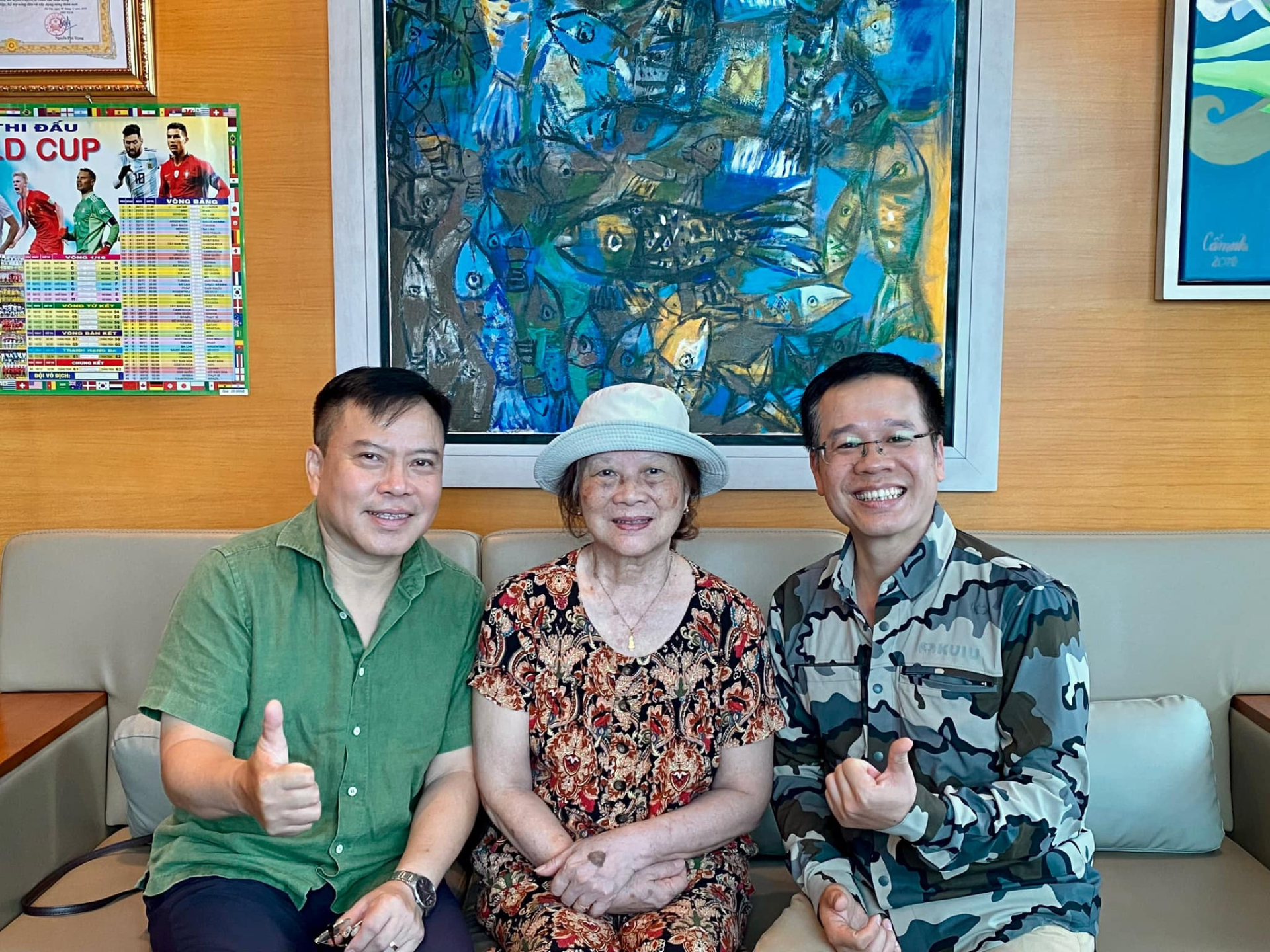
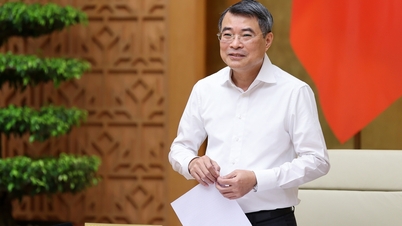
Journalists Luu Quang Dinh and Do Doan Hoang, along with Ms. Mai - the wife of journalist Tran Duc Chinh, discussed and exchanged ideas about the book "Speaking the Right Thing, Not Speaking the Right Thing," which is scheduled to be released on June 18, 2024. The book is a tribute and expression of respect from colleagues to journalist Tran Duc Chinh.



Another time, I went to write about Cay Chay hamlet, an area that could only be reached by crossing the Tich River (in the former Ha Tay province). At that time, there was still no electricity, roads, schools, or medical facilities. Mr. Chinh said, "Cay Chay, if things continue like this, when will it ever bear fruit?" I immediately wrote a report titled: "When will Cay Chay bear fruit?"; and I earnestly advocated for filling the gaps so that the young people there could thrive.
Another time, I walked for a whole week, then took a motorbike taxi through the districts of Quỳ Châu, Quỳ Hợp, and Quế Phong in Nghệ An province, all the way to Nậm Nhoóng and Tri Lễ, and then to neighboring Laos . I traveled with the police (at that time I was working for the police newspaper). The motorbike taxis had stretchers to carry the motorbike across raging streams, the motorbike bounced on rocks, both wheels were submerged in mud, crawling over the edge of cliffs, the passengers were strained, tensing up like monkeys climbing trees, and the driver strained so much that his hands became calloused with large lumps the size of eggs. Many villages had become brothels for drug traffickers; the police raided large mountain caves and found sacks sticky with black resin, full of opium transported from Laos. In the midst of this drug hotspot, the motorbike taxi drivers would occasionally sit in front of an oil lamp in a deserted village, cutting off slices of the cumbersome lumps on their hands and burning them…the smell was strong and pungent. I reported this to Mr. Lý. He encouraged me, and I wrote "The Art of the Hybrid Vehicles." Nearly 20 years have passed, and I'm still friends with those hybrid vehicle drivers. That report later won an award from the Lao Dong newspaper.
It wasn't until I read the theoretical articles of journalist Tran Duc Chinh (when he was Deputy Editor-in-Chief of the Labor Newspaper and held several other positions in the Vietnam Journalists Association) that I understood that Mr. Chinh had once cycled into the fierce battlefields of Quang Binh and Quang Tri, witnessing the horrific death and destruction of war. He was also a journalism lecturer and an outstanding writer of journalistic theory. His humorous and insightful way of speaking, the way he questioned the subject matter of a young boy like me at the time, was also a way for the editorial board to critique the author (contributor) and steer their story (report) to the most relevant issue.
In 2004, I transferred from the World Security Newspaper to the Labor Newspaper, immediately assigned to the Feature Reporting section, editing every word, working late into the night, meticulously reviewing drafts and proofs until I could smell the fresh ink of the newly printed newspaper. Many tasks were unfamiliar to me. I was also scolded by my superiors, but I wasn't afraid or discouraged; I found joy in the hard work of what I loved. While I was diligently working late into the night, Deputy Editor-in-Chief Ly Sinh Su arrived. He told the Editor-in-Chief: "Oh my God, this bandit! His place is in the forest, thousands of miles away! How can he possibly handle this? He can't do this kind of work. You've wasted a very good writer and gained a terrible editor!" And so I escaped "feature reporting management," traveling from North to South, across the country, and to all corners of the world. I will be eternally grateful to Mr. Ly for this.
It seems that anything that falls into Mr. Ly's hands creates controversy. He's elderly and the boss, so he keeps the section that the female staff members don't dare ask for until he submits it. They subtly suggest it, and he says: "My section is 'Horny or Demand' (Speak or Don't, that's the wordplay)." They ask every day, because one article a day is too tiring. I think it's simple: what if he's sick, attending a feast, drunk, or asleep and loses his inspiration? I heard that even when he's abroad, he can still predict what's trending in public opinion in the coming days, and he'll preemptively write "Speak or Don't," which is always witty, humorous, and perfectly on-topic.
I called him "teacher," and now I work with his daughter at the editorial office. Occasionally, I'd slip him a few coins as a token of my appreciation, telling him to take them home as a gift for Mr. Chính, even though I'd never had the chance to be taught by him in a lecture. He only patted me on the shoulder a few times, and I never dared to have a proper chat with him over drinks, due to the age difference and the busy schedules of the boss at the editorial office. So, I just kept my distance. But, truly, whenever he edited and guided me in a feature story, everything opened up for that particular piece; and it served as a "guiding principle" for countless subsequent feature stories. When I published my books, he wrote the preface twice – I was thrilled! The happiest were the articles published in the Feature Stories section of the Lao Dong Newspaper back then, which included a few words of "commentary" as an introduction, a box before the main article. Mr. Ly's writing is masterful, like someone painting a watercolor or a martial arts master striking pressure points – the journalist is "caught out" and the reader is captivated in a very interesting way.
When Huynh Dung Nhan and I co-published a book titled "From the Mong Duong Coal Mine to the Roof of the World, Tibet," I released stories of my travels across the globe, looking down from the distant peak of Tibet. Meanwhile, Nhan remained a renowned journalist in Vietnam for a long time. During my student years, I read many of Huynh Dung Nhan's books. Now, Mr. Ly Tran Duc Chinh has written the introduction to the book, and reading it makes me realize how busy he is, yet he still closely follows every step of his nephew Hoang's journey. Such affection from a writer is incredibly precious. I am close friends with two of Vietnam's leading journalistic wolves, Huynh Dung Nhan and Do Doan Hoang; both are of similar height and share a passion for travel, a romantic spirit, and a love for literature (and all sorts of other things). His voice is playful but incredibly warm.
Excerpt: “Huynh Dung Nhan went ahead with two cross-Vietnam trips, wearing out a motorbike (borrowed), not to mention countless detours across hundreds of regions. Do Doan Hoang was also impressive, traveling across the entire country of Vietnam in 10 years. Both of them traveled extensively and wrote prolifically; their books fill my bookshelf, and journalism departments offer courses on feature writing by both of them; and for many years now, both have lectured to students, young and old journalists, on feature writing (…). This time, they've decided to co-publish that book, truly a battle of wits, a “double sword” collaboration. “After reading (the book), many readers may feel sad or angry; but more importantly, we have strengthened our faith in life, in humanity, no matter what… And who knows, (after reading), many young journalists might suddenly want to travel and write!” (Preface by journalist Tran Duc Chinh for the aforementioned book).



They say that in life, there are people you only meet briefly, but they influence you a thousand times more than you imagine. For me, journalist Tran Duc Chinh was a mentor whom I respected from afar, yet he influenced my path so profoundly. He would sit there, smiling and speaking wittily, addressing me informally as "you," "my nephew," "my rascal," and skillfully guiding younger writers and apprentices towards progress. Each time we met, with just a word or a pat on the shoulder, I understood that from that first meeting to this one, and for all these years, he had always favored me, a simple country boy carrying a backpack to seek an audience and present my journalistic topics. I know that at times, I was too naive and delusional, but Mr. Ly would still smile, be tolerant, and continue to impart his skills and guidance.
I believe that Uncle Chinh treated many people with the same wit and warmth.
Source: https://www.congluan.vn/cu-ly-cuoi-hom-bay-binh-phap-viet-phong-su-post299196.html