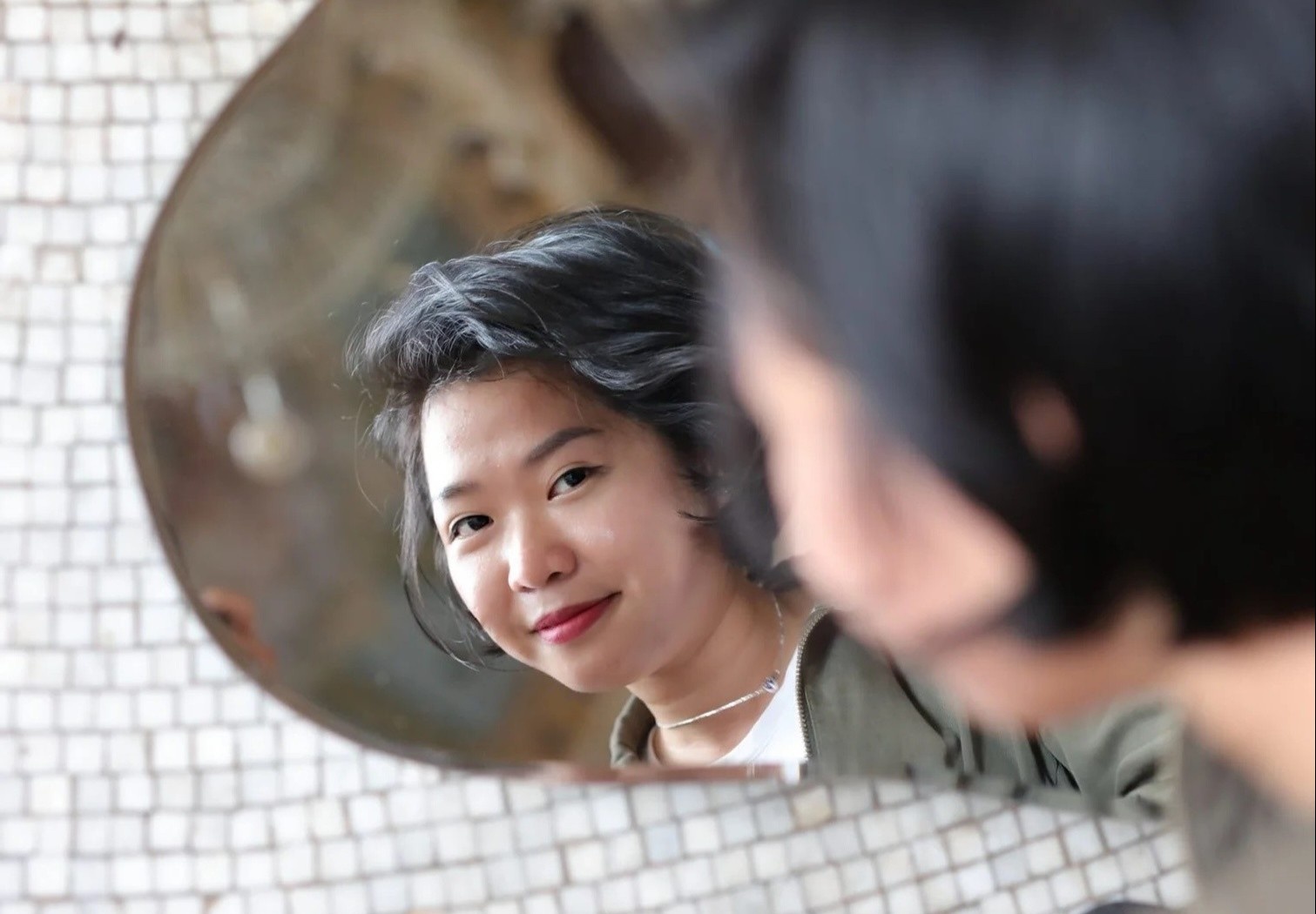
“Who is Le Giang? This is the first time I’ve heard her name because of the incident involving Son Tung”; “Just chasing fame again, right?”; “If she’s a flop, she’ll just add Son Tung’s name”; “Just riding on his coattails to become famous again.” … These are just some of the comments among tens of thousands of criticisms and attacks against visual artist Le Giang on social media platforms in recent days.
Even the artist's latest post on June 5th received numerous angry reactions from netizens.
From being a "victim" in the incident where the production team of Son Tung's " Come My Way" music video appropriated her work, artist Le Giang unexpectedly became a "villain" in the eyes of a segment of the public.
For Le Giang, this was "a huge shock and a severe emotional trauma."
Why was Le Giang attacked?
After a period of silence, visual artist Le Giang officially spoke out on her personal page. In it, she asserted that the apology from Son Tung's team was disrespectful and did not reflect the true nature of the unauthorized use of her work. The production team also showed no concrete action to take responsibility for infringing on the artist's copyright under the Intellectual Property Law. Furthermore, the owner of the music video (allegedly Son Tung) that used her artwork has yet to contact her to fulfill their obligations regarding the use of her copyrighted work.
"I am truly disappointed and feel that my artistic work has been insulted by the way the relevant parties have handled the situation," Le Giang shared, adding that in recent days, she has had to face personal attacks and acts of defamation on social media after the incident was made public.
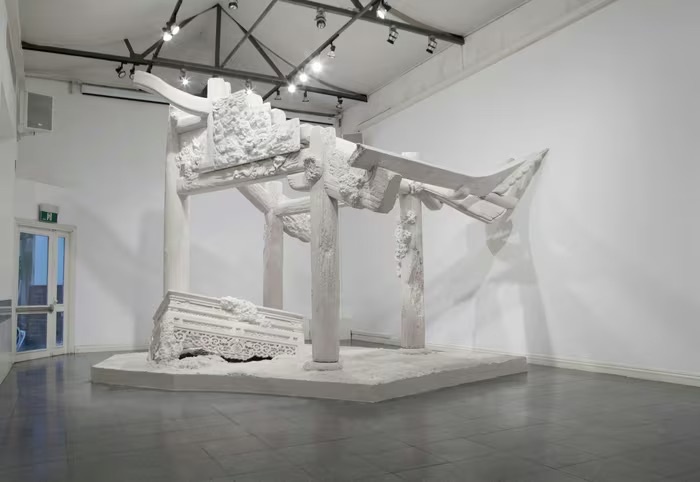 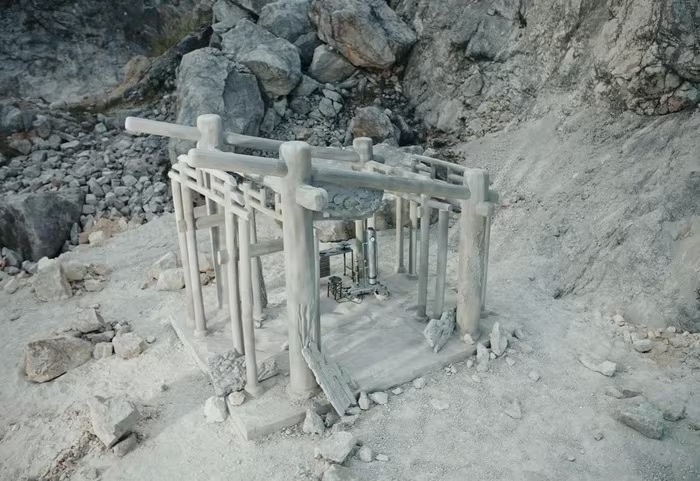 |
Images from artist Le Giang's artwork and a scene from the music video "Come My Way ". Photo: @legiang/ M-TP. |
Explaining why Le Giang – who was once someone needing protection and support – suddenly became the target of online attacks, Ms. Le Thi Khuyen, a researcher in the field of Social Sciences, who holds a Master's degree in Educational Psychology from the University of Sydney, Australia, and is currently a lecturer in Psychology at Hoa Sen University (Ho Chi Minh City), stated that there are four reasons leading to this phenomenon.
Firstly, it stems from a protective attitude towards idols. For popular artists with large fan bases, a segment of fans tends to equate criticizing a product with personal attacks on the idol. In this case, the person raising the copyright issue is easily perceived as an "opponent" of the idol, even though they are actually discussing copyright and the licensing process.
Next, there's the perceptual gap between visual art and popular culture. Many people might look at an installation and think of it as merely a "background," a "wall," a "relief," or "general cultural material." But in contemporary art, the organization of space, components, materials, composition, local memory, and visual language can all be very specific creative endeavors. The World Intellectual Property Organization (WIPO) also emphasizes that copyright protects forms of expression, not abstract ideas. Therefore, the point of debate isn't "who owns traditional culture," but whether a specific expression can be copied, reproduced, or used in commercial products without permission.
Furthermore, there is ambiguity between "referencing," "being inspired," and "appropriating." Microwave Soups admitted to referencing the sculptural language of the relief piece from Le Giang's work but claimed they did not seek permission or discuss it beforehand. The term "referencing" might lead some to believe the matter is less serious, while Le Giang maintains that the essence is the unauthorized use of the work. This difference in terminology creates a gray area for public debate and criticism.

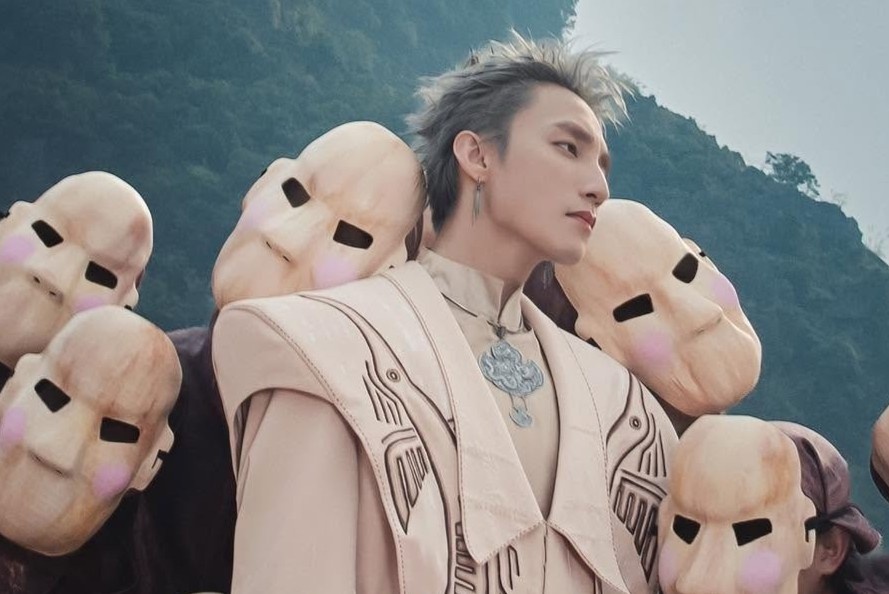 |
According to experts, when a less well-known individual competes with a major entertainment brand, they are more likely to be accused of having ulterior motives such as "seeking fame," "riding on the coattails," or "showing off." Photo: M-TP . |
Finally, there is prejudice against those who speak out in power struggles. When a less well-known individual confronts a major entertainment brand, they are easily labeled with motives such as "seeking fame," "riding on the coattails," or "showing off." This is a dangerous social reaction, as it weakens the legitimate right of artists to protect their work, especially young or independent artists who lack strong legal and media resources.
"When an individual artist speaks out in front of a large team and a star with a large fan base, the media balance is often disrupted. The person speaking out can quickly be labeled as 'causing trouble,' 'making a big deal,' or 'riding on the coattails of a celebrity,' instead of being seen first and foremost as an entity with the right to defend their work. This is a fairly common victim reversal in popular culture crises," the Master shared with Tri Thức - Znews .
Double damage
According to experts, the personal attacks and defamation inflicted on artist Le Giang on social media after the incident was made public will cause significant emotional trauma and damage to her reputation.
For artists, a work of art is not just a product of their labor, but also connected to memories, professional identity, and creative honor. When a work is used without permission, the feeling of infringement is already profound. If the artist is subsequently attacked, their motives questioned, or their reputation damaged, the harm is doubled: they lose both control over their work and the right to tell their story with dignity.
Furthermore, Le Giang also suffered damage to her reputation. In the creative environment, personal credibility is a crucial professional asset. Attacks such as "fame-seeking," "overreacting," and "copyright infringement," if widespread, can mislead the public about the true nature of the incident and make the artist appear as a controversy-monger rather than a protector of copyright.
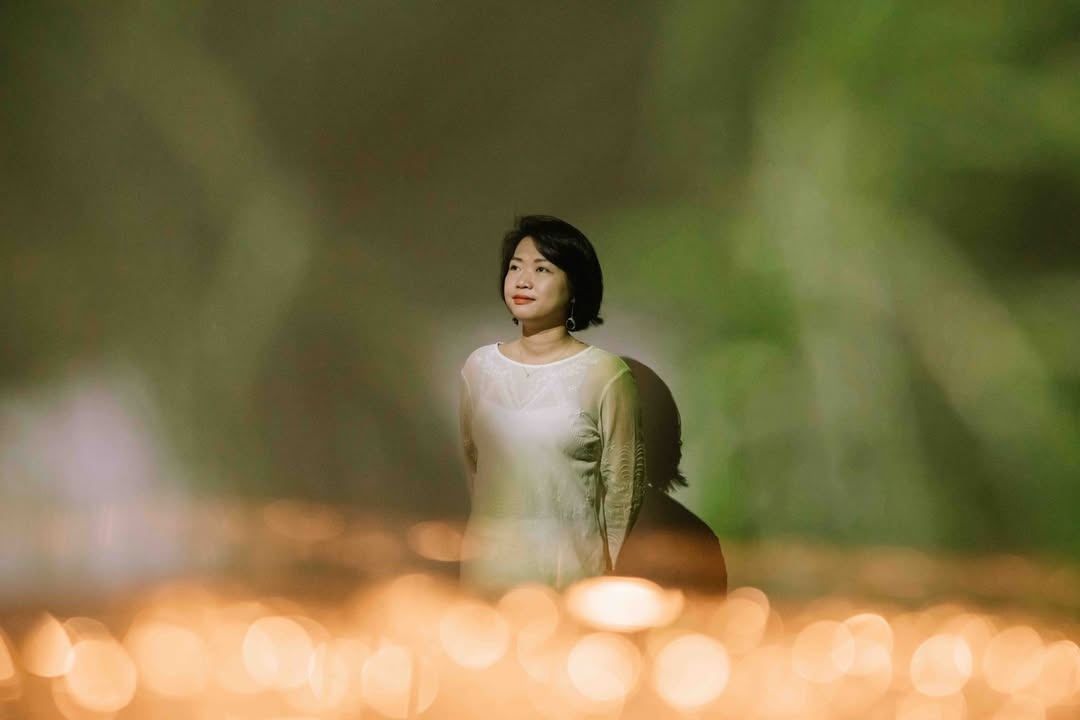 |
Visual artist Le Giang said she was shocked and emotionally traumatized after the incident. Photo: VCCA Vietnam . |
Along with that comes professional and economic damage. If a work is used in a major commercial product without permission, proper attribution, or a usage agreement, the artist may lose licensing opportunities, the exploitable value of the work, and control over how the work is placed in a new context. This is why such disputes should not be simply viewed as "internet drama," but rather as a story about creative labor rights and professional standards for the entire industry.
"But the most worrying point is the silence effect. If an artist speaks out to defend their work and is attacked by the online community, other artists – especially young and independent artists – may choose to remain silent in similar cases. Then, the creative market will develop a skewed standard: those with greater media power can exploit the intellectual resources of the weaker party, while the weaker party is afraid to speak out for fear of being attacked," observed Master's degree holder Le Thi Khuyen.
In a statement posted on the evening of June 5th, Son Tung's team stated that the incident involving artist Le Giang was "unwanted and unforeseen." They are currently gathering official information and reviewing the efforts to resolve the issue from the production company, Antiantiart.


According to experts, Son Tung's team should contact Le Giang directly and officially, not just through an intermediary. If the music video bears Son Tung's name and is associated with his brand, then the singer or his legal/media representative should have an official dialogue with the author.
Furthermore, to avoid negatively impacting Le Giang, the male singer's side needs to speak out and call on the fan community to stop personal attacks against the artist. This is crucial. An artist with a large fan base cannot control every action of their fans, but they have a moral responsibility to guide the community. A short, clear statement calling for respect for Le Giang and refraining from personal attacks would be extremely valuable in de-escalating the situation.
"This incident leaves many lessons. For mainstream artists, the lesson is that the more famous they are, the greater the responsibility. A star's work can amplify the image, symbolism, and works of others to millions of people. Therefore, copyright infringement is no longer a minor behind-the-scenes mistake; it can become a public ethics issue. As for the public, the lesson is to distinguish between criticism and attack. We can question the evidence, the degree of similarity, or the boundary between inspiration and copying. But humiliating individuals, attributing motives, or using the power of the crowd to silence those who speak out is unacceptable," said Master's degree holder Le Thi Khuyen.
Source: https://znews.vn/cu-soc-cua-le-giang-post1657452.html
![[Photo] General Secretary and President To Lam receives Palestinian Ambassador Saadi Salama](https://vphoto.vietnam.vn/thumb/1200x675/vietnam/resource/IMAGE/2026/06/25/1782365384740_a1-bnd-9423-8322-jpg.webp)


![[Photo] General Secretary and President To Lam attends the 13th National Congress of the Ho Chi Minh Communist Youth Union](https://vphoto.vietnam.vn/thumb/1200x675/vietnam/resource/IMAGE/2026/06/25/1782356968989_ndo_br_1-jpg.webp)