 |
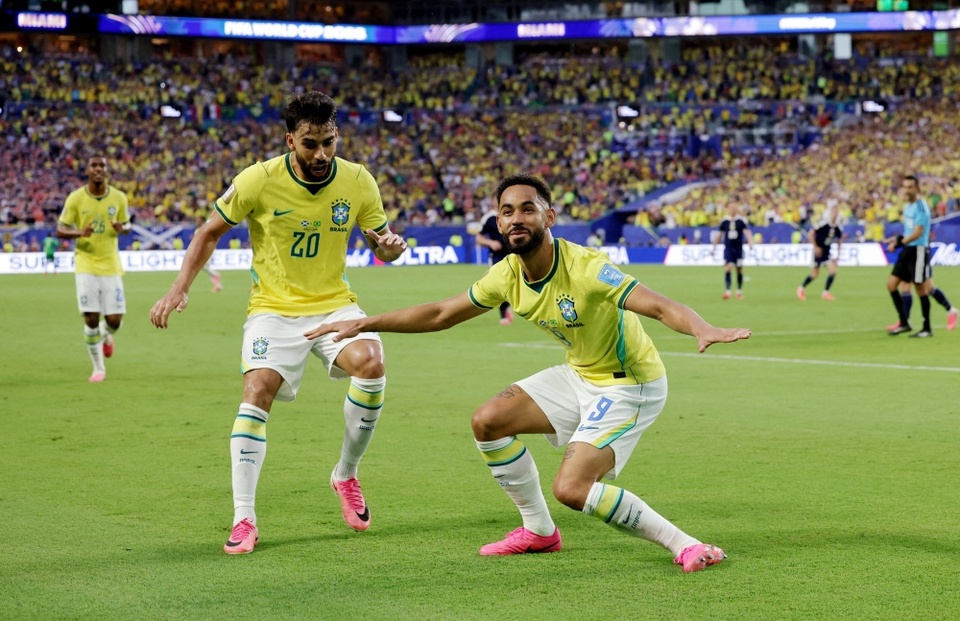
Matheus Cunha is becoming key to how Brazil's attack will function at the 2026 World Cup. |
Brazil entered the 2026 World Cup with a strange question: who is the number one center forward? For a footballing nation that has produced Ronaldo , Romario, Adriano, and many other famous number 9s, this ambiguity is unusual. Even Carlo Ancelotti didn't have a clear answer before the tournament, having tried Matheus Cunha, Igor Thiago, Endrick, Joao Pedro, and Richarlison in turn.
Number 9 is not like traditional Brazil.
After three group stage matches, the answer is leaning towards Cunha. Not because he resembles the great Brazilian strikers of the past, but because he is different from them.
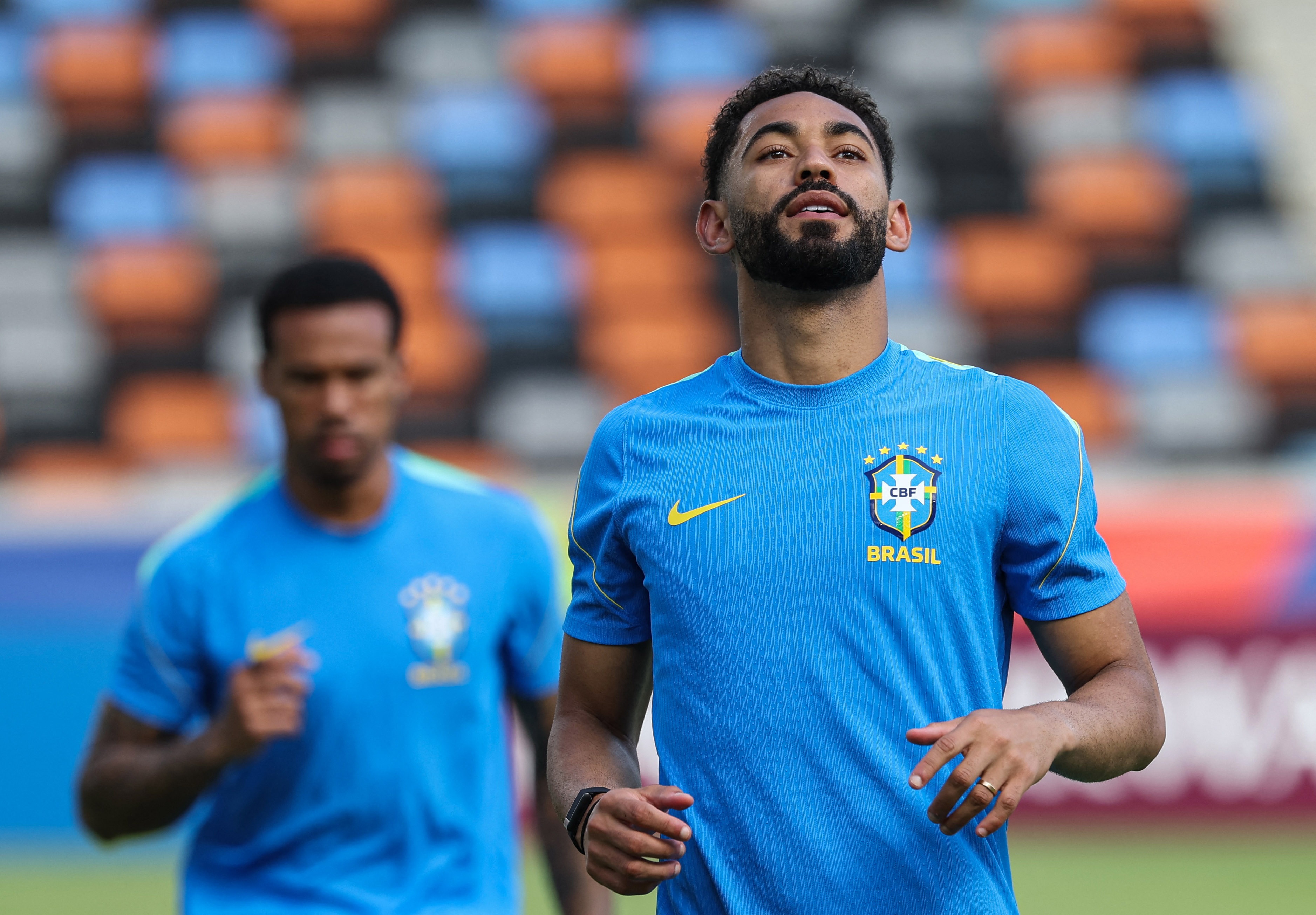
Cunha isn't a classic number 9 who just waits for the ball in the penalty area. Nor is he simply a playmaker with a number 10. He lies somewhere between those two archetypes, like a "number 9.5," capable of both scoring goals and dropping deep to link up play.
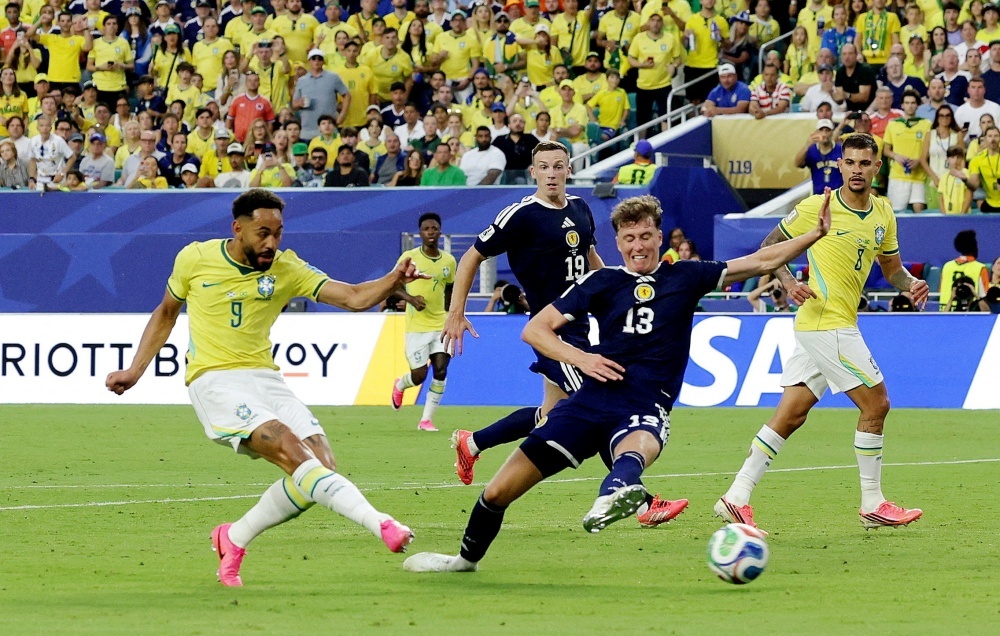
That's what makes Brazil so unpredictable. Cunha has scored 3 goals since the start of the tournament, but his value isn't just in the goal statistics. He moves wide, drawing opposing defenders out of position, creating space for Vinicius Junior and Rayan to run onto. When defenders mark him, Brazil has more space behind. When opponents leave him unmarked, Cunha has time to receive the ball between the lines, turn, pass, or shoot himself.
Former midfielder Lucas Leiva compared Cunha to Roberto Firmino, and that's a fitting comparison. Neither of them plays as a pure center forward. They make the system more fluid by dropping deep, by reading space, and by keeping opposing defenders in a state of uncertainty.
 |
Carlo Ancelotti has helped Brazil become more flexible, rather than relying on a fixed identity. |
Cunha is also exceptional in terms of defensive capabilities. At times, he initiates the pressing. At other times, he drops very deep, almost playing like a number 6 in front of the midfield.
The touch map against Scotland shows that 15 of Cunha's 38 touches occurred in his own half. Against Haiti, the corresponding figure was 14 of 41 touches in his own half or center circle.
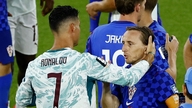

A Brazilian center forward is typically expected to be positioned as close to the goal as possible. Cunha, however, can appear far from the goal, then carry the ball forward to initiate an attack. This difference gives Brazil an extra layer of connection, instead of isolating the attack from the rest of the team.
Raphinha's injury before the Morocco match inadvertently helped Ancelotti find a more suitable formula. Raphinha is an excellent player, but he tends to move around a lot and is too versatile. When Rayan came on, Brazil's right wing became more fixed. With Vinicius on one side and Rayan on the other, Cunha had more space in the midfield to do what he does best.
The important thing is that Brazil isn't currently locked into one option. Igor Thiago could still be a choice when the team needs a central striker, playing high up the pitch, pinning down defenders and applying physical pressure. But in his current form, Cunha gives Ancelotti the balance that Brazil had been struggling to find.
Brazil is just learning how to adapt.
Brazil's transformation isn't just about Cunha. It's about how Ancelotti is redefining the team's identity. The current Brazil doesn't necessarily need to possess the ball excessively, constantly press, or dominate from start to finish. They can concede possession, draw opponents into desired positions, and then press at the right moment to punish them.
The match against Scotland clearly demonstrated this. Brazil didn't need overwhelming possession to control the game. They allowed their opponents to hold possession in less dangerous areas, dictated their attacking moves, and then pressed when opportunities arose. The first goal and the second goal that was disallowed weren't due to luck, but rather the result of a tactical trap.
This is what makes Ancelotti so valuable. He doesn't force Brazil to live within a fixed mold. For him, identity isn't about always controlling 70% of the ball or always attacking with fiery intensity. Brazil's current identity is about adaptability. When there are individuals intelligent enough to change according to the game, the whole team also has the right to be flexible in that way.
 |
Brazil entered the match against Japan with greater confidence after showing significant improvement in their three group stage games. |
The new Brazil also differs from the old Brazil in its use of full-backs. In the past, the yellow-shirted team was always associated with explosive full-backs like Roberto Carlos, Cafu, Maicon, Marcelo, or Dani Alves. But at the 2026 World Cup, Douglas Santos, Roger Ibanez, or Danilo will play more cautiously. They won't constantly push forward, but will maintain a more solid structure for the defense.
That restraint doesn't make Brazil any less dangerous. On the contrary, it helps Vinicius maintain a more advanced position and be more energetic when the team transitions. Brazil is therefore less flamboyant, but more pragmatic and balanced. The defense has only conceded one goal, while the attack has scored seven. That's enough to give Brazilians reason to be optimistic.
The midfield also needed a overhaul after the opening match against Morocco. At that time, Casemiro was left too exposed in the center of the pitch and received a lot of criticism. But the problem wasn't solely his fault. Casemiro isn't the type of player who can single-handedly cover every space, especially at the age of 34.


From there, Ancelotti switched Brazil's formation from 4-2-3-1 to 4-3-3. When Bruno Guimaraes pushed forward, Casemiro still had Lucas Paqueta supporting him. That structure helped Brazil control the game better against Haiti and Scotland, and also provided an important foundation for the match against Japan.
Japan will be a real test. They are more flexible, faster, and more dangerous than Haiti or Scotland in attack. Against a constantly moving opponent, Brazil needs a solid defense, a balanced midfield, and Cunha's link-up play up front.
After the first match, the Brazilians were still worried. After three matches, they started to smile. But the knockout round is where all positive feelings must be re-evaluated. Ancelotti's Brazil is taking shape, but that shape will only truly be valuable if they continue to win.
Cunha isn't the familiar Brazilian number 9. But perhaps it's precisely this unconventional number 9 that Brazil needs right now.
Source: https://znews.vn/cunha-mo-ra-hinh-hai-moi-cho-brazil-post1664324.html