

The U.S. Department of Commerce announced that it has discovered that tin-plated steel sheet products from Canada, China, Germany, and South Korea are being dumped into the U.S. market.
According to a statement issued on January 5th, the US Department of Commerce also affirmed that tin-plated steel sheets – a bright, silvery metal widely used in the production of food cans, paints, aerosols, and other containers – imported from the Netherlands, Taiwan, Türkiye, and the United Kingdom are not being dumped.
As a result, the U.S. Department of Commerce has imposed final anti-dumping duties on tin-plated steel imported from Canada, Germany, and China.
According to the American news outlet BNN Breaking, the highest tariff applied to some types of steel imported from China is 122.5%. China's leading steel producer, Baoshan Iron and Steel Co Ltd, currently faces a countervailing duty of 650%, while other Chinese steel producers face 331.9%. Germany's ThyssenKrupp Rasselstein and other German producers have been assigned a final tariff of 6.88%, while Canada's ArcelorMittal Dofasco and other Canadian producers are subject to a 5.27% tariff. South Korea's KG Dongbu Steel is assigned a 2.69% tariff.
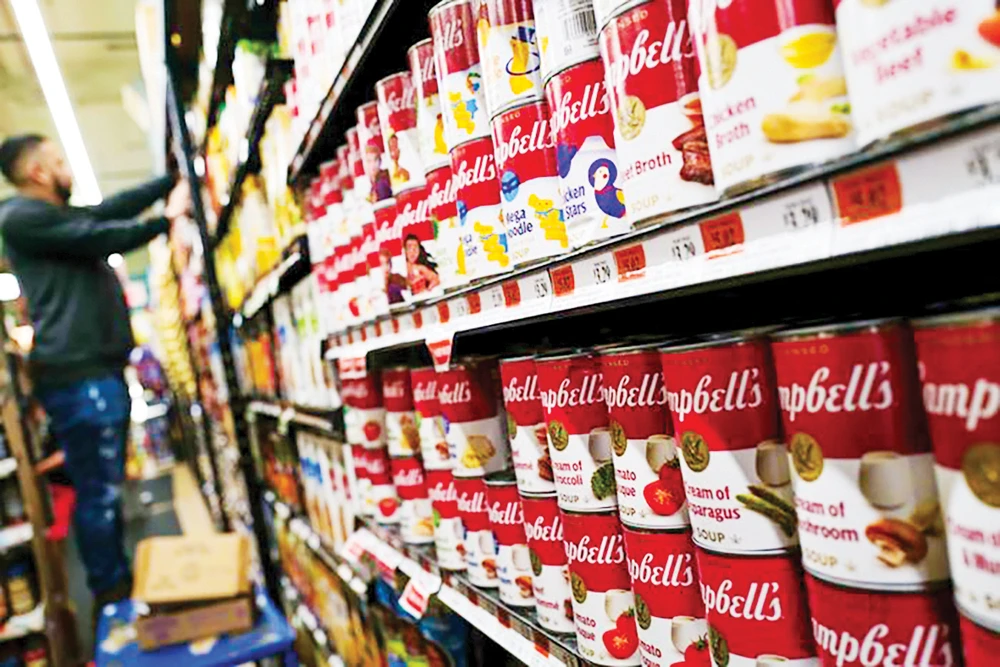
The final duty rates largely conform to the Commerce Department's preliminary anti-dumping duties on tin-plated steel imports from Canada, Germany, and China, imposed in August 2023. At that time, following a preliminary investigation that found a subsidiary of Canadian steelmaker ArcelorMittal and Germany-based ThyssenKrupp were dumping tin-plated steel into the U.S. market at prices lower than similar products in their respective domestic markets (dumping rates of 5.3% and 7%, respectively), the U.S. Commerce Department imposed preliminary anti-dumping duties on tin-plated steel imports from Canada and Germany. The highest preliminary anti-dumping duty, 122.5%, was applied to tin-plated steel coil imports from China.
Canada has expressed disappointment over the anti-dumping duties, citing potential adverse impacts on supply chains and inflation. Reuters quoted Canadian Trade Minister Mary Ng as saying in a statement: “These duties not only undermine supply chains between Canada and the U.S. but also exacerbate the effects of inflation on both sides of the border. Canada will continue to defend the interests of the Canadian steel industry and its workers.”
The U.S. International Trade Commission is expected to make a final decision in the coming weeks on whether or not these tariffs will be implemented.
Compiled by Hanh Chi
Source




























































































Comment (0)