

Washington is launching the next phase of modernizing its missile defense system protecting the mainland, but what about Moscow?
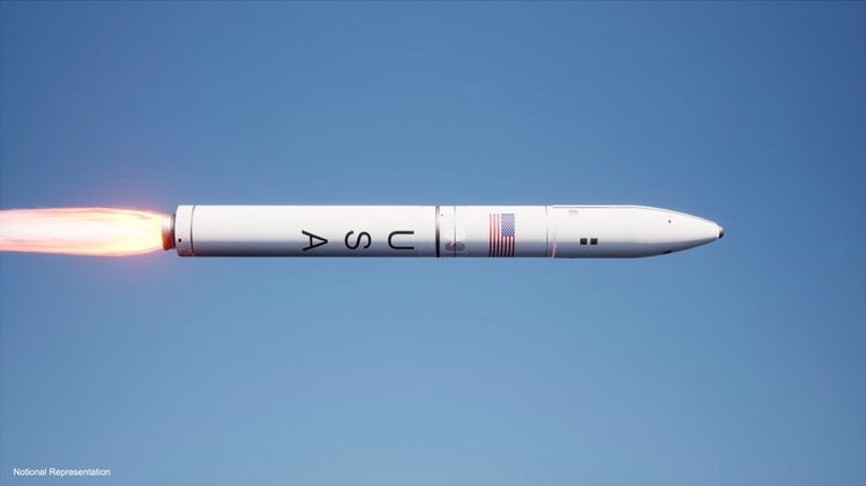 |
| Northrop Grumman's Next Generation Interceptor (NGI) group has been completed. Preliminary design review was completed one year ahead of the original contract date. (Source: Northrop Grumman) |
According to an article in the Russian news agency RIA Novosti , Northrop Grumman and Lockheed Martin have completed the design of a promising interceptor missile prototype. The Pentagon assures that these missile defense systems can shoot down modern Russian and Chinese intercontinental ballistic missiles (ICBMs) while they are in flight.
The core component of the U.S. national missile defense system is approximately 60 ground-launched interceptor missiles (GMDs) deployed in Alaska and California. These are capable of intercepting ballistic missiles mid-course.
Target identification is performed by a radar tracking and early warning system. The warhead has kinetic energy, destroying the target with a head-on collision. However, tests have shown low effectiveness – they only shot down about half of the decoy missiles.
The Americans have repeatedly attempted to improve their continental missile defense system. They researched the use of multiple warheads (MOKV) but without success. In the middle of the last decade, they launched the Reconstruction of the Destroyer Vehicle (RKV) program to create new warheads for interceptor missiles to replace the existing kinetic-atmospheric interceptor missiles.
The US allocated $5.8 billion to this program. Raytheon, Boeing, and Lockheed Martin were expected to complete development by 2025, but in August 2020, the US Missile Defense Agency (MDA) canceled the contract. According to US media, the reason was "product design issues." Subsequently, the Pentagon announced it would no longer invest in upgrading the GMD platform; they needed a fundamentally new interceptor missile.
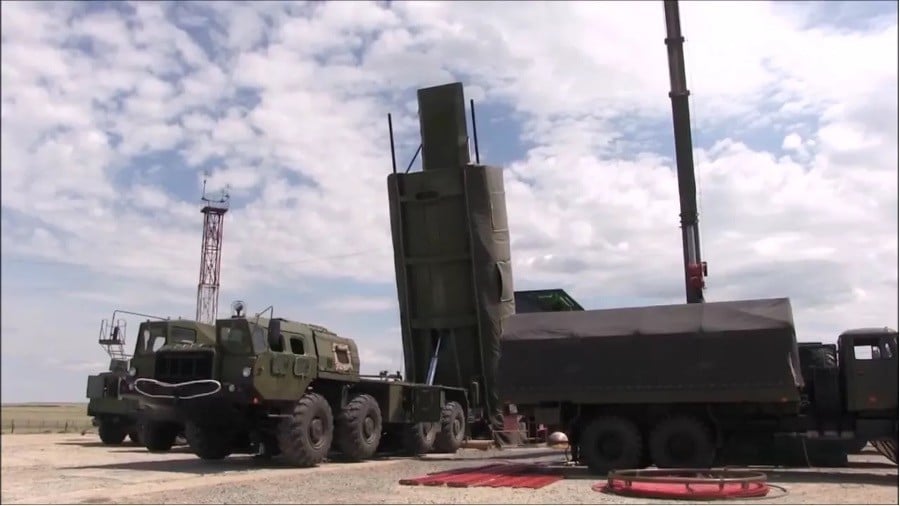 |
| Avangard missile system. (Source: Russian Ministry of Defense ) |
Protection against "Avangard"
New interceptor missiles have been in active service since the mid-2020s and have, over time, become the core of the missile defense system. The Pentagon decided to continue modernizing them because of suspicions that Russian and Chinese ICBMs are too powerful for existing interceptor missiles, primarily the GMD system.
The Next Generation Interceptor (NGI) program was launched in April 2023 when the MDA requested new design options from the country's industries. The estimated budget and timeframe for development and manufacturing were $4.9 billion. Alongside Lockheed Martin and Northrop Grumman, Boeing, the manufacturer of the GMD missile defense system, participated in the bidding process but was not selected by the Pentagon.
The appearance of the NGI, along with its tactical and technical characteristics, remains a closely guarded secret. However, the Pentagon has repeatedly emphasized that the national missile defense system must be capable of intercepting the most advanced warheads, including hypersonic ones. Presumably, the NGI will be designed primarily to target Russia's newest "Avangard" hypersonic missile system.
It's unclear how the Americans would intercept a moving warhead. The main difference between a missile defense system and an anti-aircraft missile is that it targets a point in advance that the target will then fly over. Because the trajectory of the Avangard warhead is extremely unpredictable, Washington's designers would have to devise something very special, far more "cunning" than simply countering a ballistic missile. However, the capabilities of the Americans should not be underestimated. Developing a prospective interceptor would allow them access to new technologies and engineering solutions.
Today, an effective missile defense system to protect against an adversary with comparable scientific, technical, and economic capabilities is impossible. A strategy of deterrence through threats of retaliation or retaliatory ballistic missile strikes is far more reliable. However, it cannot be said that developing a prospective interceptor missile is a waste of money. This allows for the development of new technologies and technical solutions that will be useful in the future.
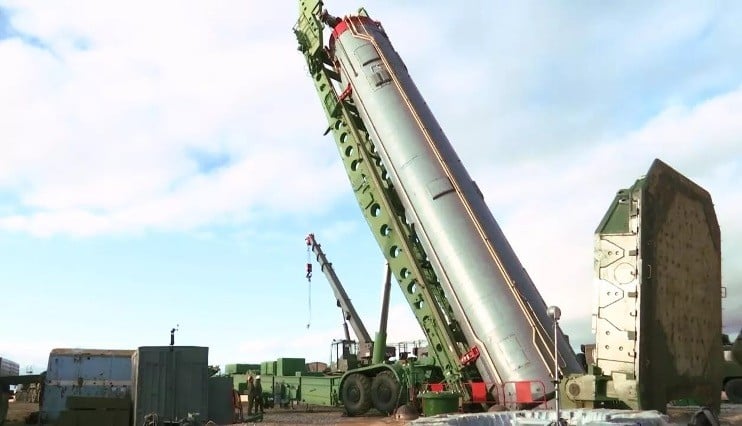 |
| Russia's Avangard is a mobile strategic missile system carrying intercontinental ballistic missiles. (Source: Sputnik) |
Temporary solution
According to Sputnik , while NGI is under development, Washington intends to strengthen its mainland missile defense system with additional forces and funding. First and foremost, this includes warships equipped with the Aegis combat information and control system and the Standard interceptor missile system. Several Arleigh Burke-class destroyers and Ticonderoga-class guided missile cruisers are deployed on permanent duty not "somewhere far away in the vast Pacific" but right off the coast of the United States.
However, the initial modifications of the Standard interceptor missile series, designed to destroy short- and medium-range missiles, were not capable of intercepting "long-range" ICBMs. High hopes are placed on the latest modified version of the SM-3 Block IIA, one of the most advanced interceptor missiles currently under joint development by the US and Japan. During testing in 2020, it successfully shot down a simulated ICBM warhead target in the Hawaiian Islands.
Furthermore, it cannot be ruled out that the US will deploy a version of Aegis Ashore on its own territory, specifically in Hawaii. The Americans have already deployed components of a similar system in Poland and Romania. Washington also intended to deploy this system in Japan, but Tokyo refused.
Another layer of national missile defense is the ground-based THAAD short-range missile defense system, specifically deployed in South Korea and Guam. THAAD is believed to intercept warheads in the final stages of their flight path. There is no precise information on how many of these systems are needed to protect the entire United States.
Russia's response
The Americans have only just begun developing a new missile defense system, while similar work is underway in Russia. The Russian Ministry of Defense has successfully launched 11 missiles of the new A-235 Nudol system at the Sary-Shagan test range in Kazakhstan. Unlike the A-135 system currently protecting Moscow and the central industrial region, the Nudol is mobile, meaning it can be deployed anywhere in Russia.
Furthermore, the S-500 air defense missile system, already in service with the Russian military, is capable of intercepting both aerodynamic and high-speed ballistic targets in dense atmospheric layers and targets at altitudes exceeding 200 km. The tactical and technical characteristics of this air defense system, as well as information on the number of systems currently in combat, are top secret. However, according to the Russian military, the S-500 has proven highly effective against all types of targets in testing.
Source



![[Photo] General Secretary and President To Lam presides over a meeting on assessing national development resources.](https://vphoto.vietnam.vn/thumb/1200x675/vietnam/resource/IMAGE/2026/05/20/1779253785852_a1-bnd-2943-8519-jpg.webp)


































































































Comment (0)