

On January 8th, Peregrine, the world's first privately-owned lunar lander, lifted off from the Cape Canaveral Space Launch Center in Florida, USA. This moment also marked the first US lunar landing attempt since 1972, as well as the first commercial flight to the Moon.
However, Peregrine's mission ended in failure due to a serious technical malfunction just six hours into flight, causing an irreparable fuel leak.
This failure stands in stark contrast to China's impressive track record in recent space exploration activities.
Since 2007, Beijing has successfully carried out a number of missions to both the lunar orbit and the lunar surface.
China also possesses the Tiangong space station, which has a crewed crew operating continuously in low Earth orbit. This would make China the only country to operate a space station after NASA's International Space Station (ISS) ceases operations around 2030.
Chinese media reports indicate that preparations for another lunar mission this summer are "progressing smoothly."
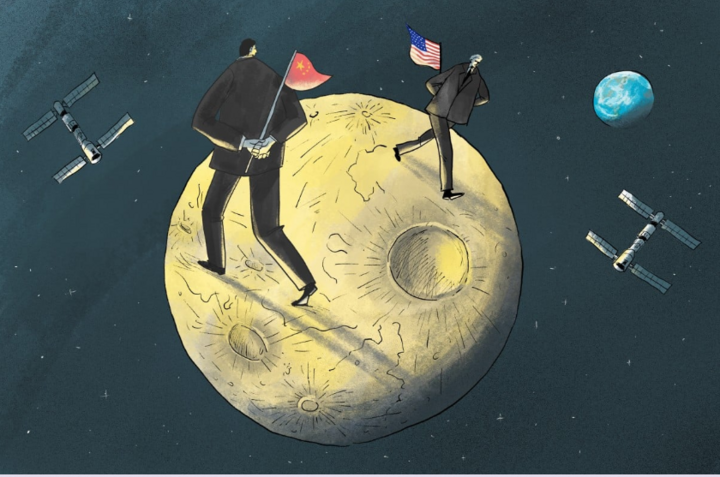
The US-China rivalry has extended into outer space, targeting routes between the Moon and Earth. (Photo: SCMP)
According to SCMP , geopolitical tensions between China and the US, which have already erupted in the South China Sea, the Taiwan Strait, and the Indo-Pacific region, are continuing to escalate in Earth's orbit. The two superpowers are watching each other warily and competing fiercely for "prime parking spots" in space, thereby gaining distinct advantages such as control of routes between Earth and the Moon.
Bill Nelson, a top NASA official, former astronaut, and U.S. Senator from Florida from 2001 to 2019, expressed concern about China's "space ambitions" and the possibility that Beijing "uses scientific activities as a cover for other military or strategic goals."
"We'd better be wary of the possibility that they (China) might land somewhere on the moon under the guise of scientific research," Nelson warned. "We're in a space race."
Recently, senior officials and analysts in President Joe Biden's administration, as well as American lawmakers across all political spheres, have been sounding the alarm about Beijing's "astronomical intentions."
Last month, the US House of Representatives' special committee on US-China competition issued a specific recommendation to curb China's "space ambitions."
The subsequent bipartisan resolution called on Washington to fund key programs to surpass China, including "ensuring the United States is the first nation to permanently station troops at all Lagrange points."
The meaning of Lagrange points
Named after the Italian astronomer and mathematician Joseph-Louis Lagrange in the late 18th century, Lagrange Point is described by NASA as a "parking lot" in the region of space between the Sun, Earth, and Moon.
There are five Lagrange points, from L1 to L5. They are particularly important for space research and exploration because their relative gravity provides a strategic advantage.
According to astronomer Martin Elvis at the Harvard and Smithsonian Center for Astrophysics in Massachusetts (USA), Lagrange points are regions of space where the gravitational forces of two celestial bodies cancel each other out. This allows an object to orbit and maintain stability between the two bodies. A spacecraft can also dock there without needing much fuel.
Princeton University physicist Gerard O'Neill recognized these advantages as making Lagrange points ideal locations for a "space city," a concept that has captured the public imagination for decades.
O'Neill envisions space cities as giant cylindrical structures: "They rotate slowly and generate enough centrifugal force to mimic Earth's gravity, allowing people to move around and live normally inside."
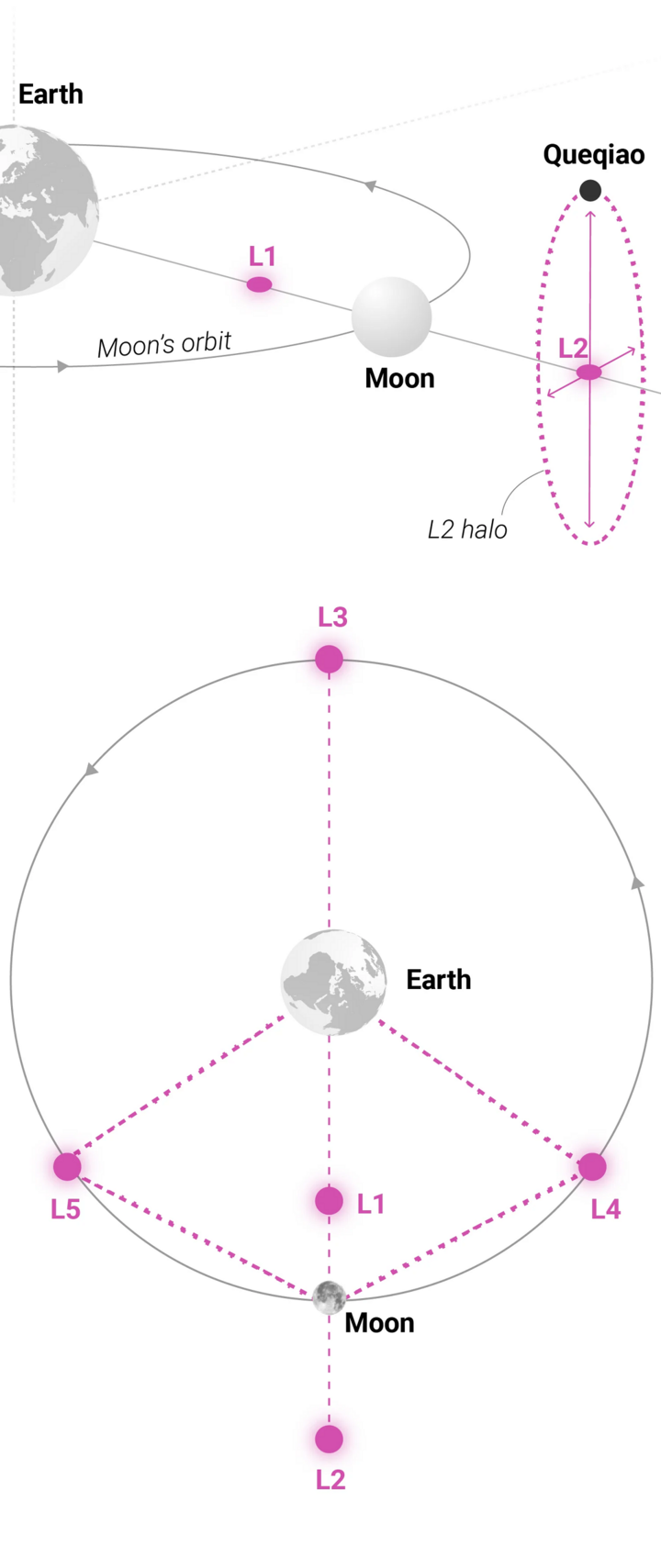
Five Lagrange points in the Earth-Moon system. (Image: SCMP)
While the two Lagrange points in the Solar-Earth system are considered useful for studying the Sun, experts believe the Cislunar region (the space between Earth and the Moon) holds strategic value. Of these, L1 and L2 are considered the most valuable due to their proximity to the Moon.
In a report last month, Shawn Willis of the Air Force Institute of Technology in Ohio (USA) revealed the strategic importance of the Cislunar region, with the potential to deploy military satellites at Lagrange points to monitor and control access between Earth and the Moon.
Willis added that navigation, guidance, and timing satellites could be another suitable mission for these locations, given their ability to access both the illuminated and dark sides of the Moon. This would allow for the implementation of support functions on the Moon similar to those on Earth.
Accelerate to the Moon
The Queqiao 2 satellite, with a lifespan of approximately five years, is expected to be launched by China this year to support the Chang'e 6 mission, which aims to bring the first soil and rock samples from the far side of the Moon.
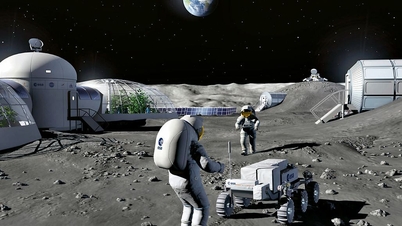
Beijing also plans to build a home on the Moon within the next five years, using at least one brick made from lunar soil, and then send humans there by 2030.
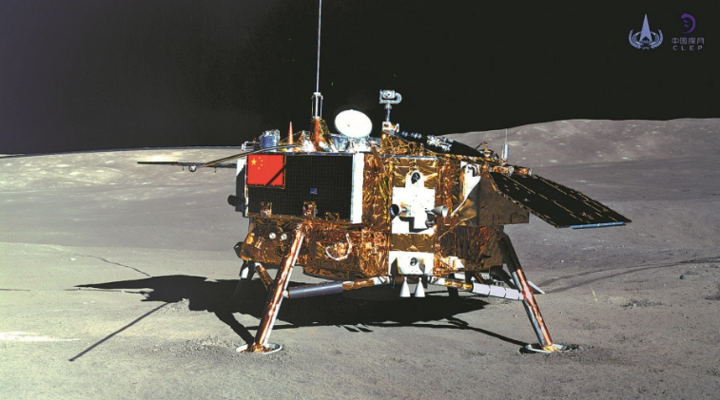
The Chang'e 4 lunar probe landed on the moon in 2019. (Photo: Xinhua)
Last week, Kathleen Hicks, the US Deputy Secretary of Defense, stated that both Russia and China are "developing military doctrines that extend into the space domain" and "deploying capabilities that could target GPS and other critical systems in space."
GPS is a constellation of satellites that provides vital positioning and navigation information for military, civilian, and commercial purposes. Most modern devices in the world today have a built-in GPS receiver.
The US is certainly not sitting idly by and is striving to achieve a position at the Earth-Moon L2 junction as soon as possible.
Washington is collaborating with commercial and international partners on the Gateway program as part of the Artemis mission to return humans to the Moon. Elon Musk's SpaceX is one of the private companies participating.
NASA stated that the Gateway program requires the construction of a small space station orbiting the Moon to provide "essential support for missions on the lunar surface."
Charles Galbreath from the Mitchell Institute for Aeronautics and Space Studies in Virginia (USA) stated that monitoring the Cislunar region, free communication, and secure navigation through it would be "key to unlocking ever-increasing scientific and economic opportunities."
Elvis suggested that the US-China space race would focus on the Moon's south pole because it receives almost constant sunlight, meaning there would be a perpetual power source and less extreme temperatures.
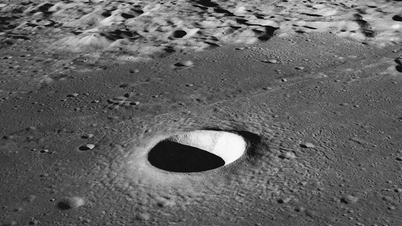
However, the Moon's poles also contain deep craters that don't receive sunlight. These locations are expected to contain ancient ice deposits and useful minerals.
Last August, India announced it had become the first nation to successfully land a spacecraft on the Moon's south pole. A few days later, Russia failed in its attempt to reach the area.
NASA's Artemis 2 mission, which was originally scheduled to send four astronauts around the Moon this year, has now been postponed to September 2025.
The US Artemis 3 mission, which will take humans to the Moon's south pole for the first time, has been postponed from 2025 to 2026. Meanwhile, China is expected to be in the area with an unmanned lander in 2027.
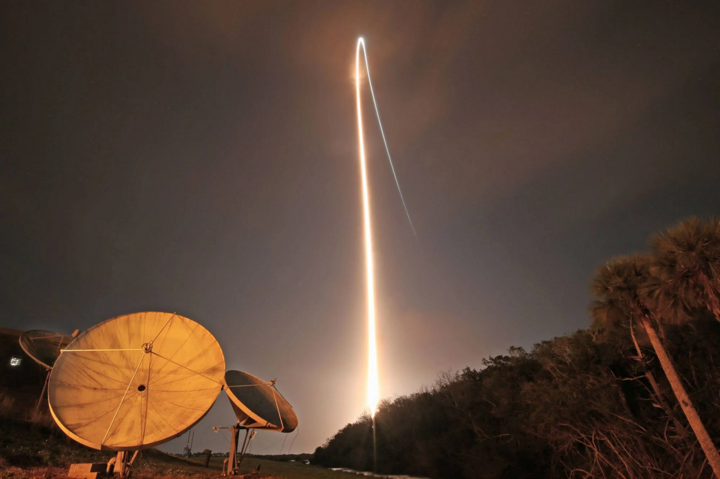
The launch of the Peregrine lunar lander rocket took off from Cape Canaveral, Florida, USA, on January 8. (Photo: SCMP)
Perhaps anticipating a tense race in Earth's orbit, a White House strategic document released in 2022 called for a "rules-based international order" in space. And just as on Earth, the U.S. is also seeking to engage allies, creating new rules for regions far from the planet.
Currently, 33 countries, including India and Brazil, have signed the Artemis Accords, led by Washington and established in 2020 to promote "peaceful" international cooperation in space. Although China is not a party to this agreement, Beijing invites international partners to cooperate on its lunar missions.
Whether it's the Moon or the Lagrange points, Elvis argued that the entire region above Earth is "first-class real estate" in space, and global cooperation is essential.
"There will be a limit to the number of satellites that can get there. If too many satellites are concentrated at the same time, it will lead to a risk of collision, and debris could be dangerous to all parties involved," Elvis said.
Hua Yu (Source: SCMP)
Source
![[Photo] Capturing the moment the tide recedes at Yen Binh Son rapids - a million-year-old scenic spot in Quang Ngai.](https://vphoto.vietnam.vn/thumb/1200x675/vietnam/resource/IMAGE/2026/05/19/1779175463885_yen9-1199-jpg.webp)




![[Photo] National Assembly Chairman Tran Thanh Man attends the groundbreaking ceremony for the National Highway 1A spatial axis project.](https://vphoto.vietnam.vn/thumb/1200x675/vietnam/resource/IMAGE/2026/05/19/1779161360398_ndo_br_bnd-1412-jpg.webp)

























































![[Photo] General Secretary and President To Lam receives Indian Defense Minister Rajnath Singh](https://vphoto.vietnam.vn/thumb/402x226/vietnam/resource/IMAGE/2026/05/19/1779184046302_anh-man-hinh-2026-05-19-luc-16-46-58.png)






























Comment (0)