This creates an urgent strategic requirement for the Gulf states: diversify shipping routes at all costs.
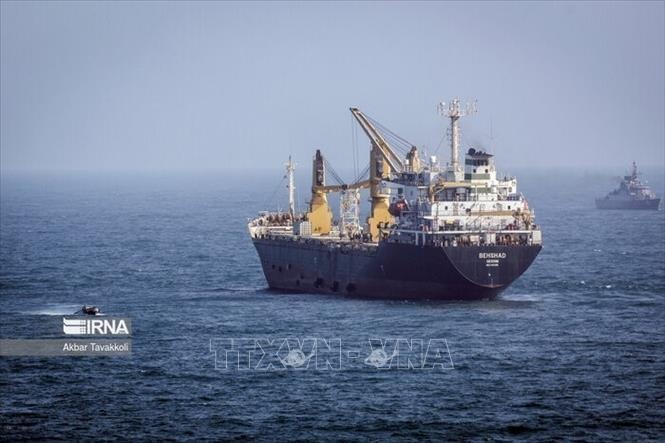
Tehran's blockade of the Strait of Hormuz has disrupted 20% of the world 's oil and liquefied natural gas (LNG) supply. This event has caused unprecedented disruption to the region's energy industry, forcing countries to cut production by approximately 11 million barrels of oil per day, and shut down numerous refineries and LNG facilities.
Although the US and Iran have agreed to negotiate a long-term peace agreement, the risk of future closure of the strait remains a real threat to the regional and global economy. Therefore, developing alternative routes for exporting energy, chemicals, and fertilizers has become a priority for Gulf states.
Saudi Arabia is a prime example of the benefits of building oil pipelines that bypass the Strait of Hormuz. Before the Middle East conflicts, the world's largest oil exporter transported approximately 60% of its exports to the port of Yanbu on the Red Sea via a transnational pipeline from the Gulf coast. Saudi Aramco, the national oil company, began constructing this 1,200-kilometer pipeline in the 1980s to mitigate potential supply disruptions.
This strategic preparation has yielded tangible results. The International Monetary Fund (IMF) forecasts that the Saudi Arabian economy will grow by 3.1% in 2026. In contrast, Qatar, a country with no alternative routes for oil and LNG exports, could see its economy contract by 8.6% this year.



Other countries in the region are also implementing similar solutions. The United Arab Emirates (UAE) has partially reduced its dependence on the Strait of Hormuz thanks to the oil pipeline to the port of Fujairah. The UAE is also pushing for the construction of a second pipeline to double the export capacity through this port by 2027.
Meanwhile, Iraq remains in a difficult position due to the large proportion of its production being concentrated in the south and its heavy reliance on the Strait of Hormuz. Authorities are considering upgrading and expanding northern export routes through Türkiye and Syria, but security and political factors continue to be major obstacles.
Meanwhile, Qatar and Kuwait face a more complex challenge due to the lack of alternative export routes within their own territories, forcing them to rely on transit infrastructure through neighboring countries.
For Qatar, the world's leading LNG exporter, access to areas beyond the Strait of Hormuz requires building pipelines through the UAE to Fujairah or Oman, or across Saudi Arabia to the Red Sea. These options all carry significant geopolitical and commercial variables.
Developing these routes also leaves Qatar heavily reliant on Saudi Arabia or the UAE, countries with sometimes strained relations with Doha. Kuwait faces a similar situation, as developing alternative export routes would certainly require deeper energy integration with Saudi Arabia.
Another response gaining attention is geographical diversification beyond the Middle East. Gulf national oil and gas companies are increasingly expanding their overseas operations to hedge against regional disruptions. Qatar Energy and Abu Dhabi National Oil Corporation (ADNOC) are leading this trend by building international portfolios encompassing oil, gas, and renewable energy.


According to businesses, acquiring stakes in upstream assets, refineries, LNG facilities, and storage facilities overseas will provide a stable income stream and less risk from fluctuations in the Gulf region. This diversification race is predicted to restructure international alliances, change government strategies, and redirect investment flows for decades to come.
Source: https://znews.vn/cuoc-dua-ne-eo-bien-hormuz-post1662901.html

![[Photo] General Secretary and President To Lam attends the Central Public Security Party Committee Conference](https://vphoto.vietnam.vn/thumb/1200x675/vietnam/resource/IMAGE/2026/06/24/1782302063612_a1-bnd-9302-9166-jpg.webp)
![[Photo] Opening Ceremony of the 13th National Congress of the Ho Chi Minh Communist Youth Union](https://vphoto.vietnam.vn/thumb/1200x675/vietnam/resource/IMAGE/2026/06/24/1782286753905_ndo_br_1-8510-jpg.webp)
![[Photo] The 13th National Congress of the Youth Union conducts personnel work.](https://vphoto.vietnam.vn/thumb/1200x675/vietnam/resource/IMAGE/2026/06/24/1782299943080_ndo_br_1-6868-jpg.webp)