

China surpasses Japan in humanoid robots.
The world is now very familiar with Chinese humanoid robots, which can participate in manufacturing activities or even take part in sporting events. However, the world's first humanoid robot was not made in China, but entirely in Japan.
WABOT-1, created in 1973, was built at Waseda University (Tokyo, Japan) by a team led by Professor Ichiro Kato, dubbed the "father of humanoid robots." WABOT-1 could walk on two legs, albeit very slowly. Its hands were equipped with tactile sensors, allowing it to move objects around it. It also had visual and auditory systems enabling it to communicate in Japanese.
When it comes to the recognition of Japanese robots, ASIMO is perhaps the most prominent and well-known. Introduced to the public in 2000, ASIMO was considered a breakthrough, taking the era of humanoid robots to a new level with its ability to run, jump, climb stairs, and smoothly avoid obstacles.
However, after the ASIMO phenomenon, 26 years later, when it comes to humanoid robots, people often immediately think of China – a country that has been surpassing Japan in this race thanks to rapid commercialization. The advantage of the country with the world's largest population is its ability to mass-produce at low cost, based on optimized technology.
Chinese corporations have rapidly adopted original Japanese and American technologies, then extensively improved them to maximize their functionality. Their core advantage lies in their synchronized domestic industrial supply chain and abundant labor force, allowing for optimized processes and lower product costs. Meanwhile, Japan, despite leading in precision engineering, faces similar challenges to those faced in the electronics and electric vehicle industries. Their overemphasis on perfect laboratory research has slowed their development of highly applicable solutions for the real-world labor market.
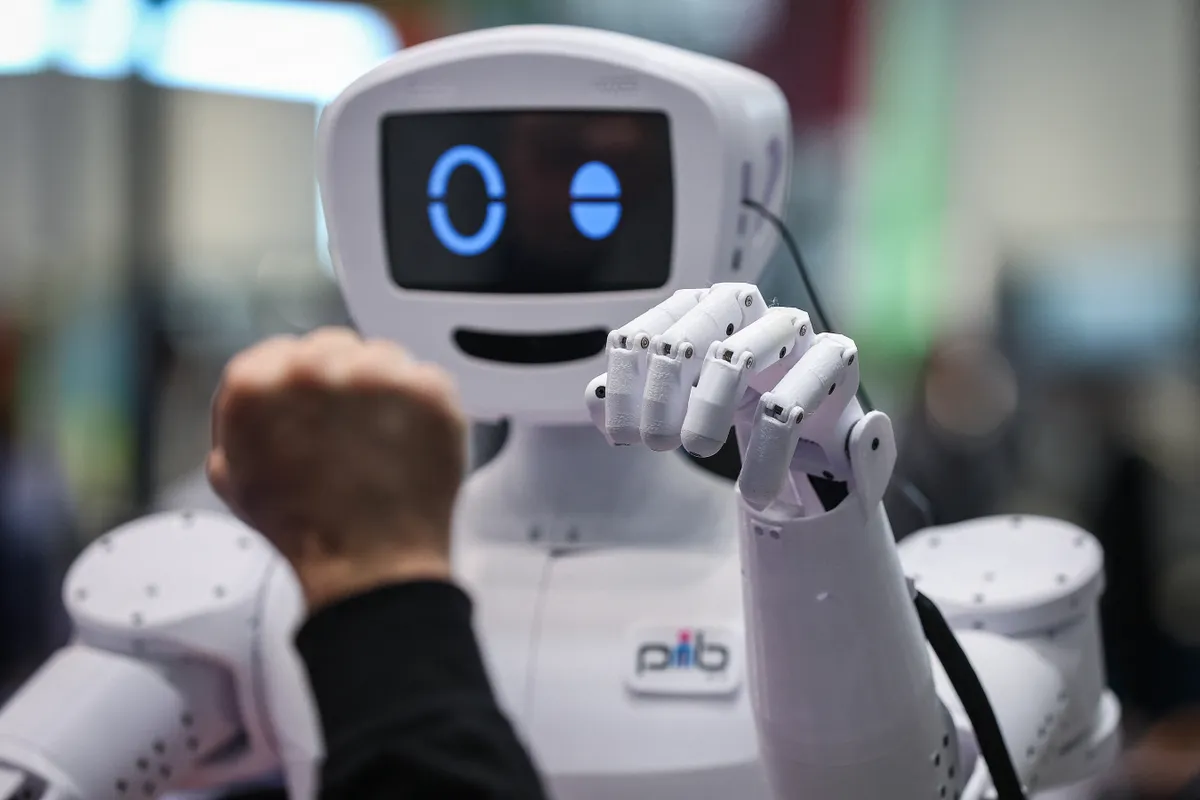
Japan has chosen a different path by focusing on the development of physical artificial intelligence.

Japan shifts focus to "physical AI"
In the race to commercialize humanoid robots, while China dominates in hardware manufacturing, Japan has chosen a different path by focusing on developing physical artificial intelligence.
This strategy is implemented by focusing on building data infrastructure and providing core software solutions, rather than racing to build manufacturing plants. This is the core foundation that will help robots transition from simple automated movements like dancing to tasks requiring reflexes and independent decision-making in real-world environments. This approach is expected to help the aging population address the labor shortage problem, making robots partners alongside humans.
Keisuke Tsuta, Assistant Chief Engineer at Honda Corporation, stated: "I believe we essentially perfected the robot's mobility in typical environments around 2013. However, truly delivering value to society remains a major hurdle. Simply being able to walk isn't enough to create value. Therefore, we shifted our research focus to the hands. Ultimately, the real value a robot contributes to society must come from performing tasks with its hands. And that's why our work is currently focused on this area."
The driving force behind the development of Japan's humanoid robotics industry.
To gain an advantage over major competitors like China in the humanoid robot race, Japan is seeking impetus from its own internal pressures. An aging population and a severe labor shortage are not only challenges but also a springboard for the country's robotics market, which is expected to experience strong growth.
The conversational AI systems developed by the AI technology company Silva Compass are called "Talk With." The strength of this system lies in its very natural reflexes in human-like interactions. The AI system can act as a brain, communicating naturally when integrated into humanoid robots.
Data and information about a person will be collected and integrated into a cloud system. Then, the AI system will process this information to enable direct communication with the person through a screen and camera.
The robot monk, named "Buddharoid," is capable of delivering sermons like a real monk. These robots have increased tourism to temples and the local area. The number of visitors coming to listen to Buddharoid monks preach has increased significantly. Furthermore, the robot monk has generated international media attention and enhanced the brand value of Japanese technology and culture.

Professor Seiji Kumagai from the Institute for the Future of Human Society, Kyoto University, shared: "We are trying to develop a system so that the words of the robot monk are increasingly closer to the teachings of the Buddha. I think the first step will be to start with dialogue. We want to announce the development of the Buddharoid robot, a Buddhist artificial intelligence that has taken on a physical form."
The humanoid robot market in Japan is valued at $0.22 billion in 2025 and is projected to grow to $0.29 billion in 2026 and $3.99 billion in 2034. This strong growth is driven by increasing demand for automation, labor shortages, and rapid advancements in robotics and artificial intelligence. Humanoid robots are increasingly expected to fill manpower shortages, improve productivity, and provide services in public and commercial settings.
The competition in humanoid robots is not just a story about technology, but also reflects the vastly different strategic choices made by various economies . And within that picture, Japan is demonstrating a long-term approach where technology not only replaces labor, but also gradually expands into more interactive spaces and serves humanity in a more comprehensive way.
Source: https://vtv.vn/cuoc-dua-robot-hinh-nguoi-cua-nhat-ban-100260604110337361.htm
























































![[Video] Sunset at Lap An Lagoon – Where the sun sets over the fishing nets](https://vphoto.vietnam.vn/thumb/1200x675/vietnam/resource/IMAGE/2026/05/31/1780192137701_beach-landscape-sea-water-nature-grass-745871-pxhere-com.jpeg)









































Comment (0)