From market dependence
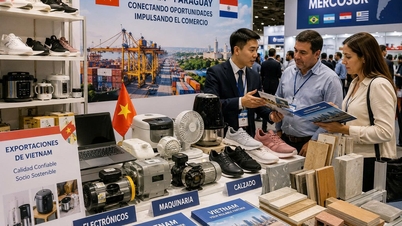
In An Giang , pangasius continues to play a pivotal role in the freshwater aquaculture industry, while tilapia is gradually emerging as a new spearhead contributing to expanding growth potential in the medium and long term. A key commonality between these two sectors is the urgent need to diversify export markets. This is no longer a tactical choice for individual businesses but a strategic requirement to ensure the safety and sustainable development of the entire value chain.

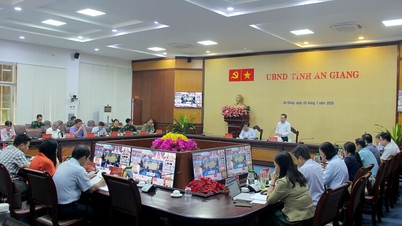
Nam Viet Group is diversifying its export markets for pangasius and tilapia to South America, opening up new prospects for freshwater aquaculture in the Mekong Delta. Photo: MINH HIEN
2025 marks a significant recovery for the pangasius industry after a period of deep adjustment. By the end of November 2025, pangasius export turnover is expected to exceed US$2 billion, a 9% increase compared to the same period in 2024; the forecast for the whole year is US$2.2 billion. In An Giang, businesses export pangasius to more than 40 countries and territories, contributing to the province's export turnover.
The entire Mekong Delta region maintains a pangasius farming area of 5,400 - 5,700 hectares, with an estimated harvest of 1.65 - 1.7 million tons. An Giang province has over 1,000 hectares of water surface for pangasius farming; the percentage of farming areas achieving sustainable certifications such as ASC and GlobalGAP accounts for more than 60%, showing a trend towards in-depth development, focusing on quality and standards.



However, behind the picture of recovery lie structural risks. China and Hong Kong account for approximately 25% of pangasius exports, while the US and the Comprehensive and Progressive Trans-Pacific Partnership (CPTPP) markets play a crucial role but are subject to significant policy changes and technical barriers. Even small changes in quarantine, inventory, or communication in importing markets can quickly impact domestic farming areas.
To diversify markets
Deputy Minister of Agriculture and Environment Phung Duc Tien emphasized: “Pangasius is a strategic commodity of Vietnam's freshwater aquaculture in general, and the Mekong Delta in particular. However, if businesses do not proactively expand markets, raise production standards, and increase deep processing, growth will lack sustainability.” Mr. Doan Toi, General Director of Nam Viet Group, observed: “Businesses cannot place all their hopes on a few large markets. When the market fluctuates, if there are no alternative markets, the risks will fall on farmers and businesses.”
While pangasius catfish serves as a cornerstone, tilapia is entering a rapid growth phase and will act as a true test of Vietnam's seafood market diversification capabilities. In 2024, tilapia export revenue is projected to reach approximately US$41 million; in 2025, it is forecast to reach US$100 million, with the US being the largest consumer market.
A notable milestone was the first successful export of Vietnamese tilapia to the South American market through the global distribution system of JBS Group (Brazil). This was not just an export contract, but also a rigorous test of standards, traceability, and stable supply capacity. Passing these strict inspection rounds shows that Vietnamese seafood has taken another step forward in the global value chain.
However, opportunities are only sustainable if accompanied by market discipline. Tilapia cannot compete solely on production volume; it must compete on quality, standards, and the ability to maintain credibility. If market expansion is pursued without proper management of farming areas, broodstock, and the supply chain, the risk of "moving quickly but fragilely" could easily repeat itself.
Market diversification is a structural requirement for Vietnam's freshwater aquaculture industry in general, and An Giang province in particular. Slow diversification not only costs businesses profits but also shifts risks to farmers and weakens the industry's regulatory capacity.



| “In the context of a volatile and uncertain global economy, market diversification is a way to ensure economic security for the industry, helping to reduce dependence, increase resilience, and maintain stable livelihoods for fishermen. Only by steadfastly pursuing this path can pangasius maintain its pivotal role, tilapia develop rapidly and steadily, and Vietnamese freshwater aquaculture achieve sustainable development and a solid position on the global trade map,” affirmed National Assembly Vice Chairman Le Minh Hoan. |
MINH HIEN
Source: https://baoangiang.com.vn/da-dang-hoa-thi-truong-xuat-khau-ca-tra-ro-phi-a472425.html