

 |
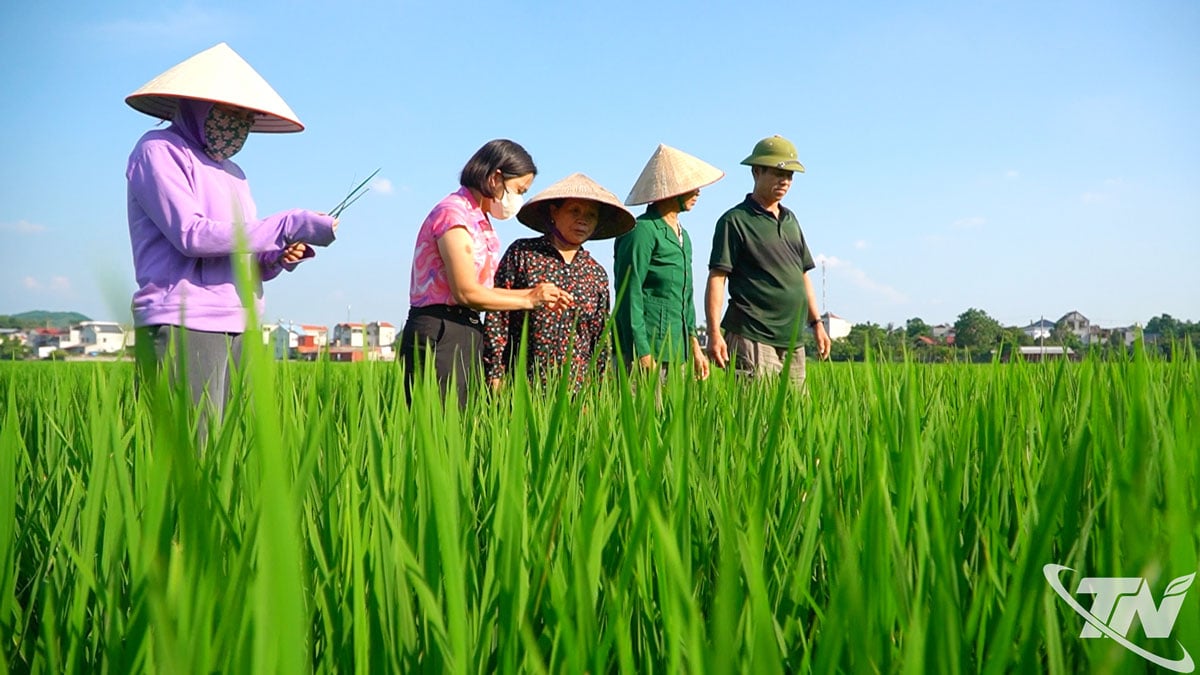
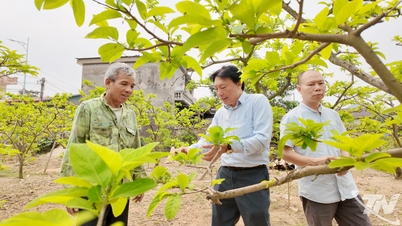
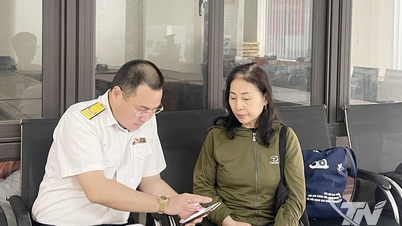
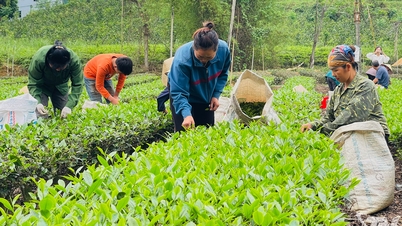
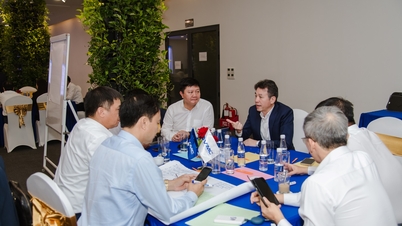
| Locals received training in rice cultivation and care techniques, which helped improve yield and quality. |
Thai Nguyen province boasts many famous specialty rice varieties, such as: Glutinous rice (Nếp cái hoa vàng), Japonica rice, upland glutinous rice, Khau Nua Lech Ngan Son rice, Bao Thai Cho Don rice, etc. Cultivating rice varieties according to region has helped improve agricultural productivity and quality.
Among them, Khau Nua Lech sticky rice from Ngan Son is a precious product of the Tay ethnic people in Ngan Son, Thuong Quan, and Bang Van communes. The rice grains are round, plump, bright white with a light brown layer at the tip, and when cooked, they are highly sticky, have a rich flavor, and a distinctive aroma. This type of rice is often used to make sticky rice dishes or banh chung and banh gio (traditional Vietnamese rice cakes).
Mr. Tran Trung Nghia, Director of the Ngan Son Clean Water and Environmental Sanitation Cooperative in Ngan Son commune, said: "We are collaborating with households growing Khau Nua Lech rice to ensure a stable market for our product. This product was granted a Certificate of Registration for Collective Trademark Protection by the Intellectual Property Office ( Ministry of Science and Technology ) in 2015 and has now developed into a 3-star OCOP product."
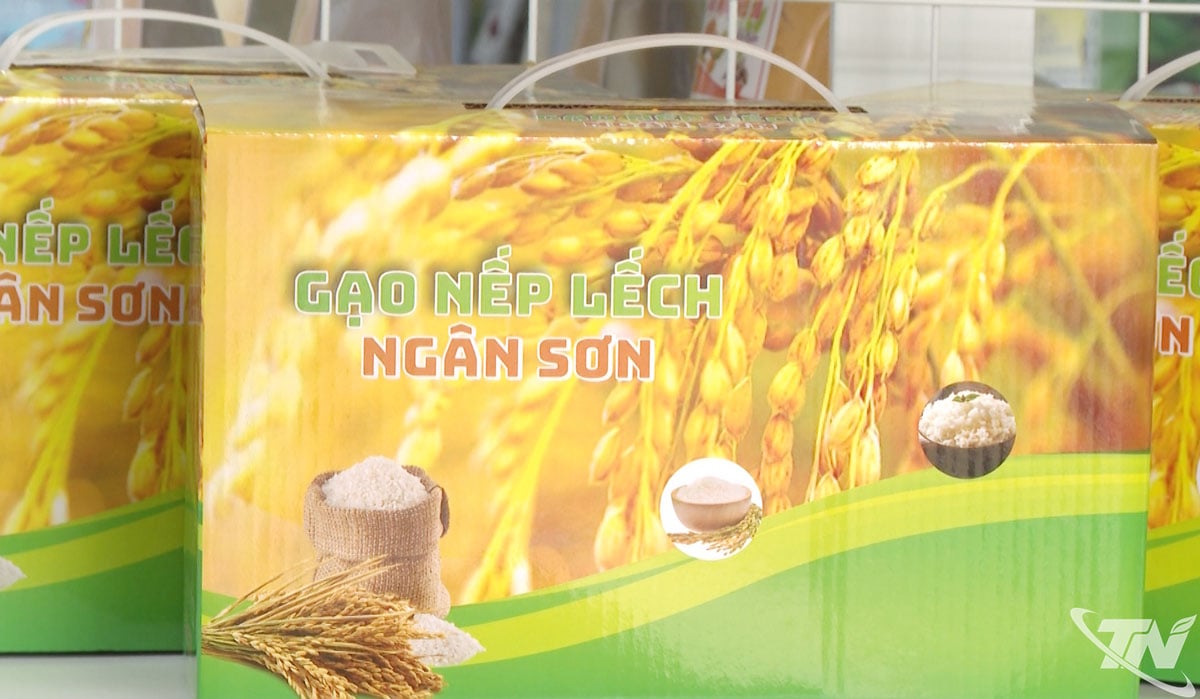 |
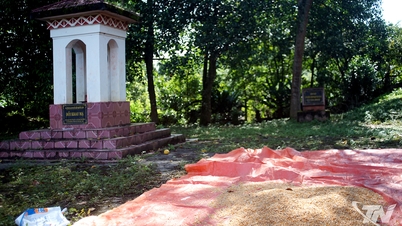
| Ngan Son specialty rice is famous for its aroma and stickiness, making it suitable for making cakes. |
Previously, rice was primarily used as everyday food. Today, from this raw material, cooperatives, businesses, and households have developed many distinctive and attractive products such as: rice cakes, puffed rice, banh chung (Vietnamese sticky rice cake), banh gio (Vietnamese rice cake), dried vermicelli, rice noodles, dried pho, fried dough sticks, banh gio (Vietnamese steamed rice cake), rice rolls, rice wine, organic rice flour, and even cosmetics extracted from rice bran. These products retain traditional flavors while meeting food safety and hygiene standards and catering to modern consumer tastes.
In the traditional culinary repertoire of the Tay ethnic group in the northern part of the province, glutinous rice cake (also known as ash cake) has long been an indispensable dish during festivals and holidays. The cake is often wrapped to offer to ancestors or given as a gift for family reunions.
Thanks to the skillful hands and creativity of the local people, banh gio (rice cake) has transcended traditional customs, becoming a commercial product that not only has economic value but also contributes to promoting local culinary culture.
Ms. Loc Thi Chanh, Director of the Bac Kan Rice Cake Cooperative (Bac Kan Ward), shared: "We used to only make rice cakes on the 5th day of the 5th lunar month or Tet (Lunar New Year) to eat within the family and give as gifts to relatives. Now, market demand allows us to make rice cakes year-round, producing thousands of cakes daily to supply the market. The cooperative also has a facility in Ho Chi Minh City to serve customers in the South."
According to statistics, the province cultivates nearly 90,000 hectares of rice annually, of which more than 4,000 hectares are specialty rice varieties. To improve productivity and quality, localities are strengthening the application of advanced farming techniques, forming areas for producing high-quality and specialty rice varieties such as: Nếp Vải, Nếp Cái Hoa Vàng (Hop Thanh, Phu Luong, and Phu Binh communes), Khẩu Nua Lếch rice (Thuong Quan commune), and Nếp Tài rice (Thuong Minh commune).
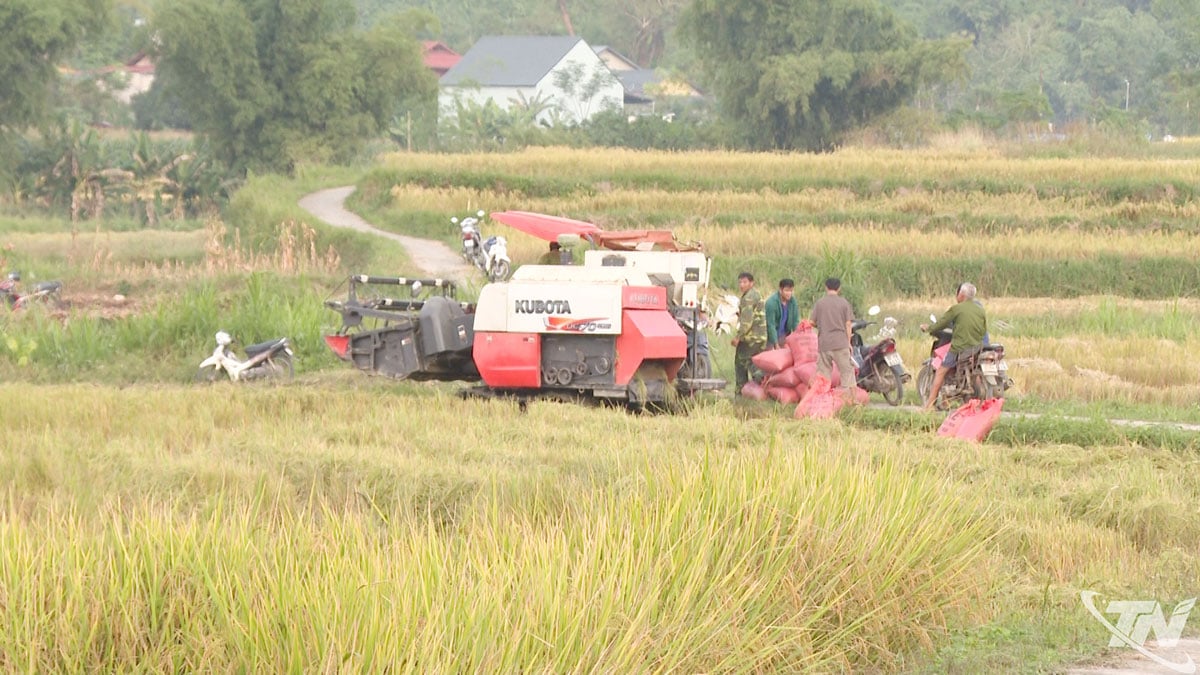 |
| Applying mechanization helps farmers reduce labor in rice cultivation. |
Thanks to this, many households have increased their income from rice farming. Ms. Duong Thi Sam, Head of Binh Dinh hamlet, Kha Son commune, said: "By applying new varieties, cultivating in a concentrated manner, and linking consumption, many households in the hamlet have had a stable source of income, with some families earning over 100 million VND per harvest. Currently, many traders come directly to the fields to buy rice, so farmers receive money immediately after harvesting."
Diversifying and developing processed rice products such as fried dough sticks, cakes, vermicelli, and dried pho noodles helps to facilitate the consumption of rice in the area. Many households have boldly invested in machinery and utilized local raw materials to create new products, increasing the value of rice grains.
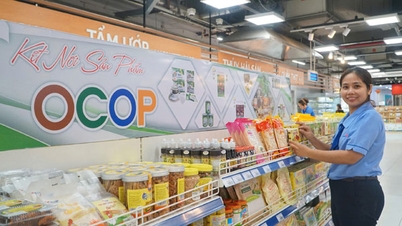
Thanks to this approach, Thai Nguyen rice is now available in markets, supermarkets, and restaurants both within and outside the province, helping farmers feel secure in their production, increase their income, and improve their lives. At the same time, the diversification of rice products contributes to preserving and spreading traditional cuisine, connecting rice with modern life, and making rice farming a sustainable livelihood in rural areas.
In many rural areas of Thai Nguyen province, rice processing models based on supply chains have been established, creating products with clear brands, attractive packaging, and transparent traceability. Many processed rice products have become tourism specialties, contributing to promoting the local image and increasing income for the people.
Source: https://baothainguyen.vn/kinh-te/202509/da-dang-san-pham-tu-gao-dia-phuong-eb02d36/

































































Comment (0)