


New appeal in a new phase
Da Nang possesses a strategic geographical location, situated in the central part of the country, serving as the main gateway to the East Sea for the East-West Economic Corridor (EWEC), and directly connecting with Myanmar, Thailand, and Laos. This favorable condition helps businesses in Da Nang optimize their international supply chains.
In terms of infrastructure, the city possesses all four major modes of transportation: expressways, the Trans-Vietnam railway, a deep-water seaport, and an international airport. The system of industrial parks and high-tech zones is well-planned. Da Nang currently has six operational industrial parks with high occupancy rates and is continuing to expand with new parks such as Hoa Ninh Industrial Park, Hoa Nhon Industrial Park, and industrial clusters for SMEs.
Da Nang High-Tech Park is one of the three key national high-tech parks, enjoying the highest preferential policies on corporate income tax (exempt for the first four years, 50% reduction for the following nine years) and exemption from import tax on fixed assets. For many years, Da Nang has ranked first in the ICT Index (Information Technology Readiness Index). For technology businesses, the availability of broadband internet infrastructure and Tier III data centers is a solid foundation for deploying large-scale projects in AI, Big Data, or semiconductors.
With a system of over 25 universities and colleges, notably Da Nang University (a key national regional university), the city annually supplies the labor market with more than 40,000 graduates, a large proportion of whom are in engineering, information technology, and business administration. A particular advantage currently is its strategy of focusing on human resources in the semiconductor industry. The city has signed cooperation agreements with major corporations such as Synopsys and Intel to build chip design training centers. The city aims to train at least 5,000 semiconductor engineers by 2030. This creates a highly specialized workforce, reassuring high-tech investors about staffing issues when establishing headquarters here, a challenge that neighboring provinces and cities are still facing.

Da Nang has long established itself as a "livable city," appealing not only to its residents but also to businesses. Political stability and consistency in investment policies are major advantages. The city government maintains an "e-government" model and is moving towards a "digital government," ensuring transparency in all administrative procedures. Indicators such as PAPI (Public Administration Performance Index) and PCI (Provincial Competitiveness Index) consistently rank among the top in the country.
The "Task Force for Resolving Difficulties for Businesses," headed by the Chairman of the City People's Committee, has successfully resolved hundreds of obstacles related to land procedures and planning for large projects during the 2024-2025 period. The proactive approach and support of the government have helped investors reduce "unofficial costs" and shorten project preparation time, creating absolute peace of mind regarding legal matters.
Da Nang's attractiveness in the 2025-2026 period will skyrocket thanks to special mechanisms from Resolution No. 136/2024/QH15 (which was recently updated and expanded in 2025). This is a superior legal framework that allows Da Nang to pilot the establishment of a Free Trade Zone (FTZ) associated with Lien Chieu Port. Businesses operating within the FTZ will enjoy separate customs, tax, and investment regulations, unprecedented in Vietnam.
Strategic investors in the high-tech and semiconductor chip sectors in Da Nang can enjoy a preferential corporate income tax rate of 10% for 15 years, and exemption from land and water lease fees for up to 30 years. These figures demonstrate that Da Nang is being given the strongest policy "weapons" to compete directly with free economic zones in Singapore or Shanghai, opening up golden opportunities for multinational investors looking to shift their supply chains to Vietnam.
Breakthrough in the development of the business ecosystem.
The central and iconic development of Da Nang is the operation of Vietnam's first Free Trade Zone (FTZ). The goal is for the Da Nang FTZ to attract approximately US$5-7 billion in FDI by 2030, contributing 1.5-2% to annual GRDP growth.
The city has also identified semiconductor chips as a new driving force, with a strategic solution being the construction of a closed ecosystem from training and design to testing. To achieve this, the government has approved a budget support package of up to 200 billion VND to invest in shared labs in the High-Tech Park and Software Park No. 2. Evidence of this initial success is the attraction of corporations such as Marvell, Synopsys, and Nvidia to establish representative offices, expected to create more than 3,000 expert jobs with an average salary of over $2,500 per month, creating a ripple effect for local supporting service businesses.
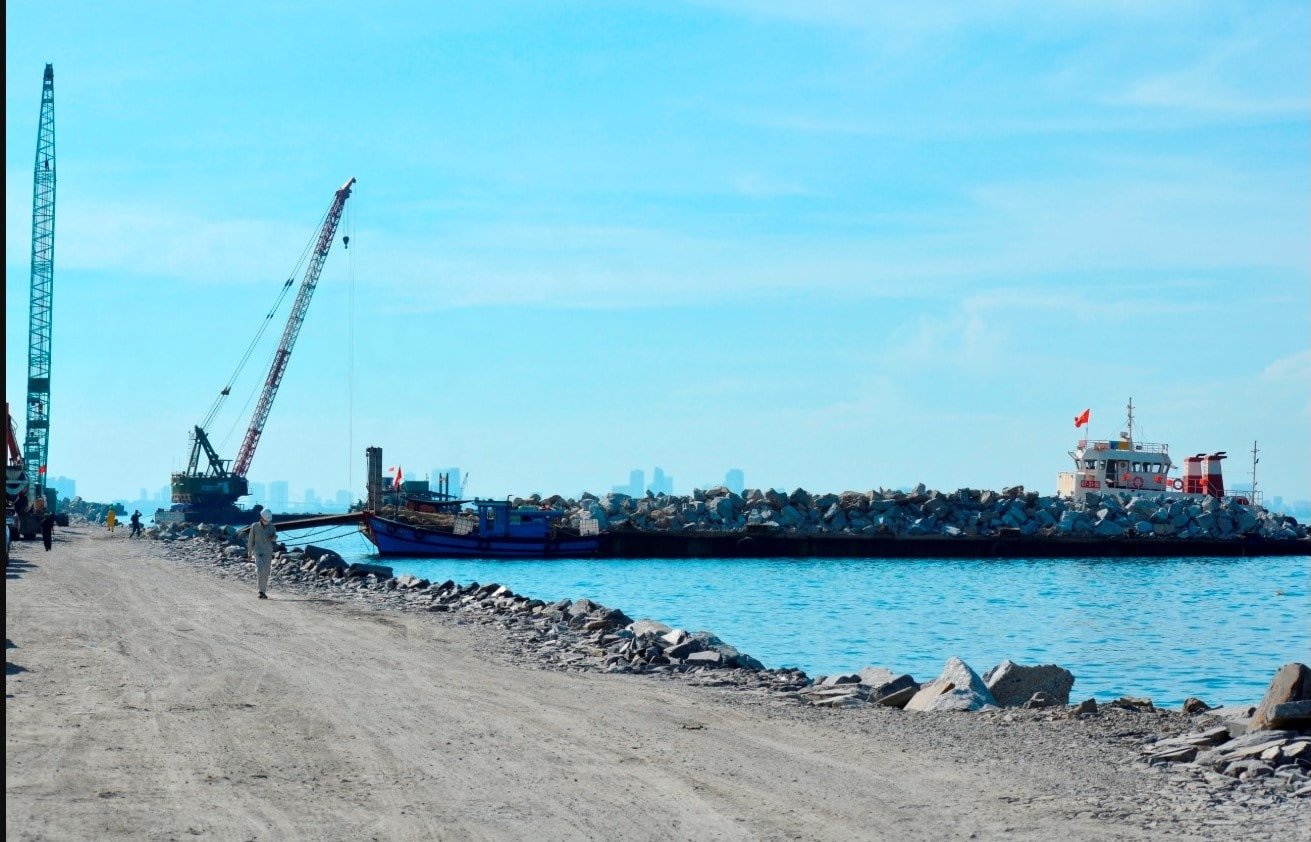
Implementing administrative reforms and improving the investment environment based on data (Data-Driven Government), the city is shifting from "support on demand" to "proactive support" through Big Data. Da Nang aims for all administrative procedures to be processed online at the entire process by 2026. It is determined to reduce the Time Cost Index (a component of the PCI) through the integration of electronic business identification.
The city is implementing a "Digital Map of Investment Opportunities," integrating data from 219 key investment projects for the 2026-2030 period, complete with information on coordinates, land status, zoning plans, and accompanying incentives. This solution helps investors reduce the time spent on field surveys and initial legal research by 70%. The specific goal is to reduce the time required to process construction permits and environmental impact assessments (EIAs) by at least 30% compared to the general regulations of the central government.
In the context of the world applying technical barriers to environmental protection (such as the EU's CBAM), Da Nang is implementing a "green enterprise" strategy. The city supports 50% of the costs of energy audits and green certification consulting (ISO 14001, LEED) for manufacturing businesses. The goal is that by 2028, at least 30% of the industrial parks in the city will be transformed into Eco-Industrial Parks, where businesses utilize each other's waste products as production inputs.
The government is also committed to providing maximum procedural support for rooftop solar power projects at factories, aiming to reduce greenhouse gas emissions in the manufacturing sector by 20% by 2030. This not only helps protect the environment but also serves as a "passport" for Da Nang businesses' goods to penetrate more demanding markets.
***
The effort to boost the investment and business environment in Da Nang City during the 2026-2030 period is not merely a purely economic task, but a comprehensive reform of governance thinking and local brand positioning. Through analyzing the current situation and favorable conditions, it can be affirmed that Da Nang possesses groundbreaking strategic "weapons," especially the legal framework from special mechanisms and the first Free Trade Zone model in the country. This is the springboard for the city to transform into a world-class high-tech, semiconductor, and logistics center.

With its strategic vision and strong political will, Da Nang has the full potential to become a "growth superpole" in Central Vietnam, making a significant contribution to national competitiveness. A transparent, safe, and promising business environment in Da Nang will undoubtedly be the strongest commitment to domestic and foreign investors, working together to build a city that is not only livable but also a place worth investing in and developing sustainably.
To support small and medium-sized enterprises (SMEs), which account for over 95% of all businesses in the city, Da Nang is implementing a "linked credit" solution. Accordingly, the city is coordinating with commercial banks to provide a preferential credit package worth VND 10,000 billion with interest rates 1.5-2% lower than the market rate for businesses in priority sectors (high technology, green transformation). Regarding land allocation, instead of focusing solely on large FDI projects, Da Nang is urgently completing the Cam Le and Hoa Nhon industrial clusters to accommodate SMEs relocating from residential areas. The total area of additional industrial land is expected to reach over 1,000 hectares by 2028. Policies supporting land lease prices for high-tech businesses may include complete exemptions for the first 5-10 years, helping businesses focus their resources on research and development (R&D).
Source: https://baodanang.vn/da-nang-diem-den-dau-tu-chien-luoc-3333325.html


![[Photo] General Secretary and President To Lam meets with National Assembly delegates from ethnic minorities.](https://vphoto.vietnam.vn/thumb/1200x675/vietnam/resource/IMAGE/2026/04/20/1776696701056_a1-bnd-8331-3342-jpg.webp)

![[Image] National Assembly discusses the implementation of the socio-economic development plan.](https://vphoto.vietnam.vn/thumb/1200x675/vietnam/resource/IMAGE/2026/04/20/1776696707422_ndo_br_img-20260420-185419-jpg.webp)



















































































Comment (0)