

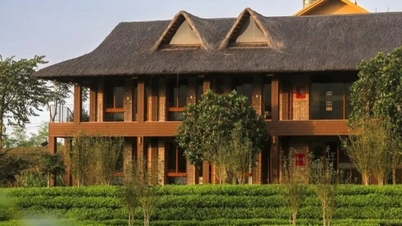
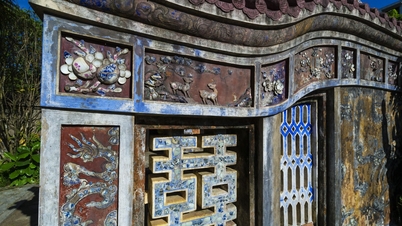
The Dọc Village communal house was built in the early 19th century (during the reign of Emperor Khải Định of the Nguyễn dynasty and was granted a royal decree). Besides worshipping deities and the village guardian spirit, the Dọc Village communal house also honors the ancestor of the Phạm family and six other families who contributed to the development of this land from the 18th century. The communal house consists of 5 bays and 2 wings, in a "Đinh" shaped architectural style.
The communal house was recognized as a provincial-level historical and cultural relic in 2005. The Dọc village communal house festival is held twice a year, on the 3rd and 4th of the first lunar month (called the Hạ Điền festival) and on the 13th and 14th of the seventh lunar month (the festival to pray to the God of Agriculture). This is a ritual to express the people's gratitude to the deity who governs agriculture .
The participants in the ceremony include: the head priest, who is the 11th-generation descendant of the Phạm family's ancestor; four respected women in the community (female attendants) chosen to serve at the festival; and female officials who are women in the community selected to participate in offering gifts, carrying the palanquin, and performing the traditional dances at the festival.
The "Phường bát âm" is a group of eight men who play musical instruments such as: large drum, small drum, trumpet, two-stringed fiddle, flute, zither, gong, and coin-shaped cymbal, and includes the entire Tay and Kinh community in Viet Hong commune.
Ms. Pham Thi Nhung, from Ban Din village – who has lived in Viet Hong for over 50 years – shared: "Every year, the villagers prepare offerings for the Dọc village temple festival, including pork, goat meat, wine, sticky rice, fruits, and sweets. To prepare for the temple festival, the local shaman usually raises pigs from the year before to slaughter for the offering. The pigs chosen for the ceremony must be fat and healthy, weighing about 60-70 kg. In the offering to the God of Agriculture of the Tay people, goat meat is also included, but other animals such as buffalo or cows can be substituted, as long as they have horns. Depending on the conditions each year, if these animals are not available, the offerings are replaced with pork."
From the 13th day of the 7th lunar month, the local shaman enters the communal house to report on the main festival preparations for the following day. Ten trays of offerings are presented, including seven savory dishes and three vegetarian dishes.
Outside the communal house, the Phuon ceremony is held at the Mo altar. The people prepare four palanquins for the procession, decorated with four different colors. When the auspicious hour arrives, the local shaman begins lighting lamps and incense, and announces his request to hold the festival the next day at the Ngoai communal house.
After the incense offering is complete, the village elder begins reciting the ceremonial prayers, performing the ritual with three rounds of wine, two rounds of incense, and one round of ceremonial prayers. Afterward, the entire village partakes in the offerings at the communal house. Around 5-6 pm, the villagers gather to carry four palanquins (three palanquins carrying the three village guardian deities, and one palanquin carrying President Ho Chi Minh) from the communal house.
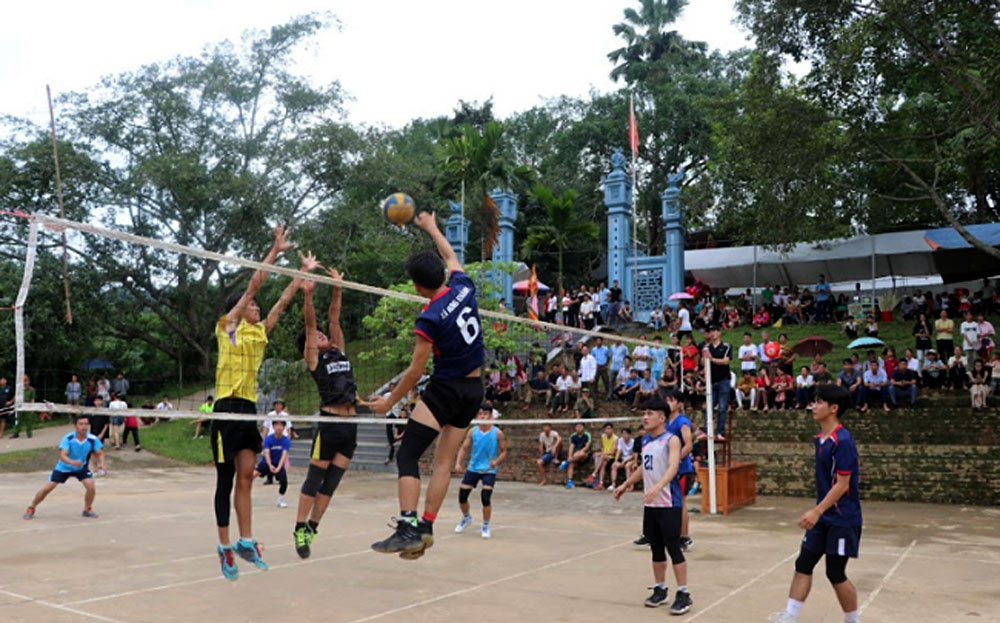
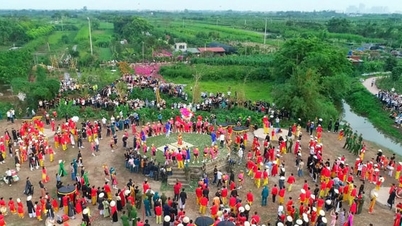
The festival portion of the God of Agriculture ceremony at Doc village communal house, Viet Hong commune, features lively and engaging sporting activities, showcasing the spirit of community solidarity.
Along the way, the procession will enter the Trung communal house for a ceremony, then proceed to the Ngoai communal house – the village communal house of Doc. The local shaman will light incense and oil lamps at the Doc village communal house, requesting permission to sit down so that the people can perform the ceremony the following day. After three rounds of wine, two rounds of incense, and one round of ceremonial texts, everyone will rest to prepare for the evening ceremony performed by the traditional music ensemble at the Ngoai communal house.
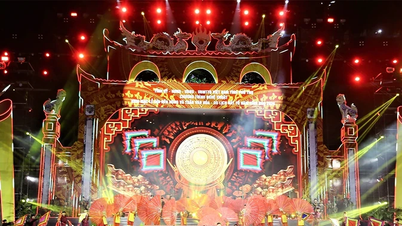
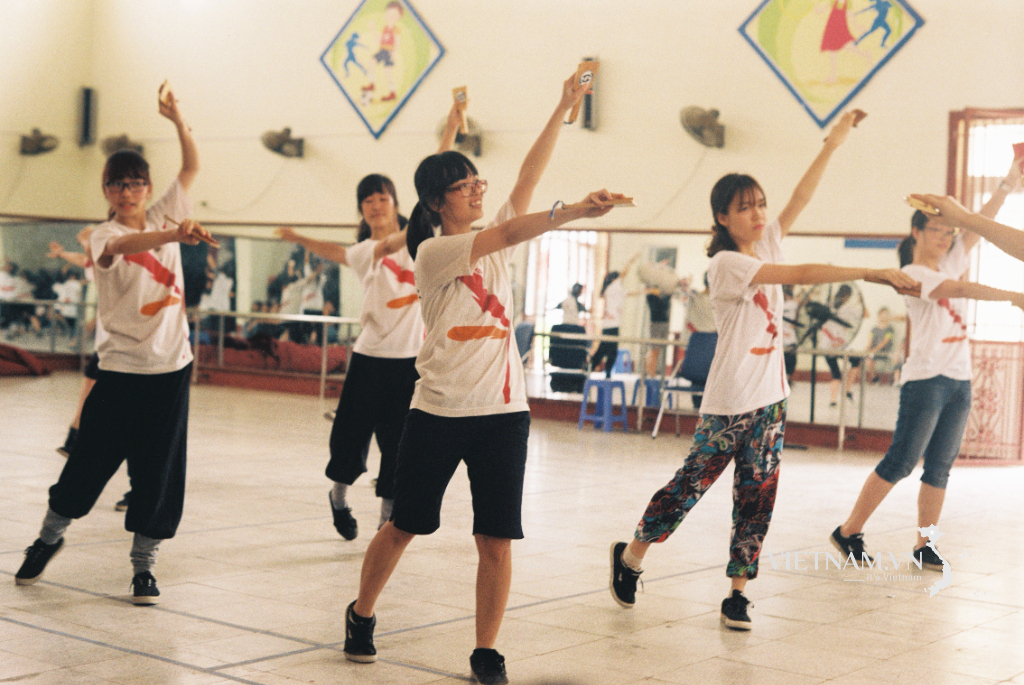
The ritual performed by the Eight-instrument ensemble is called the musical ritual, dedicated to the gods. After a 15-20 minute vegetarian offering, the Eight-instrument ensemble performs the musical ritual ( musical ritual). Female members perform dances accompanied by drums, gongs, flutes, and two-stringed fiddles. The female members and villagers then perform the Tay folk dance, with various movements such as scarf dances, fan dances, musical instrument dances, and gong dances. While the Eight-instrument ensemble performs the musical ritual, the local shaman continues to recite the ceremonial text.
On the 14th day of the 7th lunar month, people gather at the Outer Temple to conduct the festival. In the procession to the Inner Temple to report on the main festival activities the following day, there are not only trays of savory and vegetarian dishes, but also trays of Phuon offerings. The Phuon offerings are placed at the Mo altar.
After preparing the offerings, the female attendants presented to the royal palace seven trays of cooked food, including dishes made from pork, sticky rice, and glutinous rice wine; three trays of vegetarian food consisting of flowers, fruits, and sweets; and one tray of Phuong food.
Outside the inner sanctuary, a tray of offerings was placed. Once the offerings were prepared, the shaman lit incense and offered prayers, inviting the deities, the local spirits, and the village guardian spirits to attend the ceremony.
After three weeks of wine, two weeks of incense, and one week of ceremonial prayers, the Earth God continued to perform the ritual at the Mo altar, offering sacrifices to the God of Agriculture.
The altar is placed at the base of the largest banyan tree on the right side of the communal house and is only erected during ceremonies. The altar is constructed of bamboo and reeds, covered with a large palm leaf, and a woven bamboo mat is placed above it as a bridge. On the altar is a tray containing cooked meat, sticky rice, wine, a piece of raw goat or pork meat, rice mixed with raw blood (blood and hair) and a few tail hairs of the sacrificial animal to create a sacred elixir for the ritual.
"According to the Tay people's beliefs, the Ban Mo is a place of worship for the deity who governs all animals in the world, so a feast of raw meat and the blood of the sacrificed animal must be used to make it sacred. The ritual of worshipping Ban Mo aims to protect and ensure the prosperity and abundance of all living things, livestock, and poultry in the village and commune," said the local shaman Pham Gia Lien.
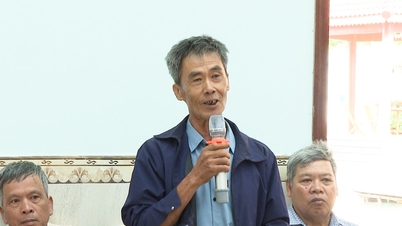
Mr. Nguyen Duc Bao, Vice Chairman of the People's Committee of Viet Hong commune, said: "To preserve and promote the historical and cultural values of the Doc Village Temple Festival, Viet Hong commune has encouraged elderly people who understand traditional culture, especially the God of Agriculture ritual, to pass it on to the younger generation. This ritual carries the cultural characteristics of the ancient Tay people, expressing the wish for all people to have a peaceful life and for the plants to flourish. This is also an opportunity to awaken the spirit of solidarity and strengthen the bonds of community."
With the humanistic significance of the God of Agriculture Festival being to strengthen community bonds and preserve the traditional cultural values of the nation, no matter how far away they live, on the days of the Dọc village temple festival, the people of Viet Hong commune always try to gather with their families, relatives, and neighbors to participate in the festivities. It is also a spiritual tourism destination for visitors whenever they set foot in the revolutionary war zone of Viet Hong.
TK (Theobaoyenbai.com.vn)
Source: https://baophutho.vn/dac-sac-le-than-nong-dinh-lang-doc-221420.htm
![[Photo] General Secretary and President To Lam presides over a working session with the Central Policy and Strategy Committee on the development of the materials industry.](https://vphoto.vietnam.vn/thumb/1200x675/vietnam/resource/IMAGE/2026/05/21/1779359935432_a3-bnd-3129-1412-jpg.webp)

![[Photo] National Assembly Chairman Tran Thanh Man working with the Standing Committee of the Law and Justice Committee](https://vphoto.vietnam.vn/thumb/1200x675/vietnam/resource/IMAGE/2026/05/21/1779378929214_ndo_br_1-4610-jpg.webp)








































![[Infographics] Things you need to know about E10 gasoline](https://vphoto.vietnam.vn/thumb/402x226/vietnam/resource/IMAGE/2026/05/22/1779412728632_fb_gemini-generated-image-50vwse50vwse50vw-1-jpg.webp)









Comment (0)